 Ultimate guide
What Is Female Pattern Baldness? Causes and Signs
Last Updated: November 10, 2026
Quick Summary
Female pattern baldness, also called female pattern hair loss, is the most common form of hair thinning in women. It is hereditary and causes gradual thinning across the top and crown of the scalp, usually while the front hairline stays intact. It tends to progress slowly over years rather than appearing suddenly.
- Female pattern baldness is hereditary and driven by sensitivity of hair follicles to androgens.
- The most common sign is diffuse thinning over the crown with a wider part line.
- Sudden clumping, round bald patches, or scalp pain should be assessed by a doctor promptly.
- The Ludwig scale grades female pattern hair loss into three stages based on part width and crown coverage.
- Topical minoxidil is the most widely studied first-line treatment, and stopping it usually lets loss resume.
Table of Contents
- What Female Pattern Baldness Is and How Common It Is
- Female Pattern Baldness Symptoms to Look For
- Female Pattern Hair Loss Causes: Genetics, Androgens and Hormones
- Female Pattern Hair Loss Stages Explained
- How Female Pattern Baldness Is Diagnosed
- Female Pattern Baldness Treatment Options and What They Cost to Maintain
- Booking a Consultation to Map Your Next Steps
- Frequently Asked Questions
What Female Pattern Baldness Is and How Common It Is
Female pattern baldness, also called female pattern hair loss (FPHL), is the most common form of hair thinning in women (the American Academy of Dermatology). It is a hereditary condition that causes gradual thinning across the top and crown of the scalp, usually while the hairline at the front stays intact. Unlike some other forms of hair loss, it tends to progress slowly over years rather than appearing suddenly.
The condition is driven by a combination of genetic predisposition and sensitivity to androgens, the hormones that also affect hair growth. Hair follicles in affected areas gradually shrink in a process called follicular miniaturization, producing finer, shorter, and less pigmented hair with each growth cycle. Over time, the scalp becomes more visible through the hair.
Exact prevalence figures vary across studies, and many women with early thinning never seek a diagnosis, so precise national numbers are difficult to pin down. It is widely recognized by dermatologists as a common concern for women, particularly after the age of 40 and again after menopause, when hormonal shifts can affect hair density. Many women who first notice a widening part or reduced ponytail volume want to understand what is happening.
Female Pattern Baldness Symptoms to Look For
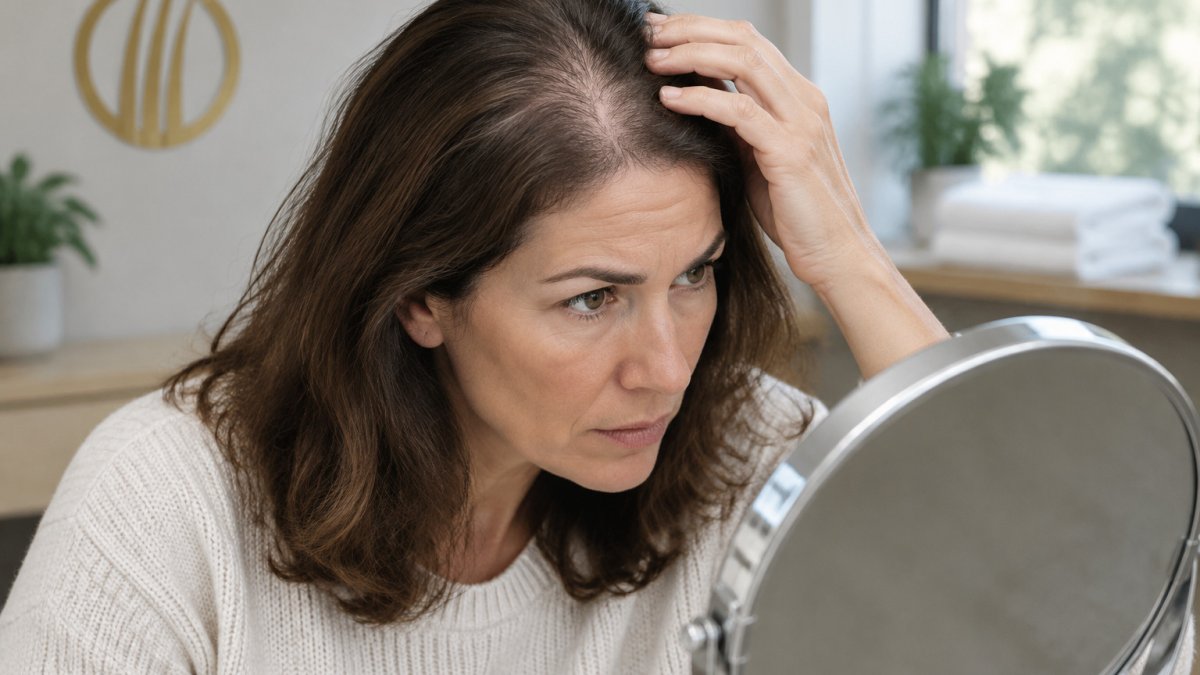
The most common sign is diffuse thinning over the crown and the top of the head. Many women first notice a wider part line, more scalp showing under bright light, or a ponytail that feels thinner than it used to.
Other signs to watch for include:
- Gradual reduction in overall hair density rather than clear, round bald patches
- Finer, shorter hairs that are harder to style
- A part that appears to widen over time
- Increased scalp visibility after showering or in photos taken from above
Hair loss that appears in sudden clumps, leaves round or patchy bald spots, or comes with scalp pain, redness, or scaling should be assessed by a doctor promptly, as other conditions can cause those patterns. Thyroid problems, iron deficiency, and other medical issues can also cause thinning, so a clinical evaluation is the reliable way to confirm the cause.
Female Pattern Hair Loss Causes: Genetics, Androgens and Hormones
Female pattern hair loss develops from a mix of inherited sensitivity and hormonal influences. It is not caused by a single factor, and it is not caused by washing, brushing, or styling habits.
The Role of Genetics and Androgen Sensitivity
The strongest known driver is inherited sensitivity of hair follicles to androgens. Women whose close relatives experienced thinning are more likely to develop it themselves. Androgens do not necessarily need to be unusually high for this to occur; what matters is how sensitive the follicles are to them. Dermatologists generally describe the condition as hereditary, with the pattern and timing varying widely between individuals. Understanding the genetic basis of this sensitivity helps clarify when dermatologists recommend hair restoration treatments as a viable strategy for managing progressive hair loss.
Hormonal Changes That Can Accelerate Thinning
Hormonal shifts can make existing thinning more noticeable. Periods of change, such as pregnancy, postpartum recovery, and the years around menopause, are commonly associated with increased shedding or faster progression. Conditions that alter hormone levels, including thyroid disorders and polycystic ovary syndrome, can also contribute, which is one reason a medical workup is worthwhile before assuming the cause is purely genetic.
Female Pattern Hair Loss Stages Explained
The Ludwig scale is the classification most commonly referenced for female pattern hair loss. It grades diffuse thinning across the top of the scalp into three stages, based largely on how wide the central part has become and how much of the crown is affected.

Stage I describes mild thinning. The part line looks slightly wider than it used to, but the crown still has good coverage and the change is usually visible mainly to the person who styles the hair daily. Stage II describes moderate thinning, where the part is clearly wider and scalp shows more readily under bright light or from above. Stage III describes advanced thinning, where the crown is substantially exposed and density loss is evident even in casual view.
A simple way to self-assess is to part your hair in your usual place, photograph the part from directly above in consistent lighting every few months, and compare the width of the part and the visibility of the scalp over time. This does not replace an examination, but it gives you a record a clinician can review, and it helps you notice whether changes are gradual or sudden.
Sudden clumping, round patches, or scalp pain do not fit this pattern and should be assessed promptly. The scale is most useful as a shared language between you and your clinician: it helps set expectations about how much change is likely and which treatments are worth discussing at your current stage.
Watch out: photographs taken at different times of day, with different hair products, or with different parts will not compare fairly, so keep your lighting and styling as consistent as you can.
The Ludwig scale grades female pattern hair loss into three stages based on how wide the part has become and how much of the crown is affected.
| Stage | Description | Key sign |
|---|---|---|
| Stage I | Mild thinning | Part looks slightly wider |
| Stage II | Moderate thinning | Part clearly wider, scalp more visible |
| Stage III | Advanced thinning | Crown substantially exposed |
How Female Pattern Baldness Is Diagnosed
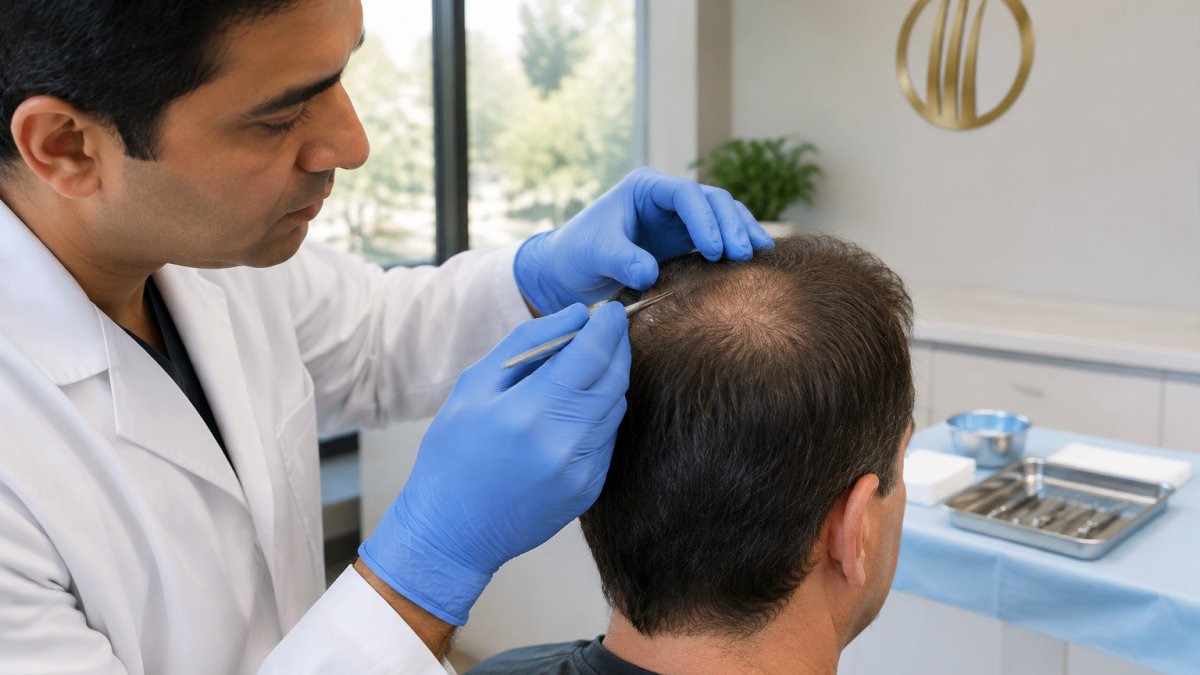
Diagnosis is usually based on a clinical examination of the scalp, a review of your medical and family history, and the pattern of thinning. A dermatologist may examine the part line and crown closely and may use magnification to assess follicle size and hair shaft quality.
Blood tests are often ordered to rule out contributing factors. These commonly include serum ferritin to check iron stores, thyroid function tests, and hormone levels where clinically indicated. In some unclear cases, a scalp biopsy may be used to examine follicles under a microscope. The goal of testing is to confirm the diagnosis and identify any treatable underlying cause.
Female Pattern Baldness Treatment Options and What They Cost to Maintain
Female pattern hair loss is progressive, so most treatment plans are judged by how well they slow thinning and maintain density over years rather than by a single visible result. Choosing an option starts with understanding how each one works and what it asks of you week to week.
Topical minoxidil (available over the counter in 2% and 5% strengths for women) is the most widely studied first-line option. It is thought to prolong the growth phase of hair follicles and increase the diameter of miniaturized hairs. Results generally take several months to appear, and early shedding is a known part of the process for some people. Stopping treatment typically allows gradual loss to resume, which is why maintenance matters more than a short trial.
Prescription oral options, such as spironolactone, are used by some physicians in women who are not planning pregnancy, because they interact with androgen signaling. They require clinical supervision, regular monitoring, and reliable contraception, and they are not appropriate for everyone. Other in-clinic approaches, including light-based devices and microneedling, are used in some practices, but the evidence for each varies and is often based on smaller studies than the topical and oral options.
Cost is a factor many people underestimate. A realistic plan considers the price of the initial product or visit, the recurring cost of continuing it, and how often follow-up appointments are needed. Pricing depends on the specific product or service, quantity, and visit schedule, so check the clinic's pricing page for current prices or request a quote. The page breaks down what restoration costs in California so you can compare options before you commit. Ask any provider for a written estimate of the first six to twelve months, including follow-up visits and any required lab work, so you can compare plans on equal terms.
Watch out: stopping a treatment abruptly often leads to noticeable shedding within months, so make sure you are prepared to continue any plan you start before you begin it.
Booking a Consultation to Map Your Next Steps
If you are noticing thinning, the most useful next step is a consultation where a qualified clinician can examine your scalp, review your history, and explain which causes are likely. Free consultations are available, and you can talk through your options and what maintenance would look like over time. Bring a list of any medications, supplements, and recent changes in health, along with photos of how your hair has looked over the past year. Learn what to expect before you book your consultation, and if you are curious about newer non-surgical stimulation options, see what Alma TED treatment for hair involves. Schedule a Free Consultation today to get a clear picture of your situation.
Frequently Asked Questions
Can hair grow back from female pattern baldness?
Female pattern baldness is progressive, so the goal of treatment is usually to slow further loss and support regrowth where follicles are still active. Topical minoxidil and other medical options can help some women regrow hair, but results vary and follicles that have been miniaturized for many years may not fully recover. Early evaluation gives the best chance of a meaningful response. A consultation with a qualified provider can help you understand what is realistic for your hair.
How do I know if my hair loss is female pattern baldness?
Female pattern baldness typically causes diffuse thinning across the top and crown of the scalp, often with widening of the part, while the frontal hairline usually stays intact. Other causes of hair loss, such as thyroid problems, iron deficiency or telogen effluvium, can look similar. Because the causes differ, a clinical examination and sometimes blood tests are the reliable way to confirm the diagnosis rather than relying on appearance alone.
Can female pattern baldness start in your 20s or 30s?
Yes. Female pattern hair loss can begin in early adulthood, although it becomes more common with age and is especially frequent after menopause. Many women first notice a wider part or lower ponytail volume and assume it is temporary. Noticing a gradual change over several months is a good reason to have it assessed.