 ultimate-guide
What Is Alma TED Treatment for Hair? A 2026 Guide
Table of Contents
- What Is Alma TED Treatment for Hair?
- How Alma TED Treatment Sessions Work
- Alma TED Results: What to Expect and How Long It Takes
- Alma TED Side Effects and Safety Considerations
- Alma TED vs. Hair Transplant: Which Approach Fits Your Goals?
- Who May Be a Good Candidate for Alma TED?
- Frequently Asked Questions
Last Updated: October 15, 2026
What Is Alma TED Treatment for Hair?
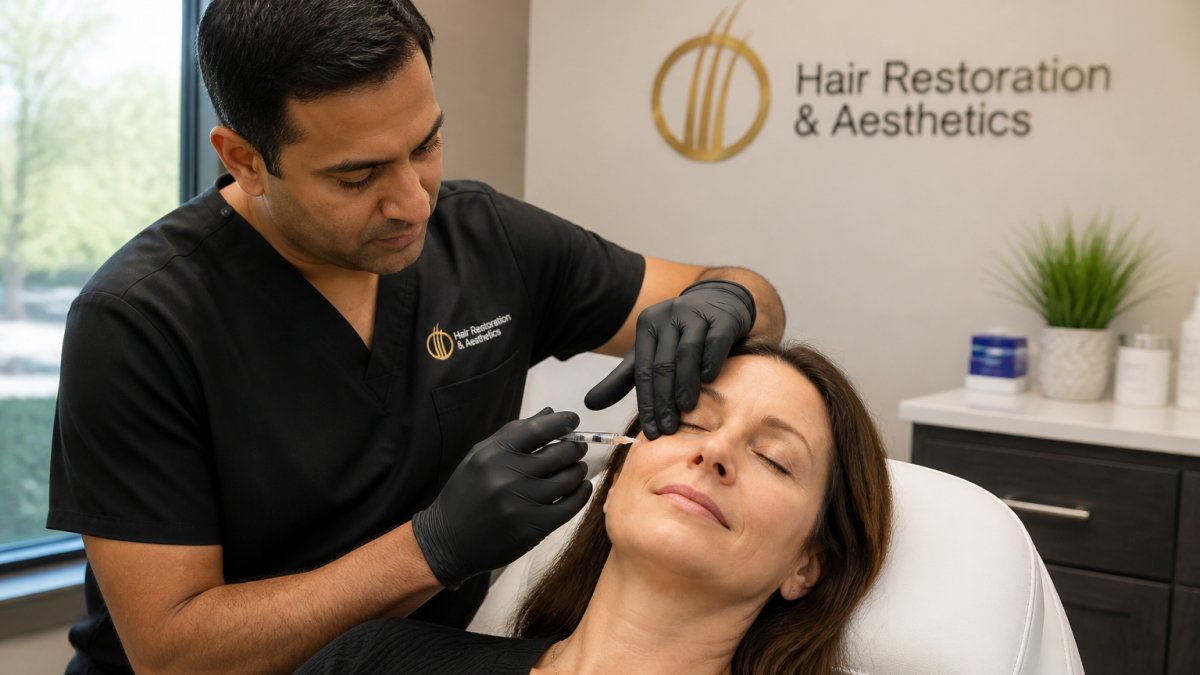
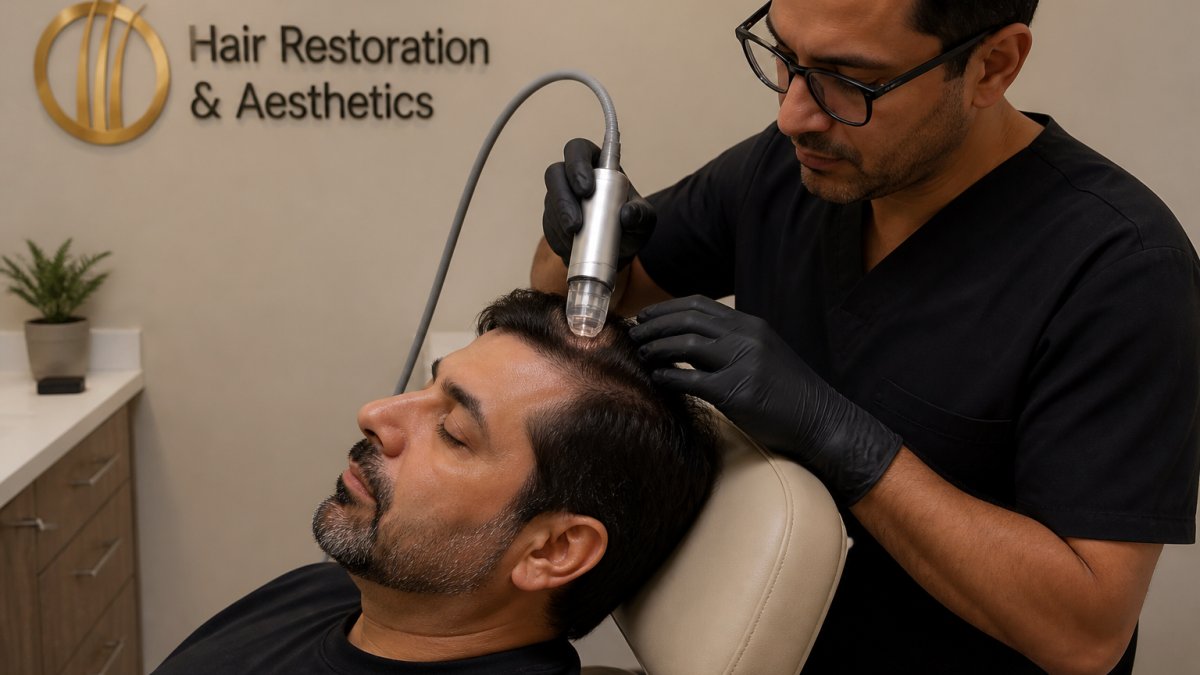
Alma TED treatment for hair is a non-invasive scalp treatment that uses ultrasound technology to help deliver growth-supporting serums into the upper layers of the scalp without needles.
At Hair Restoration Clinic of Granite Bay, we use Alma TED as part of a broader approach to hair restoration. The name itself tells you a lot about how it works, so let's break it down before getting into results, sessions, and who it actually suits.
What the Name Means and Where It Fits in Hair Restoration
TED stands for TransEpidermal Delivery, and Alma refers to the company that developed the platform.
This matters because many topical serums sit on the surface of the scalp and never reach the follicle. The device uses acoustic sound waves and air pressure to move product past that barrier.
In the wider world of hair restoration, Alma TED sits in the non-invasive category. The American Academy of Dermatology's guidance on hair loss notes that treatment choice should follow a proper diagnosis, since hair thinning has many possible causes.
How Alma TED Treatment Sessions Work
A session is quick and does not require anesthesia.
The device pairs ultrasound energy with air pressure to push a growth-supporting serum into the scalp tissue. Blood circulation and cell metabolism around the follicles are part of what the treatment aims to support.
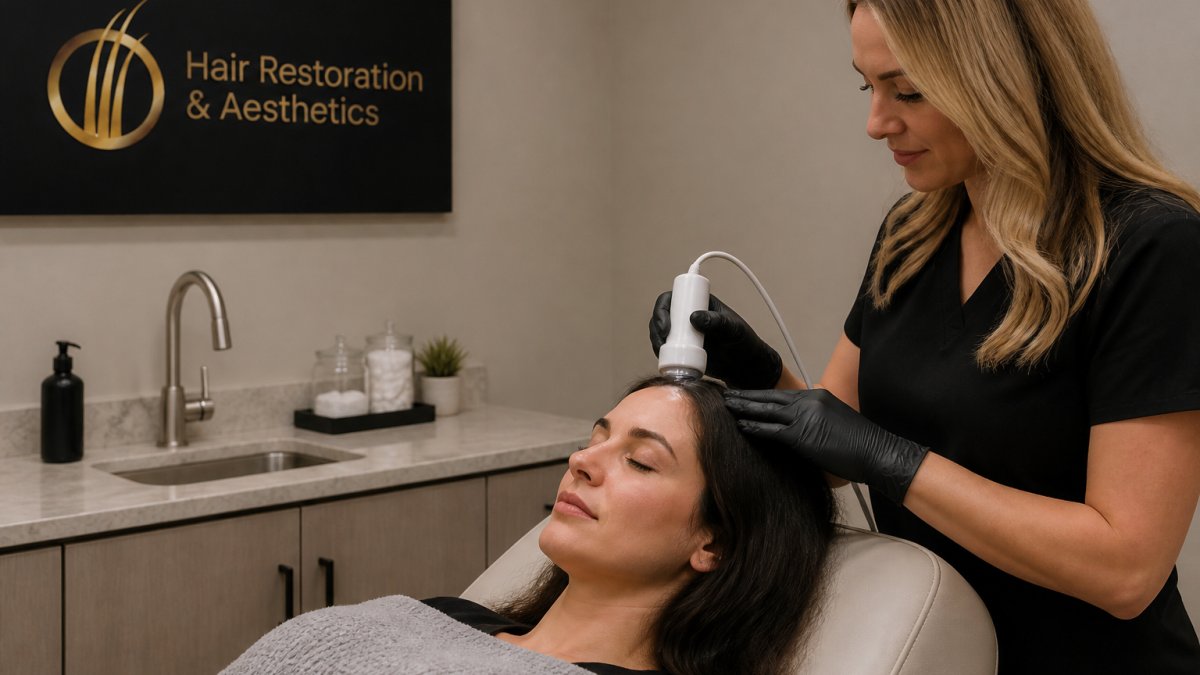
What to Expect During a Session
Sessions usually run about 20 to 30 minutes. Your provider will first assess your scalp and hair, then apply the topical serum and move the device in sections across the treatment area.
Most people tolerate it well. If you have a sensitive scalp, tell your provider beforehand so they can adjust.
How Many Sessions Are Typically Recommended?
Alma TED is delivered as a treatment series, not a one-time visit. A common approach is a short series of sessions spaced a few weeks apart, followed by maintenance treatments.
The exact number depends on your degree of thinning, your goals, and how your scalp responds. Your provider should map this out at your consultation rather than quoting a fixed number before examining you.
Alma TED Results: What to Expect and How Long It Takes
Results build gradually. Because Alma TED supports the scalp environment rather than instantly adding hair, most people notice reduced shedding first, with visible improvement in density appearing over a series of months.
Patient-reported outcomes in provider settings often describe less shedding and a fuller look over time, though individual results vary. The National Library of Medicine's overview of hair loss treatments is clear that non-surgical options work best when matched to the right type of hair loss.
Tracking Your Progress Objectively
Photographs are the simplest tool. Take standardized photos of the same areas under the same lighting before your first session, then repeat monthly.
| What to Track | How to Measure | How Often |
|---|---|---|
| Shedding | Count hairs on pillow or in shower drain | Weekly |
| Density | Standardized photos, same angle and lighting | Monthly |
| Scalp health | Provider assessment of irritation or flaking | Each visit |
| Overall impression | Your own before-and-after comparison | Every 3 months |
Alma TED Side Effects and Safety Considerations
Alma TED is generally well tolerated, and because it is needle-free, it avoids the discomfort and small puncture wounds associated with injection-based delivery. That is a real advantage, but it is not the same as risk-free, and the difference matters when you are deciding whether to book a series.
What People Typically Report After a Session
The most common reports are mild and short-lived:
- Redness or flushing across the treated scalp, usually fading within a few hours
- Mild tenderness or a warm sensation in the treatment area
- Temporary sensitivity to touch or to styling products
These are expected tissue responses to acoustic energy and air pressure, not signs that something went wrong. Most people return to normal activity, including washing and styling their hair, the same day. Integrating this non-invasive approach into a broader strategy often yields the most consistent results when compared to other hair growth treatments.
When Treatment Should Wait
A clinician should pause or decline treatment if any of the following are present in the treatment area:
- An active scalp infection, including bacterial, fungal, or viral outbreaks
- An open wound, recent laceration, or healing surgical site on the scalp
- An active flare of a skin condition such as eczema, psoriasis, or seborrheic dermatitis in the treatment zone
These are not permanent disqualifiers. They are reasons to resolve the issue first and reassess.
Schedule a Free Consultation →
Situations That Need Physician Review First
Some patients should have a conversation with their physician before scheduling, even if the scalp looks healthy:
- Pregnancy or breastfeeding
- A history of skin cancer or precancerous lesions on the scalp
- Active treatment for a serious medical condition
- Use of blood thinners or medications that affect clotting
None of these automatically rules out Alma TED, but each changes the risk-benefit conversation and should be raised at the consultation, not discovered on treatment day.
What Alma TED Cannot Address
Two categories of hair loss fall outside what this treatment can reasonably help:
- Scarring alopecia. Where follicles have been replaced by scar tissue, no topical or ultrasound-based delivery can restore them.
- Hair loss driven by an untreated underlying cause. Thyroid disorders, iron deficiency, hormonal imbalances, autoimmune conditions, and certain medications can all drive shedding. Delivering serum to a scalp whose follicles are being suppressed by a systemic problem does not fix the systemic problem.
This is why a proper diagnosis comes first. The American Academy of Dermatology's guidance on hair loss is clear that identifying the type and cause of hair loss should precede any treatment decision.
Reporting Problems
If you experience pain that does not settle within a day, spreading redness, swelling, drainage, or a rash that worsens rather than fades, contact your provider. These are uncommon, but they are the signals that warrant a check rather than a wait-and-see approach.
Alma TED vs. Hair Transplant: Which Approach Fits Your Goals?
Alma TED and FUE hair transplant are not competing versions of the same thing. They solve different problems, and the right choice, or the right combination, depends on what is actually happening at the follicle level.
The Core Distinction
- Alma TED supports follicles that are still alive but weakened. It delivers growth-supporting serums into the upper scalp using ultrasound and air pressure, with the goal of improving the environment around existing follicles.
- FUE hair transplant relocates healthy, genetically stable follicles from a donor area into regions where follicles have stopped producing hair. It creates new hair where none is growing.
If an area is smooth and bare, no topical or ultrasound-based treatment will bring those follicles back. That is the situation where transplantation fits. If follicles are still active but producing thinner, weaker hair, Alma TED can make sense on its own or alongside other options.
How Alma TED Compares to Other Non-Surgical Options
Alma TED is one of several non-surgical paths. A balanced view means knowing where each one sits:
| Option | How It Works | Evidence Base | Commitment |
|---|---|---|---|
| Alma TED | Ultrasound and air-pressure delivery of topical serums | Limited independent data; largely manufacturer- and provider-reported outcomes | In-clinic series plus maintenance sessions |
| Minoxidil (topical) | Vasodilator applied directly to the scalp | Long-established, widely studied | Daily at-home use, indefinite |
| Prescription oral therapies | Systemic modulation of hair-cycle hormones | Well-studied for appropriate candidates | Daily medication, physician oversight |
| Platelet-rich plasma (PRP) | Injection of concentrated growth factors from your own blood | Growing but mixed evidence; technique-dependent | In-clinic series plus maintenance |
| FUE hair transplant | Surgical relocation of donor follicles | Well-established for suitable candidates | One procedure, typically minimal ongoing maintenance |
Each has a different risk profile, cost structure, and evidence quality. None is universally best. The right answer depends on your pattern, your diagnosis, your tolerance for ongoing commitment, and what you are willing to spend over time.
A Practical Way to Decide
Work through these questions with your provider:
- What is the diagnosis? Androgenetic alopecia, telogen effluvium, alopecia areata, and scarring alopecia all call for different approaches. Without a diagnosis, treatment selection is guesswork.
- Are the follicles in the target area still active? If yes, non-surgical options are on the table. If no, transplantation is the only route to new hair in that area.
- How much ongoing commitment is realistic? Minoxidil and oral therapies require daily use. Alma TED and PRP require returning for maintenance. FUE is largely a one-time event.
- What does the evidence actually support? Some options have decades of independent research behind them. Others, including Alma TED, rely more heavily on provider-reported and manufacturer-reported outcomes. That does not make them useless, it means the certainty is lower, and you should weigh that honestly.
Combining Approaches
Many patients at our Granite Bay clinic combine FUE to rebuild density in bare areas with Alma TED to support the surrounding hair that is still present. Dr. Piyush Kumar evaluates each patient's pattern before recommending either path, and sometimes recommends neither, because the diagnosis points somewhere else entirely.
You can review FUE candidacy guidance from the ISHRS to understand how surgeons assess transplant suitability, but the assessment itself should come from a clinician who has examined your scalp.
Who May Be a Good Candidate for Alma TED?
The best candidates are adults in the early to moderate stages of thinning, with active follicles and no untreated scalp condition.
You may be a poorer fit if you have extensive baldness with smooth, inactive areas, an active scalp infection, or hair loss from an undiagnosed medical cause.
Hair thinning rarely resolves on its own, and guessing at the cause wastes the months when treatment works best. Hair Restoration Clinic of Granite Bay offers a free consultation with Dr.
Frequently Asked Questions
Does Alma TED actually work for hair regrowth?
Alma TED uses acoustic sound waves and air pressure to deliver growth-supporting serums into the scalp without needles. Clinical outcomes reported by the manufacturer and some providers suggest reduced shedding, increased hair growth, and improved hair density. However, evidence quality varies, and results depend on your specific type of hair loss, how consistently you complete the recommended treatment series, and whether you continue maintenance sessions. It works best for early-stage thinning rather than advanced baldness.
How many Alma TED treatment sessions are typically recommended?
Most providers recommend an initial series of treatment sessions spaced a few weeks apart, followed by periodic maintenance treatments to sustain results. The exact number depends on your degree of hair thinning, how your scalp responds, and your overall hair restoration goals. During a consultation, a qualified professional can assess your scalp and medical history to outline a session schedule tailored to you.
Is Alma TED painful or does it require downtime?
Alma TED is a needle-free, non-invasive treatment. Most patients describe the sensation as a gentle vibration or pressure on the scalp, and there is typically no downtime afterward. You can generally return to normal activities immediately. Some people may notice mild temporary redness or sensitivity at the treatment site, but this usually resolves quickly. If you have a low pain tolerance or scalp sensitivity, discuss it with your provider beforehand.
How does Alma TED compare with FUE hair transplantation?
Alma TED and FUE hair transplant serve different purposes. Alma TED is a non-surgical option that uses ultrasound and air pressure to deliver topical serums, aiming to improve hair density and reduce shedding in thinning areas. FUE is a surgical procedure that moves healthy hair follicles from one part of the scalp to another, producing permanent regrowth in treated areas. Some patients combine both approaches, using Alma TED to support overall scalp health before or after a transplant. A consultation can help determine which option matches your hair loss pattern and goals.