
 ultimate-guide
Hair Loss Treatment: A 2026 Guide
Table of Contents
- Understanding Hair Loss and Its Causes
- Medical and Topical Hair Loss Treatments
- Non-Surgical Hair Loss Solutions
- Alma TED Hair Restoration Benefits
- FUE Hair Transplant Recovery and Results
- Choosing the Right Hair Loss Treatment for You
- The Psychological Impact of Hair Loss and Treatment
- Frequently Asked Questions
Last Updated: September 29, 2026
Understanding Hair Loss and Its Causes
Hair loss affects millions of people, yet many don't understand what's actually happening beneath the scalp. At Hair Restoration Clinic of Granite Bay, we've found that most patients benefit from understanding the mechanics of hair loss before exploring treatment options. The good news: knowing what causes your hair loss determines which hair loss treatment will work best for you.
Hair loss isn't random. It follows patterns rooted in biology, genetics, and sometimes lifestyle. When you understand these patterns, you can make informed decisions about which hair loss treatment approach fits your situation.
How Hair Growth Cycles Work
Hair doesn't grow continuously. Each strand cycles through distinct phases: the anagen phase (active growth lasting 2-7 years), the catagen phase (transition lasting weeks), and the telogen phase (resting period lasting months) (Integrative and Mechanistic Approach to the Hair Growth Cycle and Hair Loss). During telogen, hair sheds naturally. This is normal. Most people shed 50-100 hairs daily (the American Academy of Dermatology).
Problems arise when too many follicles enter the telogen phase simultaneously, or when follicles shrink and stop producing healthy hair. This is where hair loss treatment becomes necessary. Understanding these cycles helps explain why some treatments take months to show results, they must work through multiple growth cycles to demonstrate effectiveness.
Common Types of Hair Loss
Androgenetic alopecia (male and female pattern baldness) accounts for the majority of hair loss cases. It's driven by genetics and DHT sensitivity, where hair follicles gradually miniaturize. The hairline recedes or the crown thins progressively.
Telogen effluvium is temporary hair shedding triggered by stress, illness, or major life changes. Hair shifts prematurely into the telogen phase, causing noticeable shedding weeks or months after the triggering event. Most recover without intervention.
Alopecia areata causes patchy hair loss when the immune system attacks hair follicles. This autoimmune condition creates distinct bald patches and requires different hair loss treatment approaches than genetic baldness.
Understanding which type you have shapes everything that follows. Misdiagnosing your hair loss leads to wasting time on ineffective treatments.
Medical and Topical Hair Loss Treatments
Medical interventions form the foundation of many hair loss treatment plans. These address the underlying biology driving hair loss rather than just treating symptoms.
DHT Blockers and Medications
Finasteride (Propecia) reduces DHT production in the scalp by inhibiting the enzyme that converts testosterone to DHT. Many people see hair regrowth or stabilization within 6-12 months. It works best when started early, before significant follicle miniaturization occurs.
Minoxidil (Rogaine) works through a different mechanism, it stimulates hair follicles directly and extends the anagen phase. It's available over-the-counter and shows results in 4-6 months for many users. The catch: you must continue using it indefinitely, as hair loss resumes when you stop.
Both medications require consistency. Skipping doses or stopping treatment reverses progress. For many people, combining these medications creates better results than using either alone.
Non-Surgical Hair Loss Solutions
Non-surgical treatments have evolved significantly. These approaches work by stimulating the scalp, improving blood flow, or using growth factors to revitalize dormant follicles.
Platelet-Rich Plasma Therapy
Platelet-rich plasma (PRP) therapy extracts growth factors from your own blood and injects them into the scalp. The growth factors in platelets stimulate hair follicles and may extend the anagen phase. PRP requires multiple sessions spaced weeks apart, typically 3-4 treatments for initial results.
Results vary. Some people see significant hair regrowth; others experience stabilization of existing hair. PRP works best when combined with other treatments like minoxidil or finasteride. It's particularly useful for people who want to avoid oral medications or enhance results from medical treatment.
Low-Level Laser Therapy and Scalp Stimulation
Low-level laser therapy (LLLT) uses specific wavelengths of light to stimulate hair follicles at the cellular level. The theory: laser energy increases ATP production in follicle cells, promoting growth. Clinical evidence supports modest benefits, particularly when combined with other treatments.
Alma TED represents an advancement in scalp stimulation technology. This non-invasive acoustic sound wave therapy stimulates hair follicles and improves scalp health. Hair Restoration Clinic of Granite Bay uses Alma TED as a complementary approach alongside other hair loss treatments. Many patients appreciate the non-invasive nature and lack of downtime.
Schedule a Free Consultation →
Microneedling for Hair Restoration
Microneedling creates controlled micro-injuries in the scalp, triggering the body's natural healing response and promoting growth factor production. When performed at the right depth and frequency, microneedling can improve hair density over time. It's often combined with topical treatments or PRP to enhance results.
The procedure causes minimal discomfort and requires no downtime. Most people see progressive improvement over 3-6 months with monthly sessions. Microneedling is particularly effective for people with thinning hair or early-stage hair loss. Combining this mechanical stimulation with targeted natural supplements for thinning can further support the follicular environment and enhance the overall density of your regrowth.
Alma TED Hair Restoration Benefits
Alma TED hair restoration offers a non-invasive alternative for people concerned about medications or surgery. This acoustic sound wave therapy stimulates hair follicles without needles, incisions, or systemic effects. The treatment takes 20-30 minutes per session, and most people complete a series of 6-8 sessions spaced weekly or biweekly.
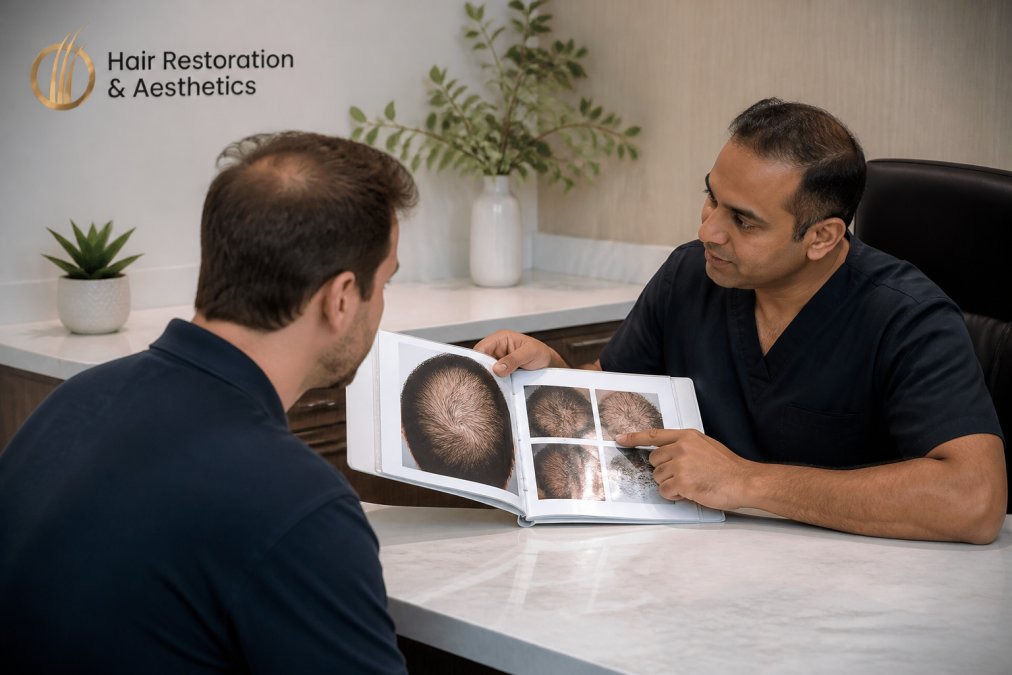
The appeal lies in simplicity and safety. There's no recovery time, no medication side effects to manage, and no surgical risks.
FUE Hair Transplant Recovery and Results
When hair loss is advanced or other treatments haven't delivered sufficient results, FUE hair transplant offers a permanent solution. FUE (follicular unit extraction) harvests individual hair follicles from areas of dense growth and transplants them to thinning or bald areas.
What to Expect During Recovery
FUE recovery is remarkably fast compared to older transplant methods. Most people return to normal activities within 7-10 days. The transplanted area may show redness and slight swelling for the first week, manageable with ice and elevation.
Long-Term Maintenance and Sustainability
Transplanted hair is permanent because it comes from genetically resistant follicles. However, your remaining native hair may continue thinning if androgenetic alopecia is active. Many people combine transplants with finasteride or minoxidil to maintain their native hair density and protect their investment.
Choosing the Right Hair Loss Treatment for You
The best hair loss treatment depends on several factors: the type of hair loss, how advanced it is, your goals, your timeline, and your preferences regarding medications or procedures.
Evaluation Criteria and Professional Diagnosis
Start with a professional diagnosis. A dermatologist or hair restoration specialist can identify your hair loss type through examination and, when necessary, scalp biopsy. This determines which treatments will actually work for your situation.
Key evaluation questions:
- How long have you been losing hair?
- Is hair loss progressing rapidly or slowly?
- Do you have family history of pattern baldness?
- Have you tried any treatments? What were the results?
- Do you prefer medications, procedures, or non-invasive options?
- What's your timeline for seeing results?
Cost-Benefit Analysis of Treatment Options
Different treatments require different commitments. Topical medications are affordable but require daily application indefinitely. PRP requires multiple sessions but no ongoing medication. Transplants have higher upfront costs but provide permanent results.
The Psychological Impact of Hair Loss and Treatment
Hair loss affects more than appearance, it impacts confidence, self-image, and mental health. Many people experience anxiety or depression related to hair loss, particularly when it's rapid or visible.
Frequently Asked Questions
What are the most effective medical treatments for hair loss?
The most effective medical treatments include DHT blockers like finasteride, which slow hair loss by targeting the hormone responsible for androgenetic alopecia, and minoxidil, a topical treatment that stimulates hair follicles. Non-surgical options like platelet-rich plasma therapy, low-level laser therapy, and microneedling work by improving scalp health and promoting hair regrowth. A dermatological evaluation can determine which hair loss treatment best suits your specific condition and hair type.
How does FUE hair transplant recovery work, and how long until I see results?
FUE hair transplant recovery typically involves minimal downtime. Most patients return to normal activities within a few days, though strenuous exercise should be avoided for 2-3 weeks. Transplanted hair sheds initially (expected shedding phase), then new growth begins around 3-4 months. Full results develop over 12-18 months as the hair density improves and the hair shaft strengthens. Your physician will provide specific post-procedure care instructions to optimize outcomes.
What is Alma TED acoustic sound wave therapy, and is it effective for hair?
Alma TED uses acoustic sound wave technology to stimulate hair follicles and improve scalp health non-invasively. The therapy works by enhancing blood flow to hair follicles and promoting the anagen phase of the hair cycle, which supports hair regrowth. It's an effective non-surgical option for patients seeking to avoid procedural intervention while still addressing thinning hair and hair loss prevention. Results typically develop over several months of consistent treatment.
Can hair that has fallen out grow back, and what determines regrowth?
Hair regrowth depends on whether hair follicles are still active. If follicles are dormant but not permanently damaged, treatments like DHT blockers, minoxidil, platelet-rich plasma, and low-level laser therapy can reactivate them. However, if follicles have been destroyed by severe scarring or prolonged androgenetic alopecia, surgical hair restoration through transplantation may be necessary. A professional dermatological evaluation determines which hair follicles can be revived.
What should I look for when choosing a hair restoration specialist?
Choose a board-certified physician with extensive experience in hair restoration procedures and a proven track record of natural-looking results. Verify credentials, ask about the specific technology used (such as the Cole follicular unit extraction system for FUE), and request before-and-after photos from patients with similar hair loss patterns. A reputable specialist offers a free consultation to discuss your hair density goals, recovery expectations, and personalized treatment options.
Why is my hair falling out, and when should I seek professional help?
Hair loss can result from androgenetic alopecia (pattern baldness), telogen effluvium (stress-related shedding), nutritional deficiencies, hormonal imbalance, or scalp conditions. If you notice excessive hair loss lasting more than a few weeks, thinning in specific areas, or declining hair density, consult a dermatologist for clinical diagnosis. Early intervention with appropriate hair loss treatment, whether medical, topical, or procedural, produces better outcomes and may prevent further hair follicle damage.