 Ultimate guide
7 Reasons Hair Thinning Happens in Your 40s
Last Updated: November 14, 2026
Quick Summary
Hair thinning in your 40s usually reflects several changes happening at once: a shorter hair growth phase, hormonal fluctuations such as declining estrogen during perimenopause, genetics coming into focus, and sometimes a treatable medical or nutritional contributor. A thorough evaluation looks at these causes together rather than in isolation, because your pattern of loss often indicates which factors matter most.
- In your 40s the growing phase can shorten and more follicles rest, reducing density rather than causing a receding hairline.
- Shedding is temporary and diffuse, while gradual thinning is slow, patterned, and usually needs ongoing management.
- Track shedding, part photos, medications, and menstrual symptoms for eight to twelve weeks before your consultation.
- Ask your doctor about a complete blood count, ferritin, TSH with free T4, and vitamin D before starting supplements.
- Give any regrowth plan at least four to six months before judging whether it is working.
Table of Contents
- Why Hair Thinning Happens in Your 40s: The Core Causes
- Hormones and Hair Loss in Women: Perimenopause, Menopause, and Androgens
- Hair Thinning in Your 40s for Women: Patterns, Triggers, and What to Track
- Hair Thinning in Your 40s for Men: Early Pattern Loss and Scalp Health
- Medical and Nutritional Contributors: Thyroid, Iron, Stress, and More
- How to Regrow Thinning Hair: Realistic Options and Timelines
- Schedule a Free Consultation to Build Your Hair Restoration Plan
- Frequently Asked Questions
Why Hair Thinning Happens in Your 40s: The Core Causes
Hair thinning in your 40s is rarely the result of one single factor. It usually reflects several changes happening at once: shifts in the hair growth cycle, hormonal fluctuations, genetics coming into focus, and sometimes a medical or nutritional contributor that can be addressed. A thorough evaluation looks at these causes together rather than in isolation, because the pattern you see in the mirror often helps indicate which factors matter most.
Below, we walk through the seven reasons hair thinning happens in your 40s, how to tell shedding apart from gradual density loss, and what a realistic path forward looks like.
How the Hair Growth Cycle Changes With Age
Every hair follicle moves through a growth cycle: an active growing phase, a short transition, and a resting phase before the hair sheds and the cycle restarts. In your 40s, two things commonly change. The growing phase can shorten, so hairs spend less time lengthening before they fall. And more follicles may spend longer in the resting phase at the same time, which shows up as reduced hair density rather than a receding hairline.
The result is subtler than sudden baldness. Hair grows back finer and shorter, the scalp becomes more visible at the part, and ponytails feel thinner. This is a normal part of aging for many people, but the pace varies widely.
Shedding vs. Gradual Thinning: Telling Them Apart
Hair shedding is a temporary increase in daily hair loss, often triggered by stress, illness, childbirth, rapid weight loss, or a dietary change. It usually appears as more hair in the brush or shower and tends to be diffuse across the scalp.
Gradual thinning is a slow reduction in hair density over months or years, typically concentrated in a pattern: a widening part and thinning crown in women, a receding hairline and crown in men.
The distinction matters because shedding often resolves once the trigger is removed, while pattern thinning usually needs ongoing management. A common mistake is treating months of steady pattern loss as if it were temporary shedding, which delays evaluation.
Hormones and Hair Loss in Women: Perimenopause, Menopause, and Androgens
Hormonal changes are one of the most common drivers of hair thinning in your 40s for women. During perimenopause, estrogen and progesterone levels fluctuate and gradually decline, while androgens remain relatively stable. That shift in balance can affect the hair growth cycle and make follicles more sensitive to androgen activity.
Androgens, including testosterone and its more potent form dihydrotestosterone, can gradually shrink susceptible follicles (Cause of Androgenic Alopecia: Crux of the Matter). This is the mechanism behind androgenetic alopecia, also called female pattern hair loss.
If you notice a widening part, a thinner crown, or increased shedding alongside irregular periods, hot flashes, or sleep changes, hormonal transition is a reasonable factor to discuss with a clinician.
Hair Thinning in Your 40s for Women: Patterns, Triggers, and What to Track

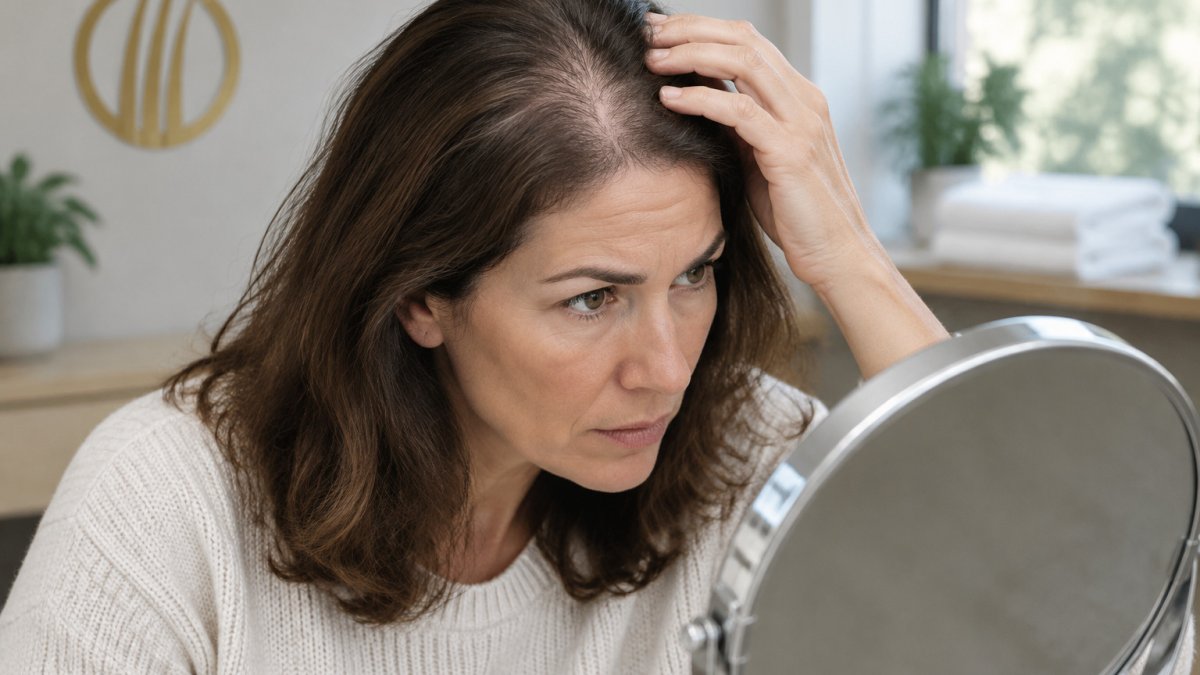
For women, pattern hair loss in the 40s most often shows up as diffuse thinning over the top and crown with a widening part, while the frontal hairline tends to hold. Because these triggers can call for different responses, hair thinning solutions should begin with identifying whether the loss reflects shedding, breakage, or a change in the hair-growth cycle.
Keep a simple log for eight to twelve weeks: daily shedding estimate, photos of your part in the same light, any new medications, and menstrual or menopause symptoms. If you are unsure whether your pattern fits female pattern baldness, our guide to what female pattern baldness looks like covers the signs and causes in more detail.
Hair Thinning in Your 40s for Men: Early Pattern Loss and Scalp Health
Male pattern loss typically begins with a receding hairline at the temples and thinning at the crown, and the 40s is when many men notice it has become visible rather than merely suspected. Genetics and family history are the strongest predictors, and androgen sensitivity drives the gradual miniaturization of hair follicles.
Scalp health matters more than most men realize. Persistent dandruff, inflammation, or seborrheic dermatitis can worsen shedding, and a scalp that is itchy or flaky deserves attention rather than a stronger shampoo. Early intervention tends to preserve more of what you have, so if you are seeing the first signs, our guide on how to stop male pattern baldness early walks through the practical steps.
Medical and Nutritional Contributors: Thyroid, Iron, Stress, and More
Not all hair thinning in your 40s is hormonal or genetic, and this is the part most people skip. Several treatable conditions produce diffuse shedding that can be reversed once identified.
- Thyroid imbalance. Both an underactive and an overactive thyroid can disrupt the hair growth cycle and cause diffuse thinning (Impact of Thyroid Dysfunction on Hair Disorders).
- Iron deficiency. Low iron stores are a well-recognized contributor to shedding, particularly in women with heavy periods.
- Nutritional deficiencies. Inadequate protein, vitamin D, zinc, or B vitamins can affect hair shaft quality and growth.
- Chronic stress. Sustained physical or emotional stress can push more follicles into the resting phase.
- Autoimmune disorders. Conditions such as alopecia areata cause distinct patches of hair loss and need medical evaluation (the American Academy of Dermatology).
- Rapid weight loss and dietary changes. Crash dieting and sudden restriction commonly trigger temporary shedding.
If you suspect stress is a major driver, our step-by-step plan to reduce hair fall from stress is a sensible starting point alongside a medical review.
A Practical Testing Guide: What to Ask Your Doctor For
Bring a specific request rather than a general complaint. Ask your clinician to consider a complete blood count, ferritin and iron studies, thyroid-stimulating hormone with free T4, vitamin D, and a basic metabolic panel. If your periods are heavy or irregular, mention it. If you have patches of smooth hair loss, ask about evaluation for autoimmune causes.
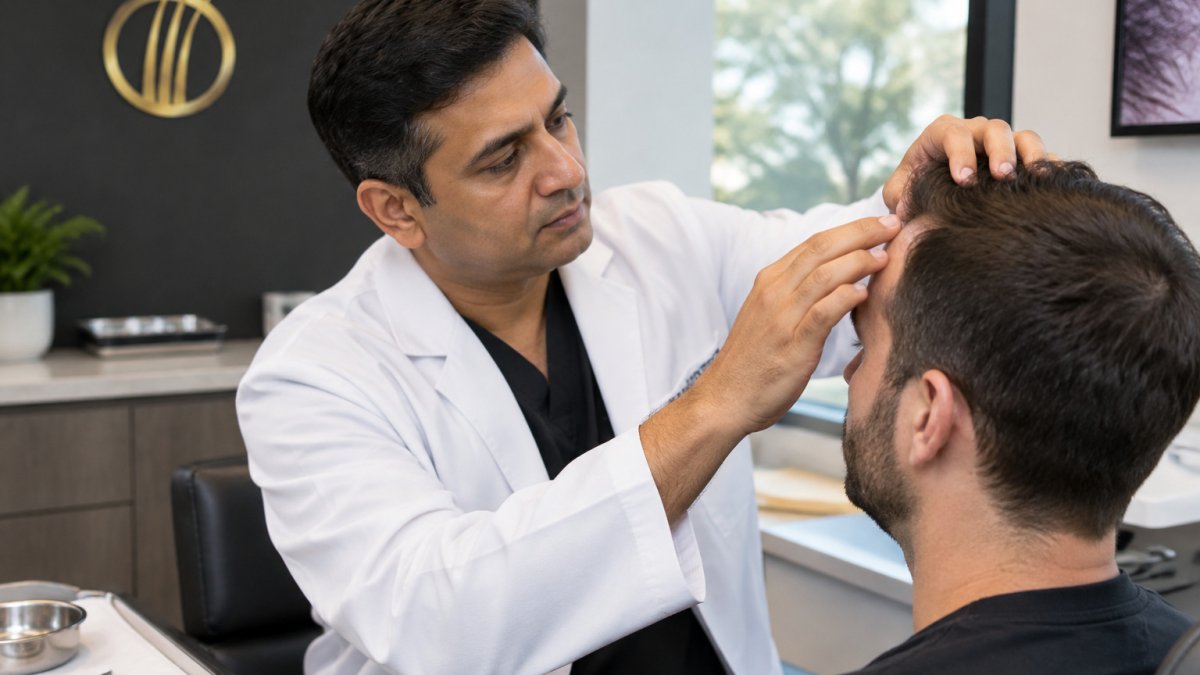
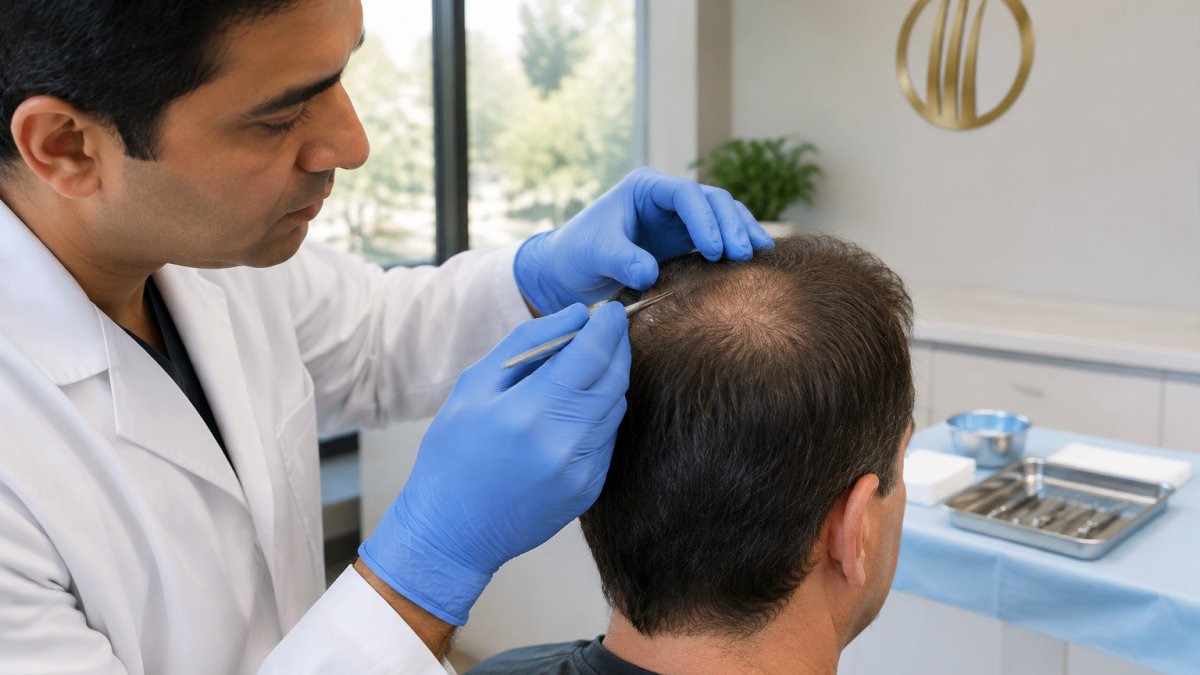
A dermatologist can assess hair density and shedding patterns with a scalp examination and, where needed, a scalp biopsy. Do not start supplements before testing; iron in particular should be guided by your results, not guessed at.
Several treatable conditions can produce diffuse shedding, so here is what to watch for and what to ask your doctor to test.
| Contributor | Effect on hair | What to ask about |
|---|---|---|
| Thyroid imbalance | Disrupts growth cycle, diffuse thinning | TSH with free T4 |
| Iron deficiency | Well-recognized contributor to shedding | Ferritin and iron studies |
| Nutritional deficiencies | Affects shaft quality and growth | Protein, vitamin D, zinc, B vitamins |
| Chronic stress | Pushes more follicles into resting phase | Stress reduction plan |
| Autoimmune disorders | Distinct patches of hair loss | Evaluation for autoimmune causes |
| Rapid weight loss and dieting | Commonly triggers temporary shedding | Dietary review |
How to Regrow Thinning Hair: Realistic Options and Timelines
Treatment works best when it matches the cause, and timelines are an important consideration. Hair grows slowly, so any regrowth plan needs at least four to six months before you judge it, and many options take longer to show full effect.
Why the Calendar Matters
A follicle that has miniaturized does not rebuild overnight. The growth phase has to lengthen again, the shaft has to thicken, and the new hair has to grow out long enough to affect visible density. Timelines vary by individual and treatment, and a clinician can advise on what to expect for a given plan. Shedding triggered by a stressor or illness follows its own clock: it typically eases within three to six months of the trigger resolving, so a treatment started for shedding may look ineffective simply because the trigger was still active.
Matching the Option to the Cause
- Topical minoxidil is a mainstay for pattern thinning and is available over the counter. It works by prolonging the growth phase and widening the follicle over time. It requires consistent, ongoing use; stopping usually returns you to your previous trajectory within months.
- Prescription options such as oral medications may be appropriate for some patients and require medical supervision. They are not interchangeable with over-the-counter products, and candidacy depends on your history and pattern.
- Supplements should target a confirmed deficiency, not a suspected one. Iron and other supplements are best guided by test results rather than assumption.
- Procedural options, including FUE hair transplantation and non-invasive acoustic sound wave therapy such as Alma TED, may be discussed at a consultation depending on the stage and pattern of loss. Procedural options such as hair transplantation address specific areas and do not stop ongoing loss elsewhere; a consultation can clarify whether they fit your situation.
When Lack of Improvement Merits Follow-Up
Set a review point rather than drifting. If you have used a treatment consistently for six months with no change in shedding or density, that is a reason to revisit the diagnosis, not to switch products at random. Ask whether the original cause was confirmed, whether lab work was repeated, whether the pattern has changed, and whether the treatment is being applied correctly.
Be cautious with any product promising rapid regrowth. Our hair loss treatment guide discusses the main options and what to realistically expect from each.
Schedule a Free Consultation to Build Your Hair Restoration Plan
The most useful next step is an evaluation that ties your pattern, history, and test results to a plan. At Hair Restoration Clinic of Granite Bay, Dr.
If you would like to understand how the visit works and how to prepare, read our guide on booking your hair restoration consultation, then schedule a free consultation and get a plan built around your own pattern of loss.
Hair thinning in your 40s has several possible causes, and the right plan depends on which ones apply to you. Guessing wastes time you could spend preserving density.
Frequently Asked Questions
Is it normal for my hair to thin at 40?
Some change in hair density is common in the 40s, but noticeable thinning is not something you have to accept. Hair follicles shrink with age, and hormonal shifts, genetics, thyroid issues, and iron deficiency can all speed up shedding. A medical evaluation can separate normal age-related change from a treatable cause, so you know whether to adjust your hair-care routine or pursue treatment.
Can you regrow hair in your 40s?
Yes, many people see improvement, but results depend on the cause and how early you act. Pattern hair loss responds best to consistent treatment, while shedding from thyroid imbalance or low iron often improves once the underlying issue is corrected. Regrowth is gradual, typically taking several months, and a board-certified physician can assess which options fit your pattern and health history.
How can you address thinning hair during perimenopause?
Start with a medical evaluation that includes hormone and nutritional testing. Then focus on proven steps: a gentle hair-care routine, avoiding tight hairstyles that cause traction, and discussing treatments such as minoxidil with your doctor. Hair restoration options such as FUE or Alma TED may be discussed at a consultation. A free consultation can help you compare realistic next steps.
When should you see a doctor about hair thinning?
See a doctor if you notice rapid shedding, patchy loss, scalp itching or pain, or thinning that continues despite basic hair-care changes. Also seek evaluation if you have fatigue, weight changes, or a family history of thyroid disease, since those can point to a treatable contributor. A board-certified physician can order the right blood tests and help you choose a treatment plan based on your pattern.