 how-to
Book Your Hair Restoration Consultation: A Guide
Table of Contents
- Why Schedule a Hair Restoration Consultation
- What to Expect During Your Initial Appointment
- Benefits of Follicular Unit Extraction for Natural Results
- Hair Restoration Consultation Checklist: How to Prepare
- Questions to Ask During Your Hair Transplant Consultation
- Hair Restoration Recovery Timeline: What You Need to Know
- Customized Hair Restoration Plans and Your Treatment Options
- How to Book Your Free Consultation Today
Last Updated: August 23, 2026
Why Schedule a Hair Restoration Consultation
A hair restoration consultation answers your questions about what's happening with your hair loss and what realistic options exist for your situation. Many people delay because they're uncertain what to expect or worried about pressure to undergo expensive procedures. A proper consultation should educate, not pressure.
At Hair Restoration Clinic of Granite Bay, the consultation prioritizes education. You'll learn about your hair loss pattern, underlying causes, and available treatments, from non-invasive therapies to surgical solutions. This foundation enables informed decision-making.
The biggest mistake is self-diagnosing or comparing your situation to others' online results. Hair loss varies significantly based on age, hair type, scalp condition, and loss extent. A qualified physician assesses these variables and provides honest expectations rather than generic promises.
What to Expect During Your Initial Appointment
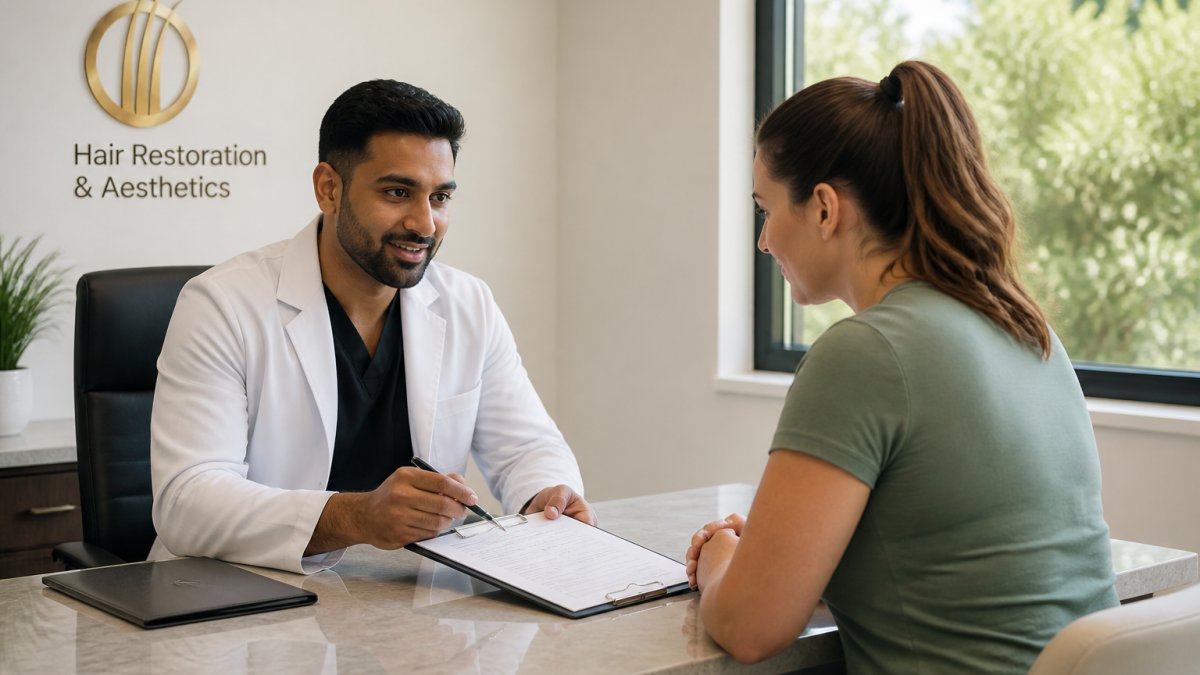
Your first appointment typically lasts 45 to 60 minutes and follows a structured clinical evaluation (the American Academy of Dermatology). Understanding the process ahead removes anxiety and helps you arrive prepared with relevant medical history and hair loss timeline information.
Scalp Analysis and Hair Density Assessment
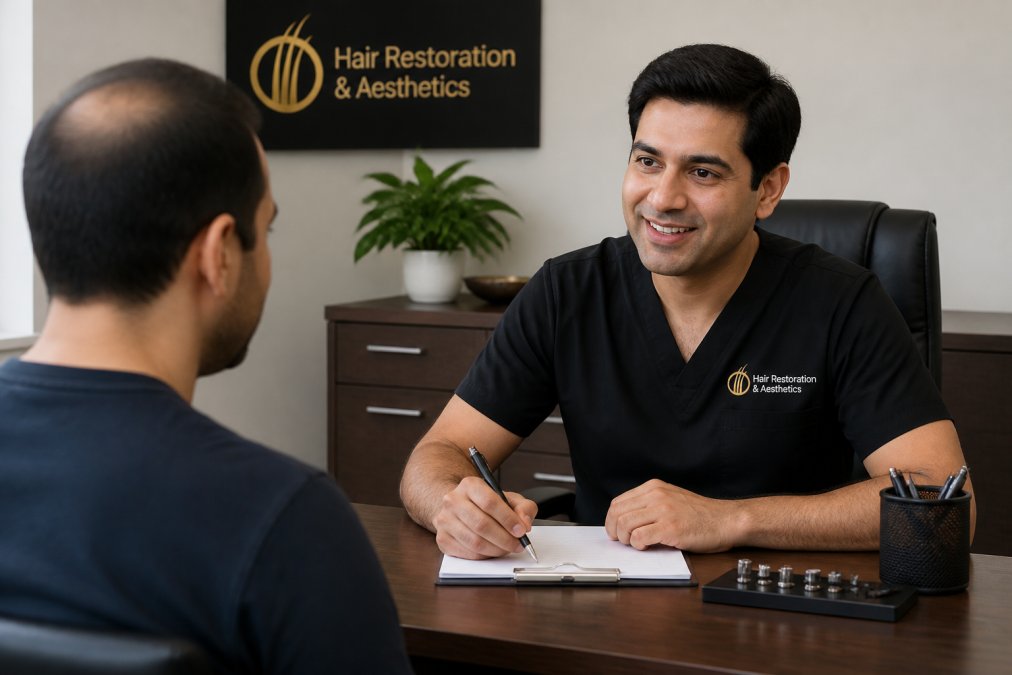
The appointment begins with thorough scalp analysis and hair density assessment. A board-certified physician or trained clinical staff will examine your scalp under proper lighting, often using magnification tools to evaluate hair follicles, scalp health, and hair loss pattern. They'll measure hair density in affected and unaffected areas to understand the scope of thinning.
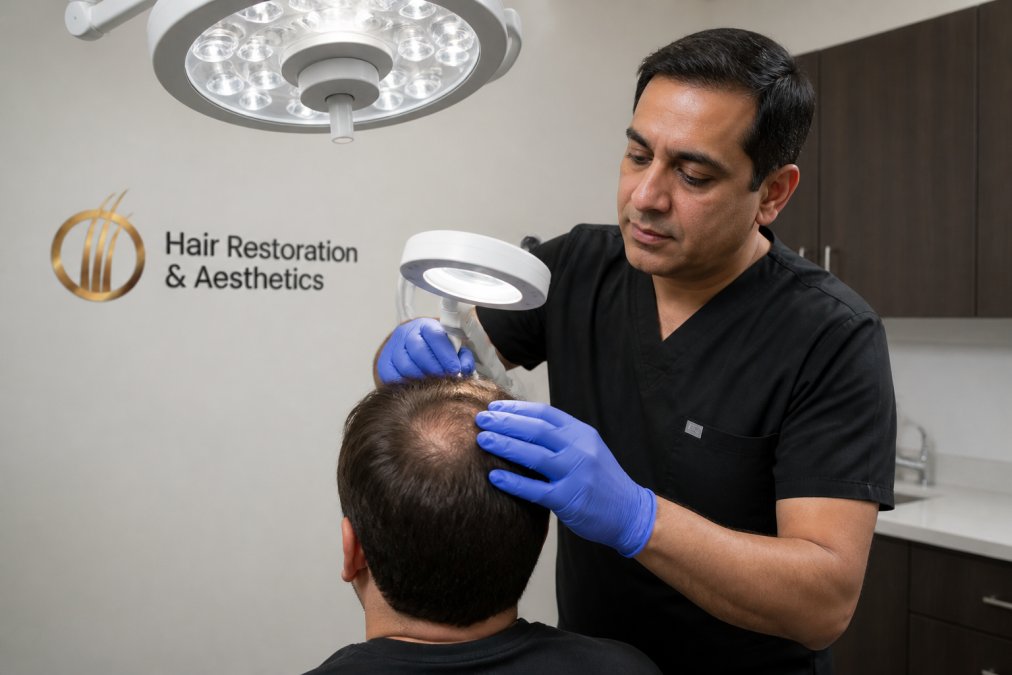
This assessment answers critical questions: Are you experiencing pattern baldness, diffuse thinning, or localized loss? Is your scalp healthy, or are there signs of inflammation affecting hair growth? How much usable donor hair is available if surgical restoration becomes relevant? These details determine which treatment paths are realistic.
Medical History and Alopecia Evaluation
Next comes detailed medical history discussion. The clinical team will ask about family history of hair loss, current medications, scalp conditions, and overall health status. Certain medications contribute to hair thinning, and underlying health conditions sometimes influence treatment decisions.
They'll also discuss your alopecia type, whether you're experiencing androgenetic alopecia (pattern baldness), telogen effluvium (temporary shedding), alopecia areata (patchy loss), or another form. Understanding your specific type is essential because treatment approaches differ significantly. Pattern baldness responds to certain medications and surgical techniques, while temporary shedding might resolve with lifestyle changes or targeted therapies.
Benefits of Follicular Unit Extraction for Natural Results
Follicular unit extraction, commonly called FUE, represents a significant advancement in surgical hair restoration. If your consultation reveals that surgical restoration is appropriate, understanding FUE's benefits helps you evaluate whether it aligns with your goals.
FUE involves harvesting individual hair follicles from donor areas (typically the back and sides of the scalp where hair is genetically resistant to loss) and transplanting them to thinning or bald regions. The procedure creates natural-looking results because it respects the natural grouping and angle of hair growth.
The primary advantage over older strip-harvesting methods is minimal scarring. Individual follicle extraction avoids the linear scar that older techniques produced. For people who prefer shorter hairstyles or want flexibility in how they wear their hair, this makes a meaningful difference.
Another benefit is reduced recovery time. Most people return to normal activities within a week or two, though strenuous exercise should be avoided for several weeks. Transplanted hair begins showing growth within three to four months, with fuller results visible by month six to nine (peer-reviewed research).
Natural appearance is perhaps the most important benefit. When performed by an experienced physician, FUE results look like your own hair because they are your own hair, redistributed to areas where you want density restored. The hairline, density, and overall appearance integrate seamlessly with existing hair.
Hair Restoration Consultation Checklist: How to Prepare
Arriving prepared ensures you get maximum value from your appointment and provide the clinical team with complete information for accurate assessment.
Documentation to Bring
Bring a government-issued photo ID and your insurance card if you have coverage. While many hair restoration treatments fall outside standard insurance, some related services might be covered.
Bring recent photos showing your hair loss progression from one year ago, six months ago, and currently. Photos taken in natural lighting from multiple angles (front, sides, crown) are most useful. If you've tried other hair loss treatments previously, bring documentation or packaging from those products.
Health and Medication Information
Prepare a written list of all medications and supplements you're currently taking, including dosages. Some medications can influence hair health or interact with treatment options.
Write down any previous surgeries or medical procedures you've had, particularly any scalp procedures. Note any allergies, especially to medications or anesthetics. If you have a history of keloid scarring or wound-healing issues, mention this upfront.
Document your hair loss timeline: When did you first notice thinning? Has the loss been gradual or sudden? Are there triggering events you associate with increased loss? This history helps the physician determine whether your loss is chronic pattern baldness or something potentially reversible.
Questions to Ask During Your Hair Transplant Consultation
Asking the right questions transforms a consultation into a genuine dialogue addressing your specific concerns. Write these questions down beforehand so you don't forget them.
Ask about the physician's experience and training. How many hair restoration procedures has the physician performed? What specific techniques do they use? Are they board-certified? These credentials matter because hair restoration requires both surgical skill and artistic judgment.
Ask about realistic expectations for your situation. Based on your hair loss pattern, donor availability, and goals, what density can realistically be achieved? A reputable physician will be honest about limitations, not promise unrealistic results.
Ask about the recovery process in detail. When can you return to work? When can you exercise? When will you see initial growth and full results? Understanding the timeline helps you plan accordingly.
Ask about potential complications or side effects. What's the risk of infection? Could there be permanent numbness? What happens if transplanted hair doesn't grow? Honest discussion of risks demonstrates professional integrity.
Schedule a Free Consultation →
Ask about follow-up care and support. Will you have access to the physician for post-procedure questions? Are there included follow-up appointments? What's the protocol if you have concerns during recovery?
Ask about cost and payment options. Ask how costs are calculated and what's included in the quoted price, and inquire about financing options.
Hair Restoration Recovery Timeline: What You Need to Know
Understanding post-procedure recovery helps you plan realistically and recognize normal healing versus complications. Recovery unfolds in predictable phases, though individual variation exists.
First Two Weeks Post-Procedure
The first two weeks involve the most visible changes and require the most care. Your scalp will be tender and sensitive immediately after the procedure. Swelling is common and typically peaks around day three before gradually subsiding. Redness and scabbing in both donor and recipient areas is normal.
During this phase, you'll receive detailed care instructions. You'll need to be gentle when washing your hair using cool water and mild shampoo. You'll likely need to sleep with your head elevated to minimize swelling. Strenuous activity, heavy sweating, and direct sun exposure should be avoided. Most people can return to desk work within a week.
Months Two Through Six
By week three, most visible signs of the procedure have resolved. The transplanted hair enters a resting phase called telogen, during which transplanted hairs shed. This shedding is completely normal and necessary, the hair follicles are resetting and preparing for new growth.
Around month three, new hair growth begins emerging from the transplanted follicles. This growth is typically fine and light initially, gradually becoming coarser and darker. By month four to six, you'll see noticeable density improvement. By month nine to twelve, results are substantially visible, though hair continues thickening for up to 18 months post-procedure.
During this period, you can resume normal activities including exercise, swimming, and sun exposure (with appropriate sun protection). Your scalp sensitivity decreases significantly.
Customized Hair Restoration Plans and Your Treatment Options
Your consultation concludes with discussion of a customized treatment plan tailored to your specific situation, goals, and preferences. This plan reflects the clinical assessment, your medical history, and realistic expectations.
Surgical vs. Non-Surgical Solutions
The choice between surgical and non-surgical approaches depends on several factors. Non-surgical options include prescription medications (like finasteride or minoxidil) that can slow hair loss and sometimes stimulate regrowth, laser therapies that promote scalp health, and advanced treatments like Alma TED therapy that use acoustic sound waves to stimulate hair follicles and improve scalp circulation (the FDA).
Non-surgical approaches work best for early-stage hair loss or diffuse thinning. They require ongoing commitment to maintain results and are less effective for extensive baldness where follicles have already permanently miniaturized.
Surgical restoration through follicular unit extraction becomes appropriate when non-surgical treatments have reached their limits or when you have significant baldness requiring density restoration. Surgery provides permanent results because transplanted hair retains its genetic resistance to loss.
Many people benefit from a combined approach: surgical restoration to address significant baldness, paired with non-surgical treatments to optimize overall hair health. Your physician will recommend the approach most likely to achieve your specific goals.
Hair Restoration Clinic of Granite Bay works with each patient to develop a plan matching their situation and preferences.
How to Book Your Free Consultation Today
Scheduling your consultation is straightforward and represents zero obligation beyond learning about your options. The consultation itself is free, allowing you to get professional assessment without financial commitment.
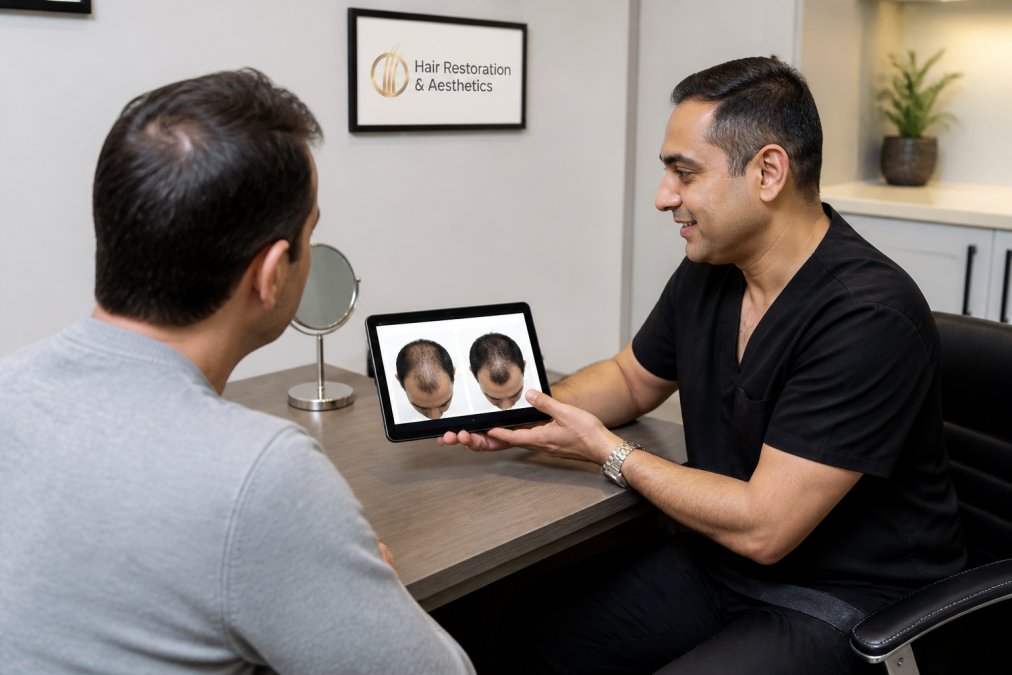
Schedule a Free Consultation with Hair Restoration Clinic of Granite Bay directly by phone or through their website contact form. When you call or submit your information, you'll be asked basic questions about your hair loss to help the clinical team prepare for your appointment.
During the scheduling call, mention any specific concerns or questions you have. This helps the team allocate appropriate time and prepare relevant information. Plan for approximately one hour from arrival to departure.
Your consultation is the foundation for everything that follows. A thorough, honest assessment from a board-certified physician gives you clarity to make the right decision for your situation. The goal isn't to pressure you into a procedure, it's to ensure you understand your hair loss, your realistic options, and what actual results look like for someone with your specific situation.
Taking the first step toward hair restoration starts with understanding what's actually possible for your situation. A professional consultation removes guesswork and provides clarity based on clinical assessment rather than online comparisons or generic advice. Hair Restoration Clinic of Granite Bay offers a free consultation where a board-certified physician evaluates your hair loss, discusses your goals, and outlines realistic treatment options tailored to your needs. Schedule your consultation today to begin your hair restoration journey with expert guidance and honest expectations.
Frequently Asked Questions
What should I bring to my hair restoration consultation?
Bring a valid photo ID, your insurance card if applicable, a list of current medications and supplements, and any medical records related to hair loss or scalp conditions. If you have before photos of your hairline from previous years, those help your physician understand your hair loss progression. Wear your hair in a way that exposes your scalp for accurate assessment. Arrive 10-15 minutes early to complete any intake forms.
How long does a hair restoration consultation usually take?
Your initial consultation typically lasts 30 to 60 minutes. This allows time for a thorough scalp analysis, discussion of your hair loss causes, review of your medical history, and detailed explanation of your treatment options. The physician will assess your donor area, evaluate hair density, and create a customized treatment plan based on your restoration goals and candidacy.
What is the difference between FUE and FUT hair restoration?
Follicular unit extraction (FUE) harvests individual hair grafts directly from the donor area, leaving minimal scarring and allowing shorter recovery times. Follicular unit transplantation (FUT) removes a strip of scalp tissue from the donor area, which is then divided into grafts. FUE typically offers more flexibility for shorter hairstyles and less visible scarring, while FUT can be more efficient for larger restoration projects. Your consultation will determine which approach suits your needs best.
How do I know if I am a good candidate for hair restoration?
Good candidates have stable hair loss, adequate donor hair density, realistic expectations, and overall good health. Your physician will evaluate your scalp health, assess the extent of your alopecia, review your medical history, and discuss your restoration goals. Age, hair type, and the pattern of your hair loss all factor into candidacy. A board-certified physician can determine during your consultation whether surgical, non-surgical, or combination approaches are right for you.
This article was written using GrandRanker