 How-to
10 Signs Stress Is Causing Your Hair Loss in Women
Quick Summary
Yes, stress can cause temporary hair loss in women, usually called telogen effluvium. Stress pushes hair follicles into a resting phase early, so hair sheds more than usual for a few months. Because follicles are typically not destroyed, this stress hair loss often improves once the trigger is removed.
- Stress-related shedding usually appears as diffuse thinning across the whole scalp, not bald patches.
- Shedding often peaks around three to six months after the stressful event.
- Hair often begins to regrow within about six to twelve months as the cycle resets.
- Shedding that is sudden, patchy, painful, or lasts past a year should be evaluated by a doctor.
- Thyroid problems, iron deficiency, and some medications can cause similar shedding.
Table of Contents
- Does Stress Cause Temporary Hair Loss in Women?
- How Stress Affects the Hair Growth Cycle
- Symptoms of Hair Loss Due to Stress
- How Long Stress-Related Hair Loss Lasts
- Will Hair Grow Back After Stress-Related Hair Loss?
- How to Stop Stress-Related Hair Loss
- When to See a Doctor About Shedding and Booking Your Free Consultation
- Frequently Asked Questions
Does Stress Cause Temporary Hair Loss in Women?
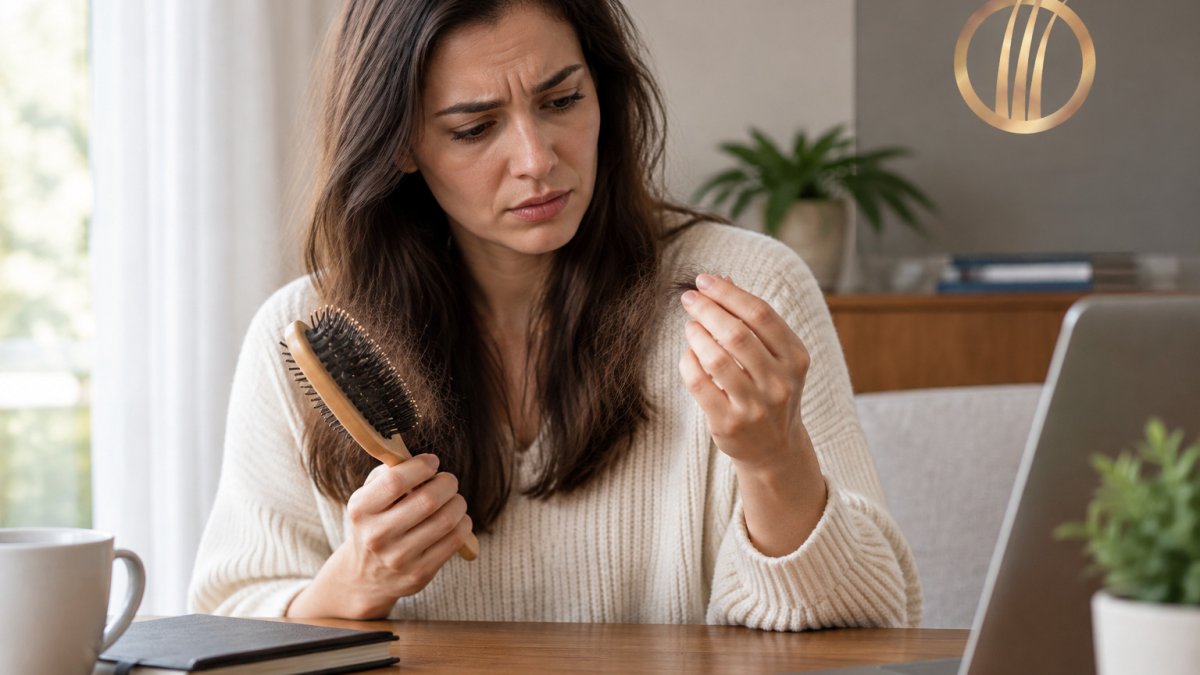
Yes, stress can cause temporary hair loss in women. The condition is usually called telogen effluvium, and it is one of the most common reasons women notice more hair in the shower or on a brush.
The good news is that this type of shedding is typically temporary. The hair follicles are not destroyed. They are pushed into a resting phase earlier than normal, and hair falls out more than usual for a few months.
Stress is not the only possible cause, though. Thyroid problems, iron deficiency, hormonal shifts, and some medications can cause similar shedding. A doctor can help sort out which factor, or combination of factors, applies to you.
How Stress Affects the Hair Growth Cycle
Each hair on your scalp moves through a repeating cycle. The growth phase, called anagen, can last several years. The resting phase, called telogen, lasts a few months. Then the hair sheds and a new one begins to grow.
Under normal conditions, most hairs are in the growth phase at any one time. Significant stress can disrupt this balance. More follicles shift into the resting phase at once, and a larger share of hair sheds together.
- Physical stress: surgery, childbirth, illness, rapid weight loss, or high fever
- Emotional stress: grief, divorce, job loss, or prolonged anxiety
- Chronic stress: long periods of pressure that wear down the body's normal balance
Because the shedding happens later, many women do not connect it to the stressful event right away.
Symptoms of Hair Loss Due to Stress
Stress hair loss usually looks like diffuse thinning across the whole scalp rather than bald patches. Many women notice:
- More hair in the shower drain or on pillows
- A wider part or more visible scalp
- A ponytail that feels thinner than before
- Hair that seems less dense overall
- Shedding that comes out in strands when washing or brushing, rather than in clumps
A common pattern is increased shedding that is spread evenly across the scalp, with the part line widening gradually rather than a single bald spot appearing. The shedding is usually painless, and the scalp itself looks normal.
Signs That Point Away From Stress Alone
Stress is one possible cause, but several other conditions produce similar shedding in women. Comparing the pattern helps you and your clinician narrow it down.
- Female-pattern hair loss (androgenetic alopecia): thinning is concentrated at the part and crown, the hairline is often preserved, and the loss is gradual over years rather than a few months. A family history of thinning is common.
- Iron deficiency: shedding is diffuse and often accompanied by fatigue, shortness of breath with exertion, or unusual pallor. Low iron stores are a frequent contributor in women who menstruate (Iron Deficiency Anaemia).
- Thyroid conditions: both an underactive and an overactive thyroid can cause diffuse shedding, often with weight change, cold or heat intolerance, or changes in energy and mood.
- Postpartum shedding: shedding typically begins about two to four months after delivery and follows the hormonal shift of pregnancy and childbirth rather than an emotional stressor alone.
- Medication-related loss: some prescriptions, including certain blood thinners, acne treatments, and mood medications, can trigger shedding that begins weeks to months after starting or changing a dose.
Red Flags That Deserve Prompt Evaluation
Some signs are not typical of stress-related shedding and should be checked rather than watched:
- Sudden patchy loss or smooth bald spots
- Scalp pain, burning, redness, or scaling
- Hair loss at the eyebrows, eyelashes, or the edges of the scalp
- Shedding that continues or worsens beyond about a year
- Accompanying symptoms such as fatigue, weight change, or cold intolerance
Watch out: assuming every shed is stress-related can delay diagnosis of a thyroid, iron, or autoimmune issue that needs its own treatment. If the pattern does not fit diffuse, painless shedding, get it evaluated. When shedding does not fit the usual stress pattern, it is worth considering whether unexplained tension has another source, and The Natural Flow Method offers a way to reflect on that possibility.
Stress-related shedding and other common causes look different in a few key ways:
| Cause | Typical pattern | Key clue |
|---|---|---|
| Stress (telogen effluvium) | Diffuse thinning across the whole scalp | Shedding begins months after the trigger |
| Female-pattern hair loss | Thinning at the part and crown | Gradual over years; often family history |
| Iron deficiency | Diffuse shedding | Fatigue, shortness of breath, pallor |
| Thyroid conditions | Diffuse shedding | Weight change, cold or heat intolerance |
| Postpartum shedding | Diffuse shedding | Begins about two to four months after delivery |
| Medication-related loss | Diffuse shedding | Begins weeks to months after starting or changing a dose |
How Long Stress-Related Hair Loss Lasts
For most women, stress-related shedding lasts several months. Shedding often peaks a few months after the trigger and then gradually slows as the hair cycle normalizes.
Your individual timeline depends on how severe the trigger was, how long it lasted, and your overall health. Some women see the shedding ease within about six months. Others may take longer, especially if the stressor continues.
A Typical Timeline From Trigger to Regrowth
- Weeks 0 to 2: The stressful event occurs. Nothing visible usually changes yet.
- Months 2 to 3: Hair follicles begin shifting into the resting phase.
- Months 3 to 6: Shedding is most noticeable. Many women see the most hair fall during this window.
- Months 6 to 9: Shedding often slows, and new growth may start to appear at the hairline or part.
- Months 9 to 12 and beyond: Hair density usually improves as regrowth fills in.
Keep a simple log of how much you shed and when. This helps you and your doctor see whether the pattern fits telogen effluvium.
Will Hair Grow Back After Stress-Related Hair Loss?
In most cases, yes. Because the follicles are typically still alive, hair often regrows once the trigger is removed and the cycle resets. Regrowth can be slow, and some women notice finer new hairs at first.
Hair that does not return after about a year, or hair loss that continues or worsens, should be checked by a doctor. Ongoing loss may point to another cause, such as androgenetic alopecia or an autoimmune condition, and these may need different treatment.
How to Stop Stress-Related Hair Loss
You cannot always remove the stressor, and no single step reverses shedding overnight. For a practical guide to keeping hair growth results on track, see how to maintain hair growth results. A useful way to think about it is to separate measures that support general health from treatments that have evidence behind them, then track what actually changes.

Measures That Support General Health
These steps help the body recover and remove common contributors, but they are not guaranteed to speed regrowth:
- Identify your triggers. Write down major stressors and the months they happened so you can match them to the shedding timeline.
- Manage stress. Regular sleep, exercise, and relaxation practices support recovery, though reducing stress does not produce immediate regrowth.
- Eat a balanced diet. Adequate protein, iron, and other nutrients support healthy hair growth. Ask a doctor before starting supplements, since unneeded supplements add cost without benefit and some can interact with medications.
- Be gentle with your hair. Avoid tight hairstyles, harsh heat styling, and aggressive brushing while shedding continues.
- Get checked. Blood tests can rule out thyroid problems, iron deficiency, and other common causes.
Treatments With Evidence Behind Them
A clinician may discuss options that support the scalp environment or hair density while the cycle resets. These are not cures for the underlying trigger, and expectations should be set accordingly:
- Topical treatments prescribed or recommended by a clinician for thinning hair
- Alma TED, a non-invasive acoustic sound wave therapy offered at Hair Restoration Clinic of Granite Bay, which a clinician may discuss for women who want to support visible density during recovery
Whether any of these is right for you depends on your diagnosis and goals, so a professional consultation is the best starting point.
A Simple Tracking Log
A short log helps you and your clinician see whether the pattern fits stress-related shedding: follow a step-by-step recovery plan to reduce stress-driven hair fall.
- Date and trigger: note major stressors and when they occurred
- Daily shed estimate: a rough count of hairs on the pillow, in the shower, or on the brush
- Scalp changes: part width, visible scalp, and any new patches
- Other symptoms: fatigue, weight change, cold intolerance, or medication changes
- Photos: take a monthly photo of the part and hairline under the same lighting
When to Seek Evaluation
Consider booking an evaluation if any of the following apply:
- Shedding is sudden or heavy rather than gradual
- You notice bald patches, scalp pain, or redness
- Shedding continues past about a year or keeps worsening
- You have fatigue, weight change, or cold intolerance alongside the shedding
- You started or changed a medication in the months before shedding began
If you are unsure what is behind your shedding, a Schedule a Free Consultation at Hair Restoration Clinic of Granite Bay can help you talk through your history, options, and next steps with a qualified clinician.
When to See a Doctor About Shedding and Booking Your Free Consultation
See a doctor promptly if you notice sudden or heavy shedding, bald patches, scalp pain or redness, hair loss that continues past about a year, or symptoms such as fatigue, weight change, or cold intolerance. These can signal conditions that need treatment.
If you are unsure what is behind your shedding, a consultation can help. book your free consultation at Hair Restoration Clinic of Granite Bay to talk through your history, options, and next steps with a qualified clinician.
Frequently Asked Questions
How long does stress-related hair loss last?
Stress-related shedding, often called telogen effluvium, usually appears about two to three months after a stressful event and tends to resolve within several months once the trigger has passed. Some women notice shedding continue longer, particularly if stress is ongoing or another factor is involved. Because individual timelines vary, a clinician can help determine whether the pattern fits a temporary stress response or needs further evaluation.
Will hair grow back after stress-related hair loss?
In most cases, hair follicles that enter the resting phase early because of stress return to the growth phase, and regrowth becomes visible over several months. Growth is often gradual, so patience matters. If shedding has continued for an extended period or regrowth does not appear, it is worth discussing the pattern with a dermatologist or other qualified clinician.
What are the symptoms of hair loss due to stress?
Common signs include more hair on the brush, in the shower or on pillows, a general decrease in hair density across the scalp, and a diffuse pattern rather than bald patches. Some women also notice a tingling or tender scalp. Shedding that is sudden, patchy or accompanied by other symptoms should be evaluated, since other causes can look similar.
How can I tell if my hair loss is from stress?
Stress-related shedding typically follows a identifiable stressor, such as illness, surgery, childbirth, a major life change or prolonged emotional strain, and shows up a few months later. Because other causes such as hormonal changes, iron deficiency or thyroid conditions can produce similar shedding, a clinician may review your medical history and run tests before reaching a conclusion.