
 How-to
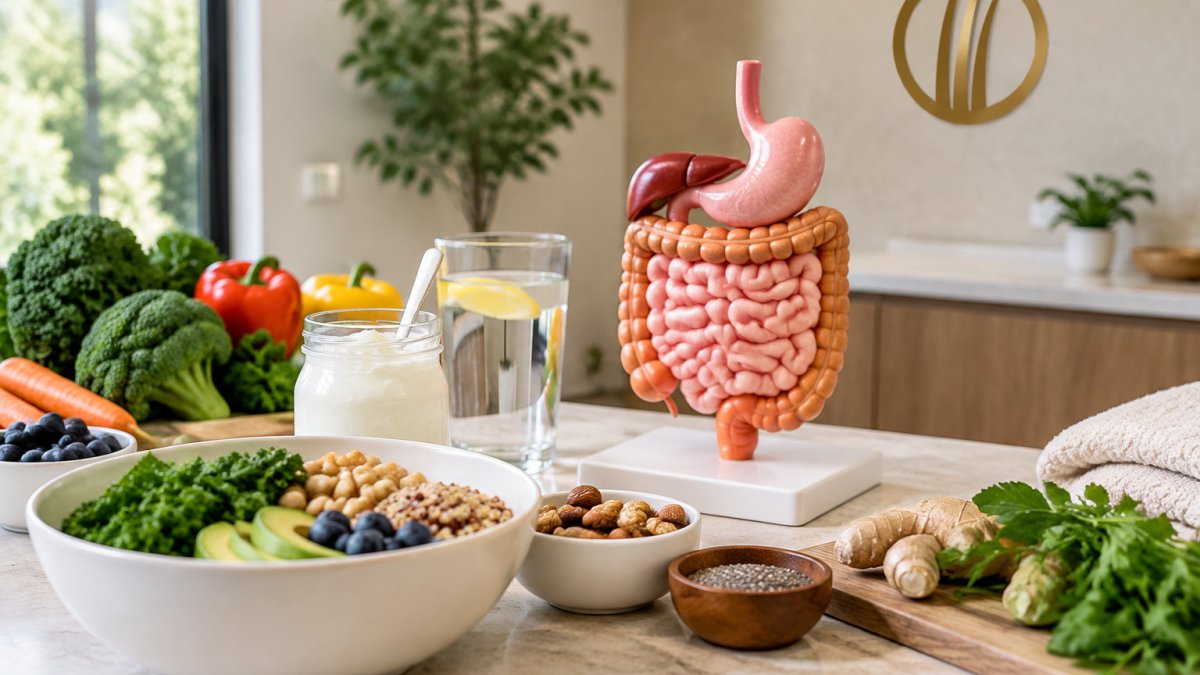
How to Improve Gut Health for Weight Loss Naturally
Last Updated: November 20, 2026
Quick Summary
Gut health can support weight loss by shaping appetite and digestion, but it works best alongside calorie balance, physical activity, sleep and stress management. To improve it naturally, eat more fiber from varied plant foods such as vegetables, beans, whole grains, nuts and seeds, and increase intake slowly.
- Studies link gut bacteria with body weight, but most of the evidence is observational, not proof of cause.
- Add one extra serving of vegetables or beans each day.
- Swap refined grains for whole grains like oats, brown rice or barley.
- Increase fiber over several weeks and drink enough water to avoid bloating.
- Probiotic supplement evidence for weight loss is limited and mixed, so talk with a clinician first.
Table of Contents
- How Gut Health Connects to Weight Loss
- How to Improve Gut Health Naturally with Fiber and Plant Foods
- What to Eat to Improve Gut Health
- How to Improve Gut Microbiome Diversity
- Probiotics, Supplements and Microbiome Testing: What the Evidence Shows
- How Long It Takes to Improve Gut Health and Track Progress
- Booking Your Free Consultation to Build a Weight Plan
- Frequently Asked Questions
How Gut Health Connects to Weight Loss
Gut health can play a supporting role in weight management.
The gut microbiome is the community of bacteria, fungi and other microbes living in the digestive tract. Diet is one of the biggest factors that shapes this community over time.
Keep the limits of current research in mind. Studies link gut bacteria with body weight, but most of that evidence is observational.
- Gut microbes help break down some food that the body cannot digest on its own
- Some studies have observed differences in microbial diversity between people with higher and lower body weight, though results vary
- Diet changes can shift the gut community over time, and lasting changes generally take longer
- Gut health supports weight loss but does not replace it
How to Improve Gut Health Naturally with Fiber and Plant Foods
Fiber is an important nutrient for people interested in digestive health. Fiber passes through the small intestine without being digested, then feeds the bacteria in the large intestine.
Many American adults eat less fiber than recommended dietary guidance suggests. Current federal dietary guidance is available from the Dietary Guidelines for Americans.
Plant variety matters as much as total fiber. Different plant foods feed different gut bacteria, so eating many vegetables, fruits, beans, whole grains, nuts and seeds supports a more varied microbial community.
- Add one extra serving of vegetables or beans each day
- Swap refined grains for whole grains like oats, brown rice or barley
- Include a handful of nuts or seeds in meals and snacks
- Increase fiber over several weeks and drink enough water
What to Eat to Improve Gut Health
Most articles stop at a list of gut-friendly foods. The harder question is how to turn that list into meals that also support a calorie deficit, fit a real budget, and do not cause digestive discomfort. This section does that.
Build the plate in a repeatable order
A gut-friendly, weight-conscious plate follows a simple structure that you can apply without measuring every gram:
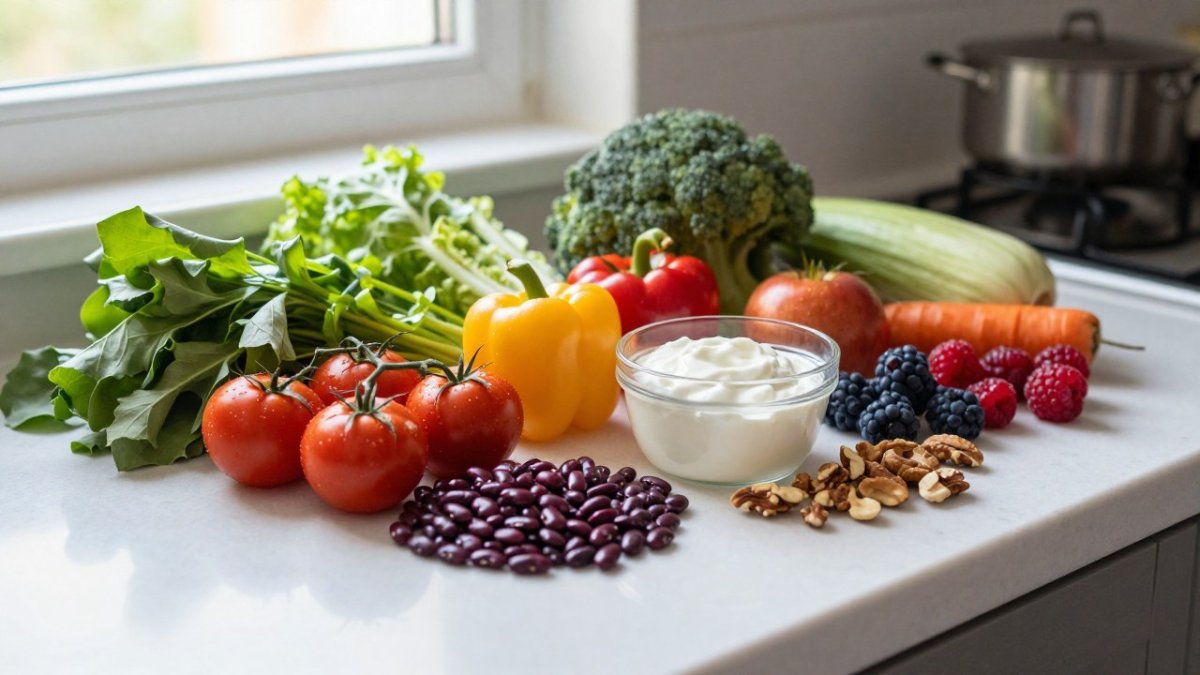
- Half the plate: non-starchy vegetables. Leafy greens, broccoli, cabbage, zucchini, peppers, tomatoes and carrots add volume, fiber and polyphenols for very few calories.
- A quarter: a protein source. Chicken, fish, eggs, tofu, tempeh, plain Greek yogurt or legumes. Protein supports satiety, which matters more than willpower when calories are reduced.
- A quarter: a whole-grain or starchy vegetable. Oats, barley, brown rice, quinoa, potatoes or corn. These carry fermentable fiber that feeds gut bacteria.
- A thumb of healthy fat. Olive oil, avocado, nuts or seeds. Fat slows digestion and helps you feel full, but it is calorie-dense, so portion it rather than free-pour it.
This structure works because it solves two problems at once: it raises fiber and plant variety, and it controls calories through volume and protein rather than through hunger.
A sample day that hits the pattern
This is an illustration of the structure, not a prescription. Adjust portions to your calorie target and preferences.
- Breakfast: Overnight oats made with rolled oats, chia seeds, plain Greek yogurt and berries.
- Lunch: A large salad with chickpeas, mixed greens, cucumber, tomato, olive oil and lemon, plus a whole-grain roll.
- Snack: An apple with a small handful of walnuts, or carrot sticks with hummus.
- Dinner: Baked salmon or tofu, roasted broccoli and peppers, and a scoop of barley or brown rice.
A day built this way typically lands well above the fiber most adults currently eat, includes a dozen or more different plant foods, and stays within a moderate calorie range without relying on packaged diet products.
A budget-conscious shopping list
The most gut-friendly foods are often the cheapest ones. Canned and frozen produce count toward plant variety and fiber just as fresh does, and they cost less and waste less.
- Legumes (canned or dried): lentils, chickpeas, black beans, pinto beans
- Frozen vegetables: broccoli, spinach, mixed peppers, green beans
- Canned tomatoes: a base for soups, stews and sauces
- Whole grains: rolled oats, brown rice, barley, whole-wheat pasta
- Eggs and plain yogurt: inexpensive protein that also supports gut health
Watch out: canned beans and vegetables can be high in sodium, so rinse beans and choose low-sodium or no-salt-added cans where available.
Where ultra-processed foods fit
Ultra-processed foods are not a moral failing, but they tend to be low in fiber, low in fermentable material for gut bacteria, and easy to overeat. The practical move is substitution rather than elimination: swap sugary drinks for water or sparkling water, swap packaged snack bars for fruit and nuts, and swap refined white bread for a whole-grain option when the price is comparable.
Eating habits that support both goals
How you eat matters alongside what you eat. Eating slowly and pausing before second helpings gives satiety signals time to register. Keeping regular meal times supports digestive regularity. And drinking water with high-fiber meals helps fiber do its job rather than causing constipation.
The table below sums up the plate structure and shopping choices described in this section.
| Plate component | Share of plate | Examples |
|---|---|---|
| Non-starchy vegetables | Half | Leafy greens, broccoli, cabbage, zucchini, peppers |
| Protein source | Quarter | Chicken, fish, eggs, tofu, tempeh, Greek yogurt, legumes |
| Whole grain or starchy vegetable | Quarter | Oats, barley, brown rice, quinoa, potatoes |
| Healthy fat | Thumb-sized portion | Olive oil, avocado, nuts or seeds |
| Fermented food | Optional side | Plain yogurt, kefir, sauerkraut, kimchi |
How to Improve Gut Microbiome Diversity
Microbiome diversity refers to how many different types of microbes live in the gut. Researchers continue to study how microbial diversity relates to health, and there is not yet agreement on an ideal level.
Several habits support diversity over time:
- Eating a variety of plant foods each week is one approach people commonly consider
- Choose whole foods over ultra-processed options
- Limit antibiotics to cases where a clinician prescribes them
- Get regular physical activity as part of a broader healthy routine
- Protect sleep as part of a broader healthy routine
A common mistake is chasing one "magic" food. A single food rarely changes the microbiome on its own. Steady variety across weeks and months has a far bigger effect.
Probiotics, Supplements and Microbiome Testing: What the Evidence Shows
Probiotic supplements are popular, but the evidence for weight loss is limited and mixed.
Supplements are not regulated like prescription drugs in the United States (the FDA).
Microbiome testing is available directly to consumers, but the results are hard to act on.
Weight-loss medications and supplements marketed for "gut detox" or "fat burning" often make strong claims with little proof.
How Long It Takes to Improve Gut Health and Track Progress
What the evidence can and cannot tell you
This is the part most articles skip. Some studies have found that the gut microbiome differs between people with higher and lower body weight, and that it can shift when people lose weight. That is an association.
The honest summary is this: diet quality, fiber and plant variety are commonly discussed ways to support digestive health and fit within a weight management plan.
How long changes actually take
Changes in gut bacteria generally develop over time with sustained dietary changes, and they vary widely between individuals. Weight change follows calorie balance over time, not gut bacteria directly, so do not expect the scale to move on the same timeline as your digestion. If you have stopped weight loss injections, read about managing weight loss after stopping injections to learn how to hold your results.
Measures worth tracking, and what each one means
Scale weight is one signal among several. Each of the following is useful, but none is a direct measure of your microbiome:
- Waist circumference: measured at the same point, at the same time of day, about once a week. It reflects changes in abdominal fat that the scale can miss.
- Bowel regularity: frequency and comfort. This is a reasonable proxy for how your diet is affecting digestion, not a readout of gut bacteria.
- Satiety: how long you feel full after meals. Rising fiber and protein intake often improves this, which supports adherence.
- Energy and sleep quality: both influence eating behavior and are influenced by diet.
- How clothing fits: a practical, low-stress check that often moves before the scale does.
Watch out: commercial stool tests are marketed as a window into your microbiome, but results vary between labs, there is no agreed standard for a "healthy" profile, and a test cannot reliably tell you which foods to eat for weight loss. Use them as background interest, not as a plan.
A simple tracking routine
Keep it light enough to sustain. Once a week, record waist circumference, a one-line note on digestion, and a one-line note on energy. Once a month, review the pattern rather than any single reading. Tracking digestion alongside waist and energy can reveal patterns worth discussing with your clinician, and a practical plan for digestion can help you decide which changes to explore next.
When to get medical advice
Some symptoms need prompt attention rather than tracking: blood in the stool, severe or persistent abdominal pain, unexplained weight loss, or ongoing vomiting or diarrhea. Talk with a doctor before major dietary changes if you have diabetes, kidney disease, or a digestive condition such as irritable bowel syndrome, and increase fiber gradually with adequate water to reduce bloating and gas.
Booking Your Free Consultation to Build a Weight Plan
Gut-friendly eating works best as part of a complete plan. Hair Restoration Clinic of Granite Bay offers physician-supervised medical weight management that combines medical weight loss, non-surgical body contouring and metabolic support. A consultation is a good starting point if diet and exercise alone have stalled.
During a free consultation, a clinician can review your history, goals and current habits, then explain which options may fit your situation. You can book a consultation to build a weight plan by calling 916-303-6229 or visiting our office at 8870 Auburn Folsom Road, Suite C, Granite Bay, CA 95746. Those who want a faster nutrient boost alongside diet changes can also learn about IV therapy options offered at the clinic.
Frequently Asked Questions
Can improving gut health help with weight loss?
Gut health can support weight loss indirectly. A diet higher in fiber and diverse plant foods tends to increase fullness and can make a calorie-controlled eating plan easier to follow. Research on the gut microbiome and body weight is still developing, and changes in gut bacteria do not by themselves guarantee weight loss. Improving gut health works best as part of a consistent eating pattern, regular physical activity, adequate sleep and stress management. If weight loss has stalled, a physician can help you review your options.
How long does it take to improve gut health?
Changes in diet can affect digestion within days, such as more regular bowel movements or less bloating, while shifts in gut bacteria typically take several weeks of consistent eating habits. There is no single timeline that applies to everyone, because individual responses vary with age, medications, baseline diet and health conditions. Increase fiber gradually over two to four weeks to limit gas and discomfort. Track how you feel and how your routine holds up, not only the number on the scale.
Do probiotics help with gut health and weight loss?
Some probiotic strains have been studied for digestive symptoms, but evidence that they produce meaningful weight loss is limited and mixed. Probiotic products vary widely in the strains and doses they contain, so a label claim does not guarantee an effect. Fermented foods such as yogurt, kefir and sauerkraut can be part of a varied diet. Talk with a qualified professional before starting a supplement, especially if you take medications or have a medical condition.
What foods support gut health and weight management?
Foods that support gut health are generally high in fiber and varied in plant type, including vegetables, fruits, legumes, whole grains, nuts and seeds. Fiber also feeds beneficial gut bacteria. Limiting ultra-processed foods and sugary drinks can help improve diet quality. Pairing these foods with adequate protein and water supports fullness and a calorie-controlled eating plan. Individual needs vary, so a registered dietitian or physician can tailor recommendations.