 how-to
How to Wash Hair After Follicular Unit Extraction
Last Updated: October 31, 2026
Quick Summary
You do not wash your hair normally for the first three days after follicular unit extraction, because water pressure can dislodge fragile grafts. Rinse with a cup of lukewarm water on days 2-3, then add mild shampoo and patting motions only once your surgeon confirms it.
- Leave the scalp completely alone on day 1: no shower stream, no shampoo, no touching.
- Pour lukewarm water slowly from a cup instead of aiming a showerhead at the grafts.
- Lather shampoo in your hands first, then press flat palms onto the scalp with patting motions only.
- Most patients return to normal showering within one to two weeks once the surgeon confirms grafts are secure.
- Never rub a towel across the recipient area; pat with a soft towel and let the rest air dry.
Table of Contents
- When to Wash Hair After FUE: The First 72 Hours
- How to Clean Scalp After Hair Transplant: Step-by-Step
- Shampoo After Hair Transplant: Which Products and How to Apply
- How to Dry Hair After Hair Transplant Without Disturbing Grafts
- Washing the Donor Area: A Different Set of Rules
- Troubleshooting: Scabs, Itching, and a Loose Graft
- Recovery Milestones and When Normal Showering Resumes
- Book a Free Consultation to Confirm Your Washing Protocol
- Frequently Asked Questions
When to Wash Hair After FUE: The First 72 Hours
The short answer: you do not wash your hair normally for the first three days after follicular unit extraction. Your scalp is covered in tiny, fragile grafts, and water pressure is the enemy.
Here is a general timeline for the first washes after FUE, with the signs that tell you when to move to the next stage. Your surgeon's written instructions always take priority.
Day 1: Keeping the Grafts Undisturbed
Leave the scalp alone. No shower stream on the recipient area, no shampoo, no touching. Your surgeon will tell you whether the graft sites should be covered or left open. If you feel crusting starting, resist the urge to pick. In the first 24 hours the grafts are settling into their new position, and any friction or tug can dislodge them (Graft anchoring in hair transplantation).
Day 2-3: The First Gentle Rinse
Your surgeon will confirm when the first rinse is appropriate, and it is typically done only with a cup or a very low-pressure stream. Fill a cup with lukewarm water and pour it slowly over the scalp.
What you should see after the first rinse: the surface looks damp but the tiny scabs stay in place, and there is no pink or red streaking in the water.
Days 4-7: First Shampoo and Softening Crusts
Your surgeon's protocol will determine when a mild shampoo and pre-wash foam or lotion are added. The foam softens crusts so they lift away on their own instead of being pulled.
The milestone to watch for: by the end of the first week, the crusts should be thinning and lifting at the edges without any picking.
Days 8-14: Transition to Normal Washing
Once your surgeon confirms the grafts are secure, you can return to a normal shower stream, still at low pressure and lukewarm temperature. The first time you wash normally, keep the showerhead off the recipient area and let water run over it indirectly. If you feel stinging or see new bleeding, step back to the cup method for another day or two.
Questions to Ask Your Clinic About Your Washing Start Date
Protocols vary more than most patients expect, so bring these to your follow-up:
- Which day can I first rinse, and which day can I first use shampoo?
- Do you want me to use a foam or lotion before shampoo, and for how many minutes?
- What water temperature and shower pressure do you recommend?
- What signs mean I should stop washing and call you?
- When can I stop using the cup and return to a normal shower?
Write the answers down. Conflicting advice online is common, and having your own clinic's answers in writing removes the guesswork.
How to Clean Scalp After Hair Transplant: Step-by-Step
Cleaning the scalp after a hair transplant means removing crusts and buildup without pulling on grafts. The method is simple: soften, lather, rinse, pat. No scrubbing, no rubbing, no scratching at any point.
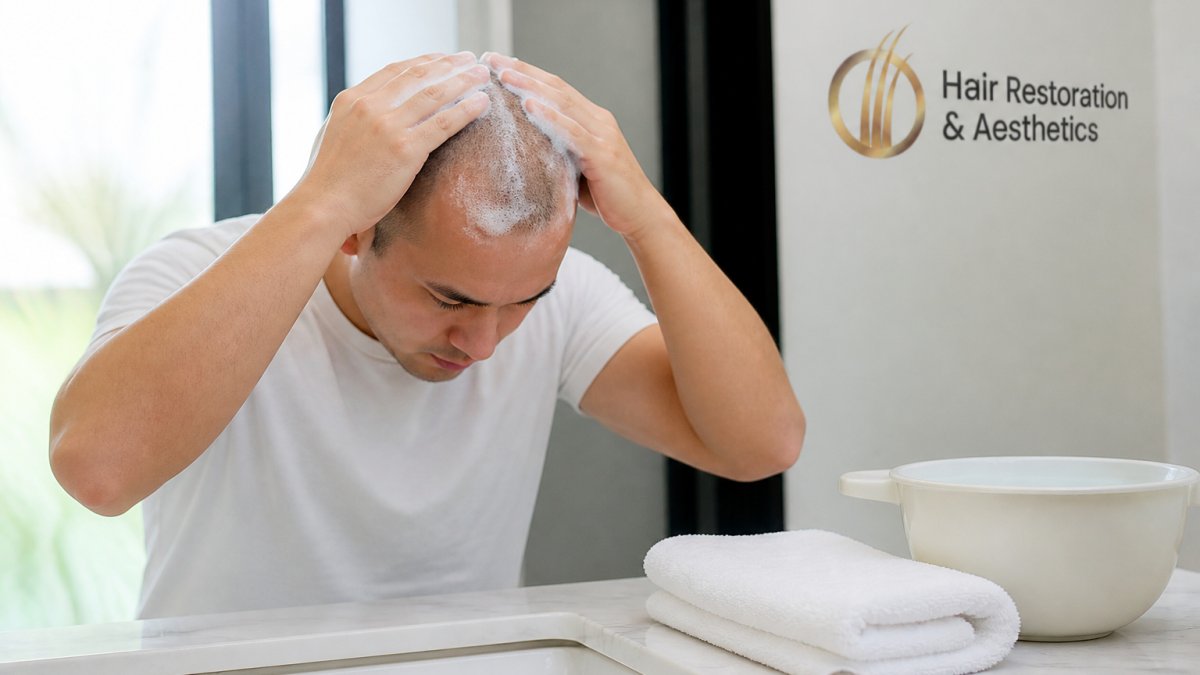
Preparing Your Washing Station
Set up before you touch your head:
- A clean cup for pouring water
- A mild or medical shampoo recommended by your surgeon
- A soft towel
- A mirror so you can see what you are doing
- Lukewarm water only, never hot
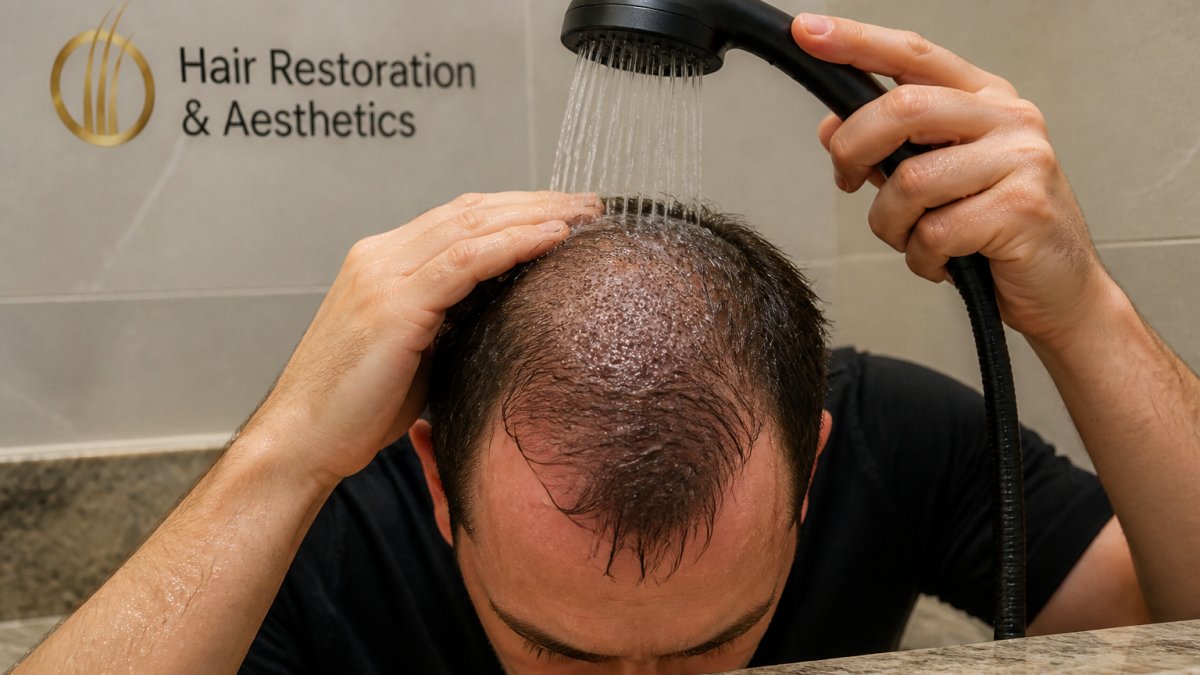
Keep the water pressure low. If your shower has a strong stream, use the cup method instead.
The Palm-and-Pat Method for the Recipient Area
- Pour lukewarm water over the scalp with the cup.
- Put a small amount of shampoo on your fingertips.
- Lather it in your hands first, then press flat palms gently onto the scalp.
- Use patting motions only, never circular rubbing.
- Rinse with the cup, tilting your head so water runs away from the grafts.
- Pat dry with a soft towel. Do not rub.
The whole wash should take a few minutes. Gentle movements matter more than thoroughness in these early days.
Shampoo After Hair Transplant: Which Products and How to Apply
Use a mild or medical shampoo your surgeon approves. Skip anything with strong fragrances, harsh detergents, or exfoliating beads. A simple, gentle formula is the goal, not a shelf full of products.
Foam and Lotion Before Shampoo
Some clinics recommend applying a foam or lotion to the scalp before shampooing in the first week or two. The foam softens crusts so they lift away on their own. Leave it on for the time your instructions specify, then rinse gently. This step does more for graft protection than scrubbing ever could.
Schedule a Free Consultation →
How to Dry Hair After Hair Transplant Without Disturbing Grafts
Drying is where patients undo good washing. Never rub a towel across the recipient area. Instead, pat the scalp with a soft towel and let the rest air dry. A cool setting on a hair dryer, held well away from the head, is fine if your surgeon allows it. Hot air and close contact are not.
Washing the Donor Area: A Different Set of Rules
The donor area at the back of the head heals differently from the recipient area. It usually has small scabs and can feel tender, but it tolerates slightly more contact than the graft sites. Still, treat it gently. Use the same mild shampoo and patting motions, and avoid scratching even when it itches. If you notice bleeding, swelling, or increasing sensitivity, call your clinic rather than waiting it out.
Troubleshooting: Scabs, Itching, and a Loose Graft
Most washing problems after FUE fall into a handful of situations. Here is what to do for each, and when to stop handling it yourself and call your clinic.
Itching Without a Visible Problem
Itching is a normal part of healing, especially in the donor area where scabs tighten as they dry. Do not scratch. Instead, soften the area with the foam or lotion your clinic recommended, rinse with lukewarm water from a cup, and pat dry. Keeping the scalp moisturized with the approved product reduces the urge to scratch.
A Scab That Will Not Lift
Scabs should soften and lift at the edges over the first week to ten days. If one stays firmly attached, keep applying foam and rinsing gently, do not pick, scrub, or use fingernails. A scab that is still attached is protecting the graft underneath. If a scab comes loose on its own during washing, that is usually fine; note whether there is bleeding and mention it at your next visit.
Accidental Graft Contact
If you bump or press the recipient area by accident, stop washing and look at the site in a mirror. A small amount of clear fluid or a tiny spot of blood that stops on its own is common and usually not a problem. Active bleeding that does not stop with gentle pressure, a graft sitting visibly on top of the skin, or a sharp pulling pain are reasons to call your surgeon the same day.
Bleeding During or After Washing
A few drops of blood mixed with water can look alarming but is often minor. Pat the area gently with a clean gauze or soft towel and avoid further washing that day. If bleeding continues, increases, or is accompanied by swelling, contact your clinic immediately.
Pain That Gets Worse Instead of Better
Mild tenderness in the donor area is expected and usually eases over the first week. Pain that increases, throbs, or is accompanied by redness, warmth, or fever is not normal post-wash soreness and should be reported to your surgeon promptly.
Washing When You Have No Help
If you live alone or have limited mobility, set up a station before you start: a cup, a handheld showerhead if you have one, a mirror at eye level, and a soft towel within reach. Wash sitting on a shower stool if standing is difficult, and keep the water pressure low.
For broader guidance on healing after cosmetic procedures, see our post-operative care tips. Watch out: scratching an itchy donor area can reopen scabs and slow healing, so keep fingernails away from the scalp entirely.
Recovery Milestones and When Normal Showering Resumes
Most patients return to normal showering within one to two weeks, once their surgeon confirms the grafts are secure. Until then, keep using low water pressure and gentle rinsing. Our week-by-week FUE recovery timeline shows how washing fits into the full healing process and what to expect next.
| Stage | Washing Method | What to Avoid |
|---|---|---|
| Day 1 | No washing | Water, touching, pressure |
| Day 2-3 | Cup rinse only | Shower stream, shampoo |
| First week | Foam plus gentle shampoo | Rubbing, scratching, hot water |
| Week 2+ | Normal showering once cleared | High-pressure water on grafts |
Book a Free Consultation to Confirm Your Washing Protocol
Every surgeon's aftercare instructions differ, and conflicting advice online is common. Bring your questions to a consultation so you leave with a protocol built for your scalp. You can also explore hair restoration services to learn about the treatments available. You can Schedule a Free Consultation with our team, or read our guide to the questions to ask your hair transplant surgeon before you go.
Frequently Asked Questions
How do you wash your hair after FUE?
Wait for your surgeon's go-ahead, usually around day 2 or 3. Wet the scalp with lukewarm water at low pressure, apply a mild shampoo to your palms, and pat it gently over the recipient area without rubbing. Rinse with a cup or your hands, then pat dry with a soft towel. Avoid hot water, high-pressure shower streams, and any scrubbing until the scabs have healed.
What shampoo should you use after follicular unit extraction?
Use a mild, fragrance-free shampoo recommended by your clinic for the first two weeks. Avoid medicated or anti-dandruff shampoos unless your surgeon approves them, because they can irritate healing skin. Apply the shampoo to your palms first, lather lightly, and pat it onto the scalp rather than pouring it directly onto the grafts. Follow your clinic's specific product list.
What should you do if a graft comes loose while washing?
Do not try to reinsert it or pick at the area. Stop washing, pat the spot dry gently, and contact your clinic the same day with a photo. A small amount of bleeding or a loose crust can happen, but your surgeon needs to assess whether the graft is viable. Most clinics will advise you to leave the area alone and continue gentle care.
When can you wash your hair normally after a hair transplant?
Most clinics clear patients for normal showering once the scabs have softened and fallen away, often around day 10 to 14. Until then, keep water pressure low and avoid rubbing the recipient area. After clearance, you can return to your regular shampoo and routine, but continue to avoid harsh scrubbing or hot water for a few more weeks.
Washing your hair after a transplant feels risky, but the right protocol makes it routine. If you want clarity on your own recovery plan, our board-certified physician and team are here to help. Get started with Hair Restoration Clinic of Granite Bay and book a free consultation to confirm your washing protocol with confidence.