 how-to
What Is Acoustic Sound Wave Therapy for Hair?
Table of Contents
- What Acoustic Sound Wave Therapy Is
- How Sound Waves Are Thought to Affect the Scalp
- What the Evidence Says for Hair Loss and Regrowth
- How an Alma TED Hair Restoration Session Is Performed
- Who Is and Isn't a Good Candidate
- Non-Invasive Hair Loss Treatment Compared With Established Options
- Recovery Time, Risks and Questions to Ask Your Provider
- Frequently Asked Questions
Last Updated: October 28, 2026
What Acoustic Sound Wave Therapy Is
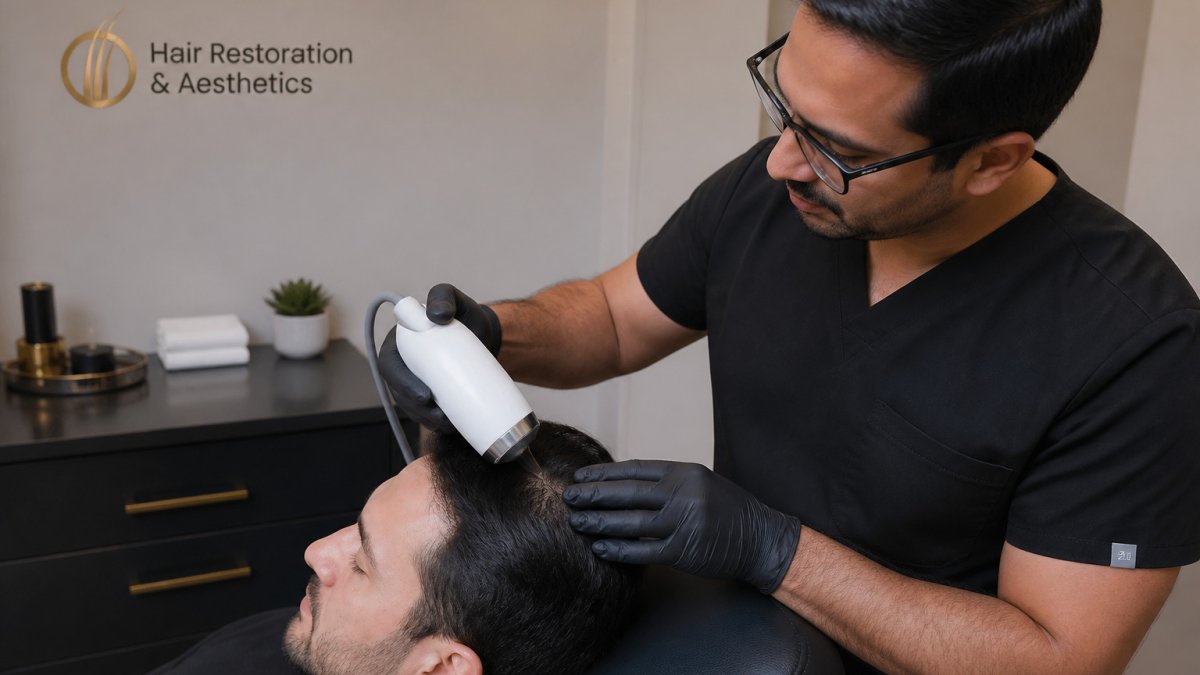
If you are wondering what is acoustic sound wave therapy for hair, it is a non-invasive treatment that delivers pressure waves to the scalp. The waves travel through the skin without needles or incisions.
At Hair Restoration Clinic of Granite Bay, we offer this approach using the Alma TED system.
- Non-invasive: no needles, cuts or stitches
How Sound Waves Are Thought to Affect the Scalp
We think it's fair to say the science is promising but not settled. Anyone who promises a guaranteed result is overstating what the current evidence shows.
What the Evidence Says for Hair Loss and Regrowth
What the early studies generally report is modest improvement in hair density and hair diameter in androgenetic alopecia, with some patients also noting reduced shedding. These are encouraging signals, not proof. A common pattern in the literature is that results are heterogeneous: some participants improve, some stay flat, and a few see no change at all. That variability is exactly why a consultation and a baseline assessment matter more than a marketing claim.
How outcomes are actually measured
- Patient-reported outcomes, validated questionnaires, useful but subjective
Realistic timelines
Hair grows roughly half an inch per month, and the follicular cycle runs in phases measured in months. That biology sets the clock for any treatment. Most practitioners judge acoustic wave therapy over a course of sessions spanning several months, with a first meaningful comparison at around three to six months and a fuller picture closer to six to twelve. Anyone promising visible regrowth in a few weeks is overselling.
What the evidence does not show
If you want to see how this fits alongside other options, our best hair restoration options guide walks through the alternatives.
How an Alma TED Hair Restoration Session Is Performed
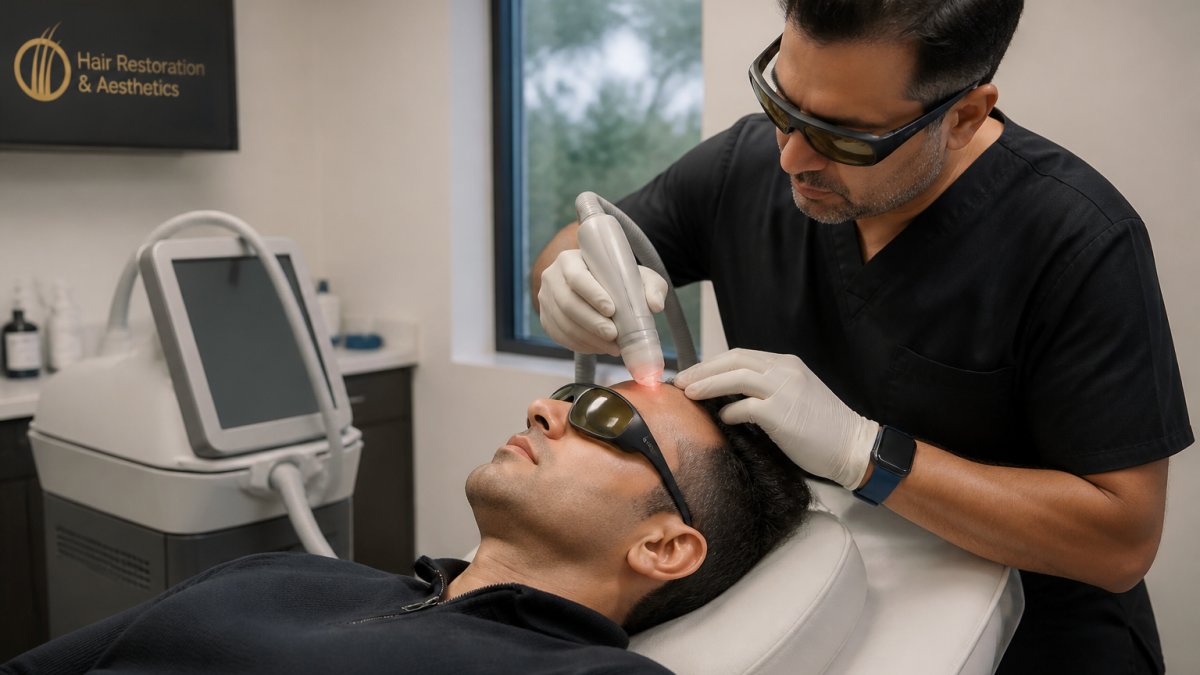
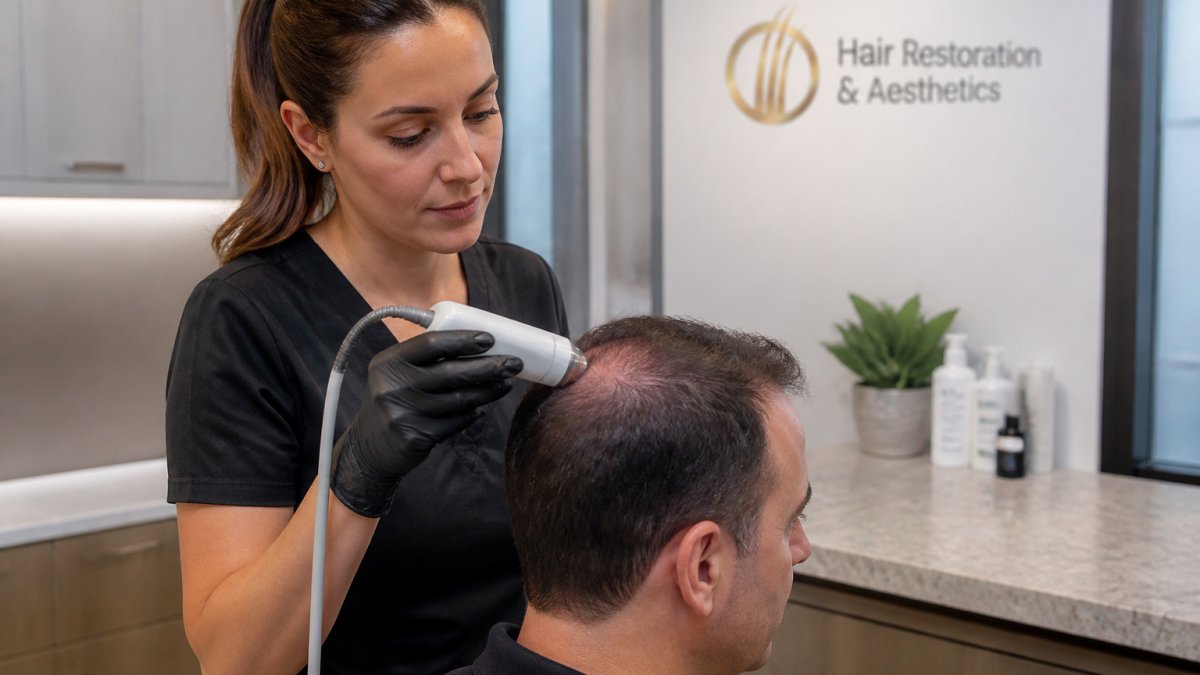
A patient seated in a bright treatment room while a clinician gently places a handheld device against the crown of the scalp. The session is usually brief, and most patients describe the sensation as a tapping or pressure feeling.
Who Is and Isn't a Good Candidate
If you'd like to talk through your options, you can Schedule a Free Consultation.
Schedule a Free Consultation →
Non-Invasive Hair Loss Treatment Compared With Established Options
Acoustic wave therapy is one choice among several, and the right pick depends on the cause and pattern of your hair loss. Here is how the main options stack up on the factors patients actually weigh: invasiveness, downtime, strength of evidence, and typical use.
| Option | Invasiveness | Downtime | Evidence Strength | Typical Use |
|---|---|---|---|---|
| Acoustic wave therapy (Alma TED) | Non-invasive | Minimal, return to routine same day | Early, small studies; promising but not definitive | Early to moderate pattern thinning; patients wanting a needle-free option |
| Topical minoxidil | Non-invasive | None | Well studied, large trials | Broad use in common pattern hair loss; requires ongoing use |
| Oral finasteride (men) | Non-invasive (prescription) | None | Well studied, large trials | Male pattern hair loss; requires prescription and monitoring |
| Platelet-rich plasma (PRP) | Minimally invasive (injections) | A day or two of scalp tenderness | Moderate; growing but mixed | Adjunct for pattern thinning; involves blood draw and injections |
| Hair transplantation (FUE) | Surgical | Days to weeks | Well established | Stable, permanent loss, especially in donor areas |
How to read the trade-offs
- Medication has the strongest evidence but requires consistent, ongoing use, stopping typically reverses gains, and oral options carry side-effect considerations that warrant a medical review.
- PRP adds growth-factor support but involves injections and repeated visits, and results vary between patients.
- Transplantation offers the most durable result for suitable candidates but is surgical, has real recovery time, and depends on having adequate donor hair.
- Acoustic wave therapy sits at the low-risk, low-downtime end. Its appeal is the needle-free, no-downtime experience; its limitation is that the evidence is earlier-stage than medication or surgery.
Recovery Time, Risks and Questions to Ask Your Provider
Bring these questions to your appointment:
- What side effects should I watch for after a session?
Frequently Asked Questions
What is acoustic sound wave therapy for hair?
Hair Restoration Clinic of Granite Bay offers non-invasive Alma TED acoustic sound wave therapy for hair health. Schedule a consultation to discuss whether it may be appropriate for you.
How many sessions are typically required?
The supplied information does not specify a session count or schedule. Schedule a consultation to discuss your questions about Alma TED.
Who is a good candidate for non-invasive hair restoration?
Schedule a consultation with a qualified professional to discuss whether Alma TED may be appropriate for you.
What is the recovery time for non-invasive hair loss treatment?
Hair Restoration Clinic of Granite Bay offers non-invasive Alma TED acoustic sound wave therapy. Schedule a free consultation to discuss questions about the treatment.
Acoustic sound wave therapy is a promising, non-invasive option for some people with hair loss, but the evidence is still developing. The best next step is an honest conversation with a qualified provider about your hair history and goals. Schedule a free consultation to learn whether this approach fits your situation.