 how-to
Fractional Laser Recovery Time: What to Expect Week by Week
Last Updated: October 23, 2026
Quick Summary
Fractional laser recovery typically takes one to two weeks for the skin's surface to heal, while redness and sensitivity can linger for several weeks. Downtime usually lasts a few days to a week, and complete recovery with collagen remodeling can take several weeks to months.
- Swelling often peaks around 48 to 72 hours, especially around the eyes and lower face.
- Crusting and peeling are usually done by week two, though skin stays pink and sensitive.
- Wait about one week before applying makeup, once crusting and peeling have resolved.
- Fractional CO2 lasers often cause one to two weeks of surface healing and several weeks of redness.
- Call your provider for spreading warmth, pus, fever, blistering, or worsening pain.
Table of Contents
- How Long Is Fractional Laser Recovery Time?
- Fractional CO2 Laser Healing Stages: A Day-by-Day Timeline
- What Recovery Looks Like and Feels Like: Redness, Swelling, and Crusting
- Fractional Laser Aftercare: Gentle Cleansing, Moisturizer, and Sun Protection
- When Can I Wear Makeup After Fractional Laser?
- Fractional Laser Results Timeline: When Skin Looks Healed vs. Fully Recovered
- Recovery by Treatment Type, Intensity, and Skin Area
- Warning Signs and When to Call Your Provider
- Frequently Asked Questions
How Long Is Fractional Laser Recovery Time?
Fractional laser recovery typically takes one to two weeks for the skin's surface to heal, while redness and sensitivity can linger for several weeks. At Hair Restoration Clinic of Granite Bay, we tell patients to think in stages, not a single date. The full fractional laser recovery arc runs longer than most people expect.
Fractional laser resurfacing is a skin treatment that creates tiny columns of controlled injury in the skin, prompting it to rebuild collagen. Because only a fraction of the surface is treated at once, healing moves faster than fully ablative lasers. Still, "faster" is not "instant."
Here is the part most guides skip: recovery is not one timeline. It is three.
Downtime vs. Surface Healing vs. Complete Recovery
These three terms get used interchangeably. They should not be.
- Downtime: the days you cannot work or socialize normally. Usually a few days to a week.
- Surface healing: when crusting and peeling stop and skin feels intact. Often one to two weeks.
- Complete recovery: when redness fades and collagen remodeling finishes. This can take several weeks to months.
Confusing these is why people feel behind schedule. You are not healing slowly. You are measuring the wrong milestone.
Fractional CO2 Laser Healing Stages: A Day-by-Day Timeline
Fractional CO2 laser healing stages follow a predictable arc, but the day markers are ranges, not appointments.
Day 1-2: The open-wound phase. Immediately after treatment the skin feels like a moderate sunburn, warm, tight, and sensitive.
Day 3-5: Bronzing and crusting. The treated skin darkens into a bronze or copper tone as the columns dry and small crusts form. This is not pigmentation, it is dried serum and dead surface cells.
Day 6-10: Peeling and flaking. Crusts begin to lift and flake away, revealing pink, fresh skin underneath. Some patients describe it as a sunburn peeling in small dots rather than sheets.
Week 2: Surface healing completes. For most patients, crusting and peeling are done and the skin feels intact, though it remains pink and sensitive.
Week 3-6: Redness fades. Pinkness gradually softens, though it can persist longer in fair skin, in patients who had deeper settings, or on areas like the neck and around the eyes.
Month 2-3: Collagen remodeling continues. The surface looks normal, but the deeper work, new collagen and elastin, keeps refining texture and tone for weeks to months.
Your provider's specific instructions should guide each stage. The American Academy of Dermatology's guidance on laser resurfacing is a useful reference for general expectations.
Here is the healing sequence most practitioners walk patients through, with what is happening in the skin at each stage.
| Stage | What happens | Timeframe |
|---|---|---|
| Open-wound phase | Sunburn-like warmth, pinpoint bleeding, swelling builds | Day 1-2 |
| Bronzing and crusting | Skin darkens bronze, small crusts form, swelling peaks | Day 3-5 |
| Peeling and flaking | Crusts lift and flake, pink skin revealed, itching common | Day 6-10 |
| Surface healing completes | Crusting and peeling done, skin intact but pink | Week 2 |
| Redness fades | Pinkness gradually softens, sun protection critical | Week 3-6 |
| Collagen remodeling | New collagen and elastin refine texture and tone | Month 2-3 |
What Recovery Looks Like and Feels Like: Redness, Swelling, and Crusting
Redness, swelling, warmth, and crusting are the normal signs of a healing skin barrier. None of them mean something went wrong. They mean the treatment is working.
Expect a sunburn-like sensation for the first day or two. Swelling is usually mild and eases within a few days. Treated skin may feel tight and sensitive to touch.
Then comes the phase people find unsettling: bronzing, peeling, flaking, and small crusts. This is dead surface skin shedding. Resist the urge to pick at it.
If redness feels intense or you want practical tips, read our guide on how to reduce redness after laser treatment. It covers simple steps that help calm post-treatment skin.
Fractional Laser Aftercare: Gentle Cleansing, Moisturizer, and Sun Protection
Fractional laser aftercare comes down to three habits: gentle cleansing, steady moisturizer, and strict sun protection. Get these right and healing tends to go smoother.
Schedule a Free Consultation →
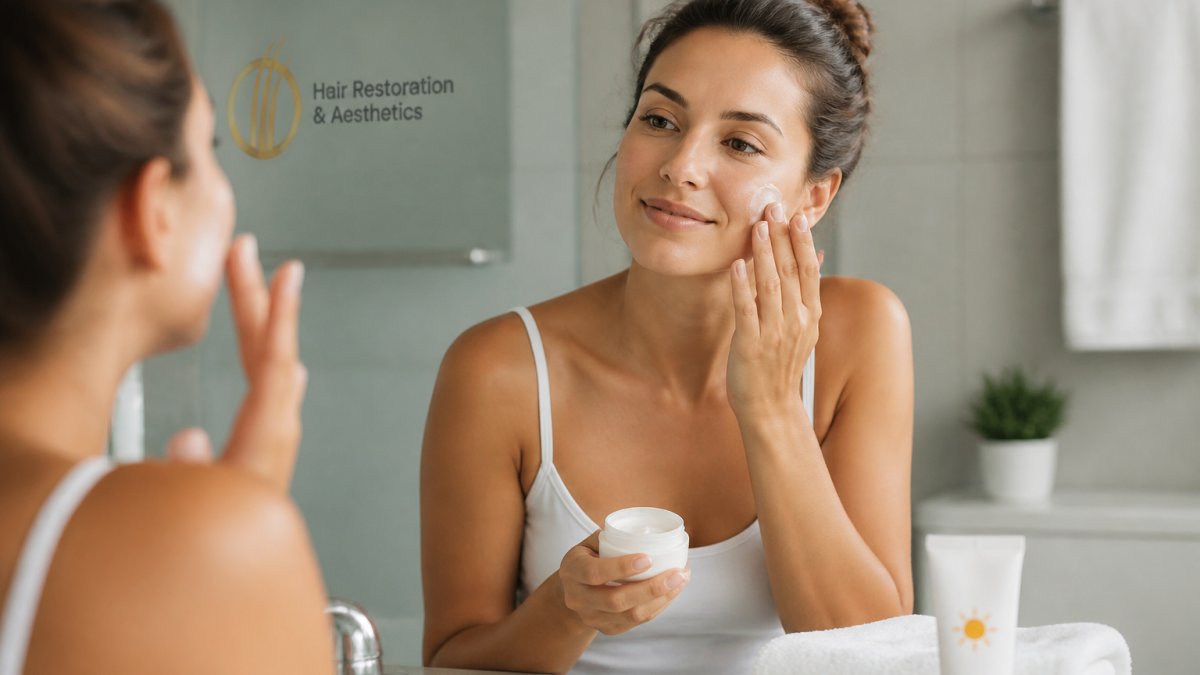
- Cleanse gently. Use a mild cleanser and lukewarm water. Pat dry, do not rub.
- Moisturize often. A plain, fragrance-free moisturizer supports the skin barrier. Apply it more than you think you need.
- Protect from the sun. Sunscreen is non-negotiable during healing. UV exposure can worsen redness and cause dark spots.
Good preparation matters too. Our guide on how to prepare for laser facial treatment explains what to do before your session so recovery starts on the right foot.
When Can I Wear Makeup After Fractional Laser?
Most providers advise waiting until the skin's surface has healed before applying makeup, often around one week. The exact timing depends on how quickly your crusting and peeling resolve.
The reason is simple. Makeup traps bacteria and can irritate skin that is still open. Applying it too early may raise the risk of irritation or breakouts in treated areas.
When you do return to makeup, start with clean brushes and gentle, fragrance-free products. Remove it carefully at night. If your skin reacts, pause and give it more time.
Fractional Laser Results Timeline: When Skin Looks Healed vs. Fully Recovered
Skin often looks healed within one to two weeks, but full fractional laser recovery takes longer. The visible surface may look normal while redness and collagen remodeling continue underneath.
Think of it as two separate finish lines:
- Looks healed: crusting and peeling are gone, skin feels intact.
- Fully recovered: redness has faded and skin texture and tone have settled into their final result.
Collagen building is a slow process. Texture improvements often keep developing for weeks after the surface looks normal. Patience here pays off.
Recovery by Treatment Type, Intensity, and Skin Area
Recovery time is not a single number because three different clocks are running at once: downtime (when you can return to work and social life), surface healing (when crusting and peeling stop), and complete recovery (when redness fades and collagen remodeling finishes). Each clock moves at a different speed depending on the laser, the settings, and where on the body you were treated.
Fractional vs. fully ablative. A fully ablative laser removes the entire surface layer in one pass, which typically means a week or more of open, weeping skin and a longer redness phase.
CO2 vs. erbium. Fractional CO2 lasers deliver deeper heat and typically produce more pronounced crusting and longer-lasting pinkness, often one to two weeks of surface healing and several weeks of redness. Fractional erbium lasers are more superficial, with less heat and often faster surface healing, though they may require more sessions to reach the same result. Neither is "better"; they trade intensity for recovery.
Settings and depth. Within the same device, higher energy, greater density, and more passes mean more injury and longer recovery. A light fractional treatment for early sun damage may heal in three to five days; an aggressive resurfacing session for scarring can take two weeks or more of surface healing.
Body area. Skin thickness and movement vary across the face and body. The forehead and cheeks tend to heal predictably; the skin around the eyes is thin and swells more; the neck and chest are more delicate and can stay pink longer; the hands and body heal on their own schedule.
Individual factors. Your skin type (especially darker Fitzpatrick types, which carry a higher risk of post-inflammatory hyperpigmentation), age, medical history, medications (including isotretinoin and blood thinners), smoking status, and how closely you follow aftercare all shape your timeline.
A treatment plan built for your skin, like the laser facial treatments we offer, accounts for these factors rather than applying a universal timeline.
Warning Signs and When to Call Your Provider
Most recovery is uneventful, but some signs warrant a call to your provider. Trust your instincts if something feels off.
Watch for:
- Signs of infection, such as spreading warmth, pus, or fever
- Blistering or worsening pain
- Redness or swelling that increases after the first few days
- Any reaction that concerns you
If you are unsure about discomfort during healing, our article on whether laser skin resurfacing is painful explains what sensations are normal. For anything that worries you, schedule a free consultation so we can assess your skin directly.
Frequently Asked Questions
How long does it take to recover from fractional laser treatment?
Most people see surface healing in about one to two weeks, with redness and sensitivity fading over several weeks. Fractional laser recovery time depends on the treatment type and intensity: non-ablative sessions often involve a few days of pinkness, while ablative fractional CO2 laser resurfacing typically means seven to fourteen days of visible healing before skin looks normal. Complete recovery, when redness fully resolves and skin feels like your own again, can take several weeks to a few months. Your provider can give a more personal estimate based on your settings and skin.
What is the worst day after fractional laser treatment?
For many patients, days two and three are the most uncomfortable. Swelling, warmth, tightness, and a sunburn-like sensation tend to peak then, and pinpoint bleeding or small crusts may appear as the treated skin begins to heal. By the end of the first week, most of the surface irritation has calmed and crusting starts to flake away. If you are planning time off work, many people choose to schedule treatment before a long weekend or a few days at home to cover this peak discomfort period.
When can I wear makeup after fractional laser?
Wait until the treated skin has closed and any crusting or flaking has resolved, which usually takes about five to seven days for lighter treatments and up to ten to fourteen days for deeper fractional CO2 laser resurfacing. Applying makeup over open or irritated skin can trap bacteria and slow healing. When you do return to makeup, use clean brushes and gentle, fragrance-free products, and remove everything thoroughly at night. Ask your provider to confirm your skin is ready before restarting your usual routine.
Does recovery time vary between fractional laser treatments?
Yes. Non-ablative fractional lasers such as Fraxel and Erbium treatments typically involve less downtime, with redness and sensitivity lasting a few days to a week. Ablative fractional CO2 laser resurfacing removes the outer skin layer and usually means one to two weeks of visible healing plus several weeks of pinkness. Settings, the number of passes, and the area treated also matter: delicate areas like the neck and around the eyes often heal more slowly than the cheeks. Your provider can tailor the plan to your schedule and skin.
Fractional laser recovery rewards patience and good aftercare more than any single product. If you are planning treatment and want a plan built around your skin, Hair Restoration Clinic of Granite Bay offers board-certified care from Dr. Piyush Kumar, MD, with over a decade of experience and FDA-approved technology. Get started with a free consultation and a recovery plan tailored to you.