 how-to
How to Prepare for Laser Facial Treatment
Table of Contents
- Why Preparation Matters for Laser Facial Results
- What to Avoid Before Laser Treatment
- Can You Use Retinol Before Laser Treatment
- Pre-Treatment Skincare Routine
- Laser Facial Consultation Questions to Ask
- Your Laser Facial Appointment Checklist
- What to Expect During and After Treatment
- Frequently Asked Questions
Last Updated: October 9, 2026
Why Preparation Matters for Laser Facial Results
To prepare for laser facial treatment properly is one of the most important steps in the process.
When you prepare for laser facial treatment properly, your skin is in the best condition to respond.
The laser targets specific layers of skin.
What to Avoid Before Laser Treatment
Certain habits and products can compromise your skin's readiness. Knowing what to skip protects your skin and maximizes results.
Sun Exposure and Tanning
Sun exposure is the biggest mistake people make before a laser facial.
Skip these for at least 2 weeks before your appointment:
- Direct sun exposure without SPF
- Tanning beds
- Self-tanning products
- Spray tans
Sunburned skin is especially risky. If you have sunburn, redness, or peeling, tell your provider immediately, you may need to reschedule until your skin heals.
Even incidental exposure matters. Wear SPF 30 or higher daily before treatment to protect your skin and keep your baseline tone consistent (the American Academy of Dermatology).
Certain Medications and Supplements
Some medications make skin more sensitive to laser energy; others increase bleeding or slow healing. Check with your provider about anything you take regularly.
Common medications to discuss:
- Accutane (isotretinoin), typically requires waiting 6-12 months after finishing
- Retinoid prescriptions, usually need to pause 3-7 days before
- Blood thinners, may increase bruising and bleeding
- Antibiotics like doxycycline, can increase photosensitivity
Don't stop prescribed medications without talking to your doctor. Tell your laser provider what you take so they can adjust settings or recommend a pause.
Herbal supplements matter too, St. John's Wort, ginger, and turmeric can increase sensitivity or bleeding. Bring your bottles to your consultation for review.
Aggressive Skincare Treatments
Your skin needs a break before laser treatment. Aggressive skincare in the week prior can leave your barrier compromised and sensitive.
Pause these treatments for 5-7 days before your appointment:
- Chemical peels
- Microdermabrasion
- Aggressive exfoliation (physical scrubs)
- Waxing or threading
- Any new skincare products you haven't used before
The goal is to let your skin recover from irritation. Stressed skin makes the laser feel more intense and recovery longer.
Can You Use Retinol Before Laser Treatment
This is one of the most common questions we hear. The answer depends on timing and strength.
Retinol and retinoids increase cell turnover, make skin more sun-sensitive, and temporarily thin the barrier.
Here's the practical timeline:
- Prescription retinoids (tretinoin, adapalene, tazarotene): pause 3-7 days before treatment
- Retinol serums and creams: pause 3-5 days before treatment
- Retinaldehyde or weaker retinoids: pause 2-3 days before treatment
- Resume after treatment: wait 5-7 days after your appointment before restarting
Exact timing depends on your retinoid's strength and how your skin responds. Your provider will give specific instructions at your consultation.
Many worry they'll lose progress by pausing retinol.
Pre-Treatment Skincare Routine
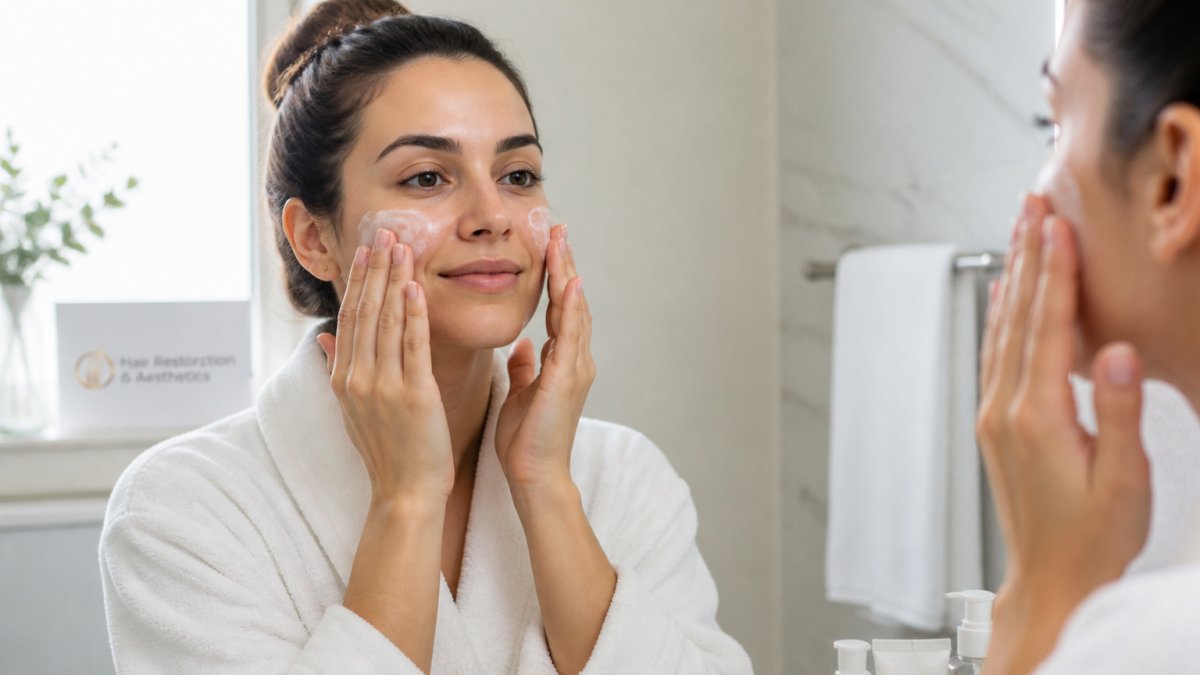
The week before your laser facial, simplify your routine dramatically. Less is more, but it needs to be the right things.
Your pre-treatment routine should include:
- A gentle cleanser (non-foaming, sulfate-free)
- A barrier-repair moisturizer
- Sunscreen SPF 30 or higher, applied every morning
- That's it
Skip everything else, no actives, exfoliants, or new products. Your goal is a strong, calm barrier.
What "Barrier-Repair" Actually Means
Your skin barrier is the outer layer of dead cells held together by lipids, ceramides, cholesterol, and fatty acids. When intact, water stays in and irritants stay out, and laser energy interacts more predictably.
Look for moisturizers that list these on the label:
Schedule a Free Consultation →
- Ceramides (often listed as ceramide NP, AP, or EOP)
- Hyaluronic acid or sodium hyaluronate
- Glycerin
- Niacinamide (usually 2-5% is plenty)
- Panthenol (provitamin B5)
Avoid fragrance, essential oils, denatured alcohol high on the list, and acids (glycolic, lactic, salicylic). These are fine normally, not the week before a laser facial.
A Day-by-Day Framework
A gradual wind-down works better than an abrupt stop, especially if you use actives regularly.
- 7 days out: Stop retinoids, AHAs, BHAs, and any exfoliating pads or scrubs. Switch to the four-product routine above.
- 5 days out: Stop waxing, threading, and any hair removal on the treatment area.
- 3 days out: Stop new products entirely. If you started a serum two weeks ago and your skin is still adjusting, pause it.
- 2 days out: No facials, no extractions, no microdermabrasion.
- Day of: Clean skin, no makeup, no moisturizer unless your provider says otherwise.
Hydration: Inside and Out
Drink water consistently before your appointment, hydrated skin responds more evenly and recovers faster. Most adults do well with roughly half their body weight in ounces daily, adjusted for activity and climate.
Moisturize morning and night. If skin feels tight or stings when you apply product, your barrier is compromised, call your provider, who may push the appointment or adjust the plan.
If Your Skin Reacts
Simplifying sometimes unmasks a problem the actives were hiding, sudden dryness, redness, or a breakout. Photograph it and tell your provider before the appointment; they'd rather reschedule than treat inflamed skin.
Laser Facial Consultation Questions to Ask
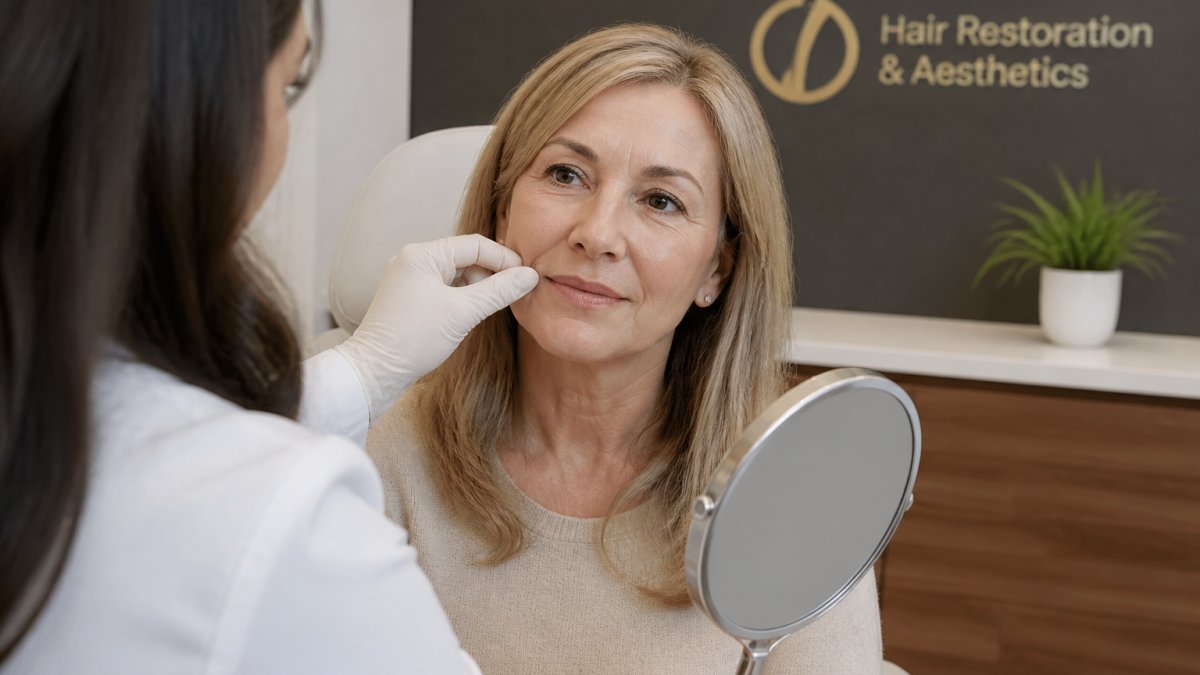
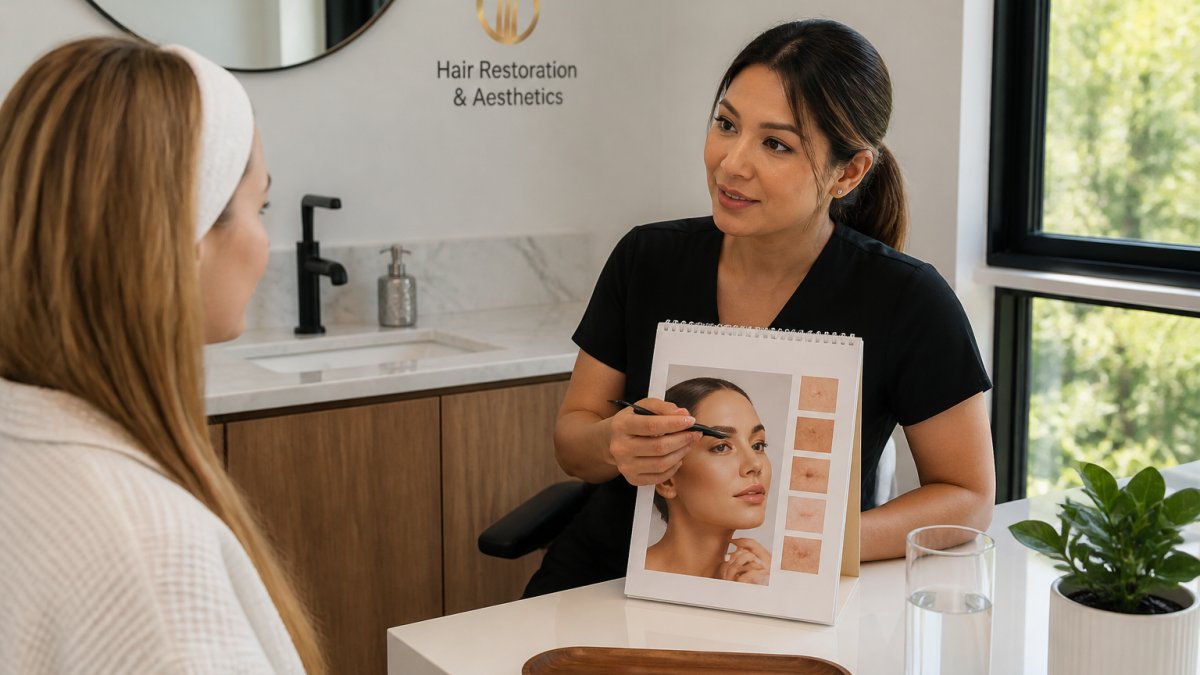
Your consultation is your chance to understand what to expect and whether the proposed plan matches your skin and goals. Come with questions, and ready to evaluate the answers.
Questions About the Device and the Plan
- Which laser or energy-based device are you using, and why that one for my skin? Different platforms target different things, pigment, vascular concerns, texture, or collagen remodeling. The right answer references your specific concern, not a generic "it works for everything."
- What settings will you use, and how do they account for my skin tone? Melanin absorbs laser energy. Darker skin tones and recently tanned skin need different parameters, and providers who treat a wide range of skin types will have a clear answer here.
- How many sessions, spaced how far apart? A common pattern is 3-6 sessions spaced 4-6 weeks apart, but the honest answer depends on what you are treating. Be wary of anyone who promises a specific result in a specific number of sessions before examining your skin.
- What results are realistic for my specific concern? Ask them to describe what improvement looks like in plain terms, softer lines, more even tone, improved texture, rather than percentages.
Questions About Safety and Your History
- Are there any risks specific to my skin type, medications, or history? Bring up cold sores if you get them, laser treatment around the mouth can trigger a flare, and many providers will prescribe an antiviral beforehand.
- Do I need to pause any medications or supplements? Go through your full list, including over-the-counter drugs and herbal supplements.
- What is the recovery timeline, honestly? Ask for the range, not the best case. Some laser facials have minimal downtime; others cause redness and peeling for several days.
- What does post-treatment care look like, and who do I contact if something goes wrong? Get a direct number or portal, not a general front-desk line.
How to Evaluate the Answers
Signals a consultation is going well:
- The provider examines your skin in person before recommending a plan.
- They ask about your history, medications, and prior treatments.
- They describe trade-offs rather than only upsides.
- They'll say "I don't think this is the right treatment for you" if it isn't.
Signals to slow down:
- A plan is proposed before your skin is examined.
- Results are described in absolute terms ("this will eliminate your lines").
- Downtime is minimized or glossed over.
- You're pushed toward a package before you can ask questions.
Bring These With You
- Photos of results you like, and, if possible, photos of results you do not want. Both help calibrate expectations.
- A written list of every medication, supplement, and topical you use.
- A list of your questions, so you do not forget them in the room.
- Your calendar, so you can schedule around any downtime the provider describes.
A Note on Severity
If your concern is fine lines around the mouth, the right plan depends on how deep and persistent they are. Superficial lines that respond to hydration may not need the same intensity as etched-in lines that persist at rest. Ask your provider to walk you through a staged approach, starting with the least aggressive option likely to work, escalating only if it doesn't.
Your Laser Facial Appointment Checklist
The day of your appointment, follow these steps to arrive prepared.
Before you leave home:
- Apply sunscreen and reapply if you'll be outside
- Wear clean, loose clothing (nothing tight on your face)
- Remove all makeup, jewelry, and contact lenses
- Eat a light meal (low blood sugar makes discomfort worse)
- Drink water throughout the day
At your appointment, tell your provider if anything has changed since your consultation. New sun exposure, new medications, new skincare products, or any skin reactions all matter.
Your provider will cleanse your skin and may apply a numbing cream if needed. You'll wear protective eyewear. The treatment itself typically takes 20-40 minutes depending on the area being treated.
What to Expect During and After Treatment
During the laser facial, you'll feel heat and possibly mild discomfort, most describe a snapping sensation or mild stinging.
Your skin will be red immediately after treatment, normal and expected. Redness typically fades within a few hours to a day.
Common post-treatment effects:
- Redness and warmth (24-48 hours)
- Mild swelling (24-72 hours)
- Dry, flaky skin (3-7 days)
- Slight bruising (rare, fades in 1-2 weeks)
- Sensitivity to touch (temporary)
You can usually return to normal activities immediately.
After your appointment, follow these steps:
- Apply cool compresses for 10-15 minutes if you're uncomfortable
- Use gentle, fragrance-free moisturizer
- Apply sunscreen SPF 30+ every 2 hours if you're outside
- Avoid makeup for at least 24 hours
- Don't pick or peel flaking skin
Most people see initial results within a week, improved texture, softer fine lines, more even tone.
You may need multiple sessions.
Preparing properly for your laser facial treatment is the difference between good results and great ones. At Hair Restoration Clinic of Granite Bay, our team guides you through every stage of preparation to ensure the best possible outcome. Schedule a free consultation with Dr.
Frequently Asked Questions
How long before a laser facial should I stop using retinol or retinoids?
Most providers recommend stopping retinol and retinoids 3-7 days before your laser facial treatment. These products increase skin sensitivity and can elevate the risk of irritation during the procedure. During your consultation, ask your provider for their specific timeline, as some laser systems may have different requirements. After treatment, your provider will advise when it's safe to resume retinoids as part of your recovery plan.
Can I get a laser facial if I have a tan or sunburn?
No. Tanned or sunburned skin is not suitable for laser facial treatment because the laser targets melanin in the skin, which increases with sun exposure. This heightens the risk of burns, hyperpigmentation, and other adverse effects. Plan your laser facial when your skin is at its baseline tone, typically 2-4 weeks after sun exposure has faded. Always use broad-spectrum SPF 30+ sunscreen in the weeks leading up to your appointment.
What should I tell my provider before laser treatment?
Disclose your full medical history, including any skin conditions (eczema, rosacea, psoriasis), recent treatments, medications, supplements, and whether you're prone to keloids or hyperpigmentation. Mention any history of cold sores if you're getting facial laser work, as the procedure can trigger an outbreak. Tell your provider if you've used Accutane in the past year, as it can affect skin healing. Being upfront helps your provider customize the treatment and minimize risks.
How long do I need to avoid sun exposure after a laser facial?
Avoid direct sun exposure for at least 48 hours after treatment, and ideally for 1-2 weeks. During this recovery window, your skin is more vulnerable to UV damage and hyperpigmentation. When you do go outside, wear broad-spectrum SPF 50+ sunscreen, reapply every 2 hours, and consider protective clothing or a wide-brimmed hat. Your provider will give you detailed aftercare instructions specific to the type of laser used.