
 how-to
How to Choose the Right Laser for Your Skin Type
Table of Contents
- Start With Your Fitzpatrick Skin Type, Not the Device Name
- Ablative vs Non-Ablative Laser Benefits: Which Trade-Off Fits Your Goals
- Matching the Laser to Your Concern: Pigmentation, Texture, Acne Scars, or Laxity
- How to Find a Board-Certified Aesthetic Physician
- Laser Skin Rejuvenation Recovery Time: What Each Depth Actually Costs You
- Contraindications, Medical History, and Skin of Color Safety
- Conclusion: Questions to Bring to Your Consultation
- Frequently Asked Questions
Last Updated: October 2, 2026
Start With Your Fitzpatrick Skin Type, Not the Device Name
Learning how to choose the right laser for your skin type starts with one number, not a brand name: your Fitzpatrick skin type, a six-point scale describing how much melanin your skin produces and how it reacts to light.
Melanin absorbs laser energy, driving every safe decision in laser treatment. Patients who pick a device before understanding their own skin rarely do well.
Here is the scale in plain terms:
- Type I: Very fair, always burns, never tans
- Type II: Fair, burns easily, tans minimally
- Type III: Medium, sometimes burns, tans gradually
- Type IV: Olive, rarely burns, tans easily
- Type V: Brown, very rarely burns, tans deeply
- Type VI: Deeply pigmented, almost never burns
Higher Fitzpatrick types carry more epidermal melanin, which competes with the target for laser energy and raises the risk of burns, blistering, and post-inflammatory hyperpigmentation.
How Melanin Determines Which Wavelength Is Safe for You
Wavelength is the deciding factor: it determines how deep a laser reaches and what it targets.
- Short wavelengths (500-600 nm): Target pigment and blood vessels, best for lighter skin
- Medium wavelengths (700-810 nm): Reach deeper, safer across more skin types
- Long wavelengths (1,000 nm+): Bypass surface melanin, best for darker skin tones
The goal is a wavelength that reaches your target while sparing your melanin. For skin of color, longer wavelengths with cooling are the safer path. A review of laser safety in darker skin explains how melanin absorption changes with wavelength.
Ablative vs Non-Ablative Laser Benefits: Which Trade-Off Fits Your Goals
Ablative lasers remove the outer skin layer; non-ablative lasers heat tissue below the surface while leaving the epidermis intact. That difference shapes results, downtime, and risk.
Both mechanisms come down to chromophores, targets that absorb a given wavelength.
Ablative lasers vaporize the epidermis and heat the dermis in one pass.
Non-ablative lasers keep the epidermis intact and deliver heat through it.
| Factor | Ablative | Non-Ablative |
|---|---|---|
| Skin removed | Yes | No |
| Primary chromophore | Water | Water, hemoglobin, or pigment depending on wavelength |
| Results | Dramatic | Gradual |
| Downtime | 7-14 days | 1-3 days |
| Skin type range | Lighter tones | All tones |
| Best for | Deep lines, laxity, severe sun damage | Texture, mild pigment, early aging |
| Sessions needed | Often 1 | Often 3-5 |
Fractional vs Fully Ablative: What Changes in Healing and Results
A fractional laser treats only a fraction of the skin in a grid pattern, typically 15-30% per pass. The untreated columns act as a reservoir of stem cells and intact epidermis, so healing is faster and safer than fully ablative treatment, which treats the entire surface for stronger results and longer recovery.
Most patients choose fractional treatment because it balances results against downtime. For darker skin tones, fractional ablative with conservative density settings is often the only ablative option a responsible provider will offer.
How Skin Type Shifts the Ablative Decision
The ablative vs. non-ablative question is about melanin risk, not just downtime.
- Fitzpatrick I-II: Full-field ablative is generally well tolerated. The main risk is prolonged redness.
- Fitzpatrick III: Fractional ablative is usually safe with conservative settings. Full-field requires an experienced provider.
- Fitzpatrick IV: Fractional ablative can work, but pre- and post-treatment pigment care is essential. Many providers prefer non-ablative or microneedling-based options first.
- Fitzpatrick V-VI: Non-ablative with longer wavelengths and aggressive cooling is the safer default. Ablative resurfacing is typically avoided unless the provider has specific expertise in skin of color.
Where Microneedling Fits in the Trade-Off
For patients who want collagen remodeling without ablative pigment risk, microneedling, sometimes paired with radiofrequency, offers a middle path. It creates controlled micro-injuries without relying on light absorption, so melanin is not the deciding factor; results are gradual but safe across Fitzpatrick IV-VI.
We often stage treatment: start with non-ablative or microneedling-based skin rejuvenation, assess your skin's response, then decide whether a fractional ablative session is worth the downtime.
Matching the Laser to Your Concern: Pigmentation, Texture, Acne Scars, or Laxity
The right laser depends on what you want fixed. Different concerns live at different depths, and the device must reach that depth.
- Pigmentation and sun damage: Pigment-targeting lasers that break up melanin
- Skin texture and fine lines: Fractional resurfacing that triggers collagen production
- Acne scars: Fractional and microneedling-based options that remodel the dermis
- Skin laxity: Devices that heat deeper tissue to tighten and firm
Collagen production is the shared outcome: controlled thermal injury tells your skin to rebuild, and that rebuilding takes weeks to show. For texture and early aging, many patients do well with lighter options first, the staged approach our laser facials and skin rejuvenation treatments use.
How to Find a Board-Certified Aesthetic Physician
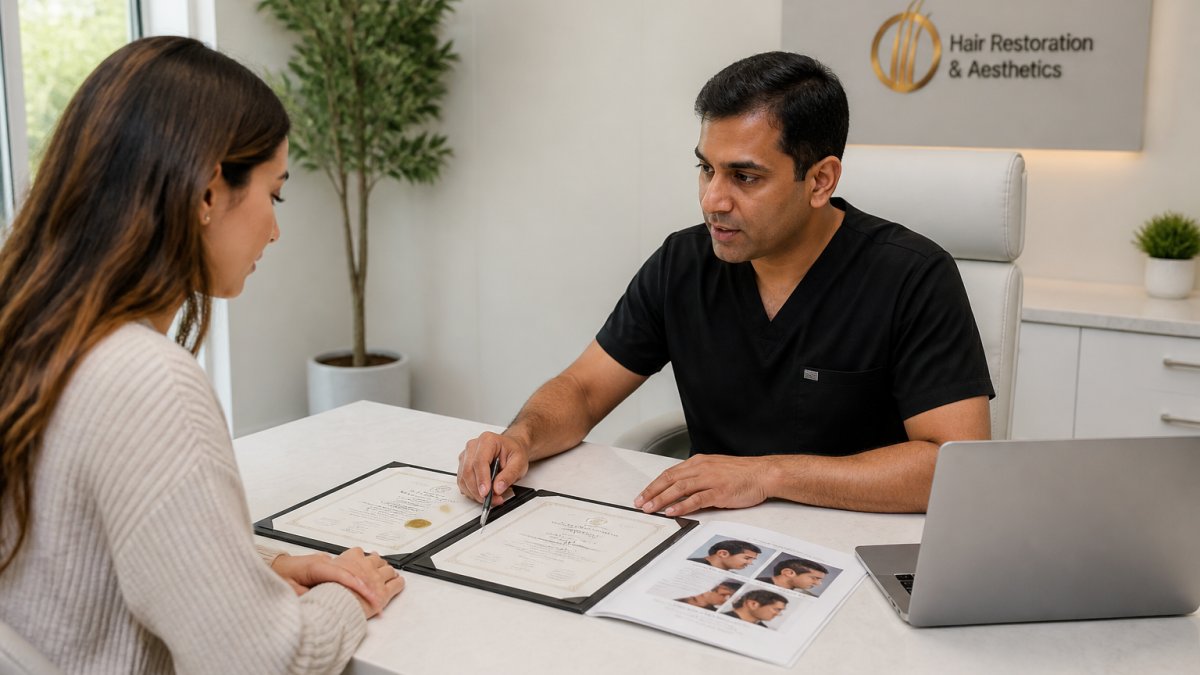
A board-certified aesthetic physician has completed accredited training, passed board examinations in a recognized specialty, and built focused experience in aesthetic procedures, the combination that separates safe care from guesswork.
Verify these before you book:
Schedule a Free Consultation →
- Confirm the physician's board certification through the relevant medical board
- Ask how many laser procedures they perform each month
- Request before-and-after photos from patients with your skin type
- Ask who operates the device and who handles complications
- Confirm the clinic carries appropriate medical oversight
A common mistake is assuming a technician and a physician offer the same care. Lasers are medical devices, and complications need medical judgment.
Hair Restoration Clinic of Granite Bay is led by Dr. Piyush Kumar, MD, a board-certified physician with over a decade of experience.
Laser Skin Rejuvenation Recovery Time: What Each Depth Actually Costs You
Laser skin rejuvenation recovery time depends on depth. Shallow treatments heal in a day or two. Deeper resurfacing can take two weeks.
- Non-ablative, light: Redness for a few hours to one day
- Non-ablative, deeper: Redness and swelling for 2-3 days
- Fractional ablative: 5-7 days of peeling and redness
- Fully ablative: 10-14 days of significant healing
Expect erythema, the medical term for post-treatment redness, to linger after visible healing. It often fades over several weeks.
Contraindications, Medical History, and Skin of Color Safety
Contraindications are conditions or medications that make laser treatment unsafe, and a thorough medical history review catches them before they cause harm. This is the section most guides rush through, and the one that matters most.
Medications That Change Your Risk Profile
Some medications disqualify you from certain lasers outright. Others require a waiting period. Tell your provider about every prescription, over-the-counter drug, and supplement you take.
- Isotretinoin (Accutane): Historically, providers required a 6-12 month wait after the last dose before resurfacing, because the drug thins the skin and impairs healing. Many practices now use shorter waits with conservative settings, but the risk of scarring and delayed healing is real. Do not assume your provider will ask, bring it up.
- Photosensitizing antibiotics: Tetracyclines (including doxycycline and minocycline) and fluoroquinolones increase light sensitivity. Many providers pause them before treatment, but only your prescribing physician should make that call.
- Retinoids: Topical tretinoin and tazarotene thin the stratum corneum. Most providers ask you to stop them 3-7 days before a resurfacing session.
- Anticoagulants and antiplatelets: Blood thinners do not disqualify you, but they raise bruising risk. Your provider needs to know.
- Immunosuppressants and biologics: These can impair wound healing and increase infection risk. Some are compatible with non-ablative treatment but not ablative.
- Hydroquinone: Often used by patients with skin of color for pigment control. It can interact with laser targeting, so timing matters.
- Herbal supplements: St. John's wort, ginkgo, and high-dose vitamin E increase photosensitivity or bleeding risk. The supplement aisle is not risk-free.
Medical Conditions That Require Extra Caution
- History of cold sores (HSV-1): Laser treatment around the mouth or face can trigger an outbreak. Most providers prescribe an antiviral before and after treatment as prophylaxis, standard practice, not an optional extra.
- History of keloid or hypertrophic scarring: Any treatment that creates a wound, including fractional ablative, carries a risk of abnormal scarring. Non-ablative options are usually preferred.
- Active infections or open wounds in the treatment area: Reschedule. Treating over an infection risks spreading it.
- Pregnancy or breastfeeding: Most providers defer elective laser treatment. Safety data is limited, and the risk-benefit calculation does not favor treatment.
- Autoimmune conditions (lupus, scleroderma): Some are aggravated by light or heat. Others affect healing. Each case needs individual review.
- Uncontrolled diabetes: Impaired healing and higher infection risk. Control first, treat later.
- History of skin cancer or precancerous lesions in the treatment area: The area needs dermatologic clearance before any cosmetic laser.
- Recent sun exposure or active tan: Tanned skin behaves like a higher Fitzpatrick type. Most providers ask you to avoid sun for 2-4 weeks before treatment.
Skin of Color: The Safety Question Most Guides Skip
Higher melanin means higher risk of burns, blistering, and post-inflammatory hyperpigmentation when the wrong wavelength or settings are used, the central safety issue for Fitzpatrick IV-VI patients.
What actually reduces risk:
- Longer wavelengths (1,064 nm Nd:YAG, some 1,550 nm fractional devices): These bypass surface melanin more effectively than shorter wavelengths.
- Aggressive cooling: Contact cooling, cryogen spray, or air cooling protects the epidermis during treatment.
- Conservative fluence and density: Lower energy per pulse and fewer passes per session reduce the thermal load on melanin-rich skin.
- Test spots: A small test area treated 1-2 weeks before the full session shows how your skin responds. For skin of color, this is not optional.
- Provider experience with your skin type: Ask directly how many Fitzpatrick V-VI patients they treat per month. A vague answer is a red flag.
A American Academy of Dermatology resource on laser safety notes that trained providers adjust settings for darker skin. The key word is trained, not all providers are.
Long-Term Maintenance and the Full Picture
Laser results fade as your skin keeps aging, so most patients need periodic touch-ups. Pigment and texture often need maintenance every 6-12 months; laxity treatment may hold longer. Ask about a maintenance plan before committing to the first session.
Conclusion: Questions to Bring to Your Consultation
Choosing a laser is a medical decision, not a shopping decision. The device matters less than the match between your skin type, your concern, and the provider's skill.
Bring these questions to any consultation:
- What is my Fitzpatrick skin type, and why does it matter here?
- Which wavelength will you use, and why is it safe for my skin?
- What results are realistic, and how many sessions will I need?
- What are my specific risks, and how would you handle a complication?
- What does maintenance look like over the next few years?
The right provider answers all of these without hesitation.
Schedule a Free Consultation with Hair Restoration Clinic of Granite Bay and get a plan matched to your skin, not a device name.
Frequently Asked Questions
How does skin tone affect laser treatment selection?
Skin tone reflects how much melanin is in your epidermis, and melanin absorbs laser energy. Lighter Fitzpatrick types (I to III) can usually tolerate higher-energy ablative and non-ablative wavelengths because there is less competing pigment. Deeper types (IV to VI) need longer wavelengths, lower fluence, and aggressive cooling to avoid burns and post-inflammatory hyperpigmentation. A board-certified physician should assess your Fitzpatrick type in person and patch test before treating larger areas.
What is the difference between ablative and non-ablative lasers?
Ablative lasers remove the outer layer of skin, the epidermis, creating a controlled thermal injury that triggers new collagen production. Results are more dramatic for fine lines, sun damage, and acne scars, but recovery takes roughly one to two weeks of visible redness and peeling. Non-ablative lasers bypass the surface and heat the dermis, so downtime is usually a few days of mild erythema. The ablative vs non-ablative laser benefits trade-off is essentially results versus recovery.
How do I know if I am a candidate for laser skin rejuvenation?
Most healthy adults with realistic goals are candidates, but a clinical consultation matters more than a quiz online. Tell your physician about active infections, cold sores, isotretinoin use in the past six months, pregnancy, keloid scarring history, and any photosensitizing medications. If you use tanning beds or spend long hours outdoors, you will need to pause sun exposure before and after treatment to protect the skin barrier and reduce hyperpigmentation risk.
What questions should I ask a board-certified physician before laser treatment?
Ask which device and wavelength they plan to use and why it suits your Fitzpatrick type. Ask who performs the treatment, the physician or a technician, and what their protocol is for complications such as burns or post-inflammatory hyperpigmentation. Ask how many treatments you need, what the recovery protocol looks like, and how the practice handles long-term maintenance. For a free consultation at Hair Restoration Clinic of Granite Bay, you can walk through these questions in person.