 blog
blog
Is Laser Skin Resurfacing Painful? What to Expect
Table of Contents
- What Laser Skin Resurfacing Actually Feels Like
- Ablative vs Non-Ablative Laser Pain: How the Two Compare
- How Providers Manage Pain During and After Treatment
- Laser Skin Resurfacing Recovery Time: What to Expect Day by Day
- Preparing for Laser Skin Treatment: Physical and Psychological Steps
- Side Effects and Risks: When Discomfort Signals Something More
- Patient-Reported Pain vs. Clinical Expectations: Closing the Gap
- Frequently Asked Questions
Last Updated: September 19, 2026
What Laser Skin Resurfacing Actually Feels Like
Most people describe laser skin resurfacing as quick rubber band snaps followed by a warm flush. The question "is laser skin resurfacing painful" comes up in nearly every consultation at Hair Restoration Clinic of Granite Bay, and the answer depends on the laser, the depth of treatment, and how your provider prepares your skin.
Laser skin resurfacing is a non-surgical procedure that uses focused light energy to remove damaged outer layers of skin and trigger new collagen production in the dermis. It treats fine lines, sun damage, acne scars, and uneven texture.
Sensation varies: some feel only mild stinging, others stronger discomfort during deeper passes. Pain is not fixed, your provider can control it at almost every step.
Sensations During the Procedure: From Rubber Band Snaps to Heat
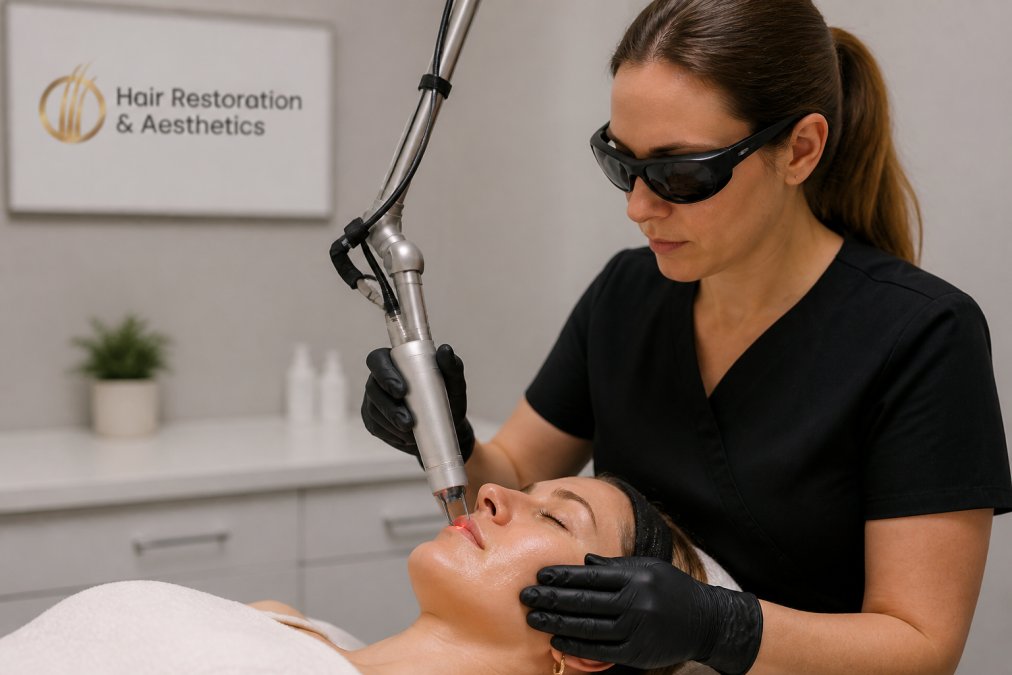
The rubber band snapping sensation is the most commonly reported feeling during fractional laser treatment. Each pulse lasts a fraction of a second. Between pulses, you feel a spreading heat as the laser energy reaches deeper skin layers.
Key sensations patients report:
- Sharp snapping or prickling with each pulse
- A heat sensation that builds during longer passes
- Cool air from the device's built-in cooling tip
- Mild stinging at the edges of the treatment area
Ablative lasers produce more heat and pressure than non-ablative ones, so providers often pause between passes to let skin cool.
Ablative vs Non-Ablative Laser Pain: How the Two Compare
The single biggest predictor of how much laser skin resurfacing hurts is whether the device is ablative or non-ablative. That distinction drives everything you feel during and after treatment.
Non-ablative lasers heat the dermis while leaving the epidermis intact. The surface stays whole, so the nerve endings in the top layer of skin are not directly vaporized. Ablative lasers remove the epidermis entirely, layer by layer, and reach into the upper dermis. That controlled injury is what produces the stronger collagen response, and it is also what produces the stronger pain signal.
A third category, fractional treatment, sits between the two. Fractional devices treat skin in a grid of tiny columns, leaving untreated skin between them. Fractional ablative lasers (such as erbium or CO2 platforms) remove tissue only inside those columns, while fractional non-ablative lasers (such as 1440 nm, 1540 nm, or 1550 nm wavelengths) heat without removing. Fully ablative treatment covers the entire surface at once, making it the most intense and least commonly performed option today.
Pain Scale by Laser Type
The table below reflects the range most patients report on a 0-to-10 scale during active treatment, assuming a standard topical numbing protocol. Individual thresholds vary, and deeper passes can push the number higher.
| Laser Category | What It Does to Skin | Typical Sensation | Reported Pain Range | Numbing Protocol | Downtime |
|---|---|---|---|---|---|
| Non-ablative fractional | Heats dermis through intact epidermis | Warm prickling, brief sting | 2-4 out of 10 | Topical lidocaine cream, 30-60 min | 1-3 days of pinkness |
| Non-ablative fully surface | Broad heating, no removal | Steady warmth, mild sunburn feel | 3-5 out of 10 | Topical cream, sometimes with cooling | 2-4 days |
| Ablative fractional | Removes epidermis in columns, reaches dermis | Sharp snap plus deep heat | 5-7 out of 10 | Topical cream plus regional nerve block or local injection | 5-7 days of peeling |
| Fully ablative | Removes entire epidermis, reaches mid-dermis | Intense heat, sustained burning | 7-9 out of 10 | Local anesthesia, often with oral sedation | 10-14 days |
Two patterns stand out. The jump from non-ablative to ablative fractional is the largest single step, and the pain range for any device is wide because the provider controls pulse density, fluence, and number of passes.
Why Depth Drives Discomfort
The trade-off is real: deeper treatments produce more visible collagen remodeling and skin tightening but ask more during the procedure and recovery. Non-ablative options suit patients who want skin rejuvenation with minimal downtime; ablative options suit those chasing stronger results and willing to accept a harder first week.
How Providers Manage Pain During and After Treatment
Pain management starts before the laser is switched on. A typical protocol combines numbing cream applied 30 to 60 minutes beforehand, active cooling during treatment, and a structured plan for the first two days at home. Most discomfort patients remember happens in that 48-hour window, not in the treatment room.
Numbing Cream, Local Anesthesia, and Sedation Options
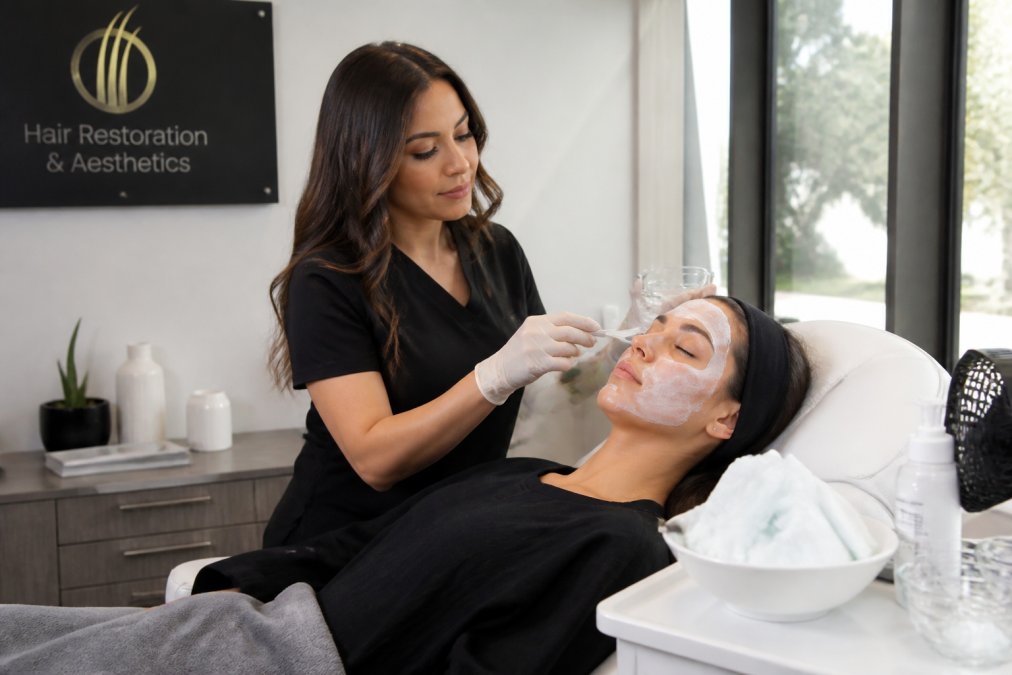
Topical anesthetic is the standard first step. It dulls the epidermis but does not reach deeper nerves, so it works well for non-ablative treatment and only partially for ablative work.
Schedule a Free Consultation →
At-Home Pain Management Protocols for the First 48 Hours
- Wrap a gel pack or a bag of frozen peas in a thin, clean cloth before applying
- Limit each session to 15 minutes on, then at least 15 minutes off
- Start within the first hour after treatment and repeat every 2 to 3 hours while awake
- Use cool, not cold, water when misting or cleansing
When the standard protocol is not enough. A minority of patients find the first night genuinely hard. If cool compresses, elevation, and approved OTC medication are not controlling discomfort, call your provider rather than waiting it out. Persistent severe pain, pain worsening after day three, or pain with blistering or fever are all signals to reach out.
Laser Skin Resurfacing Recovery Time: What to Expect Day by Day
Laser skin resurfacing recovery time runs from about 3 days for light non-ablative sessions to 10 to 14 days for deeper ablative work. Most patients return to normal activities within a week.
Day-by-day, here is the typical pattern:
- Days 1-2: Redness, swelling, warmth, and a sunburn-like sting
- Days 3-5: Skin darkens and begins to flake or peel
- Days 5-7: Peeling finishes, pinkness remains
- Weeks 2-4: Redness fades, collagen production ramps up
- Months 2-6: Skin tightening and texture improvements appear
Preparing for Laser Skin Treatment: Physical and Psychological Steps
Preparation for laser skin treatment covers two fronts: what you do to your skin and what you do with your expectations. Both shape how painful the experience feels.
Physical steps to take:
- Stop retinoids and exfoliating acids several days before, as directed
- Avoid sun exposure and tanning for at least a week prior
- Arrive with a clean face, free of makeup and lotion
- Arrange a ride if sedation is planned
Psychological Preparation for Pain: Managing Anticipatory Anxiety
Anticipatory anxiety is the dread before the first pulse. It tightens muscles, raises heart rate, and makes each sensation feel sharper than it is.
What helps:
- Ask for a full walkthrough of the procedure at your consultation
- Practice slow breathing during the first few passes
- Bring headphones or a podcast to redirect attention
- Agree on a pause signal with your provider
Side Effects and Risks: When Discomfort Signals Something More
Normal post-procedure discomfort includes stinging, itching, swelling, and redness. These fade on a predictable timeline. Some symptoms need a call to your provider.
Contact your provider if you notice:
- Pain that worsens after day three instead of easing
- Blistering, oozing, or a foul smell
- Fever or spreading redness
- Severe swelling that affects your vision
Patient-Reported Pain vs. Clinical Expectations: Closing the Gap
Clinical descriptions of laser skin resurfacing often use words like "mild discomfort." Patients on forums describe it as a 5 or 6 out of 10 during deeper passes. That gap between clinical language and lived experience is worth naming.
Frequently Asked Questions
Does the intensity of laser resurfacing affect the level of pain?
Yes. Higher-energy settings and deeper penetration produce more heat in the dermis, which typically means more discomfort during and after treatment. Ablative lasers like CO2 and erbium remove the epidermis entirely and tend to cause more intense stinging and a longer recovery period than fractional or non-ablative options. Your provider adjusts intensity based on your skin concerns, pain threshold, and treatment goals.
How long does it take to fully recover from laser skin resurfacing?
Recovery time depends on the laser type. Non-ablative and fractional treatments often involve 3 to 7 days of redness, mild swelling, and skin sensitivity. Ablative resurfacing can require 10 to 14 days for the skin to re-epithelialize, with residual pinkness lasting several weeks. Following post-operative care instructions, using cool compresses, and avoiding sun exposure help speed healing.
Is one session of laser resurfacing enough to see results?
One session can produce visible improvement in skin tone and texture, but most people need a series of treatments for optimal results. Non-ablative and fractional lasers typically require 3 to 5 sessions spaced several weeks apart. Ablative lasers may achieve significant results in a single session but involve more downtime. Your provider will recommend a plan based on your skin condition and goals.
What are the common side effects of laser skin resurfacing?
Expected side effects include erythema (redness), edema (swelling), stinging, itching, and skin sensitivity that can last from a few days to a couple of weeks. Less common risks include hyperpigmentation, hypopigmentation, and infection. Serious complications are rare when treatment is performed by a qualified provider. Contact your clinician if you notice unusual blistering, persistent pain, or signs of infection.