 blog
FUE Success Rate: What to Expect From Your Transplant
Last Updated: October 22, 2026
Quick Summary
The FUE success rate commonly falls in the high-80% to mid-90% range in peer-reviewed literature, with the strongest series approaching the mid-to-high 90s. Treat advertised claims above the mid-90s with skepticism unless the clinic shows the method behind its number.
- Graft survival is measured differently by different providers, so percentages are not directly comparable between clinics.
- Transplanted hairs shed between weeks 2 and 8, which is normal and not a sign of failure.
- Judge your final result at the one-year mark, when density and texture are stable enough to assess.
- Smoking impairs blood flow and healing and is one of the most consistent negative factors in wound outcomes.
- Ask each surgeon how they measure transection rate and what they do to keep it low.
Table of Contents
- What the FUE Success Rate Actually Measures
- The FUE Graft Survival Rate: What the Numbers Mean
- FUE Hair Transplant Results Timeline: When to Judge Success
- Factors Affecting Hair Transplant Success
- How to Verify Advertised Success-Rate Claims
- Planning for Long-Term Results With Progressive Hair Loss
- Frequently Asked Questions
What the FUE Success Rate Actually Measures
The FUE success rate is not one number. It is a measure of how many transplanted follicular units survive, grow, and produce hair that looks natural in the recipient area.
Most advertised figures blend those two ideas together. That is where confusion starts.
A follicular unit extraction procedure moves individual follicular units from the donor area to thinning or bald spots on the scalp. Success depends on graft survival, growth, density, and how natural the hairline looks.
So when you read a success-rate claim, ask what it counts. Survival? Density? Patient satisfaction? Each answer tells a different story.
The FUE Graft Survival Rate: What the Numbers Mean
The FUE graft survival rate is the share of transplanted follicular units that take root and grow hair. It is the most common way clinics report outcomes, and it is also the easiest figure to present favorably.
Here is the catch. Graft survival is measured in different ways by different providers. Some count grafts that produce any visible hair. Others count only grafts that grow at a normal angle and thickness.
That gap matters for you. A high survival figure does not guarantee a dense, natural-looking hairline. It tells you the grafts stayed alive, not that the result looks good.
What the Published Numbers Actually Say
Across peer-reviewed hair restoration literature, reported FUE graft survival rates commonly fall in the high-80% to mid-90% range, with the strongest series approaching the mid-to-high 90s. You will see clinics advertise figures above 95%, and occasionally claims of 98% or higher. Treat any figure above the mid-90s with calibrated skepticism unless the clinic can show you the method behind it.
Three measurement choices explain most of the spread between published rates:
- What counts as survival. A graft that produces a single fine hair counts in some studies and not in others. Studies counting only cosmetically meaningful growth report lower, and more honest, numbers.
- How grafts are counted. Some studies count follicular units; others count individual hairs. A 2-hair graft that loses one hair may be scored as a survival or a partial failure depending on the protocol.
- Follow-up length. A rate measured at 6 months is not the same as one measured at 12 or 18 months. Early counts can overstate final density because some grafts thin out during maturation.
FUE-Specific Evidence Versus General Transplant Statistics
Many headline percentages you encounter are drawn from mixed-technique studies or from strip-harvest (FUT) series, then applied loosely to FUE. That is a problem, because the two techniques stress grafts differently. FUE involves individual extraction with punch devices, which raises the risk of transection and handling trauma in a way that strip harvest does not.
When you read a statistic, ask: was this measured in FUE patients specifically, by a surgeon using a technique comparable to the one I am considering, with a follow-up long enough to reflect final density? If the answer is unclear, the number is not really about your procedure.
We treat graft survival as a starting point, not the finish line. The real question is how many grafts grow into hair you would actually want on your head, and whether the clinic can show you the method behind its number.
FUE Hair Transplant Results Timeline: When to Judge Success
You cannot judge success in the first month. The FUE hair transplant results timeline runs about a year, and each stage looks different. Expecting fast results is the fastest route to unnecessary worry.
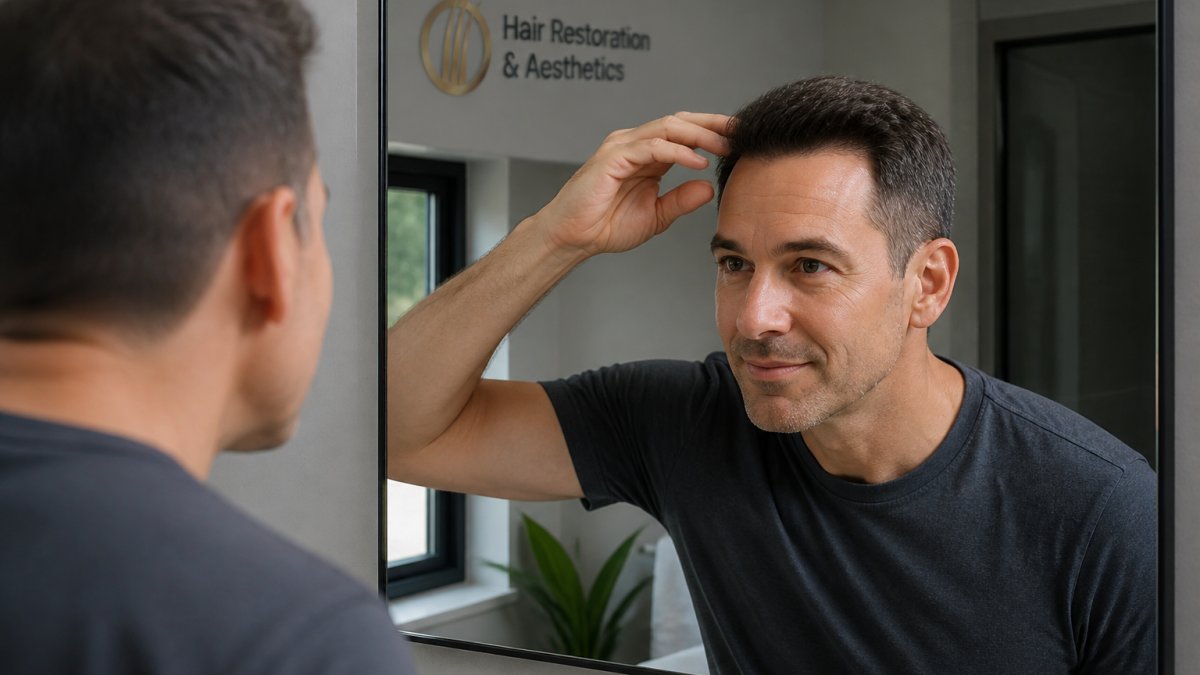
Here is the realistic sequence:
- Weeks 1-2: Small scabs form and heal in the donor and recipient areas.
- Weeks 2-8: Transplanted hairs shed. This is normal, not failure. The follicle stays put.
- Months 3-4: New growth starts, often fine and uneven.
- Months 5-6: Density begins to show. Results still look thin.
- Months 8-12: Most patients see the bulk of their final result.
- Beyond 12 months: Maturation continues, with texture and density refining.
The shedding phase catches people off guard. It is the single most common reason patients panic in month two. The follicles are settling in, not dying.
Judge success at the one-year mark, not week six. That is when the result is stable enough to assess honestly.
Factors Affecting Hair Transplant Success
Several factors affecting hair transplant success sit outside the operating room. Surgeon skill gets the headlines, but donor quality, patient suitability, and aftercare matter just as much. The most useful way to think about them is as questions you can bring to a consultation, each one maps to a mechanism that changes how many grafts survive and how the result looks.
Technique and Graft Handling
How grafts are extracted, handled, and placed shapes survival. Rough handling damages follicles. Transection, where a graft is cut during extraction, lowers the usable count. Punch size and design, extraction speed, how grafts are stored between extraction and placement, and how long they sit outside the body all influence survival. A surgeon who tracks transection rate and keeps it low is protecting your graft count before a single graft is placed.
Questions to ask: How do you measure transection rate, and what is yours? How are grafts stored and for how long? What punch do you use for my hair type?
Donor Area Quality and Graft Characteristics
Thick, dense donor hair supports better coverage. Fine or sparse donor hair limits what any surgeon can achieve. Follicular unit characteristics matter too: patients whose units contain more hairs per unit get more visual density per graft. Donor density, the ratio of units to hairs, and the stability of the donor zone over time all shape the ceiling on your result.
Schedule a Free Consultation →
Questions to ask: What is my donor density, and how many grafts can my donor area safely support now and later? Are my follicular units single-hair or multi-hair?
Patient Suitability and Scalp Health
Age, hair loss pattern, scalp health, and healing response all affect outcomes. A good candidate has stable, well-defined loss and realistic goals. Active scalp inflammation, uncontrolled skin conditions, or a rapidly progressing loss pattern can change the plan. Certain medical conditions and medications that affect healing or bleeding also belong in this conversation.
Questions to ask: Is my loss pattern stable enough to treat now? Do I have scalp conditions that need treatment first? Do any of my medications or health conditions affect healing?
Lifestyle and Aftercare
Following post-operative care instructions protects grafts during the fragile early days. Smoking impairs blood flow and healing and is one of the most consistent negative factors in wound outcomes. Poor scalp hygiene, sun exposure, and rushing back to harsh activity can hurt results. So can scratching or picking at scabs in the recipient area.
Questions to ask: What is your smoking and recovery guidance? What does the first two weeks of aftercare look like hour by hour? Who do I contact if something looks wrong?
Expectations and Long-Term Planning
Realistic expectations and a long-term plan matter as much as any single factor. Hair loss is often progressive, so the design of the hairline and the preservation of donor reserves for future sessions affect how the result ages.
Questions to ask: How will this result look in five and ten years if my loss continues? How much donor hair will be left for future sessions?
- Graft handling and transection rates
- Donor density and follicular unit characteristics
- Healing and recovery response
- Realistic expectations and long-term planning
A common mistake is choosing a clinic on graft count alone. More grafts handled poorly beat fewer grafts handled well. Technique wins.
How to Verify Advertised Success-Rate Claims
Treat every success-rate claim as a question, not a fact. Verification is your job, and a few direct questions do most of the work.
Ask providers:
- What exactly does your success rate measure?
- How do you define a surviving graft?
- Do you have before-and-after photos from patients with my hair loss pattern?
- How many FUE procedures has the surgeon performed?
- What is your follow-up process at 6 and 12 months?
Board certification is verifiable (What is ABMS Board Certification?). You can check a physician's credentials through official medical boards. The American Board of Medical Specialties lets you confirm certification status directly.
Be wary of a single headline number with no method behind it.
At Hair Restoration Clinic of Granite Bay, Dr. Piyush Kumar is a board-certified physician with over a decade of experience, and we encourage patients to review credentials and ask hard questions before committing.
Planning for Long-Term Results With Progressive Hair Loss
FUE does not stop hair loss. It redistributes hair you already have, which means planning for the future matters as much as the procedure itself.
Hair loss is often progressive (pubmed.ncbi.nlm.nih.gov). Transplanted hair in the recipient area tends to hold, but the surrounding native hair can keep thinning. A hairline that looks full today can look isolated in ten years if the loss continues around it.
Smart planning accounts for this:
- Preserve donor hair for future sessions rather than using it all at once
- Design a hairline that will still look natural as loss progresses
- Discuss medical support for ongoing hair health with your physician
- Set a follow-up schedule to track changes over the years
Non-surgical options can support the plan. Alma TED acoustic sound wave therapy is a non-invasive treatment we offer for hair health, and it can complement a restoration strategy.
Hair restoration is a long game, and the clinics worth trusting will tell you that up front. We will review your donor area, map a realistic timeline, and answer your questions before you commit to anything. Schedule a free consultation and get a plan built around your hair, not a headline number.
Frequently Asked Questions
How is FUE hair transplant success measured?
Success is usually measured in two ways: graft survival rate (the percentage of transplanted follicular units that grow) and patient satisfaction with density, hairline design, and natural appearance. A clinic may report a high graft survival rate while a patient judges success by how the final result looks in everyday light. Ask how a provider defines success and whether they track one-year outcomes with standardized photos, not just immediate post-op images.
Can FUE hair transplants fail?
Yes, grafts can fail to grow, and results can fall short of expectations. Causes include graft damage during extraction or handling, poor blood supply in the recipient area, infection, and inadequate aftercare during the first critical days. Smoking and uncontrolled medical conditions can also reduce graft take. A reputable surgeon will discuss these risks honestly during consultation rather than promising a guaranteed outcome.
How long does it take to see FUE hair transplant results?
Most patients see early growth around three to four months, with noticeable density by six to nine months. The fullest result is typically judged at twelve months, and some patients see continued improvement up to eighteen months. Shedding in the first few weeks is normal and does not mean the transplant failed. Plan to assess success at the one-year mark, not in the first few months.
What factors affect FUE graft survival?
Key factors include surgeon experience and technique, the quality and density of the donor area, how carefully grafts are handled and stored, and the health of the recipient scalp. Patient-level factors matter too: smoking, poorly controlled diabetes, certain medications, and skipping post-operative instructions can all lower graft survival. Choosing an experienced surgeon and following aftercare closely gives you the best chance of a strong result.