 how-to
7 Reasons Microneedling Evens Out Uneven Skin Tone
Last Updated: October 25, 2026
Quick Summary
Microneedling uneven skin tone works by creating controlled micro-injuries that trigger collagen production and speed up cell turnover, so discolored surface cells shed faster and fresher skin replaces them. It is most responsive for sun spots, brown post-acne marks, and dullness, while melasma needs a specialist assessment first.
- Sun spots and age spots sit in the top layer and are the most responsive target.
- Brown post-acne marks respond to the same turnover mechanism as sun spots.
- Melasma is prone to rebound and should never be treated aggressively.
- Darker skin tones face a higher PIH risk, so needle depth must be adjusted.
- Most people need a series of sessions spaced several weeks apart for gradual improvement.
Table of Contents
- How Microneedling Improves Uneven Skin Tone
- Microneedling for Hyperpigmentation and Dark Spots
- Microneedling on Darker Skin Tones: Safety and PIH Risk
- Texture, Pores, Acne Scars, and Fine Lines: What Else It Refines
- Microneedling Results Timeline: Sessions and Realistic Expectations
- Microneedling Aftercare and Sun Protection
- Who Should Avoid Microneedling and When to See a Dermatologist
- Book a Free Consultation to Plan Your Microneedling Sessions
- Frequently Asked Questions
How Microneedling Improves Uneven Skin Tone
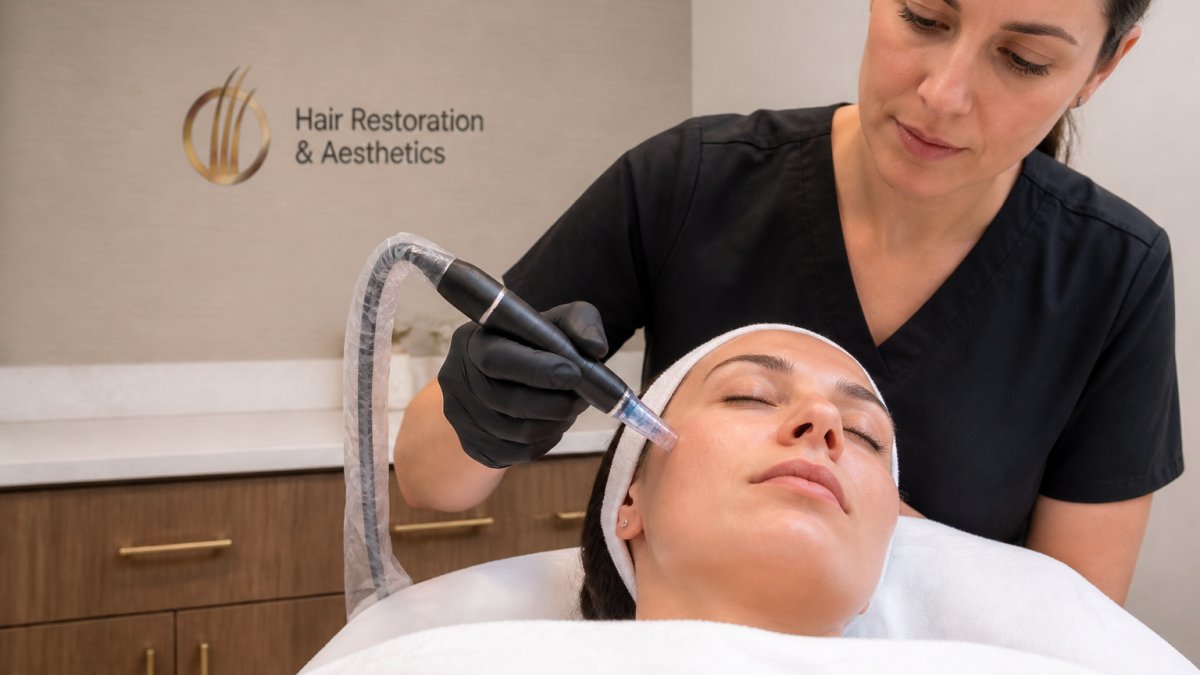
Microneedling is a skin rejuvenation treatment that uses fine needles to create controlled micro-injuries in the skin, triggering a natural healing response that builds collagen and makes microneedling uneven skin tone a realistic goal over time (Microneedling in Dermatology).
Here is the core idea most guides skip. Uneven tone rarely comes from one cause. Sun damage, old acne, and slow cell turnover all leave their mark in different ways.
The Controlled Injury That Starts Skin Renewal
The treatment creates tiny punctures across the skin's surface. Your body reads these micro-injuries as small wounds and responds by sending collagen and elastin to repair them.
Microneedling is a minimally invasive procedure that creates controlled micro-injuries to stimulate collagen production and skin renewal.
As new collagen forms, the skin thickens slightly and cell turnover speeds up, which is how microneedling uneven skin tone works beneath the surface.
A common mistake is expecting one session to fix everything. It will not.
Microneedling for Hyperpigmentation and Dark Spots
Microneedling for hyperpigmentation works by accelerating cell turnover, which helps the skin shed pigmented surface cells and replace them with fresh ones. Dark spots, age spots, and patches of discoloration often sit in the upper layers of skin.
But here is the nuance that matters, and it is the part most guides flatten. Uneven tone is not one condition. It is a category, and each cause sits at a different depth in the skin and responds differently to a needle.
Which Types of Uneven Tone Respond Best
Sun spots and age spots (solar lentigines). These are concentrated pigment in the epidermis, the top layer.
Post-acne marks (post-inflammatory hyperpigmentation). These are the flat brown or red marks left after a breakout heals.
Melasma. This is the one to treat with the most caution.
Dullness and patchy tone from slow turnover. This is the broadest and most forgiving category.
Redness and broken capillaries. Microneedling is not the primary tool here.
Why the Distinction Changes Your Plan
The practical takeaway: a physician should identify which type of discoloration you have before planning treatment. A sun-spot plan and a melasma plan look nothing alike, and using the wrong one can waste sessions or, in the melasma case, make things worse. According to the American Academy of Dermatology's guidance on pigmentation disorders, accurate diagnosis of the pigmentation type is the first step toward effective treatment.
A combined approach is common for stubborn cases: microneedling to drive turnover and collagen, plus a laser facial or prescription topical to target pigment directly. The right mix depends on your skin type, the depth of the pigment, and how your skin has responded to past treatments.
Not all uneven tone behaves the same way under a needle, so here is how each type responds.
| Type of uneven tone | Where it sits | Response to microneedling |
|---|---|---|
| Sun spots and age spots | Top layer (epidermis) | Most responsive target; visible fading over a series |
| Post-acne marks, brown | Upper layers | Responds to the same turnover mechanism as sun spots |
| Post-acne marks, red | Vascular, dilated capillaries | Fades on its own timeline; responds less predictably |
| Melasma | Chronic, hormone- and UV-sensitive | Prone to rebound; specialist decision, never aggressive |
| Dullness and patchy tone | Slow cell turnover | Broadest and most forgiving; usually noticed first |
| Redness and broken capillaries | Vascular | Not the primary tool; light and laser work better |
Microneedling on Darker Skin Tones: Safety and PIH Risk
Microneedling can be safe on darker skin tones, but the risk of post-inflammatory hyperpigmentation (PIH) is higher and needs careful management. PIH is a darkening of the skin that can follow any injury, including the micro-injuries from treatment.
This is not a reason to avoid treatment. It is a reason to choose an experienced provider. The steps that lower PIH risk include:
- Adjusting needle depth to your skin type
- Avoiding overly aggressive settings
- Preparing the skin before treatment
- Strict sun protection afterward
Watch out: at-home devices with no professional oversight raise the PIH risk on darker skin, because depth and technique are guesswork. A physician-supervised setting lets your provider tailor the approach to your skin.
Texture, Pores, Acne Scars, and Fine Lines: What Else It Refines
Beyond tone, microneedling refines several related concerns at once. The same collagen response that fades discoloration also improves skin texture, softens fine lines, and helps acne scars look less pronounced.
Schedule a Free Consultation →
Scarring is where patience pays off. For a closer look at how the treatment performs on scarring, read is microneedling worth it for acne scars.
The texture refinement also improves product absorption. Skin that has renewed itself accepts serums and moisturizers more evenly, which supports the overall complexion between sessions.
Microneedling Results Timeline: Sessions and Realistic Expectations
Microneedling results timeline: most people need a series of sessions spaced several weeks apart, with gradual improvement appearing over the following months as collagen builds. You will not see the full effect after one visit.
Here is what realistic expectations look like:
- First sessions: subtle changes in brightness and texture
- Mid-series: more even tone, softer fine lines
- After the series: clearer complexion and improved firmness
- Ongoing: maintenance sessions to hold results
The exact number of sessions depends on your skin concerns and how your skin responds. Some people extend treatment to other areas, such as the chest; our guide on microneedling for the décolletage covers whether that is worth it.
Microneedling Aftercare and Sun Protection
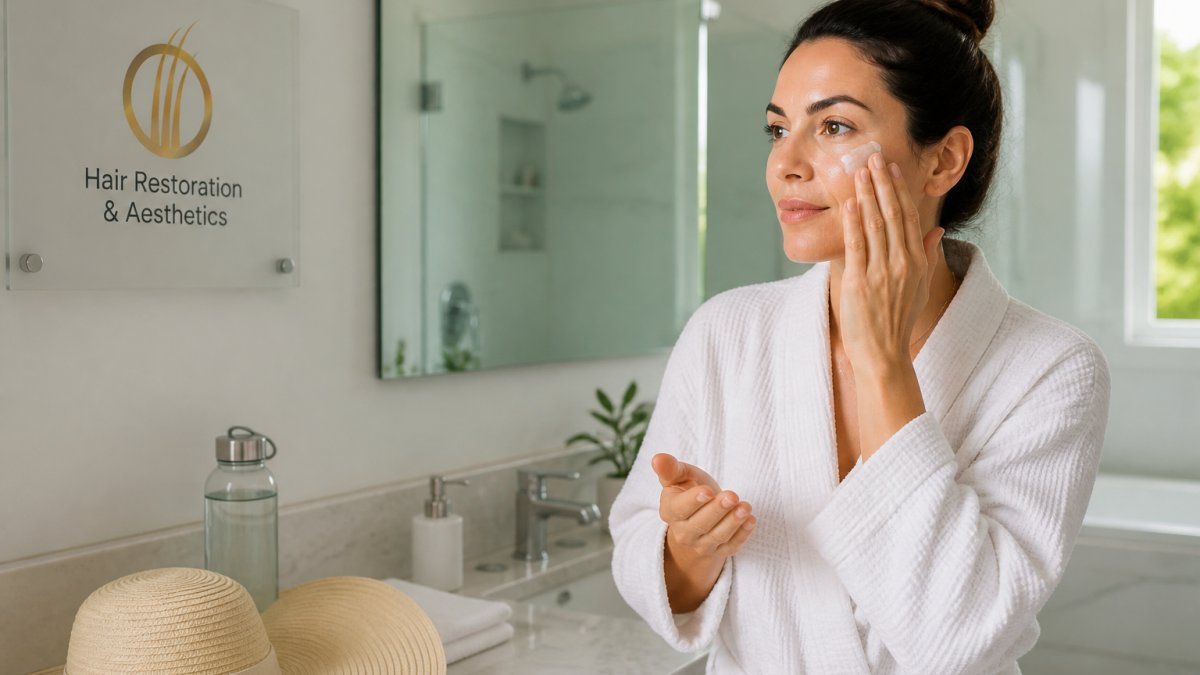
Aftercare decides how well your results hold, and it is where the tone outcome is quietly won or lost. Sun protection is the single most important step, because fresh, renewed skin is more vulnerable to UV damage. Without it, new discoloration can form and undo your progress.
The First 24 to 48 Hours
Your skin is temporarily open and inflamed. Treat it like a healing wound, not like normal skin.
- Skip makeup and harsh products. Let the micro-channels close before applying anything that is not a gentle cleanser or moisturizer.
- Cleanse gently. Use lukewarm water and a mild, fragrance-free cleanser. Pat dry; do not rub.
- Moisturize often. A plain, hydrating moisturizer supports the barrier while it recovers.
- Avoid heat. Skip hot showers, saunas, strenuous workouts, and direct sun while redness settles.
- Do not pick or scratch. Any pinpoint crusting should be left alone to shed on its own.
The First Week
Redness typically fades within a few days, but the skin is still remodeling underneath. This is the window where the wrong product can cause a setback.
- Hold active ingredients. Retinoids, exfoliating acids, and high-concentration vitamin C can irritate freshly treated skin. Most practitioners advise waiting several days before reintroducing them, and longer if your skin is sensitive.
- Keep the routine boring. Cleanser, moisturizer, sunscreen. That is the whole job this week.
- Watch for warning signs. Increasing pain, spreading redness, warmth, or pus are not normal healing. Contact your provider.
Sun Protection Is Not Optional
This is the part that directly protects your tone results. UV exposure stimulates the same pigment cells that microneedling is trying to calm, and renewed skin is more photosensitive during healing. A single unprotected day in strong sun can set back weeks of progress, particularly for anyone prone to post-inflammatory hyperpigmentation.
- Daily broad-spectrum sunscreen with a high SPF, applied generously and reapplied every couple of hours outdoors.
- Physical cover, a wide-brimmed hat and shade during peak midday hours, does more than sunscreen alone.
- Do not rely on makeup SPF for meaningful protection during healing.
The Skin Cancer Foundation's sun protection guidance recommends broad-spectrum sunscreen as a daily habit, which matters even more after skin treatments.
Aftercare Between Sessions
Good habits compound. Keeping up sunscreen, gentle cleansing, and a stable moisturizer between appointments supports the collagen remodeling that is still happening under the surface. If your provider gives you a specific post-treatment protocol, follow it over any general advice, because needle depth and device settings change what your skin needs.
Who Should Avoid Microneedling and When to See a Dermatologist
Some people should skip microneedling or get medical clearance first. If you have an active skin infection, open wounds, or a flare of a skin condition in the treatment area, wait until it clears.
See a dermatologist or qualified physician if you have:
- A suspicious mole or changing spot
- Severe or cystic acne
- A pigmentation disorder that needs diagnosis
- A bleeding or healing disorder
If you are weighing this treatment against other options, you can explore skin rejuvenation treatments to compare approaches before deciding. A proper assessment keeps treatment safe and sets realistic goals.
Book a Free Consultation to Plan Your Microneedling Sessions
The right plan starts with an honest look at your skin. If you want to understand the service first, you can learn about professional microneedling treatments and what they involve.
At Hair Restoration Clinic of Granite Bay, Dr. Piyush Kumar, MD leads a board-certified practice with over a decade of experience. We offer microneedling alongside skin rejuvenation and scar treatment, all guided by physician oversight. To get started, schedule a free consultation and we will build a plan around your skin.
Frequently Asked Questions
How does microneedling improve uneven skin tone?
Microneedling creates tiny controlled micro-injuries in the skin, which triggers the natural healing response. That response ramps up collagen and elastin production and speeds cell turnover, so pigmented surface cells are shed and replaced more evenly. Over a series of sessions, this can fade discoloration, soften acne scars, and refine texture. Because the treatment works at a cellular level rather than bleaching the surface, results build gradually and look natural rather than abrupt.
Is microneedling safe for darker skin tones?
Microneedling is generally considered safe for darker skin tones because it does not use heat or light energy, which is where many pigmentation risks come from. The main concern is post-inflammatory hyperpigmentation, especially if the skin is treated too aggressively or aftercare is poor. That is why depth, needle settings, and session spacing should be set by a qualified provider who treats melanin-rich skin regularly. Sun protection after each session is essential to protect your results.
How many microneedling sessions are needed for uneven skin tone?
Most people need a series of sessions rather than a single treatment. A typical plan starts with three to six sessions spaced about four to six weeks apart, with maintenance sessions afterward. Superficial concerns like dullness may respond faster, while hyperpigmentation and acne scars usually need more sessions. Your provider will assess your skin type and concerns at a consultation and set a realistic schedule instead of promising a fixed number.
What should you avoid after microneedling?
For the first 24 to 48 hours, skip active ingredients like retinoids, exfoliating acids, and vitamin C, and avoid makeup on treated skin. Stay out of saunas, hot yoga, and swimming pools while the skin is still healing. Do not pick or scrub at any flaking. Daily broad-spectrum sunscreen is non-negotiable, because fresh skin is more vulnerable to UV damage and new dark spots. Your provider will give you a specific aftercare routine to follow.
Uneven skin tone rarely resolves on its own, and guessing at treatments can waste time or raise your risk of new discoloration. A physician-supervised plan removes the guesswork. Hair Restoration Clinic of Granite Bay offers board-certified care, over a decade of experience, and a free consultation to map out your sessions. Get started with Hair Restoration Clinic of Granite Bay and plan a microneedling series built around your skin.