 ultimate-guide
FUE Hair Transplant Recovery Timeline: Week by Week
Table of Contents
- What Happens During FUE Hair Transplant Recovery
- Days 1-7: Immediate Post-Operative Care for Hair Transplant
- Days 8-14: Managing Swelling After Hair Transplant
- Weeks 3-4: When Do Transplanted Hairs Fall Out
- Months 2-6: Hair Growth and Graft Survival
- Activity Restrictions and Physical Exercise Timeline
- Mental Health and Emotional Support During Recovery
- Follow-Up Appointments and Long-Term Results
- Frequently Asked Questions
Last Updated: September 2, 2026
What Happens During FUE Hair Transplant Recovery
Follicular unit extraction, or FUE, has become the gold standard for hair restoration because it avoids the linear scarring associated with older techniques. The real test comes after surgery ends. The recovery timeline for FUE hair transplant determines not just how quickly you return to normal life, but whether your grafts survive and ultimately deliver the natural-looking results you're paying for.
At Hair Restoration Clinic of Granite Bay, we've guided many patients through this process. Recovery isn't passive. The first two weeks set the foundation. Months two through six determine graft survival. And the psychological journey, watching transplanted hair fall out before it grows back, separates patients who succeed from those who panic and abandon the process.
This guide walks you through exactly what to expect, day by day and week by week, so you understand what's happening to your scalp, why it matters, and what you should actually be doing about it.
Days 1-7: Immediate Post-Operative Care for Hair Transplant
The first week after FUE hair transplant recovery is deceptively critical. Your grafts are at their most vulnerable. The anesthesia is wearing off. Your scalp is swollen, tender, and covered in crusting that looks far worse than it actually is.
Scab Formation and Scalp Sensitivity
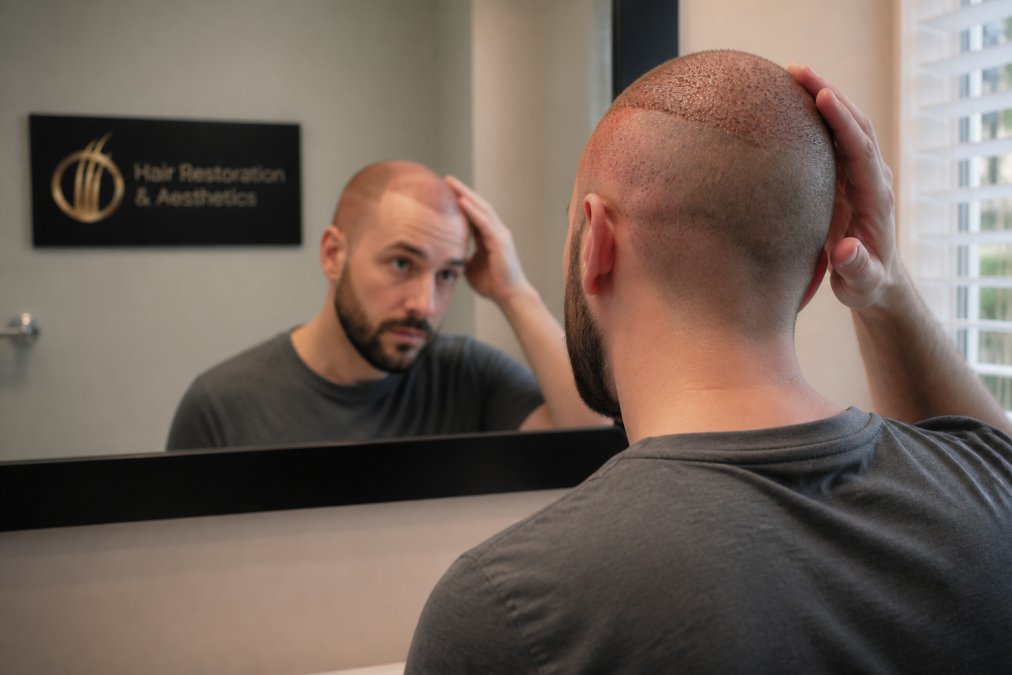
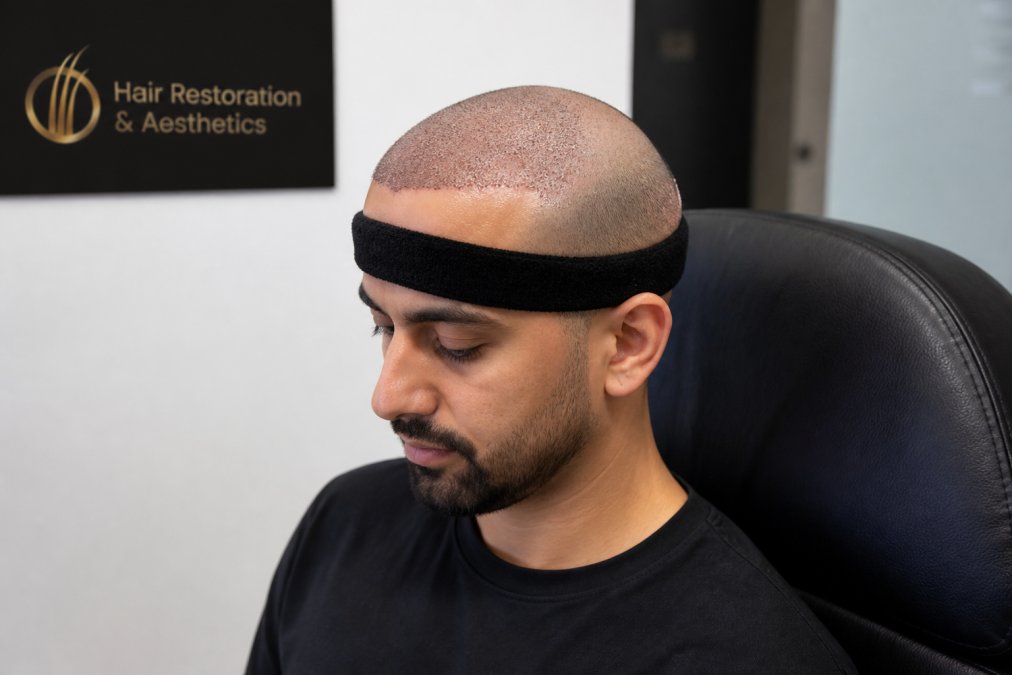
Crusting begins immediately after surgery. By day two, small scabs form around each graft site in the recipient area. These aren't a sign something went wrong, they're the body's natural healing response, protecting delicate transplanted follicles while new blood vessels integrate the grafts into surrounding tissue.
Scalp sensitivity peaks between days two and four. The donor area feels raw and tender. The recipient site feels tight and hypersensitive to touch. This is normal. The temptation to pick at scabs or scratch is intense. Don't. Removing scabs prematurely can dislodge grafts that haven't fully integrated. Scabs naturally shed within seven to ten days (peer-reviewed research). Until then, keep the scalp clean and protected.
Managing Discomfort and Anesthesia Effects
Most patients experience mild to moderate soreness rather than severe pain. Local anesthesia wears off gradually over the first 24 to 48 hours. Swelling in the forehead and around the eyes can occur, particularly if grafts were placed near the hairline, peaking around day three or four.
Keeping your head elevated, even while sleeping, reduces swelling significantly. Over-the-counter acetaminophen or ibuprofen handles most discomfort. Prescription pain medication is rarely necessary and generally discouraged because it can increase bleeding and swelling. Take medication on a schedule rather than waiting until pain becomes severe.
By day five or six, most patients report that discomfort has dropped to a manageable level. By day seven, many describe their scalp as tender rather than painful, a significant psychological shift.
Days 8-14: Managing Swelling After Hair Transplant
The second week is where recovery accelerates visibly. Scabs continue shedding. Swelling drops noticeably. You start to feel like yourself again.
Edema and Inflammation Patterns
Edema, fluid accumulation in tissues, is the primary concern during days eight through fourteen. Some inflammation is protective, bringing nutrients and immune cells to surgical sites. But excessive swelling can compress blood vessels and reduce oxygen flow to grafts.
Swelling peaks around day three or four, then decreases steadily (peer-reviewed research). By day seven, you're at perhaps 40 percent of peak swelling. By day fourteen, most patients have minimal visible swelling, though subtle puffiness may persist for another week or two.
Cold therapy in the first 48 hours constricts blood vessels and reduces initial swelling. After that window closes, avoid hot showers, saunas, and direct heat sources for at least two weeks. Stick to lukewarm water and gentle cleansing.
Returning to Work and Daily Activities
By day ten, most patients are ready to return to work, assuming their job doesn't involve manual labor or heavy sweating. The visible signs of surgery have diminished enough that a casual observer wouldn't immediately know you'd had a procedure.
This is the psychological turning point. You're functional again. You can resume light exercise, though strenuous activity remains off-limits. You can wash your hair gently with a prescribed saline spray. You can wear a hat if you're self-conscious about residual redness.
Work restrictions depend on your job. Desk work? Return by day ten. Customer-facing roles where appearance matters? Consider waiting until day twelve or fourteen. Physical labor or jobs with significant sweating? Hold off until at least day twenty-one.
Weeks 3-4: When Do Transplanted Hairs Fall Out
This is where the recovery timeline takes an unexpected turn. The transplanted hairs begin to shed. This terrifies first-time transplant patients. It shouldn't.
Understanding Shock Loss and the Dormant Phase
Shock loss is the shedding of transplanted hairs that occurs three to four weeks after FUE hair transplant recovery (peer-reviewed research). The grafts themselves survive. The follicles remain viable. But the hairs fall out because transplantation disrupts the hair growth cycle.
Every hair follicle cycles through three phases: anagen (growth), catagen (transition), and telogen (rest). Transplantation can push follicles into telogen prematurely, a protective mechanism. The hair sheds, but the follicle remains dormant, waiting to restart the growth cycle.
Shock loss typically affects some transplanted hairs. Some patients experience none. Others lose a higher percentage. The shock loss phase lasts two to four weeks. By week eight or nine, new hairs begin emerging from those same follicles.
This is the hardest part of recovery psychologically. You see hairs falling out and panic. But shedding means the grafts are alive and cycling. Follicles that didn't survive don't shed; they simply never grow hair.
Scalp Hygiene During the Shedding Phase
Scalp hygiene becomes critical during weeks three and four. Your grafts are now integrated. Your job is to keep the scalp clean and healthy while follicles cycle through dormancy.
Wash your hair gently two to three times weekly with a mild, sulfate-free shampoo using lukewarm water. Pat dry rather than rubbing. Avoid aggressive toweling or brushing. The recipient area is still healing.
Saline spray remains your best friend. Many clinics recommend a prescribed saline solution for the first month post-surgery. This keeps the scalp hydrated, reduces inflammation, and supports the healing environment. Use it daily, particularly if you're in a dry climate.
Avoid products that irritate the scalp, harsh shampoos, strong styling products, or anything with alcohol. You're not trying to style your hair during this phase. You're creating an environment where dormant follicles can wake up and restart growth.
Months 2-6: Hair Growth and Graft Survival
Months two through six is where patience becomes the primary requirement. Visible hair growth is slow and inconsistent. But this is when you discover whether your grafts truly survived and whether the procedure will deliver the results you expected.
The Anagen Phase and New Hair Growth
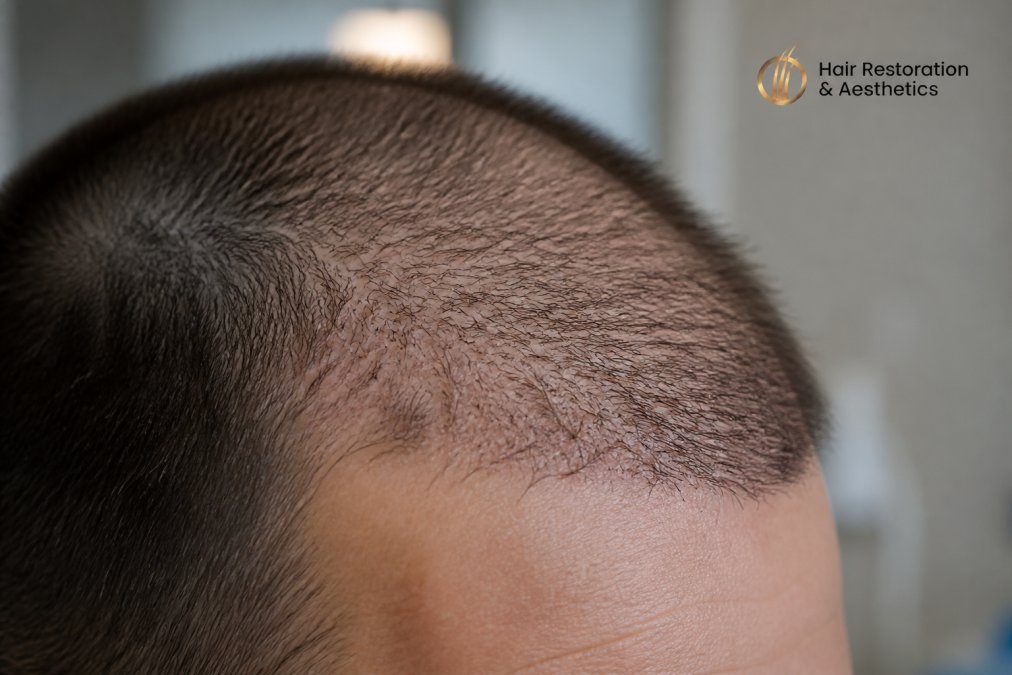
New hair growth from transplanted follicles typically begins around month two, though some follicles start as early as week six and others wait until month three or four. This variability is normal.
Initial growth is fine and sparse. You might see short, thin hairs emerging from graft sites. These hairs are fragile and can break easily. By month three, growth becomes more consistent and visible. Hair grows roughly half an inch per month.
Schedule a Free Consultation →
By month four, many patients see enough density to feel confident about the transplant's success. By month six, the transplanted hair typically reaches a length where styling becomes possible. Density continues improving beyond month six. By month nine to twelve, most patients see near-final density, though some follicles continue producing thicker, stronger hair for up to eighteen months.
Nutritional Support for Optimal Healing
While your scalp is healing and follicles are growing, nutrition matters. Hair is primarily protein. Follicles require specific micronutrients to produce strong, healthy hair.
Protein intake is foundational. Aim for adequate protein at each meal, roughly 0.7 to 1 gram per pound of body weight daily. Iron, zinc, biotin, and B vitamins are critical for hair growth. If you have a history of deficiency or follow a restrictive diet, consider a consultation with your physician about supplementation.
Hydration supports the healing process. Drink adequate water daily, roughly half your body weight in ounces. Avoid crash diets or significant caloric restriction during recovery. Your body is healing from surgery and supporting new hair growth.
Activity Restrictions and Physical Exercise Timeline
One of the most common questions patients ask is when they can return to normal activity. The answer depends on what "normal" means for you.
Strenuous Exercise and Sun Exposure Precautions
Light walking and gentle movement are fine by day seven or eight. By day fourteen, most patients can resume light exercise, easy walking, gentle yoga, or leisurely cycling. Strenuous exercise, running, weightlifting, and intense cardio should wait until at least week three or four.
Strenuous exercise increases heart rate and blood pressure, which increases bleeding and swelling. It also increases sweating, which irritates healing surgical sites and increases infection risk. By week four, you can typically resume moderate exercise. By week six, most restrictions lift.
Sun exposure is a separate concern. The recipient and donor areas are healing and hypersensitive to UV radiation. Direct sun can cause hyperpigmentation. Avoid direct sun exposure for at least three months. If you must be outside, wear a hat or use sunscreen rated SPF 30 or higher on exposed scalp.
Chlorine and salt water should be avoided for at least two weeks. After that, they're generally safe, though many surgeons recommend waiting until month two to be conservative.
Mental Health and Emotional Support During Recovery
The recovery timeline for FUE hair transplant isn't just physical. The psychological journey is equally challenging.
Weeks one and two are hopeful. But weeks three and four bring shock loss, and with it, doubt. You see hairs falling out and wonder if the procedure failed. Your scalp looks worse than it did before surgery, red, irritated, with visible scabs and shedding hair. You're not seeing new growth yet. Many patients report feeling depressed or anxious during this window.
This is normal and temporary. By week six or seven, new growth becomes visible. By month three, most patients feel confident the procedure is working. But the weeks in between are psychologically difficult.
Support matters. Talk to your surgeon about what to expect. Connect with other transplant patients who've gone through the same experience. Knowing that shock loss is expected and temporary makes it psychologically easier to manage.
Avoid social media comparisons. Every transplant is different. Every person's timeline is different. Focus on your own progress and trust the process.
Follow-Up Appointments and Long-Term Results
Your surgeon will schedule follow-up appointments to monitor healing and graft survival at two weeks, one month, three months, six months, and one year post-surgery.
The two-week appointment checks basic healing. The one-month appointment occurs right around the shock loss phase, providing reassurance that shedding is expected and grafts are viable.
The three-month and six-month appointments track hair growth. By three months, your surgeon can assess graft survival and predict final density. By six months, you're seeing substantial growth.
The one-year appointment shows near-final results. Most transplants reach their final appearance around twelve to eighteen months as follicles continue producing thicker, stronger hair.
Long-term results depend on graft survival and your genetic predisposition to hair loss. A successful FUE hair transplant restores hair to transplanted areas permanently, those grafts are genetically resistant to hair loss. But you may continue losing untransplanted hair in other areas. Many patients plan for staged procedures to address progressive hair loss over time.
The recovery timeline for FUE hair transplant extends far beyond the first two weeks. True healing takes months. True results take longer. But understanding what to expect at each stage, the swelling, the shock loss, the slow regrowth, and the psychological challenges, transforms the experience from frightening to manageable. At Hair Restoration Clinic of Granite Bay, Dr. Piyush Kumar and his team guide patients through every stage of recovery with realistic expectations and proven protocols. If you're considering FUE hair restoration and want to understand exactly what recovery looks like, schedule a free consultation to discuss your specific situation and timeline with an experienced physician.
Frequently Asked Questions
Would I look normal 10 days after FUE hair transplant?
At day 10, most crusting has shed, but mild redness and swelling may remain visible depending on your skin tone and healing pace. The recipient site typically shows fine, short hairs beginning to emerge. Many patients feel comfortable returning to work with a hat or by styling hair over the area. Full healing takes 2-3 weeks, but you'll look substantially better than in the first week.
When can I return to work following an FUE hair transplant?
Most patients return to desk work within 7-10 days post-transplant. If your job involves physical labor, direct sun exposure, or sweating, wait 2-3 weeks. The transplanted follicles are most vulnerable during the first 14 days, so avoid environments that compromise scalp hygiene or increase infection risk. Your surgeon will provide specific guidelines during your follow-up appointments.
When will I see the final results of my FUE hair transplant?
Hair begins growing visibly around month 3-4, but final results take 12-18 months. Most noticeable improvement occurs between months 6-12 as transplanted follicles enter the anagen phase and produce thicker, longer strands. Graft survival rates are generally high when post-operative care is followed correctly, and the transplanted hair continues growing for life.
How can I speed up FUE recovery?
Follow post-operative instructions precisely: use prescribed saline spray, avoid strenuous exercise for 3 weeks, protect the scalp from sun exposure, and maintain excellent scalp hygiene after crusts shed. Proper nutrition supports healing, especially protein and micronutrients like zinc and vitamin C. Manage stress and get adequate sleep, as the body heals most efficiently during rest. Avoid smoking and alcohol, which impair circulation and graft survival.
What happens if I accidentally pull off a scab after FUE?
Accidentally removing a scab may compromise the graft site and increase infection risk. If this happens, gently rinse the area with saline spray and contact your surgeon immediately. Avoid touching, picking, or scratching the transplanted area for at least 14 days. Wear a protective hat or headband if needed to prevent accidental damage while crusts are forming and shedding naturally.
How long does it take for the donor area to heal after FUE?
The donor area heals faster than the recipient site because follicles are extracted individually, leaving tiny puncture wounds rather than a linear scar. Most donor sites show minimal visible healing within 7-10 days and are virtually undetectable within 2-3 weeks. Full collagen remodeling continues for several months, but you can resume normal activities once initial crusting resolves.
Are there specific activities I must avoid during the first two weeks of recovery?
Avoid strenuous exercise, heavy lifting, bending over, swimming, saunas, and direct sun exposure for at least 14 days. Do not wash your hair or scalp vigorously, and avoid touching or scratching the transplanted area. Sleep with your head elevated on 2-3 pillows to minimize swelling. Wear a protective hat outdoors. These precautions protect graft survival and reduce inflammation during the critical healing window.
This article was written using GrandRanker