 how-to
Post-Operative Care Tips for Cosmetic Procedures
Table of Contents
- What to Expect in the First 24 Hours After Your Cosmetic Procedure
- Aftercare Instructions for Cosmetic Treatments: The First Week
- Skin Care After a Cosmetic Procedure: Cleaning and Protection
- Understanding Cosmetic Treatment Recovery Time
- When to Call a Provider After Cosmetic Treatment
- Managing Swelling, Bruising, and Discomfort
- Long-Term Post-Operative Care and Follow-Up
- Frequently Asked Questions
Last Updated: October 17, 2026
What to Expect in the First 24 Hours After Your Cosmetic Procedure
The first day after your procedure sets the tone for your entire recovery. Your body is healing, and what you do during these critical hours matters.
Rest is your priority. Avoid strenuous activity, heavy lifting, and intense exercise for at least 24 hours. Your blood pressure should stay low to minimize swelling. Keep your head elevated, even while sleeping, by using extra pillows.
Follow your provider's specific post-operative care tips exactly. Some procedures require you to keep bandages on. Others need the area to stay clean and dry.
Many patients ask about pain. Most cosmetic procedures cause mild discomfort rather than sharp pain. Over-the-counter pain relief usually works well. Your provider will recommend safe options during your recovery.
Watch for signs that need attention. Excessive bleeding, severe swelling that worsens after 24 hours, or signs of infection warrant a call to your provider. But minor swelling and slight bruising are expected and will improve.
Aftercare Instructions for Cosmetic Treatments: The First Week
Your first week determines how well you heal. This is when aftercare instructions for cosmetic treatments become your daily routine. Stick to them closely, even when you feel tempted to resume normal activities.
Days 2 through 7 are critical for managing swelling and preventing complications. Most swelling peaks around day 3, then gradually improves. Bruising may darken before it fades, this is normal and temporary.
Keep the treated area clean. Wash gently with lukewarm water and a mild cleanser. Pat dry with a clean towel. Don't rub or scrub. Your skin is sensitive right now.
Sleep with your head elevated for at least the first week. This prevents fluid from pooling in the treated area overnight. Use two or three pillows to keep your head higher than your heart.
Avoid these common mistakes:
- Touching or picking at the treated area
- Applying heat (saunas, hot showers, hot tubs)
- Swimming or submerging the area in water
- Strenuous exercise or heavy lifting
- Alcohol and blood thinners (ask your provider about medications)
- Direct sun exposure
Most patients can return to light work by day 3 or 4. Desk jobs are fine. Jobs that involve physical labor, heavy sweating, or sun exposure need to wait longer. Ask your provider when you can safely resume your normal routine.
Skin Care After a Cosmetic Procedure: Cleaning and Protection
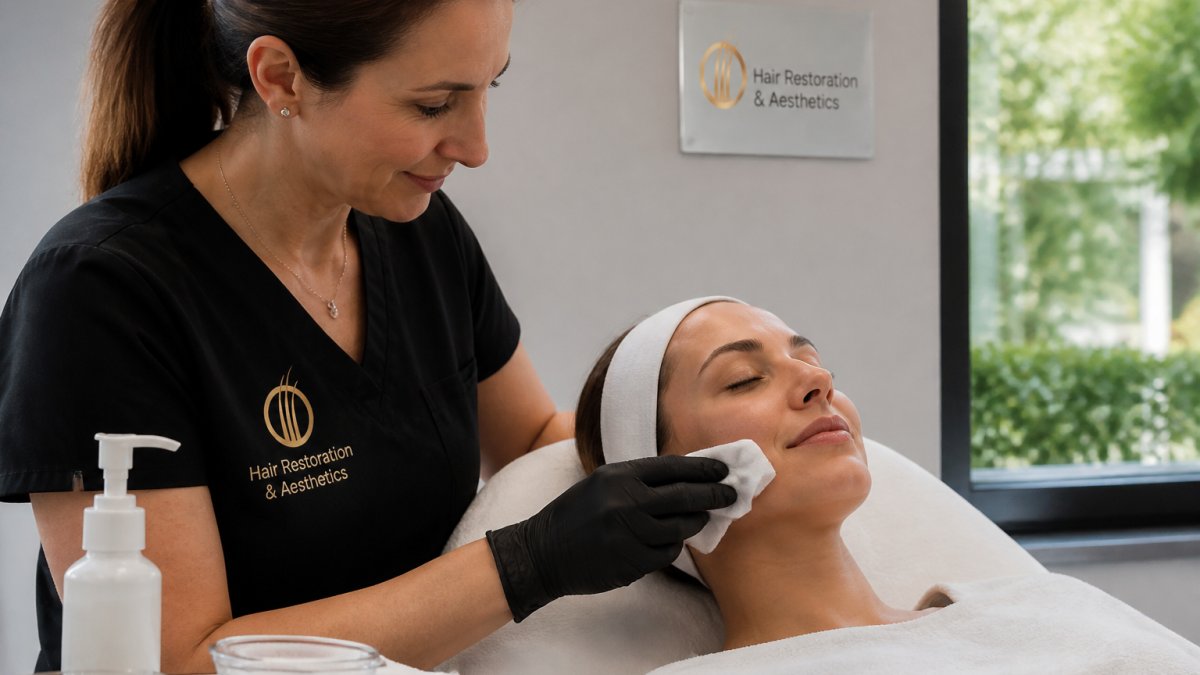
Skin care after a cosmetic procedure is simpler than your normal routine, less is more right now. Your skin needs gentle handling and protection, not extra products.
Cleanse twice daily with a gentle, fragrance-free cleanser. Use lukewarm water, never hot. Hot water increases inflammation and swelling. Apply cleanser with your fingertips, using light circular motions.
Moisturize immediately after cleansing. Your provider may recommend a specific moisturizer. If not, choose one labeled for sensitive skin. Apply while your skin is still slightly damp to lock in hydration.
Sun protection is non-negotiable. Use a broad-spectrum SPF 30 or higher daily (the American Academy of Dermatology).
Avoid these skincare ingredients during recovery:
- Retinol and retinoids
- Vitamin C serums
- Alpha hydroxy acids (AHAs)
- Beta hydroxy acids (BHAs)
- Benzoyl peroxide
- Fragrance and essential oils
Your provider will tell you when it's safe to resume these products. Usually, it's 1-2 weeks after your procedure. Introduce them slowly, one at a time, to avoid irritation.
Understanding Cosmetic Treatment Recovery Time
Cosmetic treatment recovery time varies by procedure type and your individual healing rate. Understanding realistic timelines helps you plan your schedule and manage expectations. The table below reflects typical recovery windows for the non-surgical treatments most patients ask about, your provider will confirm your specific timeline at your consultation.
| Treatment | Typical Downtime | When Results Appear |
|---|---|---|
| Neurotoxins (Botox, Dysport, Xeomin) | None to 24 hours | 3-7 days, full effect at 14 days |
| Dermal fillers | 24-48 hours of mild swelling | Immediately, settling over 2 weeks |
| PDO threads | 3-5 days of mild swelling | 2-4 weeks as collagen builds |
| Microneedling | 1-3 days of redness | 4-6 weeks, series-dependent |
| Laser facials | 1-3 days of redness | 1-2 weeks, series-dependent |
| Laser hair removal | 24-48 hours of redness | 2-3 weeks per session |
| Skin rejuvenation | 2-5 days | 2-4 weeks |
| Scar treatment | 3-7 days | 6-12 weeks, series-dependent |
| FUE hair transplant | 3-7 days visible healing | 3-4 months for growth, 12 months final |
| Alma TED hair restoration | None | 6-12 weeks, series-dependent |
| Eyebrow restoration | 3-7 days visible healing | 3-4 months for growth |
| IV therapy | None | Immediate to 24 hours |
Here's what to expect by timeline for most treatments:
| Timeline | What's Happening |
|---|---|
| Days 1-3 | Swelling peaks. Mild discomfort. Follow strict aftercare. |
| Days 4-7 | Swelling starts to decrease. Bruising may darken. Light activity okay. |
| Weeks 2-3 | Most swelling gone. Bruising fading. Can resume most activities. |
| Weeks 4-6 | Final healing. Results becoming clear. Full activity safe. |
Some treatments heal faster than others. Non-invasive options like laser facials or microneedling may have minimal downtime. More intensive options take longer. Your provider will give you a specific timeline during your consultation.
Age, skin type, and overall health affect healing speed. Younger patients often heal faster. Smokers and those with certain health conditions may heal more slowly. Proper aftercare accelerates the process.
When to Call a Provider After Cosmetic Treatment
Know the difference between normal healing and complications. Minor swelling and bruising are expected. Certain signs mean you should contact your provider right away.
Call your provider immediately if you experience:
- Excessive bleeding that doesn't stop with gentle pressure
- Signs of infection (increasing redness, warmth, pus, fever above 101°F)
- Severe pain not relieved by recommended pain medication
- Allergic reaction (hives, difficulty breathing, severe itching)
- Unusual numbness or tingling that worsens or spreads
- Asymmetry or results that look wrong (wait until swelling subsides to judge)
- Blistering or open sores
- Swelling that worsens after day 5
Most concerns are minor and resolve on their own. But don't wait to call if something feels wrong. Your provider wants to hear from you. Early intervention prevents small issues from becoming big problems.
Keep your provider's contact information handy. Know their after-hours number. Some practices have nurse hotlines for non-emergency questions. Use them. That's what they're there for.
Schedule your follow-up appointment before you leave the clinic. This visit, usually 1-2 weeks after your procedure, lets your provider check your healing and address any concerns. Don't skip it.
Managing Swelling, Bruising, and Discomfort
Swelling and bruising are your body's natural healing response. They're temporary. Managing them well speeds recovery and improves comfort.
Schedule a Free Consultation →
Swelling management:
Cold therapy works best in the first 48 hours. Apply ice packs for 15 minutes, then rest for 15 minutes. Repeat throughout the day.
Elevation matters. Keep your head elevated above your heart as much as possible. Sleep with extra pillows. Sit upright rather than lying flat.
Stay hydrated. Drink plenty of water. Avoid alcohol and excess salt, which increase fluid retention. Limit caffeine, which can increase swelling in some people.
Bruising management:
Bruising fades on its own. You can't speed it up, but you can minimize it.
Some people find that vitamin K creams or arnica gel help, though evidence is mixed.
Discomfort management:
Over-the-counter pain relievers like acetaminophen work well for most patients. Take them as directed on the package.
Rest and relaxation reduce discomfort naturally. Your body heals faster when you're not stressed. Avoid strenuous activity. Take it easy for the first week.
Long-Term Post-Operative Care and Follow-Up
Recovery doesn't end after two weeks. Post-operative care tips extend beyond the initial healing phase. Long-term care protects your results and keeps your skin healthy.
Attend all scheduled follow-up appointments. Your provider monitors your healing and addresses any concerns.
Sun protection remains crucial for months. UV exposure can darken scars, cause discoloration, and damage healing skin. Use SPF 30 or higher daily. Reapply frequently.
Resume your normal skincare routine gradually. Introduce one product at a time, waiting a few days between additions. This helps you spot any irritation.
Exercise can resume slowly. Start with light walking after the first week. Progress to moderate activity by week 2 or 3.
Protect your results long-term:
- Maintain a consistent skincare routine
- Use sunscreen daily, year-round
- Stay hydrated and eat a balanced diet
- Avoid smoking and excessive alcohol
- Get adequate sleep
- Manage stress through exercise or relaxation
Some treatments require periodic touch-ups to maintain results. Neurotoxin treatments typically last 3-4 months. Dermal fillers last 6-12 months depending on the product (the American Academy of Dermatology).
Evaluating your provider for long-term care
Long-term results depend on an ongoing relationship with a provider who communicates clearly and puts safety first. Use these criteria when deciding whether to continue care:
- Credentials: Confirm the provider is licensed and trained in the specific treatment you received. Ask who performs the procedure and who handles follow-up.
- Communication: A good provider answers questions in plain language, returns calls within a reasonable window, and gives you written aftercare and follow-up instructions.
- Safety standards: Look for a clean, accredited setting, proper consent forms, and a clear protocol for handling complications.
- Pressure-free decision-making: You should never feel rushed into booking the next session or adding treatments you didn't ask about. A provider who respects your time to decide is a provider worth keeping.
- Transparency about outcomes: Ask what results are realistic for your skin type and health history, and what the plan is if you don't see the expected change.
If something feels off, vague answers, inconsistent follow-up, or pressure to commit to a package, it's reasonable to seek a second opinion.
At Hair Restoration Clinic of Granite Bay, we believe recovery is part of the treatment. If you're considering a cosmetic procedure and want to discuss what recovery will look like for your specific situation, Schedule a Free Consultation with our team to learn more.
Frequently Asked Questions
What should I do immediately after my cosmetic procedure?
Follow your provider's specific aftercare instructions carefully. Most patients experience mild swelling and redness in the first 24 hours. Rest, apply ice if recommended, keep the treatment area clean and dry, and avoid touching or rubbing the area. Take prescribed medications as directed and avoid strenuous activity. Your provider will give you a detailed post-operative care sheet before you leave, follow it exactly to support optimal healing and results.
How long is the cosmetic treatment recovery time?
Recovery time varies depending on the procedure type and extent of treatment. Some patients return to light activities within 24-48 hours, while others need a week or more. Most swelling and bruising resolves within 7-14 days, though final results can take several weeks to months to fully appear. Your provider will outline your specific cosmetic treatment recovery time during your consultation so you can plan accordingly.
When should I contact my provider after a cosmetic procedure?
Contact your provider immediately if you experience severe pain not relieved by prescribed medication, signs of infection (fever, increasing redness, pus), excessive bleeding, or allergic reactions. Also reach out if you have questions about your aftercare or notice unusual symptoms. Most providers offer 24-hour support lines for post-operative concerns. Don't wait, when in doubt, call. Your safety and satisfaction are the priority.
Can I wash my face after a cosmetic procedure?
Yes, but gently and only after your provider gives clearance, typically 24 hours post-procedure. Use lukewarm water and a mild, fragrance-free cleanser. Pat skin dry gently with a clean cloth; do not rub. Avoid hot water, harsh scrubs, and products containing acids, retinoids, or vitamin C until cleared by your provider. Proper skin care after a cosmetic procedure is essential for preventing infection and supporting healing.
Proper post-operative care tips make the difference between good results and great ones. Your healing process deserves attention and care. If you have questions about recovery or want to discuss which cosmetic treatment is right for you, schedule a free consultation with our board-certified team. We'll walk you through the entire process, from procedure to full recovery.