 how-to
How to Identify Early Signs of Hair Loss
Last Updated: November 1, 2026
Quick Summary
The early signs of hair loss are usually subtle changes in density and texture rather than bald spots: a wider part line, a softer hairline at the temples, more scalp visible under bright light, a ponytail that feels thinner, and hairs that look finer and shorter. Track them with monthly photos taken from the same spot, lighting and angle, and compare every three months rather than weekly.
- Most people shed roughly 50 to 100 hairs a day, a general estimate rather than a pass/fail threshold.
- A delayed shedding wave can arrive about two to three months after illness, surgery, fever, stress, weight change or childbirth.
- For the pull test, take about 50 to 60 hairs near the crown or temple at least 24 hours after washing.
- Book a routine evaluation if thinning has been visible for three months or more and is not improving.
- Bring dated monthly photos, a shedding log, medication list and family history to a doctor's visit.
Table of Contents
- Why Catching Early Signs of Hair Loss Matters
- Hair Shedding vs Hair Loss: What's the Difference?
- How Much Hair Shedding Is Normal?
- The Earliest Signs of Thinning Hair to Watch For
- How to Track Hair Loss Over Time
- When to See a Doctor for Hair Loss
- What Happens at a Free Hair Loss Consultation
- Frequently Asked Questions
Why Catching Early Signs of Hair Loss Matters
Spotting the early signs of hair loss gives you the widest range of options. Once a follicle stops producing hair for good, no product brings it back. Treatment works best on follicles that are still alive but shrinking.
That is the whole game. Timing decides everything.
The hair loss treatment guide on our site walks through the full range of options.
Hair Shedding vs Hair Loss: What's the Difference?
Hair shedding is the normal daily release of old hairs. Hair loss is when fewer hairs grow back to replace them. One is a cycle. The other is a shift in that cycle.
Everyone sheds. The question is whether regrowth keeps pace.
How to Tell Shedding From Loss in Practice
Look at the pattern, not a single day. Ask yourself:
- Are the shed hairs thin and short, or full length?
- Is the loss spread out or focused on the temples and crown?
- Has your part line widened over months?
- Is your scalp more visible in photos than it was a year ago?
Thin, short strands often point to miniaturized follicles. That is a hallmark of pattern hair loss, not routine shedding. Full-length hairs scattered on a pillow are usually just the normal cycle.
How Much Hair Shedding Is Normal?
Most people shed roughly 50 to 100 hairs a day, a commonly cited general estimate (the American Academy of Dermatology). That number is not a pass/fail threshold. It moves with washing frequency, brushing, combing, season, and hormonal shifts, so a single heavy day tells you very little.
The reason is the hair growth cycle. Each follicle cycles through anagen (growth, roughly two to six years on the scalp), catagen (a short transition of a few weeks), and telogen (a resting phase of about three months) before the hair sheds and the cycle restarts. Because hairs sit in different phases, shedding is normally staggered. When a large share of follicles gets pushed into telogen at once, after illness, surgery, high fever, major stress, rapid weight change, or childbirth, you get a delayed wave of shedding about two to three months later (the American Academy of Dermatology). That pattern is called telogen effluvium, and it is diffuse rather than patterned (Telogen Effluvium: A Review).
Why Wash Day Looks Alarming
Hairs that were already loose collect in the scalp and release when you shampoo and comb. If you wash every three days, that wash-day count can look like triple the daily number and still be completely normal. Judge by the weekly total and the trend across weeks, not one shower.
The Pull Test, Done Properly
A rough pull test is more useful than counting strands, but technique matters:
- Wash and dry your hair, and do not apply product.
- Wait at least 24 hours after washing so loose hairs have cleared.
- Take a small section of about 50 to 60 hairs near the crown or temple.
- Run your thumb and fingers firmly but gently from the base to the tip.
- Count the hairs that come free.
A few strands is generally considered typical. If you consistently pull out more from the same area on repeated attempts, consider a professional evaluation. Do the test on the same spot at the same time of day so you are comparing like with like.
Shedding Patterns That Point Somewhere Else
- Sudden, heavy, diffuse shedding starting weeks after a stressor: often telogen effluvium, which usually resolves on its own over several months.
- Patchy, smooth bald spots with no scaling: can suggest alopecia areata, an autoimmune pattern that warrants a doctor's visit.
- Shedding with fatigue, cold intolerance, or weight change: worth discussing with a doctor.
- Shedding with an itchy, flaky, or inflamed scalp: worth discussing with a doctor.
The article gives a few concrete reference points for judging whether shedding is normal.
| Item | Value | Note |
|---|---|---|
| Typical daily shedding | 50 to 100 hairs | A general estimate, not a pass/fail threshold |
| Anagen (growth phase) | Roughly two to six years | On the scalp |
| Catagen (transition) | A few weeks | Short transition phase |
| Telogen (resting phase) | About three months | Then the hair sheds and the cycle restarts |
| Delayed shedding wave | About two to three months later | After illness, surgery, fever, stress, weight change, childbirth |
| Pull test section | About 50 to 60 hairs | Near the crown or temple |
| Pull test timing | At least 24 hours after washing | Wash and dry hair, no product |
The Earliest Signs of Thinning Hair to Watch For
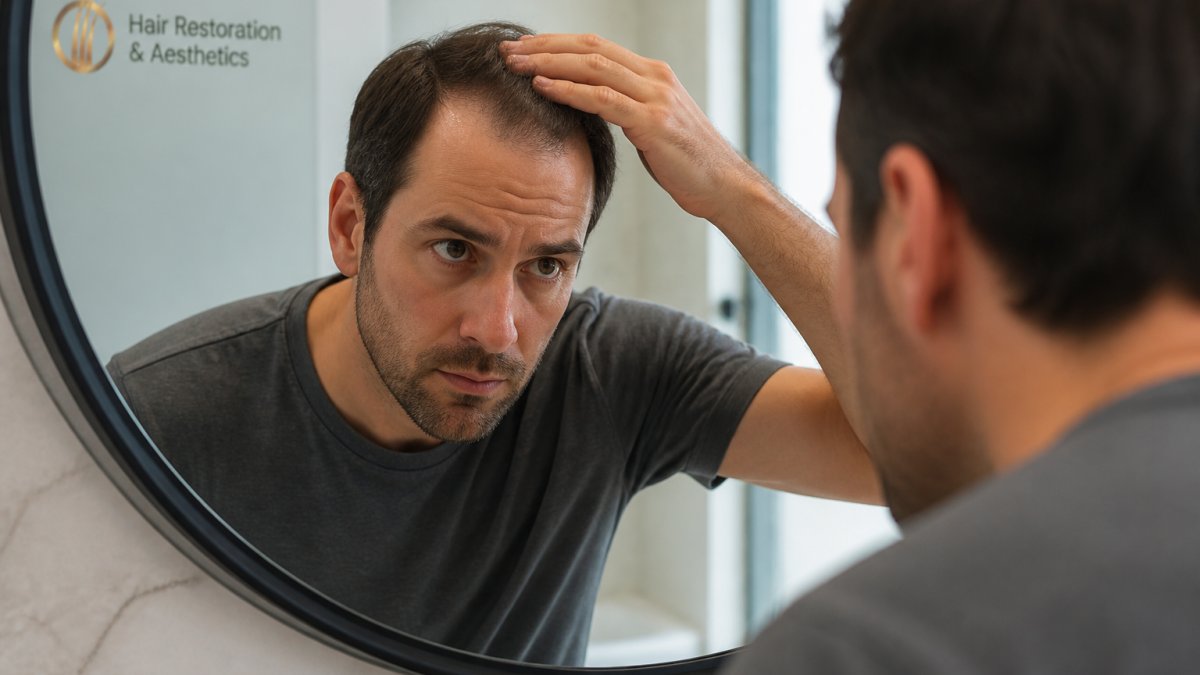
The earliest signs of thinning hair are subtle. Density drops before anyone else notices. You will see them first in the mirror, not in a crowd.
- A wider part line
- A softer, less dense hairline at the temples
- More scalp visible under bright light
- A ponytail that feels thinner in your hand
- Hairs that look finer and shorter than the rest
For men, the temples and crown usually go first. For women, it is often the part line and overall density. Our guide on how to stop male pattern baldness early covers the most common form in more depth.
What Early Hair Loss Actually Looks Like
Early loss rarely looks like a bald spot. It looks like a change in texture and coverage. The hairline creeps back slowly. The scalp catches the light.
That is why photos beat memory. You will not notice a slow change day to day.
Schedule a Free Consultation →
How to Track Hair Loss Over Time
Photograph your hair on the same day each month. Same spot, same lighting, same angle. This is the single most reliable way to see what is actually happening.

Set up a simple tracking routine:
- Pick one spot with good overhead light.
- Take three shots: front hairline, part line, crown.
- Label each photo with the date.
- Compare every three months, not every week.
Weekly checks feed anxiety. Quarterly checks show the trend.
Also note shedding on wash days, any scalp itching, and changes in your diet or stress. Those clues help a doctor later.
When to See a Doctor for Hair Loss
Book a visit when the pattern is persistent, not occasional. The clearest signal is a trend that keeps moving in one direction over months: a part line that widens, a hairline that creeps back, or a pull test that keeps climbing. One bad week is not a diagnosis.
Routine vs. Prompt: Sorting the Signals
Book a routine evaluation when:
- Thinning has been visible for three months or more and is not improving.
- Your part line, temples, or crown show steady change across monthly photos.
- The pull test reliably releases six or more hairs from the same spot.
- You have a family history of pattern hair loss and want to act before it advances.
Seek a prompt visit when:
- Shedding starts suddenly and heavily, especially weeks after illness, surgery, high fever, or major stress.
- You notice smooth, patchy bald spots, with or without scalp itching or burning.
- The scalp is red, scaly, painful, or inflamed.
- Loss is accompanied by fatigue, cold intolerance, unusual weight change, or other systemic symptoms.
- You are losing hair alongside starting a new medication.
What a Doctor Can Rule Out
A clinician can check for possible underlying contributors, such as thyroid, iron, vitamin D, or other nutritional or hormonal factors. A scalp exam also distinguishes pattern hair loss from conditions like alopecia areata or scalp infections that need different care.
How to Prepare for the Visit
Bring more than a description. A short, organized file makes the appointment far more useful:
- Your dated monthly photos, in order.
- A simple log of wash-day shedding and pull test results.
- A list of medications and supplements, with start dates.
- Notes on recent illness, surgery, stress, or major weight change.
- Your family history of hair loss.
If you are ready to have it looked at properly, here is how to book a hair restoration consultation and what the process involves.
What Happens at a Free Hair Loss Consultation
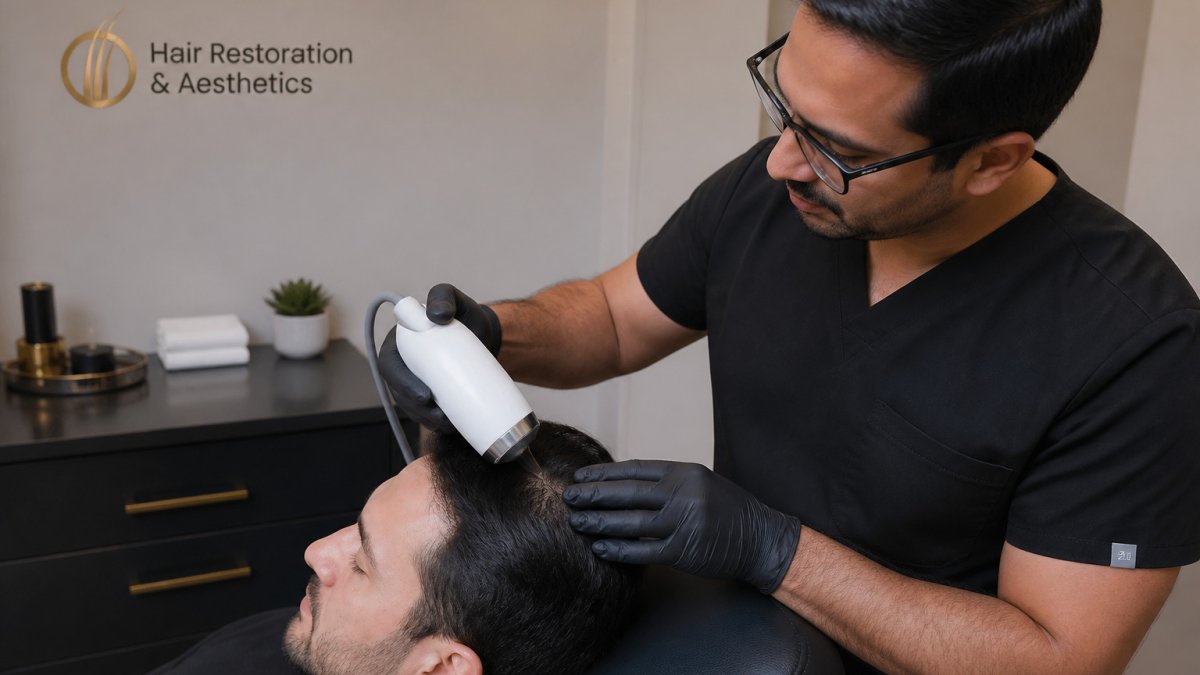
A consultation is a conversation and an exam. A physician reviews your history and examines your scalp.
At our clinic, Dr. Piyush Kumar, MD, leads that evaluation. He is board-certified and has over a decade of experience. The practice uses the Cole follicular unit extraction system for FUE hair and eyebrow transplants. For patients who want a non-surgical route, TED Hair Restoration uses Alma TED acoustic sound wave therapy.
You can schedule a free consultation and get a clear read on where your hair actually stands.
Frequently Asked Questions
What are the first signs of hair loss?
The earliest signs of hair loss usually show up as a widening part, a receding hairline, or a thinner crown rather than sudden bald patches. You may also notice more hair on your pillow, in the shower drain, or on your brush. Many people first spot it in photos taken months apart. Compare the same angle and lighting over time, and look for a change in scalp visibility rather than a single day's shedding.
How can I tell if my hair is thinning or just shedding?
Shedding is a normal cycle where hair falls out and regrows. Thinning means hair is not growing back at the same rate or density. A practical test: if your part looks wider or your scalp is more visible in the same lighting, that points to thinning. If you simply notice more loose hairs but density looks the same, it is more likely shedding. Track both for a few weeks before drawing conclusions.
When should I see a doctor about hair loss?
See a doctor if you notice rapid shedding, patchy loss, scalp itching or pain, or thinning that continues for more than a few months. Also seek advice if hair loss comes with fatigue, weight changes, or other new symptoms. A board-certified physician can examine your scalp, review your history, and discuss options such as FUE hair transplant or Alma TED acoustic sound wave therapy if appropriate.
Can stress cause sudden hair shedding?
Yes. Significant physical or emotional stress can push more hairs than usual into the shedding phase, often weeks to months after the event. This type of shedding is usually temporary, but it can be alarming. If shedding does not settle within a few months, or if you also see thinning, get evaluated. A doctor can rule out other causes and recommend next steps.
Hair loss moves slowly, which makes it easy to ignore until the options narrow. Get a professional assessment while you still have the most choices. Hair Restoration Clinic of Granite Bay offers board-certified care, a free consultation, and payment plans, so you can start with answers instead of guesswork. Get started with Hair Restoration Clinic of Granite Bay and find out exactly what your scalp is telling you.