 Ultimate guide
What Are the Long-Term Effects of Microneedling for Stretch Marks
Last Updated: November 22, 2026
Quick Summary
Long-term, microneedling for stretch marks may produce gradual, modest improvements in texture and colour, though results vary widely between people. Changes build over several months as new collagen forms, and the benefit is best described as long-lasting rather than permanent. Newer red marks often respond better than older white ones.
- Improvement usually appears gradually over several months rather than immediately after treatment.
- Results are best described as long-lasting rather than permanent, and the long-term evidence is limited.
- Newer red marks generally respond better than older, more mature white marks.
- Post-inflammatory hyperpigmentation is the most common long-term concern, especially in darker skin tones.
- Strict sun protection for at least two weeks after each session reduces long-term risk.
Table of Contents
- What Are the Long-Term Effects of Microneedling for Stretch Marks?
- How Microneedling Affects Collagen and Elastin in Stretch Marks
- How Long Microneedling Results Last After 3 Treatments
- How Many Microneedling Sessions Stretch Marks Typically Need
- Realistic Changes by Stretch Mark Color, Age and Body Area
- Microneedling Side Effects Over the Long Term
- Microneedling Stretch Marks Before and After: What to Expect
- Booking a Free Consultation to Assess Your Stretch Marks
- Frequently Asked Questions
What Are the Long-Term Effects of Microneedling for Stretch Marks?
Long-term, microneedling for stretch marks may produce gradual, modest improvements in texture and colour, though results vary widely between individuals. This guide explains what the evidence and clinical experience generally suggest about how these effects develop over months and years. Stretch marks, known medically as striae, form when the dermis is stretched beyond its capacity, leaving scar-like bands of altered collagen and elastin.
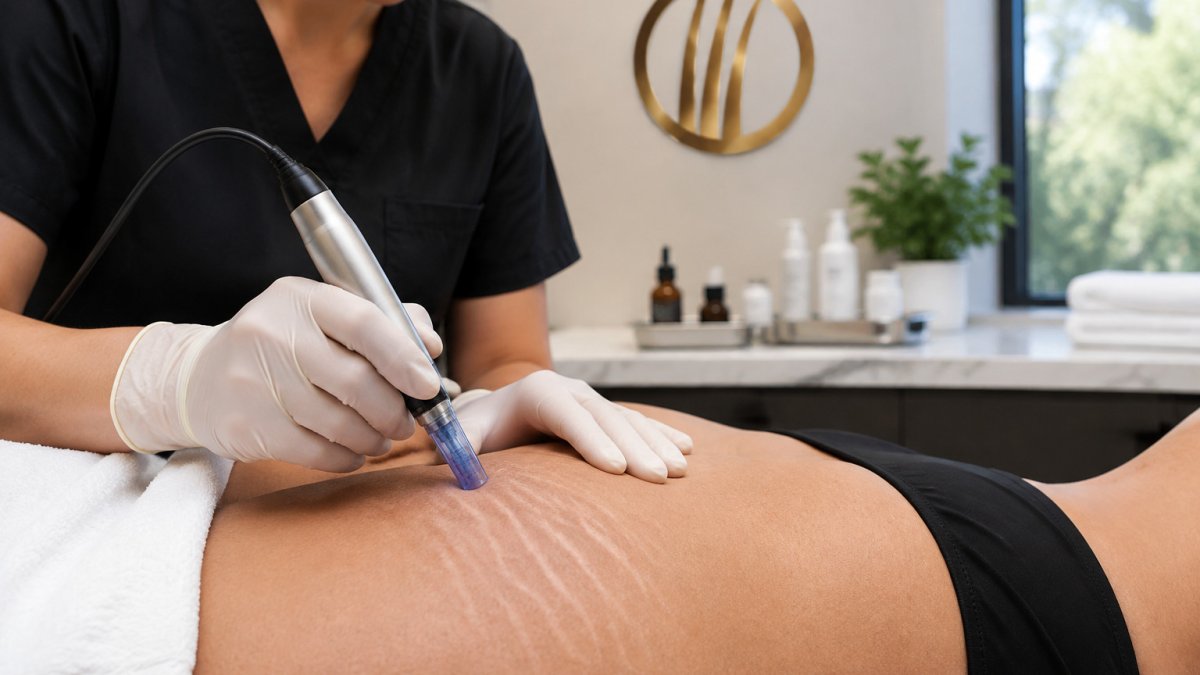
Microneedling works by creating many tiny controlled punctures in the skin, which prompts the body to repair itself and produce new collagen. Because the process is gradual, the most noticeable changes usually appear over several months rather than immediately. A clinician can explain whether the treatment is a reasonable option for your particular marks, colour and skin type during a Schedule a Free Consultation.
How Microneedling Affects Collagen and Elastin in Stretch Marks
The controlled skin injury from microneedling triggers a wound-healing response that includes new collagen and elastin production. Researchers generally describe this as dermal remodelling, meaning the existing scar tissue is gradually reorganised. National Institutes of Health overview of microneedling research
Changes are usually subtle. Red, newer marks may appear to fade more than older white marks, which have less active blood supply and tend to respond more slowly. Skin texture and firmness around the marks may also improve over time.
How Long Microneedling Results Last After 3 Treatments
Durability is the part of microneedling most often oversold, so it helps to separate what is actually known from what is assumed. The honest answer for stretch marks is that improvement is best described as long-lasting rather than permanent, and the evidence base is thinner than the marketing around collagen induction suggests.
What the healing cycle actually does. Each microneedling session creates controlled micro-injuries that trigger three overlapping phases: inflammation in the first few days, proliferation over the following weeks as new collagen and elastin are laid down, and remodeling that can continue for months. Because remodeling outlasts the treatment calendar, many people see the clearest change in the three to six months after their final session rather than immediately after it. A series of three sessions spaced roughly four to six weeks apart therefore produces a result that is still maturing well after the last appointment.
What studies actually measured. Most clinical research on microneedling and striae evaluates change at a fixed endpoint, commonly a few months after the treatment course, using photographic scales or investigator ratings. That design tells you whether marks looked better at that checkpoint; it does not tell you whether the improvement held at two, five, or ten years. National Institutes of Health overview of microneedling research Long-term follow-up specific to stretch marks is limited, and any claim that results last a defined number of years should be treated as clinical impression rather than established fact.
Why stretch marks behave differently from wrinkles. Collagen induction in photoaged skin is supported by a larger body of evidence than collagen induction in striae. Stretch marks are a form of dermal scarring with altered, disorganized collagen and elastin, and older white marks in particular have reduced vascularity and less active remodeling. That is why improvement tends to plateau earlier in mature marks and why a maintenance schedule, often one session every few months, is a common clinical pattern rather than a guarantee of continued gains.
What shortens the apparent result. Sun exposure accelerates collagen breakdown and can deepen the contrast between a faded mark and surrounding skin. Significant weight change, pregnancy, and rapid growth during puberty can create new striae independent of any treatment. Age-related collagen loss continues regardless of microneedling, so the comparison that matters is treated skin versus what that skin would have looked like untreated, not treated skin versus flawless skin.
A realistic durability picture by mark type.
How Many Microneedling Sessions Stretch Marks Typically Need
Treatment plans commonly involve a series of sessions spaced several weeks apart, since the skin needs time to heal and respond between treatments. The question of whether microneedling is worth repeating for scarring is covered in a separate article. The right number depends on the depth of the marks, their colour and the area of the body being treated. Keeping track of progress with photographs can help you and your clinician decide when further sessions are worthwhile.
Realistic Changes by Stretch Mark Color, Age and Body Area
Newer red marks generally respond better than older white ones, which are more mature and less vascular. Marks on the abdomen, hips and thighs can behave differently from those on the breasts or upper arms because skin thickness and stretch patterns vary. A guide to treating textured scars shows how depth and skin area shape outcomes in a similar way. Expectations should be set around gradual improvement in appearance rather than complete removal of the marks.
Microneedling Side Effects Over the Long Term
Most microneedling side effects are short-lived, but the long-term picture deserves more attention than a single sentence about infection. The concerns that matter months later are persistent color change, texture problems, and marks that look worse rather than better.
The normal recovery arc. Erythema (redness) typically settles within a few days, and mild swelling and pinpoint bleeding resolve even sooner. Readers can see what to expect as the skin heals after each session. Some people notice dry, flaky skin or slight bronzing for up to a week. These are expected parts of the wound-healing response, not complications.
Post-inflammatory hyperpigmentation is the most common long-term concern. In darker skin tones, particularly Fitzpatrick types IV to VI, the inflammation from needling can trigger excess melanin production, leaving brown patches that may take months to fade and can persist. This risk is higher with deeper needle settings, aggressive passes, and inadequate sun protection afterward. A clinician experienced with your skin tone should adjust depth and energy accordingly, and a test area is a reasonable precaution. Post-inflammatory hypopigmentation (light patches) is less common but harder to reverse.
Texture changes and scarring.
Marks that appear to worsen. Some people report that stretch marks look wider, more indented, or more noticeable in the weeks after treatment. This is usually temporary remodeling, but persistent widening or thinning warrants assessment. Prolonged redness beyond a couple of weeks, spreading warmth, pus, fever, or a new firm lump under the skin are reasons to contact a clinician promptly rather than wait it out.
Infection and reactivation. A clinician can advise on any factors in your medical history that may affect treatment before it is planned.
Prevention that actually reduces long-term risk. Strict sun protection for at least two weeks after each session, gentle skincare without actives during healing, and avoiding picking or scrubbing are the basics. If you notice a change that persists beyond a few weeks, photograph it under consistent lighting and have it reviewed.
The table below sums up the long-term concerns covered in this section and what each one usually means.
| Concern | Cause | Note |
|---|---|---|
| Post-inflammatory hyperpigmentation | Inflammation from needling triggers excess melanin | Most common in darker skin tones; may take months to fade |
| Post-inflammatory hypopigmentation | Inflammation leaves light patches | Less common but harder to reverse |
| Redness | Normal wound-healing response | Typically settles within a few days |
| Marks that look wider or more indented | Temporary remodelling | Persistent widening warrants assessment |
| Prolonged redness or spreading warmth | Possible infection | Contact a clinician promptly |
| Pus, fever or firm lump | Possible infection | Contact a clinician promptly |
Microneedling Stretch Marks Before and After: What to Expect
Before-and-after results vary considerably, and photographs taken under consistent lighting are the most useful way to judge progress over time. Expect gradual change over several months rather than dramatic transformation.
Booking a Free Consultation to Assess Your Stretch Marks
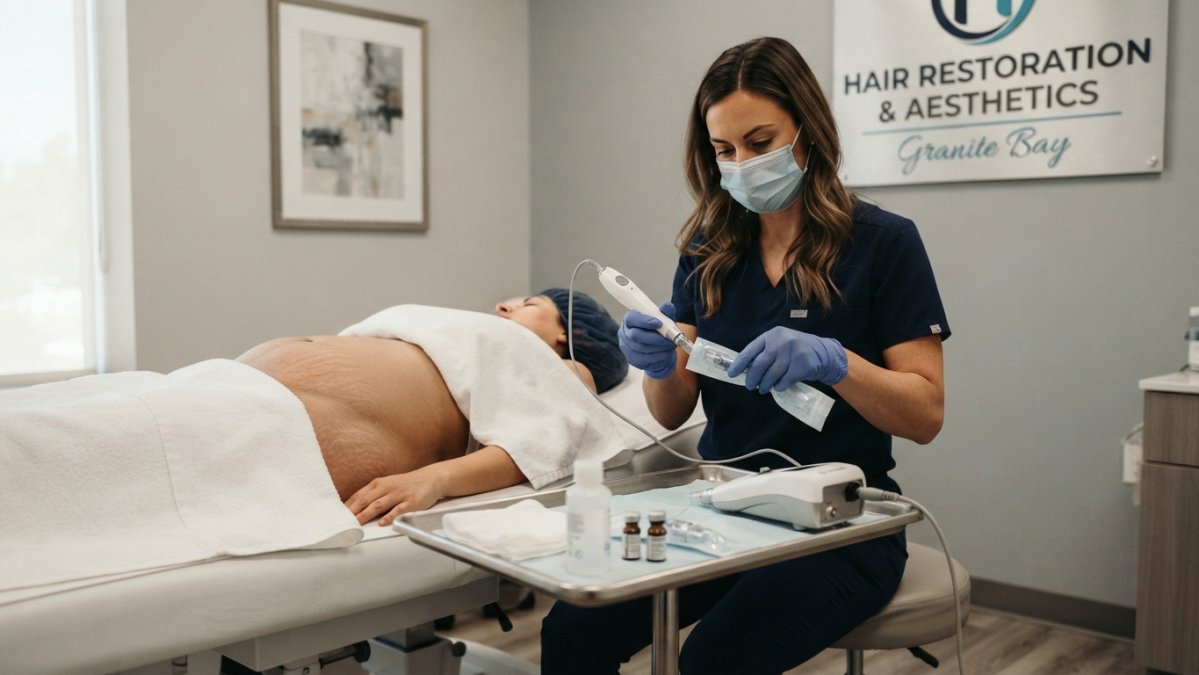
A consultation with a qualified clinician is the best way to learn whether microneedling suits your stretch marks, skin type and goals. Clinic visitors can also explore professional laser facial treatments for skin tone and texture as an alternative. You can book a free consultation with Hair Restoration Clinic of Granite Bay to discuss realistic outcomes, alternative treatments and what a suitable treatment plan might look like for you.
Frequently Asked Questions
Can microneedling make stretch marks look worse?
Microneedling can cause temporary redness, swelling and irritation, and some people notice more visible marks in the weeks after treatment. Persistent or worsening changes are less common but are reported, so a clinician should review any change that does not settle. Discussing your skin type, mark age and treatment history at a consultation helps set realistic expectations and reduces the chance of an unexpected result.
Is microneedling safe for stretch marks on different skin tones?
Skin tone affects the risk of post-inflammatory pigmentation changes after microneedling, so darker skin tones need careful assessment before treatment. A qualified professional can review your skin type, the color of your stretch marks and your history of pigment changes. Sun protection and following aftercare instructions also play a role in reducing pigmentation risk.
How many microneedling sessions are needed for stretch marks?
Stretch marks are usually treated over several sessions spaced weeks apart, because collagen remodeling is gradual. The exact number depends on the mark type, age and body area, as well as how your skin responds. Improvement is typically assessed across the course of treatment rather than after a single session, and a clinician can outline a plan at your consultation.
Does microneedling work on old stretch marks?
Older, white stretch marks are generally less responsive than newer red or purple marks, and outcomes vary from person to person. Some people see gradual improvement in texture or tone, while others see only modest change. The current evidence base for long-term stretch mark outcomes is limited, so a consultation is the best way to discuss realistic results for your marks.
Is microneedling bad for your skin in the long term?
Microneedling is generally considered a low-risk procedure when performed by a trained professional, but long-term effects depend on your skin, the device used and how the treatment is spaced. Possible concerns include pigmentation changes, scarring and persistent redness, which is why follow-up matters. Ask about adverse effects, aftercare and monitoring during your consultation.