 comparison
What Are the Benefits of DHT FUE Hair Transplant?
Last Updated: October 26, 2026
Quick Summary
A DHT FUE hair transplant uses implanter pens to place grafts with fewer handling steps and better angle control than traditional FUE, resulting in more natural placement and reduced graft trauma during the procedure.
- DHT FUE loads grafts directly into pens with less transfer between containers, reducing handling events
- Site creation and graft placement happen in one motion with the pen, shortening time outside the body
- Surgeon skill, donor supply, and surgical planning matter more than the instrument used
- Results vary by patient and a second procedure is common for larger areas of hair loss
- Transplanted hair matches your natural hair texture and cannot stop future native hair loss
Table of Contents
- Understanding DHT FUE Hair Transplant Technology
- How DHT FUE Differs from Traditional FUE
- Precision Graft Placement and Natural Results
- FUE Hair Transplant Recovery Time and Healing
- Who Makes a Good Candidate for FUE Hair Transplant
- Key Questions to Ask During Your Hair Transplant Consultation
- Schedule Your Free Consultation Today
- Frequently Asked Questions
Understanding DHT FUE Hair Transplant Technology
The benefits of DHT FUE hair transplant procedures have made them one of the most sought-after solutions for pattern baldness and hair loss.
How DHT FUE Differs from Traditional FUE
With that settled, here is a like-for-like comparison of the procedure steps where the methods actually diverge:
| Step | Traditional FUE (needle + forceps) | DHT/DHI-style FUE (implanter pens) |
|---|---|---|
| Donor extraction | Motorized or manual punch; graft pulled free | Same extraction principle; punch type varies by clinic |
| Graft handling | Grafts sorted and held in storage solution | Grafts loaded directly into pens, often with less transfer between containers |
| Recipient sites | Surgeon pre-creates sites with a needle or blade, then inserts grafts with forceps | Site and graft placed in one motion by the pen |
| Angle and depth control | Set manually per graft; depends heavily on surgeon's hand | Controlled by the pen's tip geometry and the surgeon's loading technique |
| Time outside the body | Longer, because sites are made first and grafts wait | Shorter per graft, because placement follows loading immediately |
| Graft handling events | More (pick up, orient, insert, adjust) | Fewer, which is the core mechanical argument for the technique |
Precision Graft Placement and Natural Results
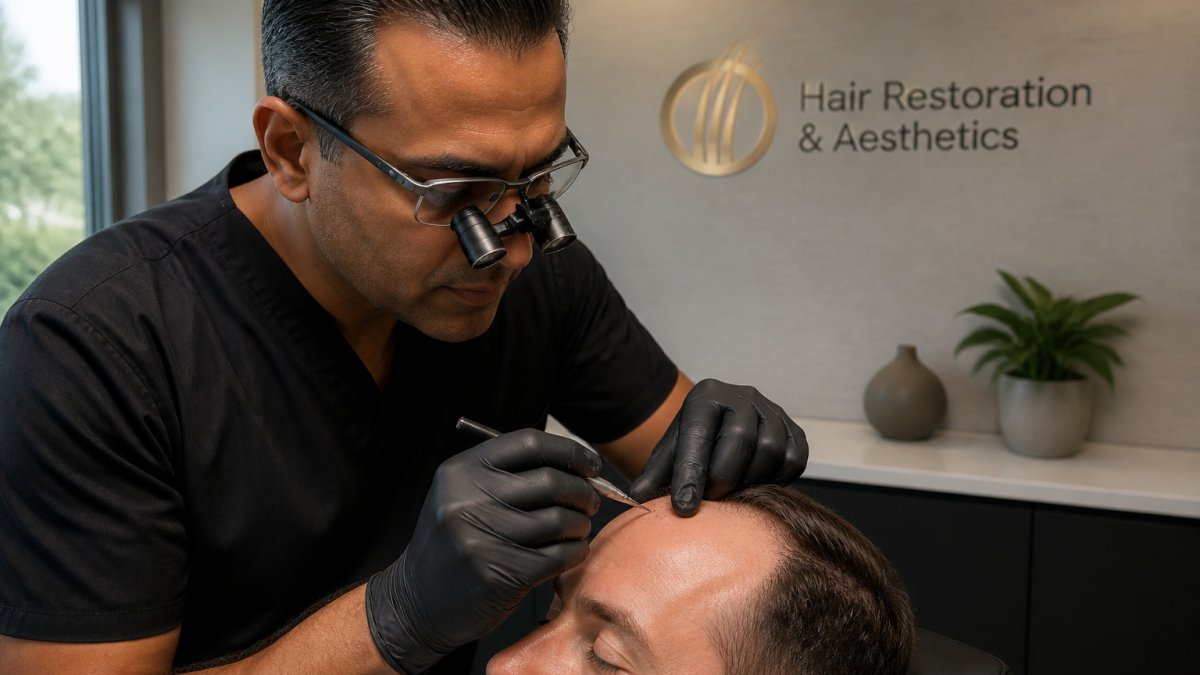
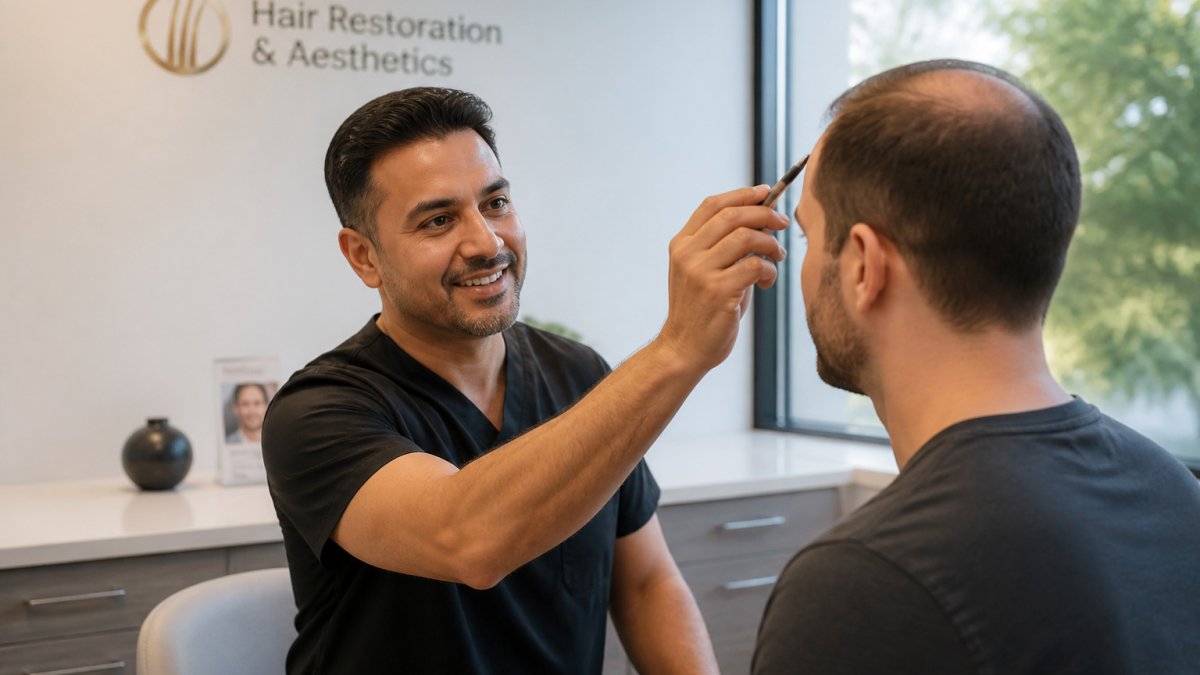
The practical takeaway: precision tooling supports better graft handling and more natural placement, but the outcome you actually get is a product of donor supply, surgical design, execution, and your own healing. Learn how natural-looking results are achieved through precision graft placement. Judge a clinic on its planning process and its tracked results, not on the name of its instruments.
FUE Hair Transplant Recovery Time and Healing
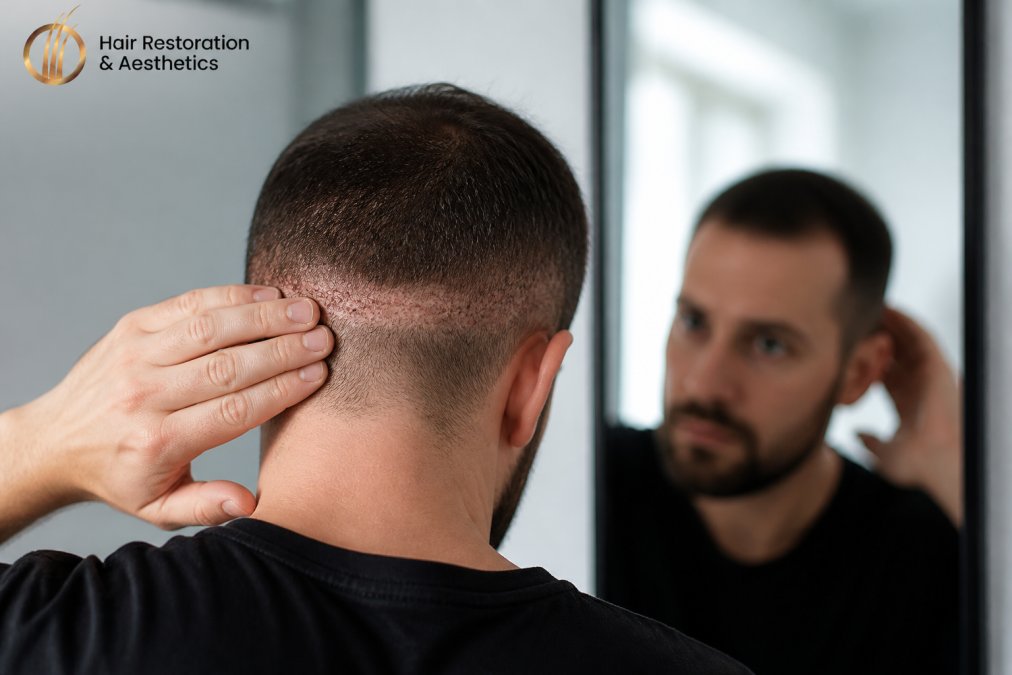
For detailed expectations about your specific recovery, learn about the week-by-week recovery process to understand what to expect at each stage after your DHT FUE procedure.
Who Makes a Good Candidate for FUE Hair Transplant
Realistic expectations are crucial. Hair transplantation restores hair to areas of loss, but it doesn't create thicker hair than your genetics allow. If you have fine, thin hair naturally, your transplanted hair will match that texture. The goal is to restore density and hairline definition, not to transform your hair type.
Key Questions to Ask During Your Hair Transplant Consultation
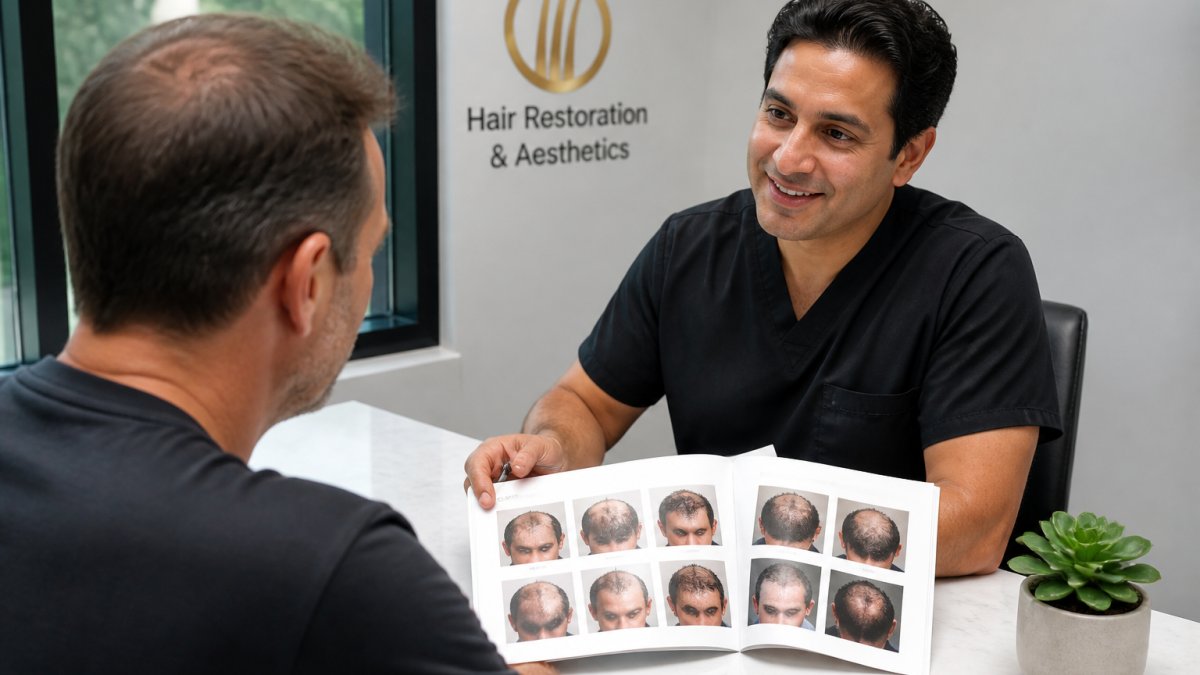
Before committing to any hair restoration procedure, you need answers to specific questions about technique, experience, and your personal outcomes. Review the complete list of questions to ask your hair transplant surgeon to ensure you're making an informed decision.
Schedule a Free Consultation →
Schedule Your Free Consultation Today
The decision to pursue hair restoration is personal, and it deserves a thorough conversation with a qualified surgeon. Explore our FUE hair transplant services and what we offer. Hair Restoration Clinic of Granite Bay offers free consultations. Schedule your free consultation today to get started.
Dr. Kumar uses the Cole follicular unit extraction system and has over a decade of experience.
Schedule your free consultation to discuss your hair restoration options.
Frequently Asked Questions
What makes DHT FUE hair transplant different from standard FUE?
DHT FUE uses advanced implanter pen technology that allows surgeons to place grafts at precise angles and depths, mimicking natural hair direction and growth patterns. This precision results in higher graft survival rates and denser, more natural-looking results compared to traditional FUE methods. The technique also minimizes tissue trauma during implantation, which can reduce bleeding and support faster healing.
How long is the recovery time for a FUE hair transplant?
Most patients can return to light daily activities within 3-5 days. However, full recovery takes longer, typically 2-3 weeks before the transplanted area fully heals and you can resume normal washing and styling. Strenuous exercise and heavy lifting should be avoided for 2-3 weeks. Hair growth begins gradually, with visible results typically appearing 3-4 months after the procedure.
Am I a good candidate for a FUE hair transplant?
Good candidates have stable hair loss, sufficient donor hair density, realistic expectations about results, and overall good health. You should be experiencing pattern baldness rather than active hair loss from other causes. Age, ethnicity, and hair type all factor into candidacy. A consultation with a board-certified physician can determine whether FUE is right for your specific situation and hair loss pattern.
What questions should I ask during a hair transplant consultation?
Ask about the surgeon's experience and before-and-after photos from similar cases. Inquire about the specific technique used, expected graft survival rates, realistic density and coverage outcomes, total grafts needed, recovery timeline, and aftercare instructions. Also discuss potential risks, how long results take to appear, and whether multiple sessions might be needed. Understanding these details helps you make an informed decision.
Hair loss is frustrating, and the options can feel overwhelming. But DHT FUE has transformed outcomes for thousands of patients by combining precision technique with realistic expectations. If you're ready to explore whether this approach is right for you, Hair Restoration Clinic of Granite Bay is here to answer your questions and help you make the best decision for your hair and confidence.