 how-to
How to Reduce Scarring After Laser Hair Removal
Table of Contents
- Understanding Scarring Risk After Laser Hair Removal
- Immediate Laser Hair Removal Aftercare to Prevent Scars
- Best Moisturizer After Laser Hair Removal and Soothing Care
- Managing Laser Hair Removal Redness Duration and Irritation
- Treating Laser Hair Removal Burns and Preventing Scar Tissue
- Sun Protection and Long-Term Scar Prevention
- When to Contact a Dermatologist or Medical Professional
- Frequently Asked Questions
Last Updated: October 10, 2026
Understanding Scarring Risk After Laser Hair Removal
Laser hair removal is highly effective for permanent hair reduction, but understanding how to reduce scarring after laser hair removal is essential if the treated area isn't protected or if burns develop and aren't managed properly. Understanding your skin's response and following proper aftercare prevents most complications.
How laser treatment affects your skin
When a laser targets hair follicles, it delivers concentrated heat that damages the follicle while stressing surrounding tissue. Your skin responds with inflammation and begins healing. Warmth and redness for several hours or days is normal.
The laser's impact depends on skin tone, laser settings, individual healing response, and practitioner skill. Darker skin tones absorb more laser energy, increasing both effectiveness and risk, so practitioners must adjust settings carefully.
Why scars form and who is at higher risk
Scarring develops when burns occur during treatment or aren't properly managed afterward. Scars form when collagen rebuilds abnormally during healing.
Risk factors include darker skin tone, history of keloid or hypertrophic scars, certain medications, smoking, poor aftercare, sun exposure, picking at scabs, and infection. Discuss your personal risk with your provider before treatment.
Immediate Laser Hair Removal Aftercare to Prevent Scars
The first week is critical, your actions in the first 24 hours and beyond directly impact healing.
The first 24 hours: cooling and protection
Immediately after treatment, cool and protect the warm, inflamed area to reduce inflammation and prevent irritation.
Cool the treated skin right away with a clean, cool compress for 10-15 minutes using a soft cloth or gel pack, never ice directly. Repeat every 2-3 hours for the first 24 hours if needed.
Keep the area clean and protected: wash gently with cool water and mild cleanser, pat dry with a soft towel, avoid tight clothing, and skip makeup and lotions for 24 hours.
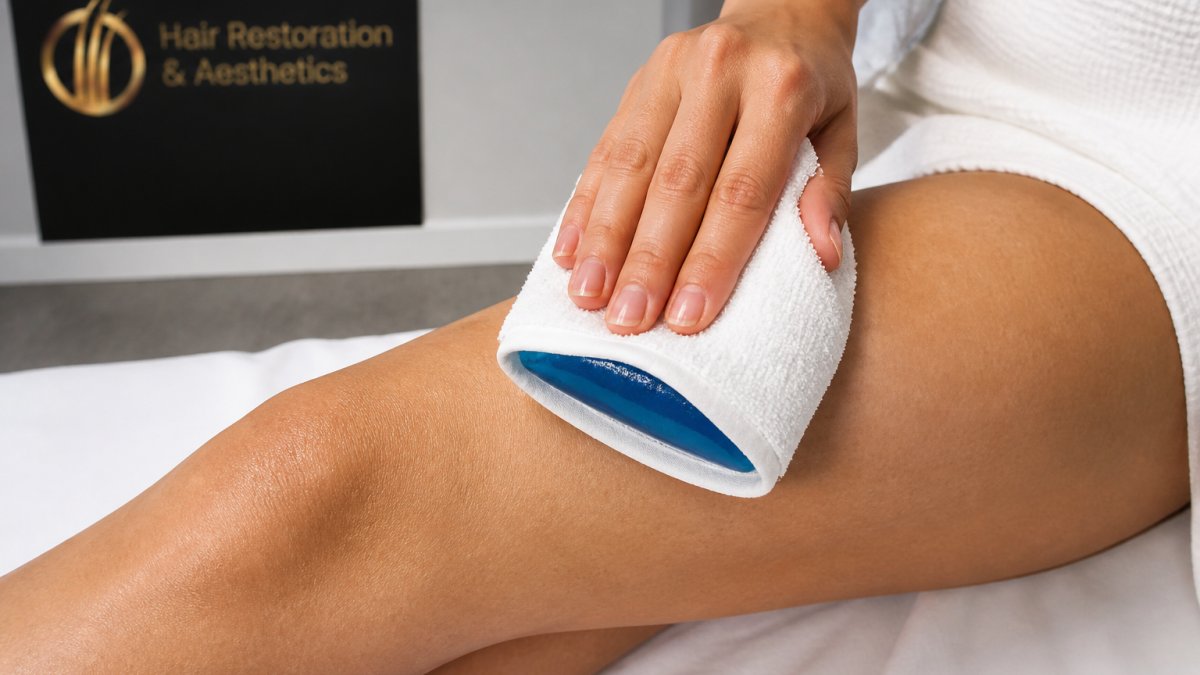
Avoid hot showers, strenuous exercise, touching or picking the area, ice, and fragrant or active products for the first 24 hours.
Days 2-7: maintaining skin integrity
Starting day 2, apply a fragrance-free, gentle moisturizer twice daily. Choose products formulated for sensitive or post-procedure skin and avoid active ingredients like retinoids or vitamin C.
Wear loose clothing that doesn't rub treated areas. Avoid direct sun exposure; if outdoors, cover with clothing rather than sunscreen alone.
Watch for increasing redness, blistering, pus, or worsening pain beyond the first 48 hours.
Avoid swimming, saunas, exfoliating, waxing, and fragrant products during this week.
Best Moisturizer After Laser Hair Removal and Soothing Care
Choosing the right moisturizer is critical, the wrong product can irritate healing skin and trigger complications.
Choosing fragrance-free, gentle formulas
Look for moisturizers that are fragrance-free, alcohol-free, hypoallergenic, designed for sensitive skin, and lightweight enough not to trap heat.
Avoid fragrance, alcohol, retinoids, vitamin C, AHAs, BHAs, benzoyl peroxide, and salicylic acid during healing.
Simple, gentle formulas work best, your skin needs hydration and protection, not active ingredients.
Aloe vera and other soothing ingredients
Beneficial ingredients include aloe vera, centella asiatica, ceramides, glycerin, and panthenol. A simple moisturizer with one or two of these is better than a complex formula.
Managing Laser Hair Removal Redness Duration and Irritation
Redness is normal after laser hair removal, but understanding what's normal and what signals a problem helps you respond appropriately.
What's normal and what signals a problem
Expect redness immediately after treatment. This is your skin's inflammatory response to the laser energy. Normal redness:
- Appears immediately or within a few hours of treatment
- Peaks within 24-48 hours
- Gradually fades over 3-7 days
- Does not cause severe pain or blistering
- Responds well to cooling and moisturizing
Redness that signals a problem:
- Increases in intensity after day 2 or 3
- Spreads beyond the treated area
- Accompanied by severe heat or pain
- Develops into blistering or open wounds
- Persists longer than 7-10 days without improvement
If you notice problem-type redness, contact your dermatologist or medical provider. Early intervention prevents scarring.
Timeline for redness to fade
Understanding the typical timeline helps you know what to expect and when to worry.
| Timeline | What to Expect |
|---|---|
| Immediately after | Mild to moderate redness, warm skin |
| 24-48 hours | Peak redness, may appear darker or more swollen |
| Days 3-5 | Gradual fading, skin may feel dry or tight |
| Days 5-7 | Significant improvement, fading to light pink |
| Days 7-14 | Most redness gone, skin returns to normal |
| Beyond 2 weeks | Any remaining redness is minimal |
Individual timelines vary. Darker skin tones may see redness persist longer. If your redness follows this general pattern, you're healing normally. If it deviates significantly, reach out to your provider.
Treating Laser Hair Removal Burns and Preventing Scar Tissue
Burns are the primary cause of scarring after laser hair removal. Recognizing a burn early and treating it properly prevents permanent damage.
Schedule a Free Consultation →
Recognizing a burn versus normal post-treatment reaction
A true burn looks and feels different from normal post-treatment redness. Normal redness is uniform, mild to moderate, and doesn't cause pain. A burn has these characteristics:
- Intense, localized redness or darkening
- Blistering or fluid-filled bumps
- Severe pain or tenderness
- Visible skin damage or crusting
- Swelling that worsens over hours
Burns can be mild (first-degree, affecting only the outer layer) or more serious (second-degree, causing blistering and deeper damage). Any blistering or open wound is a second-degree burn and requires professional care.
First aid and topical antimicrobial care
If you suspect a burn, start first aid immediately:
- Cool the area gently with cool (not cold) water for 10-15 minutes
- Do not apply ice directly
- Pat dry gently with a clean cloth
- Apply a topical antimicrobial ointment to prevent infection
- Cover loosely with clean gauze if needed
- Take over-the-counter pain relief if needed
Do not:
- Apply ice directly to the burn
- Use greasy ointments that trap heat
- Apply fragrant lotions or oils
- Expose the burn to direct sun
For mild burns, continue gentle cooling and antimicrobial care every few hours for the first 24-48 hours. Monitor closely for signs of worsening.
When blistering or open wounds develop
Blistering means the burn has damaged deeper skin layers. This requires professional evaluation. Contact your dermatologist or medical provider immediately if you develop:
- Blisters of any size
- Open wounds or broken skin
- Signs of infection (increasing warmth, pus, spreading redness)
- Pain that worsens instead of improves
Your provider may recommend:
- Specialized wound dressing to protect the area
- Topical or oral antibiotics if infection is present
- Professional scar treatment options if scarring begins to develop
Early professional care prevents minor burns from becoming permanent scars.
Sun Protection and Long-Term Scar Prevention
Sun exposure is one of the most damaging things you can do to healing skin. It accelerates scarring and darkens scars that do form.
Why sun exposure accelerates scarring
UV radiation damages skin cells and triggers inflammation. On healing skin, sun exposure:
- Increases inflammation and redness
- Slows the healing process
- Darkens scars and makes them more visible
- Can cause permanent pigment changes in treated areas
- Increases risk of keloid formation in darker skin tones
Scars are more vulnerable to sun damage than normal skin. A scar exposed to sun during healing can become darker and more noticeable permanently.
SPF requirements and protective clothing
Protect treated skin from sun for at least 2 weeks after treatment, and ideally for 4-6 weeks.
Use these protection strategies:
- Wear SPF 30 or higher sunscreen on treated areas after 48 hours
- Reapply every 2 hours if sweating or in water
- Prefer clothing coverage over sunscreen alone
- Wear long sleeves, pants, or hats to shield treated areas
- Avoid direct sun exposure during peak hours (10 AM to 4 PM)
- Use mineral sunscreens (zinc oxide or titanium dioxide) rather than chemical formulas
For the first 48 hours, avoid sunscreen entirely, your skin is too irritated. After that, sunscreen becomes essential. Mineral formulas are gentler on post-treatment skin than chemical sunscreens.
If you must be outdoors, clothing is more reliable than sunscreen. A lightweight long-sleeve shirt or pants provides complete protection without the irritation risk of topical products.
When to Contact a Dermatologist or Medical Professional
Knowing when to seek professional help prevents minor complications from becoming permanent problems.
Red flags that require professional evaluation
Contact your dermatologist or medical provider if you experience:
- Blistering of any kind
- Open wounds or broken skin
- Signs of infection (increasing warmth, pus, spreading redness)
- Severe pain that doesn't improve with over-the-counter pain relief
- Redness that worsens after day 3
- Redness that persists beyond 2 weeks
- Unusual pigment changes (darkening or lightening)
- Any concern about how your skin is healing
Don't wait to see if problems resolve on their own. Early professional intervention prevents scarring.
Professional scar treatment options
If scarring does develop, several professional treatments can improve appearance:
- Laser scar treatment, which uses targeted laser energy to remodel scar tissue
- Microneedling, which stimulates collagen production and improves texture
- Chemical peels, which can help with surface-level scars
- Dermal fillers for depressed scars
- Topical scar treatments prescribed by your dermatologist
The earlier you seek treatment after scarring develops, the better the results. Scars are easier to treat in the first few months than years later.
Learning how to reduce scarring after laser hair removal is achievable through proper aftercare and early intervention if complications develop. The first week is critical, cool the treated area, keep it clean and protected, and avoid sun exposure and irritating products.
If you're concerned about scarring risk or want personalized guidance before treatment, Schedule a Free Consultation to discuss your skin type, healing history, and individual risk factors. Our team can help you prepare for laser hair removal and ensure you have the support you need throughout recovery.
Frequently Asked Questions
What is the best moisturizer to use after laser hair removal?
Choose a fragrance-free, hypoallergenic moisturizer designed for sensitive skin. Aloe vera gel or a ceramide-based cream works well for most people. Apply it to cool, clean skin several times daily for the first week. Avoid products with alcohol, fragrance, or active ingredients like retinol or vitamin C, which can irritate the treated area. If you develop any reactions, stop and consult a dermatologist.
How long does redness last after laser hair removal?
Redness typically fades within 24 to 48 hours for most patients, though it can persist for 3 to 5 days on sensitive skin. Darker or deeper skin tones may experience longer redness duration. Cool compresses, fragrance-free moisturizers, and sun protection help speed recovery. If redness lasts beyond a week or worsens, contact your dermatologist to rule out infection or burn.
How do you treat a burn after laser hair removal?
If you suspect a laser burn, cool the area immediately with a clean, damp cloth (not ice directly on skin). Avoid touching the area and do not apply makeup. Use a topical antimicrobial ointment if the skin is intact, or a specialized wound dressing if blistering occurs. Take over-the-counter pain relief if needed. Seek medical attention if the burn is severe, blistering spreads, or signs of infection appear such as warmth, pus, or increasing pain.
Can laser hair removal cause permanent scars?
Permanent scarring is rare when laser hair removal is performed by a qualified professional using appropriate settings for your skin type. Most post-treatment reactions, redness, crusting, and minor scabbing, heal without scarring. Risk increases if you have darker skin, a history of keloids, or if a burn occurs. Following proper aftercare, avoiding sun exposure, and seeking prompt medical attention for complications significantly reduces scar risk.