 how-to
Laser Hair Removal Safety for Dark Skin: A Complete Guide
Table of Contents
- Why Laser Hair Removal Requires Different Approaches for Dark Skin
- How Laser Hair Removal Works on Dark Skin
- ND:YAG Laser for Dark Skin: The Gold Standard Technology
- Skin Preparation for Laser Hair Removal: Essential Steps Before Treatment
- Managing Laser Hair Removal Side Effects on Dark Skin
- Is Laser Hair Removal Permanent for All Skin Tones?
- Post-Treatment Care and Recovery
- Frequently Asked Questions
Last Updated: September 1, 2026
Why Laser Hair Removal Requires Different Approaches for Dark Skin
Laser hair removal safety for dark skin demands a fundamentally different strategy than what works for lighter skin tones. The reason comes down to melanin, the pigment that gives skin its color. When melanin concentration is high, standard laser technologies designed for lighter skin can cause serious complications: burns, blistering, scarring, and unwanted pigmentation changes. At Hair Restoration Clinic of Granite Bay, we understand that safe and effective laser hair removal on dark skin requires selecting the right laser technology, precise settings, and meticulous pre- and post-treatment care.
The critical difference is that melanin absorbs laser energy across a broader spectrum of wavelengths. With proper technology and clinical expertise, laser hair removal delivers excellent results for all skin types, including melanin-rich skin. Understanding how your skin responds to laser energy is the first step toward achieving permanent hair reduction without complications.
How Laser Hair Removal Works on Dark Skin
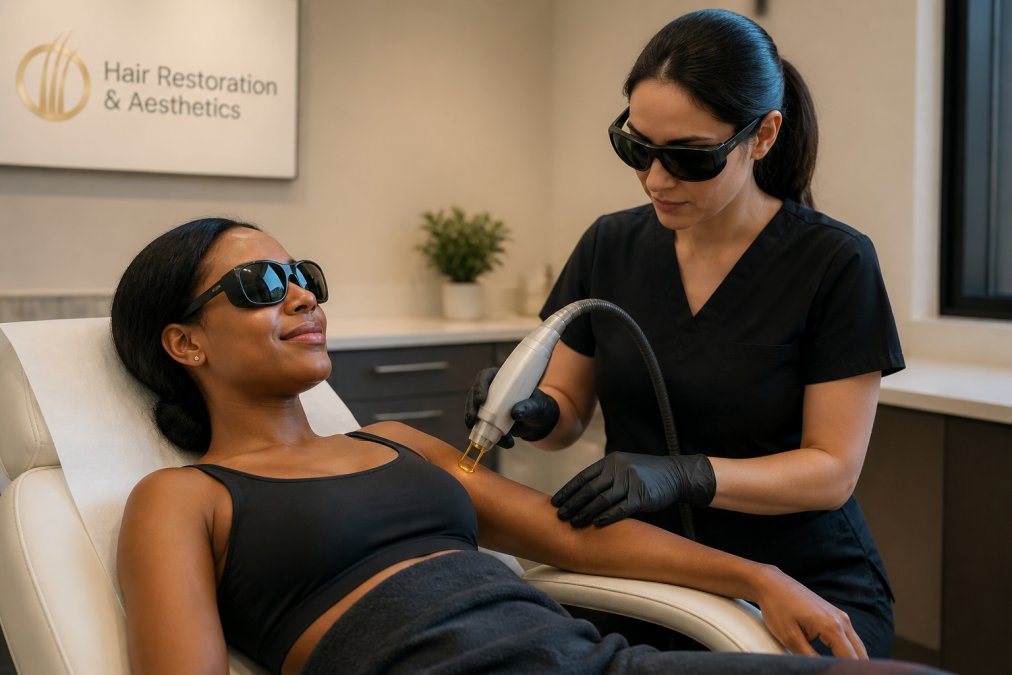
Laser hair removal works by directing concentrated light energy at hair follicles beneath the skin's surface. The melanin in the hair shaft absorbs this energy, converting it to heat that damages the follicle and prevents regrowth. On dark skin, the challenge is that melanin exists in two places: inside the hair follicle (where you want the energy to go) and throughout the epidermis and dermis (where you don't want it to go).
This dual presence of melanin creates a narrow therapeutic window. The laser must deliver enough energy to destroy the hair follicle while minimizing heat absorption by the surrounding skin. When settings are too aggressive or the wrong wavelength is used, the epidermis absorbs excessive heat before the energy reaches the follicle, resulting in burns, blistering, or post-inflammatory hyperpigmentation.
Melanin and Wavelength: The Critical Relationship
Melanin absorbs light energy across multiple wavelengths, but some wavelengths penetrate deeper into the skin than others. This relationship is the foundation of safe laser hair removal for dark skin.
Shorter wavelengths (like 694 nm alexandrite lasers) are absorbed more readily by melanin at the skin's surface, making them less ideal for dark skin. Longer wavelengths (like 1064 nm ND:YAG lasers) penetrate deeper, bypassing surface melanin more effectively and targeting the follicle with less epidermal heating.
The Fitzpatrick scale classifies skin phototypes from I (very fair) to VI (very dark). For Fitzpatrick types IV through VI, which encompass most people of African, Hispanic, Mediterranean, Middle Eastern, and South Asian descent, the ND:YAG laser at 1064 nm wavelength is the gold standard. This longer wavelength allows laser energy to pass through the melanin-rich epidermis and reach the hair follicle in the dermis with minimal thermal injury to surrounding tissue.
Pulse duration also matters. Shorter pulse durations (measured in milliseconds) allow the laser to deliver energy specifically to the hair follicle while the surrounding tissue cools between pulses. This selective photothermolysis is essential for dark skin, where the margin for error is smaller.
ND:YAG Laser for Dark Skin: The Gold Standard Technology
The ND:YAG laser for dark skin is the most effective and safest option for permanent hair reduction in melanin-rich skin. The 1064 nm wavelength was specifically developed to address the challenges of treating darker skin tones, and decades of clinical data support its safety and efficacy across all Fitzpatrick phototypes.
Unlike alexandrite (755 nm) or diode (808 nm) lasers, which carry higher risk of adverse effects on dark skin, the ND:YAG wavelength penetrates to the hair follicle while allowing the epidermis to cool between pulses. This reduces the risk of epidermal damage and post-inflammatory hyperpigmentation, the most common complication in dark skin.
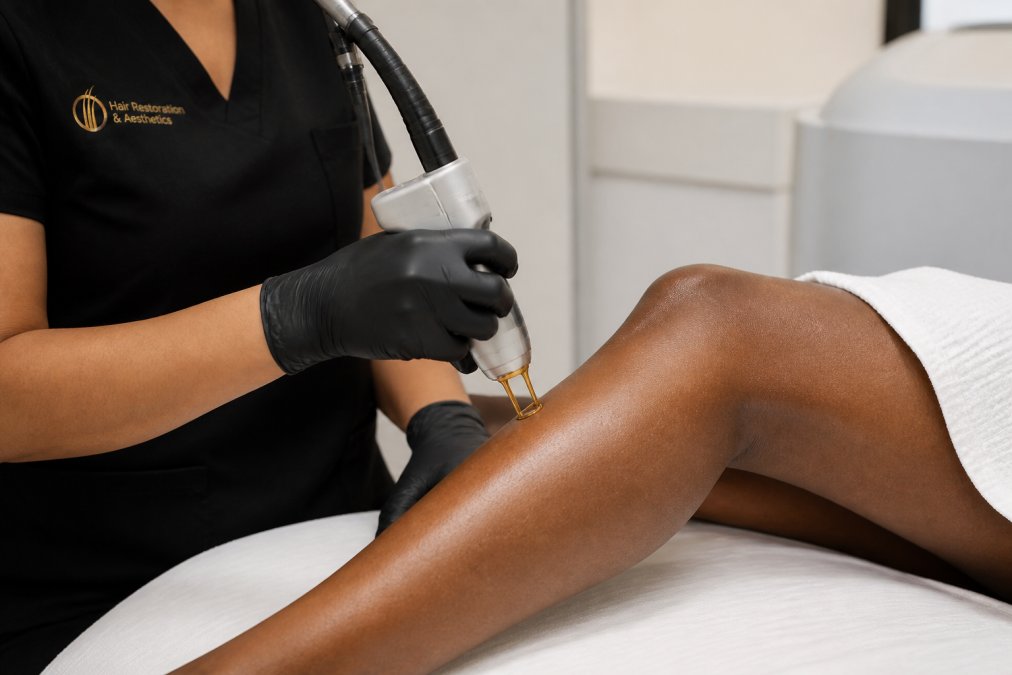
Modern ND:YAG systems include integrated cooling mechanisms, either contact cooling (sapphire handpiece cooling) or cryogenic cooling (cryogen spray), that further protect the epidermis by lowering surface temperature before, during, and after each pulse. Clinical expertise matters enormously with ND:YAG technology. Practitioners must adjust fluence (energy density), pulse duration, and cooling parameters based on individual skin tone, hair color, and hair density. A board-certified physician or trained dermatologist understands these nuances and can optimize settings for your specific skin.
Skin Preparation for Laser Hair Removal: Essential Steps Before Treatment
Proper preparation before laser hair removal significantly reduces the risk of complications and improves treatment effectiveness.
Pre-Treatment Consultation and Patch Testing
Your first step should always be a comprehensive consultation with a qualified provider. During this visit, discuss your skin type, medical history, current medications, and any previous adverse reactions to treatments.
Patch testing is essential and non-negotiable for dark skin. A patch test involves applying the laser to a small, inconspicuous area of skin (typically the inner thigh or behind the ear) at conservative settings. This allows you and your provider to observe how your skin responds over 24-48 hours. If the patch test shows good tolerance, the provider can confidently proceed with full treatment. If complications appear, settings can be adjusted before treating larger areas.
Medications and Photosensitivity Concerns
Certain medications increase photosensitivity, the skin's sensitivity to light, and raise the risk of burns and pigmentation changes during laser treatment (the FDA). Before your appointment, inform your provider of all medications and supplements you're taking.
Common photosensitizing medications include:
- Antibiotics (tetracyclines, sulfonamides, fluoroquinolones)
- Nonsteroidal anti-inflammatory drugs (NSAIDs) like ibuprofen and naproxen
- Retinoids (tretinoin, adapalene, isotretinoin)
- Some antifungal medications
- Certain herbal supplements (St. John's Wort, bergapten)
- Some blood pressure medications and diuretics
If you're taking a photosensitizing medication, discuss timing with your provider. Some medications can be paused before treatment; others require ongoing use. Additionally, avoid sun exposure for at least two weeks before treatment. Sun-exposed skin has elevated melanin levels in the epidermis, narrowing the therapeutic window further.
Managing Laser Hair Removal Side Effects on Dark Skin
Complications can occur even with proper technique and preparation. Understanding what to expect and how to manage side effects is crucial for a successful outcome.
Schedule a Free Consultation →
Post-Inflammatory Hyperpigmentation (PIH) and Hypopigmentation
Post-inflammatory hyperpigmentation (PIH) is darkening of treated skin that develops days to weeks after laser treatment. It's the most common side effect on dark skin and occurs when the skin's inflammatory response triggers increased melanin production. PIH typically appears as darker patches in the treated area and usually resolves within weeks to months as the skin normalizes.
The risk of PIH increases with darker skin phototypes, aggressive laser settings, and inadequate sun protection after treatment. Preventing PIH starts before treatment: avoid sun exposure, use broad-spectrum sunscreen (SPF 30 or higher), and discuss your phototype with your provider so settings can be conservative. After treatment, strict sun avoidance and daily sunscreen use are essential.
Hypopigmentation, lightening of treated skin, is less common but more permanent. It occurs when laser energy damages melanocytes (the cells that produce melanin), resulting in patches of lighter skin. Prevention is the only reliable approach: conservative laser settings, proper cooling, and selection of an experienced provider.
Blistering, Scarring, and Burn Prevention
Blistering and burns indicate thermal injury to the epidermis and are largely preventable with appropriate technique. Burn prevention depends on several factors:
- Correct laser wavelength: ND:YAG is safer than shorter wavelengths for dark skin
- Conservative initial settings: Your provider should start at lower fluence and increase gradually
- Adequate cooling: The handpiece should cool the skin before and after each pulse
- Appropriate pulse duration: Shorter pulses reduce epidermal heating
- Proper technique: The provider must maintain consistent contact and avoid overlapping pulses
If blistering does occur, treat it as a minor burn. Keep the area clean, avoid picking at the blister, and allow it to heal naturally. Antibiotic ointment can prevent infection. Most blisters resolve within 1-2 weeks without scarring.
Is Laser Hair Removal Permanent for All Skin Tones?
Laser hair removal achieves permanent hair reduction across all skin tones. The FDA defines permanent hair reduction as a long-lasting reduction in the number of hairs that regrow after treatment (the FDA). Most hairs don't regrow, but some may return over years as dormant follicles reactivate.
The effectiveness of laser hair removal for dark skin is comparable to lighter skin tones when the correct technology and settings are used. Studies show that ND:YAG laser treatment achieves 70-90% hair reduction after a series of sessions, with results lasting years (peer-reviewed research). Darker hair responds better than lighter or gray hair because the melanin in dark hair absorbs laser energy more readily.
Most people need 6-12 sessions spaced 4-8 weeks apart to achieve desired results. Maintenance sessions may be needed every 1-3 years to address any regrowth. This is far less frequent and less expensive than ongoing waxing or shaving, making laser hair removal a practical long-term solution.
Post-Treatment Care and Recovery
The hours and days after laser hair removal are critical for preventing complications and optimizing results. Proper aftercare determines whether you heal smoothly or develop PIH, blistering, or infection.
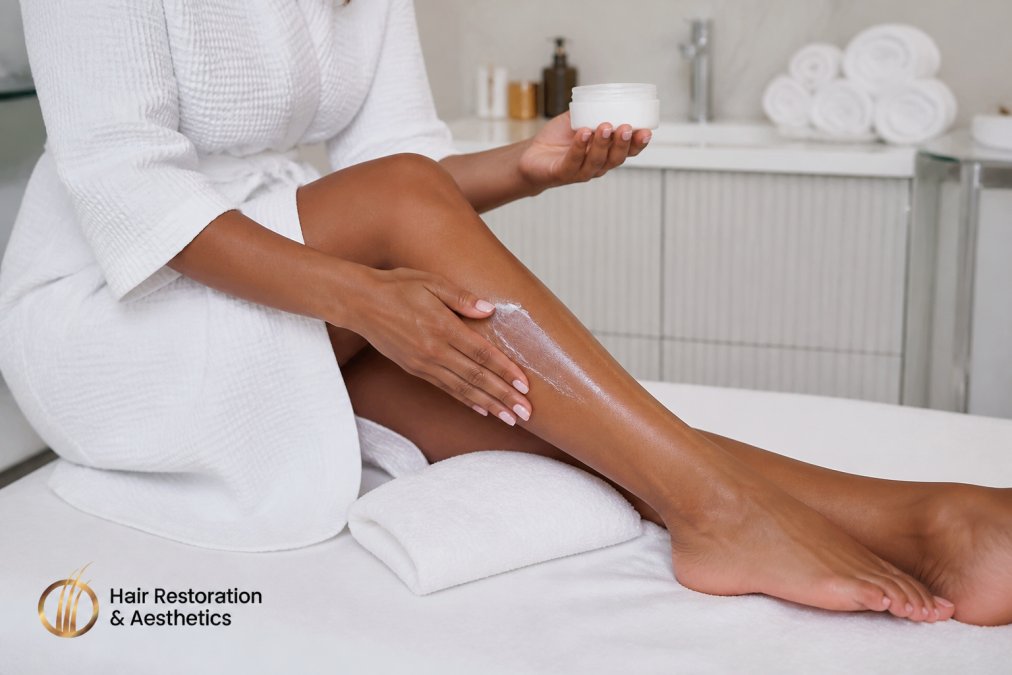
Immediately after treatment, your skin will be warm and may appear slightly red or swollen. This is normal and typically subsides within a few hours. Your provider will apply a soothing lotion or cooling gel and may recommend ice packs for the first few hours to reduce inflammation.
For the first 24-48 hours after treatment:
- Avoid hot water, hot showers, and saunas (heat increases inflammation and PIH risk)
- Avoid strenuous exercise and sweating
- Avoid direct sun exposure
- Wear loose clothing over treated areas to prevent friction
- Apply fragrance-free moisturizer and broad-spectrum sunscreen daily
- Avoid exfoliation, scrubs, and harsh products
- Do not pick at scabs or peeling skin
For the first 2-4 weeks:
- Apply broad-spectrum sunscreen (SPF 30 or higher) daily, even on cloudy days
- Limit sun exposure as much as possible
- Continue moisturizing with gentle, fragrance-free products
- Avoid swimming in chlorinated pools
- Avoid waxing, plucking, or electrolysis
- Shaving is acceptable if necessary, but use a gentle technique
Most people can return to normal activities within 24 hours. Redness typically fades within a few hours to a day. Itching is common as the skin heals and may persist for several days. Resist the urge to scratch, as this can trigger infection or worsen PIH. A cool compress or fragrance-free lotion can help manage itching.
Laser hair removal on dark skin is safe and effective when approached with proper technology, clinical expertise, and meticulous preparation. The key is choosing a provider who understands the unique challenges of treating melanin-rich skin and is willing to invest time in consultation, patch testing, and conservative settings. At Hair Restoration Clinic of Granite Bay, we specialize in laser hair removal for all skin tones, using ND:YAG technology and board-certified expertise to deliver permanent hair reduction without complications. Schedule a free consultation to discuss your specific skin type and goals with Dr. Piyush Kumar and our team.
Frequently Asked Questions
Is laser hair removal safe for dark skin?
Yes, laser hair removal is safe for dark skin when performed with the correct laser technology and by a qualified provider. ND:YAG lasers are specifically designed to treat melanin-rich skin safely because their longer wavelength penetrates deeper into the dermis while minimizing surface melanin absorption. The key is proper wavelength selection, appropriate energy settings, and expert clinical judgment. A patch test during your consultation helps confirm your skin's response before full treatment begins.
Which laser is best for dark skin tones?
The ND:YAG laser is considered the gold standard for dark skin because its 1064-nanometer wavelength bypasses surface melanin and targets the hair follicle directly. This reduces the risk of burns and hyperpigmentation compared to shorter-wavelength lasers like Alexandrite (755nm) or diode lasers. Alexandrite lasers can work on darker skin in experienced hands, but ND:YAG remains the safest first choice. Always verify your provider uses the appropriate laser type for your specific skin tone.
What should I do to prepare my skin before laser hair removal?
Preparation is critical for safety on dark skin. Avoid sun exposure and tanning for at least two weeks before treatment, as UV exposure increases melanin production and hyperpigmentation risk. Do not wax, pluck, or use depilatory creams for two weeks prior; shaving is acceptable since it leaves the root intact. Inform your provider about any medications, especially photosensitizing drugs like certain antibiotics or anti-inflammatory medications. Arrive with clean, dry skin free of lotions, deodorant, or makeup. A patch test confirms your skin's tolerance before proceeding with full treatment.
Is laser hair removal permanent for all skin tones?
Laser hair removal provides long-term hair reduction, though 'permanent' varies by individual. Most people see 70-90% reduction after a full treatment series (typically 6-8 sessions). Results depend on hair color, follicle depth, hormonal factors, and skin tone. Dark skin may require additional sessions due to the need for lower energy settings to prevent side effects. Maintenance sessions every 1-2 years help sustain results. Discuss realistic expectations during your consultation, as outcomes differ based on your specific hair and skin characteristics.
This article was written using GrandRanker