 How-to
How to Prevent Hair Loss After Pregnancy
Last Updated: November 8, 2026
Quick Summary
You cannot stop the hormonal reset that causes hair loss after pregnancy, but you can protect the hair you have with gentle care and steady nutrition. Wash with sulfate-free shampoo, detangle with a wide-tooth comb, avoid tight styles and high heat, and eat enough protein, iron, and zinc.
- Postpartum shedding typically begins a few months after delivery and eases on its own.
- Match your routine to your shedding level, from light to heavy, and adjust for hair texture.
- Shedding means whole strands fall from the root; breakage means hair snaps along the shaft.
- While breastfeeding, clear oral hair-growth drugs, medicated scalp products, and supplements with a clinician first.
- See a doctor if shedding lasts beyond a year or comes with bald patches, scalp itching, or fatigue.
Table of Contents
- Why Hair Sheds After Pregnancy and What You Can Actually Control
- How to Prevent Hair Loss After Pregnancy Naturally
- How to Prevent Hair Loss After Pregnancy While Breastfeeding
- When Does Postpartum Hair Loss Stop?
- Postpartum Hair Loss Regrowth: What to Expect Month by Month
- Shedding or Breakage? Red Flags That Need a Doctor
- Book a Free Consultation for Postpartum Hair Concerns
- Frequently Asked Questions
Why Hair Sheds After Pregnancy and What You Can Actually Control
Postpartum hair shedding is a common, temporary type of hair loss that typically begins a few months after delivery and eases on its own (Postpartum Hair Loss: Causes, Treatment & What to Expect). Postpartum shedding is generally understood to be normal, and most of it cannot be stopped by changing your routine.
The key to coping is knowing what is happening and what you can influence. Below, we cover how to prevent hair loss after pregnancy where it is possible, and what to expect when it is not.
The hormonal shift behind postpartum shedding
Pregnancy raises estrogen levels, which keep hair follicles in the growth phase longer. After delivery, estrogen drops fast. Many strands then move into the resting and shedding phase at the same time.
That shift is a normal part of the hair growth cycle. It is not a sign of illness, and it does not mean you did something wrong.
What prevention can and cannot do
You cannot stop the hormonal reset. No shampoo or vitamin changes that biology.
What you can control is how gently you treat your hair and scalp while it happens. Good care reduces breakage and protects the hair you have. It will not halt the natural shed.
If shedding is heavy or lasts longer than expected, a medical check-up can rule out other causes. The American Academy of Dermatology's guidance on hair loss notes that several conditions can mimic postpartum shedding.
How to Prevent Hair Loss After Pregnancy Naturally
The most effective natural approach is gentle hair care and steady nutrition. Neither will change your hormones, but both help your hair come through the shedding phase in better shape. The right routine depends on how much you are shedding and on your hair texture.
A staged routine based on shedding level
Instead of one fixed list, match your routine to what you are seeing.
Light shedding (a few extra strands, no visible thinning):
- Wash two to three times a week with a sulfate-free shampoo and a light conditioner
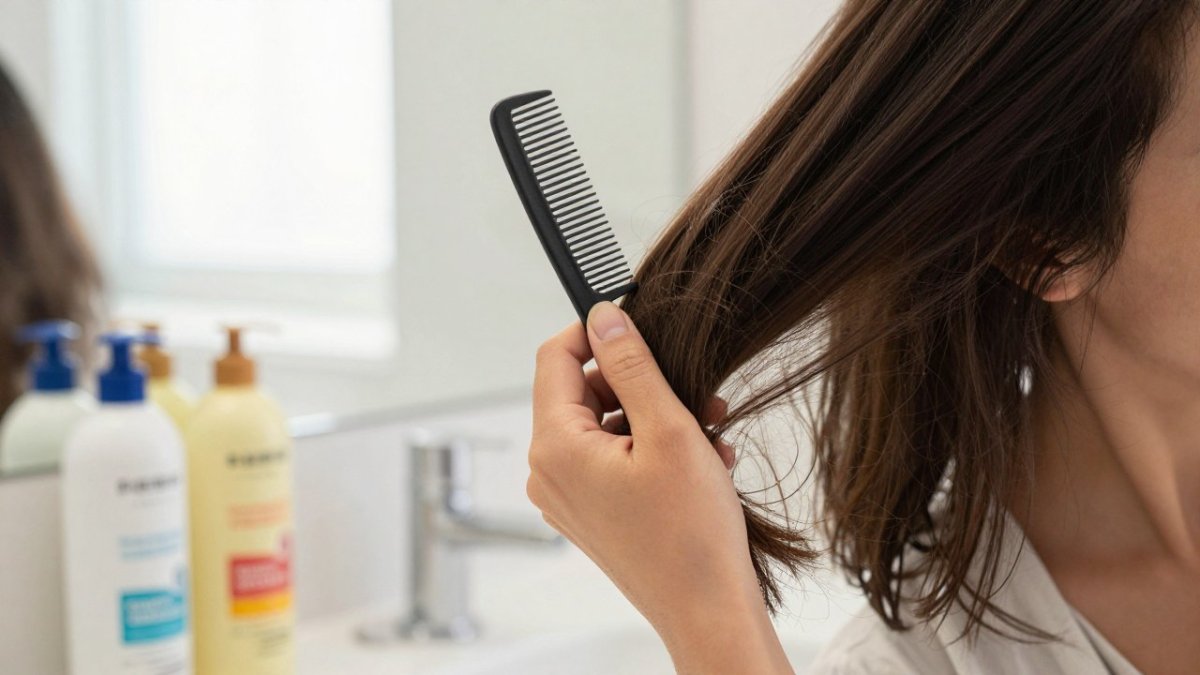
- Detangle with a wide-tooth comb, working from the ends upward
- Pat hair dry with a soft towel, never rub
- Keep heat styling to a minimum and use a heat protectant when you do
Moderate shedding (thinner ponytail, more strands on the pillow):
- Add a leave-in conditioner or detangling spray to reduce friction
- Switch to a satin or silk pillowcase to cut overnight friction
- Loosen hairstyles; skip tight ponytails, braids, and buns that pull at the roots
- Space out chemical treatments such as color or relaxers until shedding slows
Heavy shedding (visible thinning, clumps in the shower):
- Wash gently and less often, and avoid vigorous scalp scrubbing
- Use a wide-tooth comb only; set aside fine-tooth brushes for now
- Keep styling simple and tension-free
- Book a medical check-up to rule out causes beyond the normal postpartum shift
Adapting the routine to your hair texture
A single routine does not fit every head of hair. A common pattern is that tighter textures need more moisture and less frequent washing, while fine, straight hair shows thinning faster and benefits from lighter products that do not weigh strands down.
- Fine or straight hair: wash slightly more often with lightweight products; avoid heavy oils that clump strands and make thinning look worse
- Wavy or curly hair: wash less often, condition generously, and detangle only when wet and coated in conditioner
- Coily or tightly textured hair: prioritize moisture, low-tension protective styles, and gentle takedowns; avoid styles left in too long or installed too tightly
Watch out: protective styles are only protective if they are installed loosely and removed gently, a tight style held for weeks can cause traction damage that looks like shedding but is not.
Shedding versus breakage: know which one you have
Shedding means whole strands fall from the root, usually with a small white bulb at the end. Breakage means hair snaps along the shaft, often from heat, harsh handling, or chemical damage, and the pieces are shorter with no bulb. The distinction matters because gentle care reduces breakage but will not stop the natural postpartum shed. If you see short broken pieces rather than full-length strands, focus on reducing heat, friction, and tension first.
Nutrition that supports hair through the shed
Diet will not override the hormonal reset, but shortfalls in protein, iron, zinc, and vitamins can make hair come through the phase in worse shape. Aim for a balanced plate with adequate protein at each meal, iron-rich foods, and a range of fruits and vegetables. Ask your doctor before starting any supplement, especially while breastfeeding.
If you want more at-home ideas, our guide on how to improve hair density naturally covers practical steps that support hair health over time.
How to Prevent Hair Loss After Pregnancy While Breastfeeding
Breastfeeding does not cause extra shedding, but it shapes which treatments are safe. Many new mothers want to know how to prevent hair loss after pregnancy while breastfeeding without passing anything risky to their baby. Prioritizing gentle, nutrient-dense scalp care remains the most effective strategy for managing these hormonal shifts, a philosophy echoed in the approach taken by Pepcare Lab regarding the management of early hair thinning.
The short answer: stick to gentle hair care and diet first, and clear anything else with a clinician who knows you are nursing.
Why breastfeeding changes the treatment calculus
Anything you apply to the scalp or swallow can, in principle, reach breast milk, though the amount varies widely by product and route. That is why the cautious default is to avoid oral hair-growth drugs and unproven supplements while nursing, and to treat topical products as something to discuss rather than assume. A clinician can weigh the benefit against the risk for your specific situation.
What to clear with a clinician before starting
- Oral hair-growth medications: generally avoided while nursing unless a doctor specifically approves
- Medicated scalp products: ask before using anything with an active ingredient, including prescription shampoos
- Supplements: check before starting biotin, iron, or any hair, skin, and nail formula, since dosing and need vary
- Topical cosmetic treatments: most are low-risk, but confirm with your doctor rather than assuming
What you can do without clearance
Gentle hair care and nutrition are the safe foundation and do not require a doctor's sign-off:
- Wash less often with a sulfate-free shampoo
- Detangle gently with a wide-tooth comb
- Avoid tight styles and high heat
- Eat enough protein, iron, and zinc
- Rest when you can, since sleep debt compounds the stress on your body
Watch out: herbal and "natural" supplements are not automatically safe while breastfeeding, some interact with milk supply or are not well studied in nursing, so treat them like any other product and ask first.
How to have the conversation with your doctor
Bring a simple list: what you are using on your scalp, any supplements you take, and how long you plan to nurse. Ask directly whether each item is compatible with breastfeeding. A healthcare professional can confirm what is safe for you. Never start a treatment on your own while breastfeeding.
When Does Postpartum Hair Loss Stop?
Postpartum hair loss is often temporary, and many people see improvement over the months following delivery.
The timeline varies. Some women shed for a few months, others closer to a year.
If shedding continues past a year, or comes with scalp itching, patches or fatigue, book a medical check-up. Those signs point to causes beyond the normal postpartum shift.
Postpartum Hair Loss Regrowth: What to Expect Month by Month
Regrowth usually starts as shedding slows. You may see short new hairs along the hairline, often called baby hairs. Here is the typical pattern:
| Timeframe | What Most Women Notice |
|---|---|
| 0-3 months | Little change, hair may look fuller |
| 3-6 months | Heaviest shedding, thinner ponytail |
| 6-9 months | Shedding slows, short new hairs appear |
| 9-12 months | Density starts to recover |
| 12+ months | Most women see near-normal density |
The Cleveland Clinic's overview of telogen effluvium describes this shedding pattern as temporary in most cases.
Regrowth takes patience. Hair grows slowly, so visible change lags behind the calendar.
Shedding or Breakage? Red Flags That Need a Doctor
Shedding and breakage look similar but have different causes. Shedding means whole strands fall from the root. Breakage means hair snaps along the shaft, often from heat or harsh handling.
Watch for these red flags and see a doctor:
- Large clumps of hair coming out
- Bald patches or a widening part
- An itchy, scaly or painful scalp
- Shedding that lasts beyond a year
- Fatigue, weight change or other new symptoms
These can signal thyroid problems, iron deficiency or other conditions. A proper medical check-up sorts out the cause. For a broader look at causes in younger women, read what causes sudden hair loss in young women. Our hair loss treatment guide also walks through the options if shedding turns out to be more than postpartum.
Book a Free Consultation for Postpartum Hair Concerns
Most postpartum shedding settles on its own. When it does not, or when thinning persists well past the first year, a proper evaluation helps.
At Hair Restoration Clinic of Granite Bay, Dr. Piyush Kumar, MD, a board-certified physician with over a decade of experience, reviews your history and examines your scalp. The practice offers non-invasive Alma TED acoustic sound wave therapy for hair health, and FUE hair restoration using the Cole follicular unit extraction system.
You can book a hair restoration consultation to discuss your concerns, or read more about Dr. Piyush Kumar and our practice before you visit. If you are unsure whether your shedding warrants a closer look, you can also schedule a free consultation to get personalized guidance.
Postpartum shedding is frustrating, and the wait for regrowth tests your patience. You do not have to guess whether what you are seeing is normal.
Frequently Asked Questions
Can you avoid postpartum hair loss entirely?
Most women cannot avoid postpartum shedding completely because it follows the natural drop in estrogen after delivery. You can reduce how much hair breaks and how thin it looks by using gentle hair care, a wide-tooth comb, sulfate-free shampoo, and limiting heat styling and tight hairstyles. Getting enough protein, iron, zinc and other essential nutrients supports regrowth. If shedding is heavy or lasts beyond about six months, talk to a healthcare professional about other causes.
How long does hair loss last after pregnancy?
Postpartum shedding often begins some months after delivery and tends to ease as the hair growth cycle rebalances. If you are still losing large amounts of hair after a year, or you notice patches, ask a doctor to check for iron deficiency, thyroid problems or other causes.
Can postpartum hair loss happen while breastfeeding?
Yes. Shedding is driven mainly by the hormone shift after pregnancy, so it can happen whether you breastfeed or not. Breastfeeding may keep estrogen lower for longer, which can stretch out the shedding timeline. The same gentle hair care routine applies: wash gently, use conditioner, avoid tight ponytails and braids, and eat a balanced diet with enough protein and iron. Check with your doctor before starting any supplement or hair loss treatment while nursing.
Will my hair grow back after postpartum shedding?
In most cases, yes. Postpartum hair loss is usually temporary, and regrowth begins as the hair growth cycle returns to normal. You may notice short new hairs around the hairline and part line as shedding slows. Hair density often improves gradually over time. If regrowth is slow or you see widening part lines, a medical check-up can rule out iron, thyroid or other issues, and a clinician can discuss options such as non-invasive treatments if needed.