 blog
How to Improve Scalp Health: 6 Daily Habits That Work
Last Updated: November 21, 2026
Quick Summary
To improve scalp health, wash according to how quickly your scalp gets oily, massage with fingertips instead of nails, and match products to your scalp type. Exfoliate gently once a week or every two weeks, support circulation with scalp massage, and protect your scalp from sun and heat.
- Oily scalps generally need washing daily to every other day with a gentle shampoo.
- Apply shampoo to the scalp, massage with fingertips for about a minute, and rinse thoroughly.
- Fragrance is a common cause of contact irritation, so remove it first when troubleshooting.
- A soft silicone scalp brush or fingertips is gentler than gritty scrubs for most people.
- Wear a hat or use scalp-friendly sunscreen on part lines and thinning areas.
Table of Contents
- Why Scalp Health Decides How Your Hair Grows
- 1. Wash Your Hair and Scalp at the Right Frequency
- 2. Master a Gentle Shampooing Technique
- 6. Protect Your Scalp From Sun, Heat, and Harsh Treatments
- Unhealthy Scalp Signs You Should Not Ignore
- Frequently Asked Questions
Why Scalp Health Decides How Your Hair Grows
Scalp health is the condition of the skin that covers your head, and it directly shapes how well hair grows.
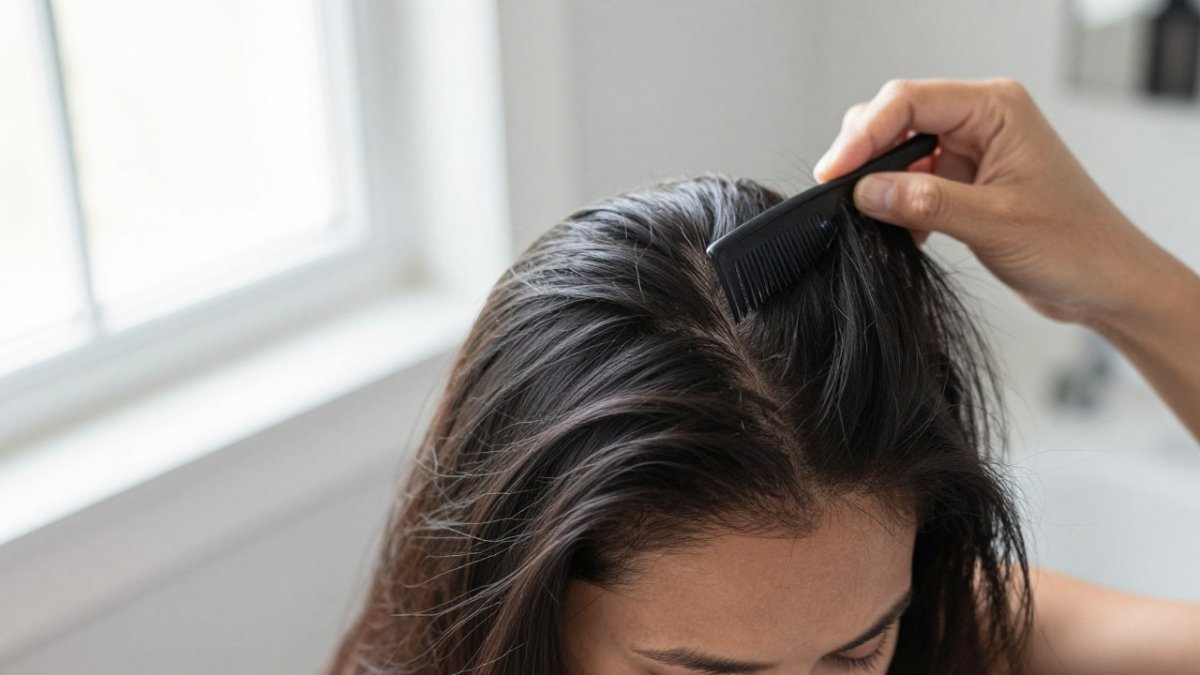
The six habits below cover cleansing, product choice, exfoliation, circulation, and protection. Most take minutes a day. Together, they form a scalp care routine you can actually keep.
A flaky, oily, or irritated scalp rarely fixes itself with a better conditioner alone.
1. Wash Your Hair and Scalp at the Right Frequency
There is no single correct wash frequency. A common approach is to match washing to how quickly your scalp gets oily, not to a fixed schedule.
- Oily scalp: wash daily to every other day with a gentle shampoo.
- Dry or sensitive scalp: wash every two to three days.
- Curly or coily hair: wash every one to two weeks, with scalp cleansing between washes.
- Fine hair: tends to show oil faster, so it often needs more frequent washing.
The goal is a clean scalp without stripping it. If your scalp feels tight or itchy after washing, you are probably overdoing it.
2. Master a Gentle Shampooing Technique
Good shampooing technique matters more than the bottle you buy.
Work in small circles for about a minute. Rinse thoroughly, because leftover product becomes residue that can flake and itch.
(https://blog.hrcaesthetics.com/what-is-acoustic-sound-wave-therapy-for-hair) is worth understanding as a clinic-based step beyond daily massage.6. Protect Your Scalp From Sun, Heat, and Harsh Treatments
Your scalp is skin, and it burns. Part lines and thinning areas get direct sun exposure, so wear a hat or use a scalp-friendly sunscreen on exposed areas.
Limit heat styling near the roots, and space out chemical treatments like relaxers and bleach. Harsh treatments, done too often, can leave the scalp irritated and hair brittle.
Unhealthy Scalp Signs You Should Not Ignore
Most scalp issues respond to better daily care. Some need a professional look.
See a clinician if you notice:
- Sores, scabs, or bleeding that do not heal
- Sudden or patchy hair shedding
- Severe itching that disrupts sleep
- Redness, swelling, or pus
- Persistent flakes that do not respond to dandruff shampoo
These can point to conditions that need proper evaluation, not another product. If you are also noticing thinning, our hair loss treatment guide covers options in more detail, and our overview of advanced hair health solutions explains what goes beyond daily habits.
If you want practical ways to support density at home, see our guide on how to improve hair density naturally.
| Sign | What It Often Means | What to Do |
|---|---|---|
| Mild flakes | Dry scalp or dandruff | Try a dandruff shampoo for a few weeks |
| Itchy, oily scalp | Buildup or seborrheic pattern | Adjust wash frequency, see a clinician if it persists |
| Patchy shedding | Possible medical cause | Book an evaluation |
| Sores or bleeding | Needs assessment | See a clinician promptly |
Our board-certified physician, Dr. You can schedule a free consultation to talk through what fits your situation.
A healthy scalp takes consistency, not perfection. If daily habits are not enough and you are seeing thinning or persistent irritation, get a professional opinion.
Frequently Asked Questions
What can I put on my scalp to make it healthier?
Start with a gentle shampoo matched to your scalp type and a light conditioner applied mostly to the hair, not the scalp. If your scalp is dry, a small amount of jojoba or coconut oil massaged in before washing can help. For flaking, an over-the-counter dandruff shampoo with ingredients like zinc pyrithione may reduce buildup. Avoid layering many products at once, since residue itself can irritate the scalp. If itching or flaking persists after a few weeks of consistent care, have a doctor look at it.
How often should I wash my hair for a healthy scalp?
Wash frequency depends on your scalp type and hair texture. An oily scalp often needs washing every one to two days, while a dry or sensitive scalp may do better every two to three days. People with curly or textured hair may stretch washes further. The key is regular washing with a gentle shampoo rather than harsh daily stripping. If your scalp feels itchy or greasy within a day of washing, adjust the schedule before reaching for stronger products.
What are the signs of an unhealthy scalp?
Common unhealthy scalp signs include persistent itching, flaking that does not clear with regular washing, redness, tenderness, and unusual shedding. You may also notice greasy patches, small bumps, or a burning feeling after using a new product. Some of these respond to a simpler routine with gentler products. Others, such as patches of hair loss or sores, need medical evaluation. Track how long symptoms last so you can describe them accurately at a consultation.
When should I see a doctor about scalp problems?
See a doctor if itching, flaking, or redness lasts more than a few weeks despite a gentle routine, or if you notice patches of missing hair, sores, or scaling that spreads. Sudden shedding, pain, or symptoms that interfere with sleep also warrant a visit. A physician can tell the difference between a treatable scalp condition and early hair loss, which matters because the approaches differ. Book a free consultation to get an assessment and a plan.