 blog
Are FUE Hair Transplant Before and After Photos Reliable?
Last Updated: November 5, 2026
Quick Summary
A fue hair transplant before and after photo is useful only when the two images are comparable. Clinics should use the same angle, lighting, hair length and a stated time point. Check the donor area too, since a full-looking hairline can sit beside a thinned donor zone.
- Confirm both photos use the same framing, lighting and hair length.
- Ask for the time point, since density keeps changing through the first year.
- Request views of the back and sides of the scalp, not just the hairline.
- Compare wet and dry views, as dry styling can mask gaps.
- Treat any single gallery as one patient's story, not a benchmark for your outcome.
Table of Contents
- What FUE Hair Transplant Before and After Photos Show
- How FUE Works and Why Donor Area Matters
- Reading the FUE Hair Transplant Timeline Month by Month
- Comparing Graft Counts and Coverage Side by Side
- What Realistic FUE Hair Transplant Results Look Like
- Risks, Setbacks and Results That Fall Short
- Booking a Consultation to Review Your Own Candidacy
- Frequently Asked Questions
What FUE Hair Transplant Before and After Photos Show
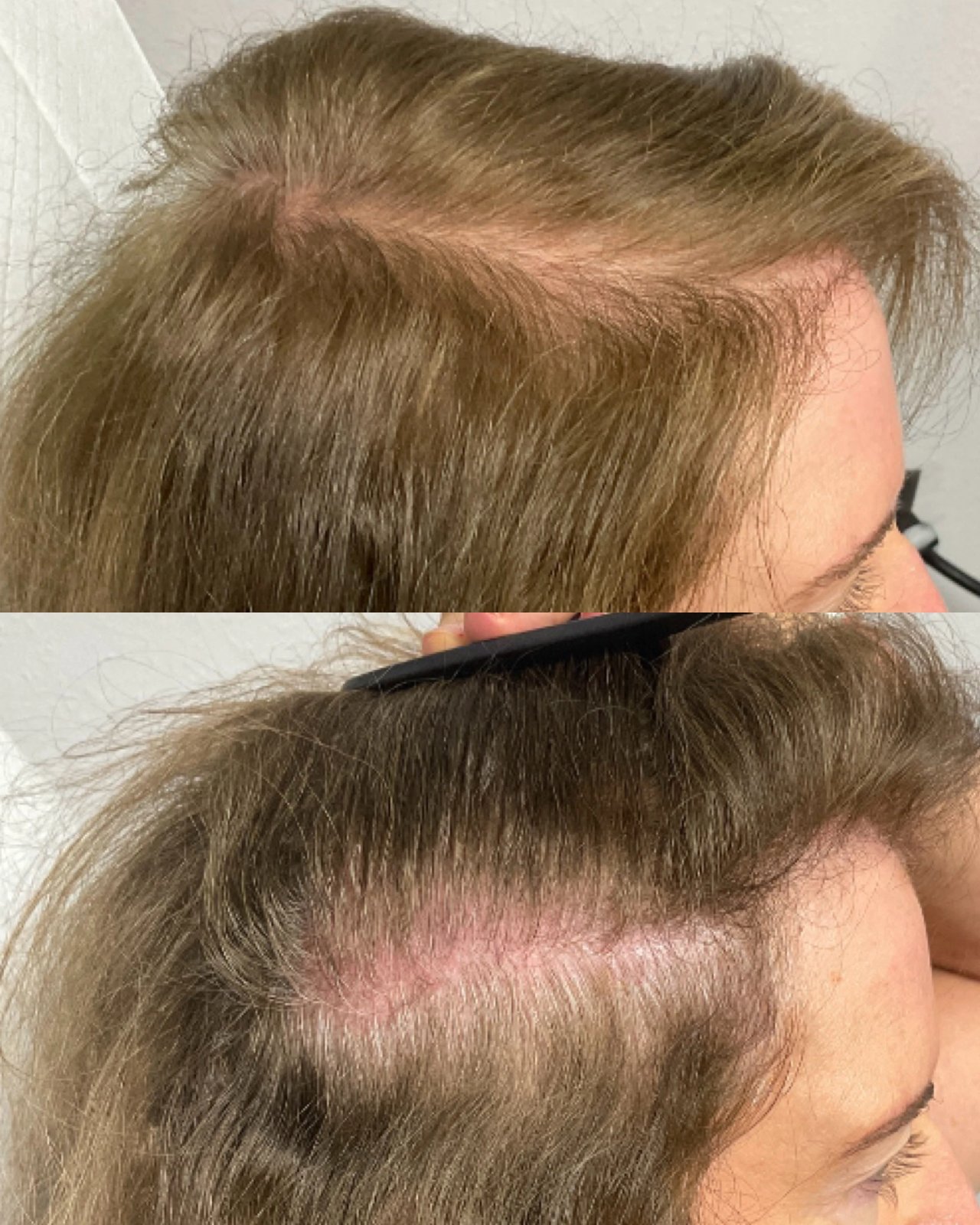
Before and after photos are the most common way clinics show hair restoration results, and they can be useful. They show how a hairline changed, how much coverage a patient gained, and whether the new hair blends with the surrounding hair. Readers can use this kind of visual guide to judge what a fue hair transplant before and after comparison really shows.
A single photo tells you very little. Lighting, camera angle, hair length, and styling can all make a result look better or worse than it is. A fair comparison uses the same angle, the same lighting, and a clear date range between the two photos.
A checklist for judging whether a photo set is trustworthy
Most galleries show attractive transformations but give you no way to tell whether two images are truly comparable. Use this checklist before you let a photo set shape your expectations:
- Same framing: The before and after should use the same camera distance, the same head tilt, and the same part line. A before shot taken under overhead bathroom light and an after shot taken under soft studio light will flatter the result.
- Same hair length and styling: Hair combed forward in one photo and swept back in the other hides or reveals scalp. Look for a stated note when length differs.
- Stated time point: "After" is not a date. A credible set says whether the image is at six months, twelve months, or later, because density keeps changing through the first year.
- Donor area shown: Ask for the back and sides of the scalp, not just the hairline. A full-looking recipient area can sit next to a thinned donor zone.
- Wet and dry views: Wet hair reveals true density and scalp visibility; dry, styled hair can mask gaps. Sets that show both are more informative.
- Consistent color and contrast: Heavy filtering, sharpening, or color grading can exaggerate density. Look for natural skin texture and visible pores.
- Multiple angles: Front, top, crown, and both sides. A single three-quarter view can hide a thin crown.
Watch out: a gallery that shows only the most flattering angle, crops out the donor area, and labels every image simply "after" is telling you more about the photographer than about the result.
Why standardized comparisons are rare
Clinics photograph patients in different rooms, with different cameras, at different stages of styling, so most online galleries cannot be compared case to case. When you review a set, treat it as one patient's story rather than a benchmark for your own outcome. The most useful sets are the ones that keep lighting, angle, hair length, and time points consistent across every patient, because only then can you compare coverage and density fairly.
How FUE Works and Why Donor Area Matters
Follicular unit extraction, often called FUE, moves individual hair follicles from a donor area to thinning areas. The donor area is usually the back and sides of the scalp, where hair is more resistant to thinning. Each graft is removed one at a time, so the procedure leaves small dots instead of a linear scar.
The donor area sets the limit on how much you can transplant. Taking too many grafts from one zone can leave it looking thin, so surgeons plan extraction carefully. When you review fue hair transplant before and after photos, check the donor area in the "after" shot. Good planning should leave the donor zone looking reasonably full.
Keep in mind that graft counts vary widely from one patient to the next. The number that suits one hairline may not suit another.
Reading the FUE Hair Transplant Timeline Month by Month
Results do not appear all at once. Transplanted hair usually sheds in the first weeks, then new growth starts over several months. Visible change often appears over the course of the first year, though timelines differ by person.
Photos taken at each stage can help you set expectations:
- Early weeks: Redness and scabbing fade, and transplanted hair may shed
- Around four months: Early new growth may appear, often thin at first
- Around ten to twelve months: Hair is typically much closer to its final look
For a detailed week-by-week breakdown, see our FUE Hair Transplant Recovery Timeline: Week by Week, which explains what is normal at each stage.
Comparing Graft Counts and Coverage Side by Side
Graft count alone does not predict a good result. Two patients with the same number of grafts can end up with different coverage, depending on hair thickness, the size of the area being treated, and how densely the grafts are placed. When you compare photos, look at coverage and density, not just the number on the chart.
What a graft count actually tells you
A graft is a small cluster of one to four hairs, so 2,000 grafts might mean anywhere from roughly 2,000 to 8,000 hairs depending on the patient's natural groupings. That is why the same number produces very different visual density from one person to the next. The variables that matter most:
- Area treated: The same graft count spread across a receding hairline looks dense; spread across the hairline and crown, it looks thin. Ask how many square centimeters the count was placed into.
- Hair caliber: Coarse, wavy hair covers more scalp per graft than fine, straight hair. Two patients with identical counts can differ visibly for this reason alone.
- Hair-to-skin contrast: High contrast between dark hair and light scalp makes thinning more visible, so more grafts are often needed to reach the same apparent density.
- Target density: A conservative hairline that frames the face needs fewer grafts than an aggressive rebuild of the frontal third and crown.
- Donor supply: The donor area sets the ceiling. A patient with dense, stable donor hair can support more grafts than one with limited or thinning donor hair.
A fair side-by-side comparison
When you look at two cases, compare like with like:
Schedule a Free Consultation →
- How large was the area treated, in square centimeters or by named zones (hairline, mid-scalp, crown)?
- How many grafts were placed, and what was the average hairs per graft?
- How does coverage look from the front, top, and crown, in both wet and dry hair?
- Is the donor area still reasonably full, and does it show visible thinning or scarring?
- What was the time point, and was the patient on any medical therapy for hair loss?
Why the comparison changes after the first year
Native hair around a transplanted area can continue to thin over time, which changes how the result looks. A result that looks full at twelve months can look less full at three or five years if untreated native hair continues to thin, leaving transplanted density surrounded by sparser hair. That is why long-term planning matters as much as the initial graft count: some patients plan for future hair loss, and additional sessions are sometimes discussed with a provider. Ask any clinic how they account for future hair loss when they set a graft plan.
Our FUE Success Rate: What to Expect From Your Transplant article goes further into what final outcomes look like for different patients.
What Realistic FUE Hair Transplant Results Look Like
Realistic results look natural, not perfect. A good hairline has irregular edges, varied angles, and a soft transition into existing hair.
Results also depend on the rest of your hair. If you continue to lose hair in areas not treated, the overall look may change over time. Many patients need to plan for ongoing hair loss, and some choose additional sessions later.
Ask your provider what results are realistic for your specific pattern of hair loss. A general photo gallery cannot answer that for you.
Risks, Setbacks and Results That Fall Short
Not every outcome matches the photos a clinic shows. Possible issues include:
- Lower-than-expected growth in some areas
- Visible shock loss, which is temporary shedding of transplanted and existing hair
- Scarring in the donor area
- Uneven density or an unnatural hairline
- Need for a second session to fill in gaps
Galleries often show only the most favourable cases. Ask to see results from patients with a similar hair loss pattern, and ask how the clinic handles touch-up work.
Hair restoration is a medical procedure, so ask a qualified provider which risks apply to you and what follow-up care is included.
Booking a Consultation to Review Your Own Candidacy
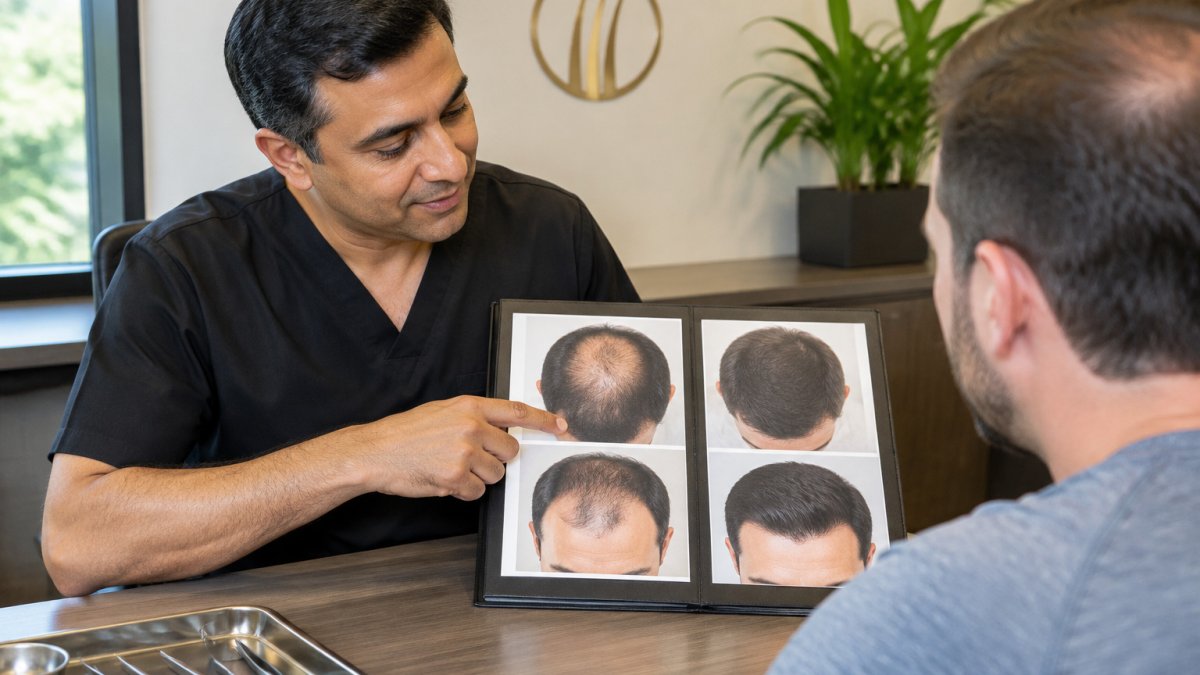
Only an in-person evaluation can tell you whether fue hair transplant is a good option for your hair loss pattern, donor supply, and goals. A consultation lets a specialist examine your scalp, discuss your expectations, and explain what realistic results look like for you.
Prepare a few questions before you go:
- What is my expected donor supply?
- Which results should I expect at four months and at one year?
- How many procedures might I need?
- What follow-up care is included?
You can schedule a free consultation to review your own candidacy. If you want help preparing, our guide to booking your hair restoration consultation explains what to bring and what to ask.
For eyebrow concerns, our precision eyebrow hair restoration service may also be worth discussing during your visit.
Frequently Asked Questions
How much coverage can 3,000 grafts provide?
The graft count needed for visible coverage depends on the size of the area being treated, the hair density the patient had before, and the hairline design chosen. Because grafts are not the same as hairs, a graft count alone does not tell you how much coverage to expect. When comparing before and after photos, look for patients with a similar starting pattern and a similar graft count, and ask the clinic to explain how that number was used. Your own surgeon can estimate a realistic range after an in-person examination.
When do FUE hair transplant results become visible?
Transplanted hairs typically shed in the weeks after surgery, and new growth usually begins gradually over several months. Many patients see early growth around the third to fourth month, with more noticeable change over the following months. Full results can take around a year. Photos taken at one, four, or twelve months can show different stages, so compare images taken at the same point in the timeline rather than a short-term photo against a long-term one.
What should I look for in FUE hair transplant before and after photos?
Look for consistent lighting, camera angle, and distance between the before and after images, and check whether the same hairline is shown from the same perspective. Note whether the patient's starting hair loss pattern resembles yours. Ask whether the photos were taken at the same time point after surgery and whether the patient has consented to their use. Photos alone cannot confirm results for your own scalp, so use them as a starting point for a consultation.
Hair Restoration Clinic of Granite Bay offers a free consultation to help you understand whether an FUE procedure fits your goals. Schedule a free consultation to talk through your options with the team.