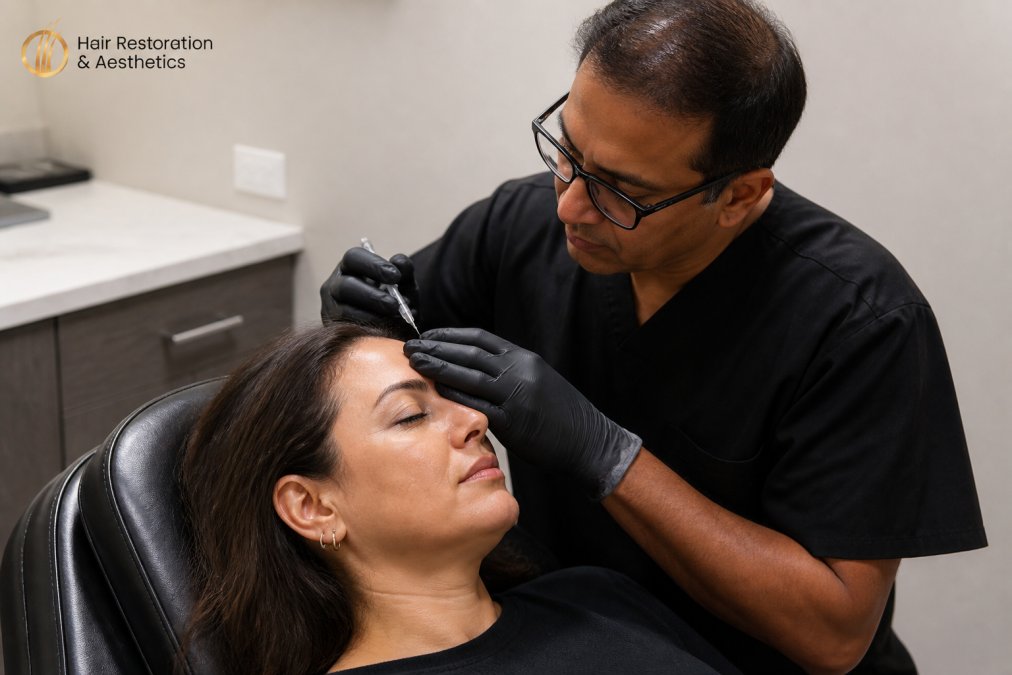
 listicle
Dermal Fillers for Volume Loss: 2026 Review
Table of Contents
- What Are Dermal Fillers for Volume Loss?
- Types of Dermal Fillers: HA vs. Biostimulatory Options
- Dermal Fillers for Volume Loss: Treatment Areas and Results
- How Long Do Dermal Fillers Last for Volume Loss?
- Dermal Filler Side Effects and Safety: What to Know
- Cost-Benefit Analysis: Choosing the Right Filler Type
- Why Choosing a Board-Certified Injector Matters
- Conclusion
Last Updated: August 22, 2026
What Are Dermal Fillers for Volume Loss?
Dermal fillers for volume loss are injectable substances placed beneath the skin's surface to restore soft tissue fullness, smooth facial contours, and reduce the appearance of wrinkles and folds. As a non-surgical approach to facial rejuvenation, they have become one of the most requested aesthetic procedures among adults seeking to address the structural changes that come with aging.
Volume loss occurs as the body produces less collagen and hyaluronic acid over time, causing sagging skin, deepening nasolabial folds, and a hollowing of the mid-face and temples. Dermal fillers replace that lost volume through subcutaneous injection, either directly or by stimulating the body's own collagen production. According to the American Society of Plastic Surgeons annual statistics report, soft tissue filler injections consistently rank among the top non-surgical cosmetic procedures performed each year.
At Hair Restoration Clinic of Granite Bay, facial rejuvenation is approached with clinical precision. Understanding what fillers are, how they differ, and which type suits your anatomy is the foundation of a good outcome.
How Subcutaneous Injection Restores Soft Tissue
Subcutaneous injection places filler material into targeted tissue planes beneath the dermis. Deeper injections provide structural lift in the mid-face, while more superficial placements address fine lines and skin surface irregularities. A skilled injector reads facial anatomy carefully before placing a single syringe, because the same product behaves differently depending on tissue density, skin thickness, and the degree of volume loss present. The result, when done correctly, is a face that looks rested and refreshed rather than altered.
Types of Dermal Fillers: HA vs. Biostimulatory Options
Two broad categories define the dermal filler landscape: hyaluronic acid fillers, which add immediate volume through a gel-like substance the body already recognizes, and biostimulatory fillers, which trigger the body's own collagen production for more gradual, longer-lasting results. Choosing between them depends on your treatment goals, timeline, and anatomy.
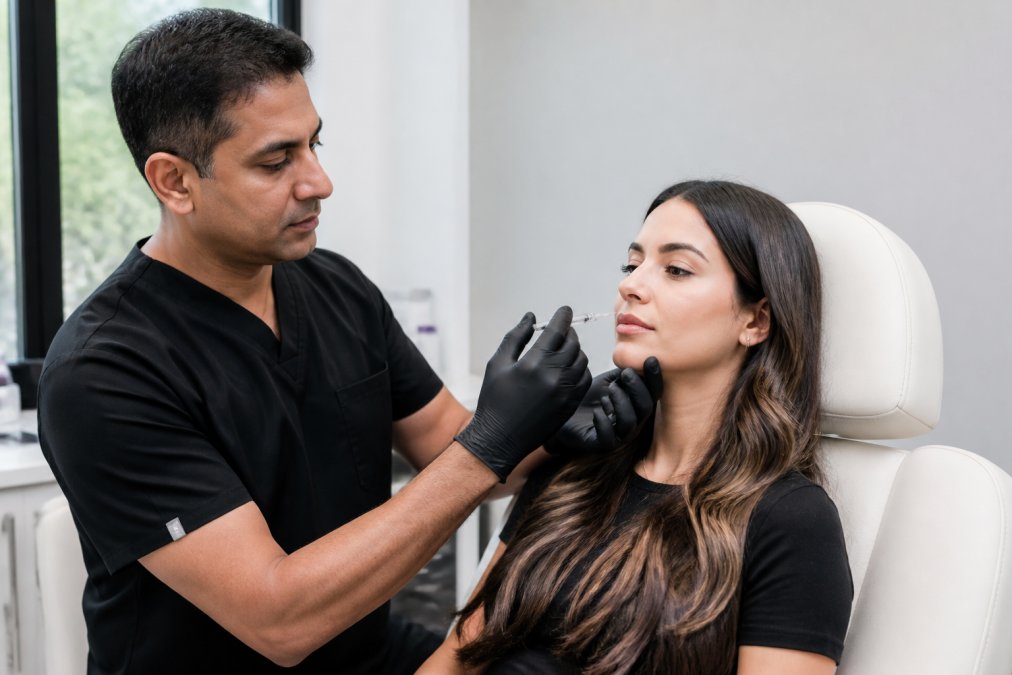
Hyaluronic Acid Fillers (Juvéderm, Restylane, Belotero, RHA)
Hyaluronic acid fillers are the most widely used category for dermal fillers volume loss treatment. Hyaluronic acid is a naturally occurring substance in the body that binds water molecules to maintain tissue hydration and elasticity, making HA-based fillers exceptionally biocompatible.
Juvéderm offers formulations targeting specific areas: cheeks, lips, jawline, and perioral lines. Results are immediate and can last from six months to two years depending on the specific product and treatment area.
Restylane covers a similarly broad range of facial concerns, from mid-face volume loss to lip augmentation and under-eye hollowing. It integrates well into tissue and is reversible with hyaluronidase if a correction is needed.
Belotero Balance uses a softer, more cohesive gel that integrates seamlessly into the skin. This makes it particularly well-suited for superficial lines and delicate zones like the under-eye area, where other fillers risk a bluish discoloration known as the Tyndall effect.
RHA Collection (Resilient Hyaluronic Acid) is engineered to move with dynamic facial expressions rather than resist them. Results can last up to 15 months and work well for nasolabial folds and the perioral region.
The defining advantage of HA fillers: they are reversible. If a result is uneven or a patient changes their mind, hyaluronidase dissolves the material quickly.
Collagen-Stimulating Fillers (Sculptra, Radiesse, Bellafill)
Biostimulatory fillers work differently. Rather than adding volume directly, they prompt the body to build new collagen over weeks and months, producing results that develop gradually and tend to last significantly longer.
Sculptra Aesthetic is made from poly-L-lactic acid, a biocompatible synthetic material that acts as a collagen biostimulator. A typical treatment series involves two to three sessions spaced several weeks apart. Results emerge gradually over three to six months and can persist for two to five years. Sculptra is particularly effective for diffuse volume loss across the cheeks, temples, and jawline.
Radiesse combines immediate results with long-term collagen stimulation. Its calcium hydroxylapatite microspheres in a gel carrier provide instant lift upon injection, while the microspheres themselves serve as a scaffold that encourages new tissue formation. Results typically last 12 to 18 months or longer.
Bellafill is the longest-lasting filler available, combining bovine collagen for immediate volume with polymethyl methacrylate microspheres that create a permanent scaffold. It is FDA-approved for nasolabial folds and is the only FDA-approved filler for atrophic acne scarring. Because the PMMA component is permanent and cannot be dissolved, patient selection and injector expertise are especially critical.
Filler | Type | Longevity | Reversible | Best For |
|---|---|---|---|---|
Juvéderm | Hyaluronic acid | 6-24 months | Yes | Lips, cheeks, jawline |
Restylane | Hyaluronic acid | 6-18 months | Yes | Mid-face, under-eyes, lips |
Belotero Balance | Hyaluronic acid | 6-12 months | Yes | Fine lines, under-eyes |
RHA Collection | Resilient HA | Up to 15 months | Yes | Dynamic wrinkle areas |
Sculptra | Poly-L-lactic acid | 2-5 years | No | Diffuse volume loss |
Radiesse | Calcium hydroxylapatite | 12-18+ months | No | Structural lift, jawline |
Bellafill | PMMA + bovine collagen | Up to 5 years | No | Nasolabial folds, acne scars |
Dermal Fillers for Volume Loss: Treatment Areas and Results
The right filler depends on where it goes and what the tissue in that zone requires. Different facial zones have different structural needs, different skin thicknesses, and different movement patterns.
Mid-Face, Nasolabial Folds, Temples, and Jawline
Mid-face volume loss is one of the most common concerns addressed with dermal fillers. The cheeks lose fatty tissue and bone density with age, creating a sunken or flattened appearance. Thicker HA fillers or biostimulatory options like Sculptra work well here because they can restore projection without looking overdone when placed correctly in the deep tissue planes.
Nasolabial folds deepen as the mid-face descends. Treating the fold itself often produces a less natural result than lifting the cheek tissue above it. HA fillers and Radiesse are both commonly used in this zone.
Temples hollow noticeably with age and are frequently undertreated. Restoring temple volume creates a more youthful oval facial shape. Sculptra and thicker HA fillers are both effective here.
Jawline definition is frequently requested by patients seeking facial contouring without surgery. Radiesse and thicker HA formulations provide structural support along the mandible, softening jowling and improving the lower face profile.
How Long Do Dermal Fillers Last for Volume Loss?
How long dermal fillers last depends on three factors: the filler type, the specific facial zone treated, and the individual patient's metabolism and lifestyle.
Comparative Longevity by Facial Zone and Filler Type
Longevity varies meaningfully by location on the face. Areas of high movement break down filler faster than areas with less dynamic activity.
- Lips: HA fillers typically last four to six months due to constant movement
- Nasolabial folds: HA fillers average nine to twelve months; Radiesse can extend to 18 months
- Cheeks and mid-face: Sculptra lasts two to five years; HA fillers average 12 to 18 months
- Temples: Sculptra and thick HA fillers perform well, with longevity in the 12-to-24-month range
- Jawline: Radiesse and thick HA fillers typically last 12 to 18 months
Biostimulatory fillers show their real advantage for patients dealing with significant mid-face volume loss. A Sculptra series may involve a higher initial investment but can deliver results that outlast multiple rounds of HA treatment in the same area.
Maintenance and Stacking Protocols
Most patients find that a maintenance approach produces better long-term outcomes than waiting until results have fully faded. Topping up a filler before it has completely dissolved tends to require less product than starting from zero.
A common approach, sometimes called "stacking," involves layering treatments strategically. For example, a patient might complete a Sculptra series for foundational collagen stimulation, then use HA fillers for precise surface corrections or lip enhancement.
Dermal Filler Side Effects and Safety: What to Know
Dermal filler side effects and safety are legitimate considerations. The most common adverse events are mild and temporary. Serious ones are rare but real, and they are almost always linked to injection technique and provider experience.
Adverse Events, Vascular Occlusion, and Filler Migration
Common side effects following dermal filler injections include temporary redness, swelling, bruising, and tenderness at the injection site. These typically resolve within a few days to two weeks.
Schedule a Free Consultation →
More serious adverse events include:
- Vascular occlusion: The most feared complication, occurring when filler is inadvertently injected into or compresses a blood vessel, potentially compromising blood flow to surrounding tissue. Prompt recognition and treatment with hyaluronidase (for HA fillers) is critical.
- Filler migration: Material that moves from the intended treatment site over time, creating irregularities. This is more likely with overfilling, incorrect product selection, or poor injection technique.
- Granulomas: A delayed inflammatory response where the body forms nodules around filler material. These are uncommon but can occur with any filler type.
- Infection: Rare but possible with any injection procedure. Proper sterile technique significantly reduces this risk.
According to FDA guidance on dermal fillers and associated risks, the FDA classifies dermal fillers as medical devices and advises that injections should only be performed by trained healthcare professionals with a thorough understanding of facial anatomy.
The irreversibility of biostimulatory fillers means that selecting the right provider is especially consequential when choosing these options.
Cost-Benefit Analysis: Choosing the Right Filler Type
The cost of dermal fillers for volume loss treatment is complex to evaluate because the right metric is not price per syringe; it is cost per year of maintained results. An HA filler that requires retreatment every nine to twelve months will accumulate significant cost over a five-year period. A Sculptra series may represent better value over that timeframe, even with a higher initial investment.
The right framework for choosing a filler type:
- Choose HA fillers when: You want immediate results, you are new to fillers and want a reversible option, your concern is localized and specific, or you prefer flexibility to adjust results over time
- Choose biostimulatory fillers when: You have diffuse, significant volume loss across multiple zones, you want longer-lasting results with fewer maintenance sessions, or you are comfortable with a gradual treatment timeline
- Choose Bellafill when: You want the longest possible duration for nasolabial fold correction and have been assessed as a suitable candidate by a qualified physician
For patients seeking facial rejuvenation at Hair Restoration Clinic of Granite Bay, Dr. Piyush Kumar evaluates each patient's facial anatomy and treatment goals individually before recommending a filler type or combination. The goal is always a natural-looking result that fits your lifestyle and budget.
According to American Academy of Dermatology guidance on injectable fillers, patient selection and realistic expectation-setting are among the most important factors in achieving satisfactory aesthetic outcomes with dermal fillers.
Why Choosing a Board-Certified Injector Matters
The single most important variable in dermal filler outcomes is not the product; it is the person holding the syringe. Filler complications, from vascular occlusion to migration to asymmetry, are almost always technique-dependent.
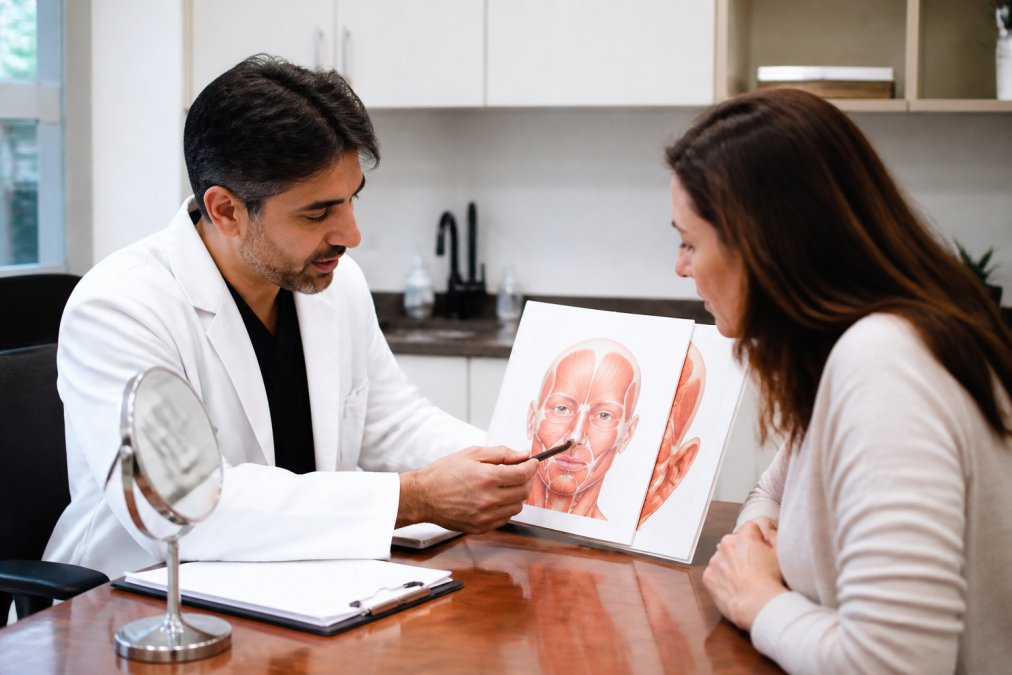
Board certification in a relevant specialty, such as dermatology or plastic surgery, signals that a provider has met rigorous training standards and is held to ongoing continuing education requirements. It meaningfully reduces risk compared to receiving injections from an inadequately trained provider.
What to verify before your appointment:
- The injector holds board certification from a recognized specialty board (American Board of Dermatology, American Board of Plastic Surgery, or equivalent)
- The practice performs a thorough consultation before any treatment
- The provider can clearly explain which filler they recommend and why, for your specific anatomy
- Emergency protocols for adverse events (including hyaluronidase availability) are in place
- Before-and-after photos from real patients with similar concerns are available for review
The psychological dimension of this decision matters too. Patients who feel confident in their provider report significantly higher satisfaction. Trust in the clinical relationship shapes how patients experience the entire treatment process and whether they return for appropriate maintenance.
As the American Board of Cosmetic Surgery's patient safety resources document, verifying a provider's credentials before undergoing any injectable procedure is a fundamental patient safety step.
Dr. Piyush Kumar brings over a decade of experience to facial rejuvenation at Hair Restoration Clinic of Granite Bay, applying the same evidence-based, anatomy-first approach to filler treatments that defines every procedure at the practice.
Dermal fillers for volume loss are an effective, non-surgical tool for facial rejuvenation when the right product meets the right technique and the right patient.
Schedule a free consultation with Hair Restoration Clinic of Granite Bay to discuss your facial rejuvenation goals with board-certified physician Dr. Piyush Kumar. During your consultation, Dr. Kumar will assess your facial anatomy, explain which filler options suit your specific concerns, and outline a treatment plan designed to deliver natural-looking, lasting results.
== FAQ ANSWERS (audit these too, same rules) ==
[1] Q: How do dermal fillers work to restore facial volume? A: Dermal fillers restore facial volume through subcutaneous injection into targeted areas of soft tissue. Hyaluronic acid fillers attract and retain water molecules, immediately plumping the treated area. Biostimulatory options like poly-l-lactic acid and calcium hydroxylapatite work differently: they stimulate your body's own collagen production over weeks and months, gradually rebuilding facial structure. The right approach depends on how quickly you want results, which facial zones need correction, and how long you want the aesthetic outcomes to last.
[2] Q: Are dermal fillers FDA-approved for volume loss? A: Yes. Several dermal fillers hold FDA approval for soft tissue augmentation and facial rejuvenation. Juvéderm and Restylane products are FDA-approved for mid-face volume loss and nasolabial folds. Sculptra Aesthetic is FDA-approved for correcting shallow to deep facial wrinkles and folds. Radiesse is FDA-approved for facial wrinkles and hand rejuvenation. Bellafill holds FDA approval specifically for nasolabial folds and atrophic acne scarring. Always confirm the specific indication for any injectable device with your provider before treatment.
[3] Q: What are the most common side effects of dermal fillers? A: Common side effects after dermal filler treatments include temporary redness, swelling, bruising, and tenderness at the injection site. These typically resolve within a few days. More serious adverse events, though rare, include vascular occlusion, granulomas, filler migration, and infection. Hyaluronic acid fillers carry the advantage of reversibility: the enzyme hyaluronidase can dissolve them if needed. Non-HA fillers like Sculptra, Radiesse, and Bellafill cannot be reversed, making patient selection and injection technique especially important.
[4] Q: What is the difference between hyaluronic acid and collagen-stimulating fillers? A: Hyaluronic acid fillers like Juvéderm, Restylane, and Belotero deliver immediate volume and wrinkle reduction, and results are reversible with hyaluronidase. Collagen-stimulating or biostimulatory fillers, such as Sculptra (poly-l-lactic acid) and Radiesse (calcium hydroxylapatite), work by triggering your body's own collagen production. Results from biostimulatory options appear gradually over several months but tend to last significantly longer. The best choice depends on your timeline, budget, and the specific areas of mid-face volume loss or contouring you want to address.
[5] Q: Who is a good candidate for dermal filler treatments? A: Good candidates for dermal fillers are generally healthy adults experiencing sagging skin, mid-face volume loss, deepening nasolabial folds, or loss of definition along the jawline and temples. Patients who want non-surgical facial rejuvenation with minimal downtime are often well-suited. A thorough consultation with a board-certified injector is essential to assess facial anatomy, discuss realistic aesthetic outcomes, and identify any contraindications. Patients who are pregnant, have certain autoimmune conditions, or have had prior allergic reactions to filler components may not be suitable candidates.
Frequently Asked Questions
Q: How do dermal fillers work to restore facial volume?
A: Dermal fillers restore facial volume through subcutaneous injection into targeted areas of soft tissue. Hyaluronic acid fillers attract and retain water molecules, immediately plumping the treated area. Biostimulatory options like poly-l-lactic acid and calcium hydroxylapatite work differently: they stimulate your body's own collagen production over weeks and months, gradually rebuilding facial structure. The right approach depends on how quickly you want results, which facial zones need correction, and how long you want the aesthetic outcomes to last.
Q: Are dermal fillers FDA-approved for volume loss?
A: Yes. Several dermal fillers hold FDA approval for soft tissue augmentation and facial rejuvenation. Juvéderm and Restylane products are FDA-approved for mid-face volume loss and nasolabial folds. Sculptra Aesthetic is FDA-approved for correcting shallow to deep facial wrinkles and folds. Radiesse is FDA-approved for facial wrinkles and hand rejuvenation. Bellafill holds FDA approval specifically for nasolabial folds and atrophic acne scarring. Always confirm the specific indication for any injectable device with your provider before treatment.
Q: What are the most common side effects of dermal fillers?
A: Common side effects after dermal filler treatments include temporary redness, swelling, bruising, and tenderness at the injection site. These typically resolve within a few days. More serious adverse events, though rare, include vascular occlusion, granulomas, filler migration, and infection. Hyaluronic acid fillers carry the advantage of reversibility: the enzyme hyaluronidase can dissolve them if needed. Non-HA fillers like Sculptra, Radiesse, and Bellafill cannot be reversed, making patient selection and injection technique especially important.
Q: What is the difference between hyaluronic acid and collagen-stimulating fillers?
A: Hyaluronic acid fillers like Juvéderm, Restylane, and Belotero deliver immediate volume and wrinkle reduction, and results are reversible with hyaluronidase. Collagen-stimulating or biostimulatory fillers, such as Sculptra (poly-l-lactic acid) and Radiesse (calcium hydroxylapatite), work by triggering your body's own collagen production. Results from biostimulatory options appear gradually over several months but tend to last significantly longer. The best choice depends on your timeline, budget, and the specific areas of mid-face volume loss or contouring you want to address.
Q: Who is a good candidate for dermal filler treatments?
A: Good candidates for dermal fillers are generally healthy adults experiencing sagging skin, mid-face volume loss, deepening nasolabial folds, or loss of definition along the jawline and temples. Patients who want non-surgical facial rejuvenation with minimal downtime are often well-suited. A thorough consultation with a board-certified injector is essential to assess facial anatomy, discuss realistic aesthetic outcomes, and identify any contraindications. Patients who are pregnant, have certain autoimmune conditions, or have had prior allergic reactions to filler components may not be suitable candidates.
This article was written using GrandRanker