
 listicle
Is Volume Loss Treatment Worth the Cost? A 2026 Review
Table of Contents
- What Does Facial Volume Loss Treatment Actually Cost Over Time?
- The Real Value of Volume Loss Treatment: More Than Skin Deep
- Dermal Filler Longevity and Maintenance: Budgeting for Touch-Ups
- Cost of PDO Thread Lifts vs Fillers: Which Offers Better Value?
- Biostimulators and Combination Therapy: A Smarter Investment
- Lifestyle Factors That Extend or Shorten Your Results
- How to Choose a Board-Certified Aesthetic Provider
- When to Stop or Pivot Your Treatment Plan
- Frequently Asked Questions
Last Updated: September 9, 2026
What Does Facial Volume Loss Treatment Actually Cost Over Time?
Facial volume loss is the gradual depletion of subcutaneous fat, bone resorption, and declining collagen that hollows the cheeks, temples, and under-eye area as part of the natural aging process. Deciding whether volume loss treatment is worth the cost requires looking past the initial price tag to the full financial picture across several years. At Hair Restoration Clinic of Granite Bay, we counsel patients daily on how dermal fillers, PDO threads, and biostimulators compare when you factor in longevity, maintenance, and the cost of doing nothing.
The honest answer is that volume loss treatment is rarely a one-time expense. Most injectable options require touch-up sessions on a defined maintenance schedule, which changes the math entirely. The real question isnt "what does one syringe cost?" but "what does maintaining a rejuvenated appearance cost over five years?"
The Real Value of Volume Loss Treatment: More Than Skin Deep
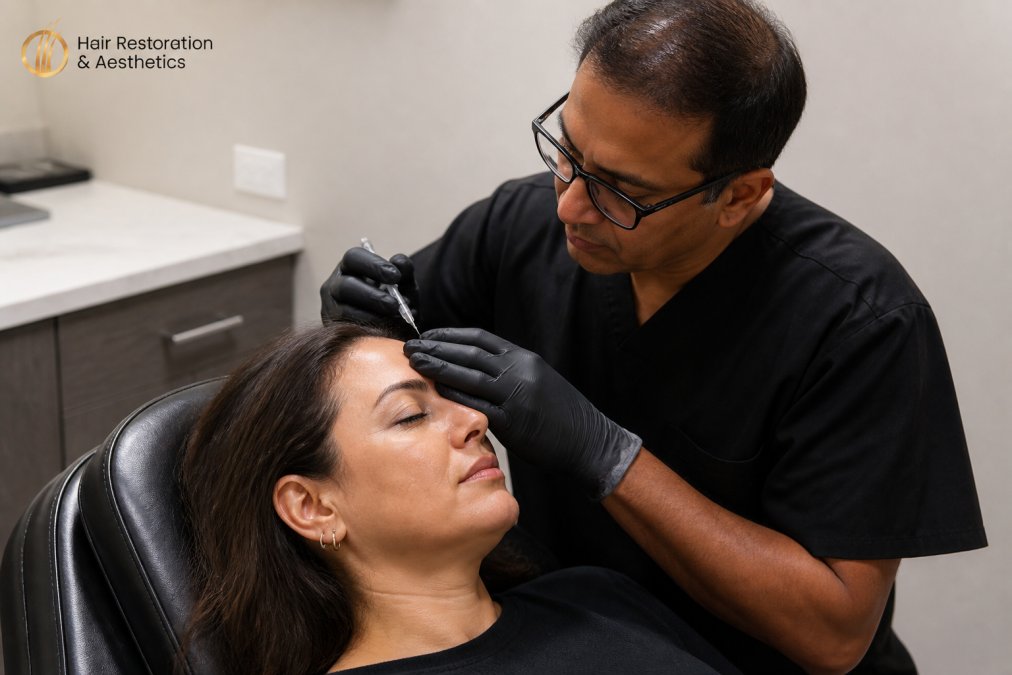
Volume restoration is a minimally invasive approach to facial rejuvenation that rebuilds structural support where aging has depleted it, using injectable fillers or biostimulators rather than surgery. The value calculation should include both the financial outlay and the less tangible benefits that make the investment worthwhile for many patients.

Psychological ROI: How Rejuvenation Affects Quality of Life
The psychological dimension of facial aging is often underestimated in cost discussions. Research on patient satisfaction consistently shows that addressing visible signs of aging improves confidence and self-perception, which carries into professional and social interactions. When you evaluate whether volume loss treatment is worth the cost, weight the daily emotional toll of looking tired or gaunt against the price of correction.
A Long-Term Cost-Benefit Calculator for Your Aesthetic Goals
Build a simple personal calculator before committing. Estimate the number of touch-up sessions you will need annually based on the product your provider recommends, multiply by your expected treatment longevity, and compare that against your budget for skincare, makeup, or other approaches you currently use to mask volume loss. Most patients find the per-day cost of treatment is modest when spread across the full lifespan of results.
Dermal Filler Longevity and Maintenance: Budgeting for Touch-Ups
Dermal filler longevity depends primarily on the specific product and the area treated, with most hyaluronic acid fillers lasting between six months and two years before natural metabolic rate breaks them down (PubMed). Areas with more movement, such as the lips and nasolabial folds, metabolize filler faster than static zones like the cheeks. Dermal filler longevity and maintenance planning means accepting that results are temporary and scheduling touch-up sessions before full resorption to avoid the "all or nothing" look.
Cost of PDO Thread Lifts vs Fillers: Which Offers Better Value?
Comparing the cost of PDO thread lifts vs fillers comes down to mechanism versus longevity. PDO threads provide immediate structural support by physically lifting sagging tissue and stimulating collagen production around the threads as they dissolve over several months. Fillers add volume directly but do less to address tissue laxity.
| Treatment | Mechanism | Typical Longevity | Best For |
|---|---|---|---|
| Hyaluronic acid fillers | Adds volume and hydration | 6-24 months | Mid-face atrophy, nasolabial folds, lips |
| PDO threads | Physical lift plus collagen stimulation | 12-18 months | Mild to moderate tissue laxity, jowls |
| Biostimulators | Collagen production over time | 18-24+ months | Gradual, natural-looking volume restoration |
For patients whose primary concern is sagging rather than hollowness, thread lifts often deliver better value per dollar. Those with true mid-face atrophy and bone resorption typically need filler volume regardless. A comprehensive treatment plan frequently combines both approaches.
Biostimulators and Combination Therapy: A Smarter Investment
Biostimulators such as poly-L-lactic acid work differently from traditional fillers by prompting your own collagen production gradually over several sessions, creating results that build slowly and look increasingly natural. While the upfront series costs more than a single filler appointment, the extended treatment longevity often makes biostimulators more cost-effective over a two-year horizon. Combination therapy that layers a biostimulator for collagen with a small amount of hyaluronic acid filler for immediate volume often delivers superior clinical outcomes to either approach alone.
Schedule a Free Consultation →
Lifestyle Factors That Extend or Shorten Your Results
Treatment longevity is not purely a function of product choice; your habits play a measurable role. Sun exposure degrades both collagen and hyaluronic acid faster, smoking accelerates metabolic breakdown of fillers, and chronic stress elevates cortisol, which impairs skin repair (peer-reviewed research). Patients who maintain consistent skincare, sun protection, and hydration typically extend the interval between touch-up sessions.
How to Choose a Board-Certified Aesthetic Provider
Choosing a board-certified aesthetic provider is the single most important factor in whether your volume loss treatment is worth the cost. A physician who understands facial anatomy and the aging process will use less product for better results than an inexperienced injector who overfills or places filler incorrectly. Verify credentials through official channels, review before-and-after photos of patients with similar anatomy, and confirm the provider performs a dermatological assessment before recommending any treatment plan. Guidance from the American Board of Medical Specialties explains what board certification actually means and why it matters for patient safety.
When to Stop or Pivot Your Treatment Plan
There comes a point where adding more volume produces an unnatural appearance, and recognizing that moment separates skilled practitioners from those who simply sell product. A responsible provider will tell you when you have reached the limit of what injectables can achieve and may suggest pivoting to skin rejuvenation treatments like microneedling or laser therapy to address texture and laxity that fillers cannot fix. The best outcome is one where friends notice you look rested, not that you had work done.
The decision ultimately rests on your aesthetic goals, your budget, and your willingness to maintain results. A free consultation with a board-certified physician can clarify which approach fits your needs and what a realistic long-term plan looks like.
Deciding whether volume loss treatment is worth the cost is deeply personal, but it should never be uninformed. The team at Hair Restoration Clinic of Granite Bay, led by board-certified physician Dr. Piyush Kumar, offers free consultations to assess your facial anatomy, discuss your aesthetic goals, and build a transparent treatment plan that respects your budget. With over a decade of experience and a full menu of dermal fillers, PDO threads, and skin rejuvenation options, we help you achieve a natural, rejuvenated appearance on your terms. Schedule a free consultation to explore your options.
Frequently Asked Questions
What is the most effective non-surgical treatment for facial volume loss?
The most effective approach often combines dermal fillers for immediate structural support with biostimulators like Sculptra or Radiesse, which trigger your own collagen production over time. Fillers give you instant correction, while biostimulators build gradual, natural-looking results that can last longer. A board-certified provider will assess your specific pattern of volume loss, skin quality, and aesthetic goals to recommend the right combination, rather than a one-size-fits-all product.
How long do results from dermal fillers typically last?
Dermal filler longevity depends on the product type and the area treated. Hyaluronic acid fillers in the lips typically last 6 to 12 months, while the same product in the cheeks can last 12 to 18 months due to less movement. Biostimulators can produce results lasting up to 2 years or more. Your metabolic rate, lifestyle, and how much product you start with all influence duration. A maintenance schedule with touch-up sessions helps you sustain results cost-effectively.
How do PDO thread lifts compare to dermal fillers for volume restoration?
PDO threads and dermal fillers address different problems. Threads physically lift and tighten sagging tissue, providing a scaffolding effect, while fillers add volume to areas that have lost fat and structure. They are often used together for comprehensive rejuvenation. Threads typically cost more upfront and results last 12 to 18 months, whereas fillers are less expensive per session but may require more frequent touch-ups. Your provider should explain which approach, or combination, matches your specific anatomy.
Is volume loss treatment worth the cost compared to surgery?
For many patients, non-surgical volume loss treatment offers a compelling balance of results, downtime, and cost. Surgical options like fat grafting involve a longer recovery and higher upfront expense. Non-surgical treatments allow you to pace your investment over time and adjust as you age. The true value depends on your priorities: if avoiding downtime and maintaining a natural appearance matter most, a well-planned non-surgical approach with a board-certified provider is often the smarter financial choice.