 listicle
Natural Looking Hair Restoration for Men: 2026 Guide
Table of Contents
- What Makes Hair Restoration Look Natural?
- FUE Hair Transplant: The Gold Standard for Natural Results
- Understanding FUE Hair Transplant Recovery Time
- Non-Surgical Options: Benefits of Alma TED for Hair Thinning
- Choosing a Board-Certified Hair Restoration Doctor
- Managing Expectations: From Hairline Design to Final Results
- Lifestyle and Maintenance After Restoration
- Conclusion: Your Path to Natural-Looking Hair
- Frequently Asked Questions
Last Updated: September 7, 2026
What Makes Hair Restoration Look Natural?
The fear of an obvious, "pluggy" hair transplant keeps many men from seeking help. Natural looking hair restoration for men is not about adding density everywhere; it is about recreating what nature gave you.
A natural result depends on three factors: the artistry of hairline design, the quality of the donor hair, and the precision of graft placement. The hairline is the most critical zone. A straight, low hairline screams "transplant," while a slightly irregular, mature hairline with soft angles looks authentic. According to the American Academy of Dermatology's guidance on hair loss, male pattern baldness typically follows a predictable progression, which means a skilled physician can plan for future loss, not just the current state.
The surgeon must also respect the hair growth cycle and the natural angle and direction of your existing hair. Patients who prioritize a conservative hairline over maximum density are consistently the happiest.
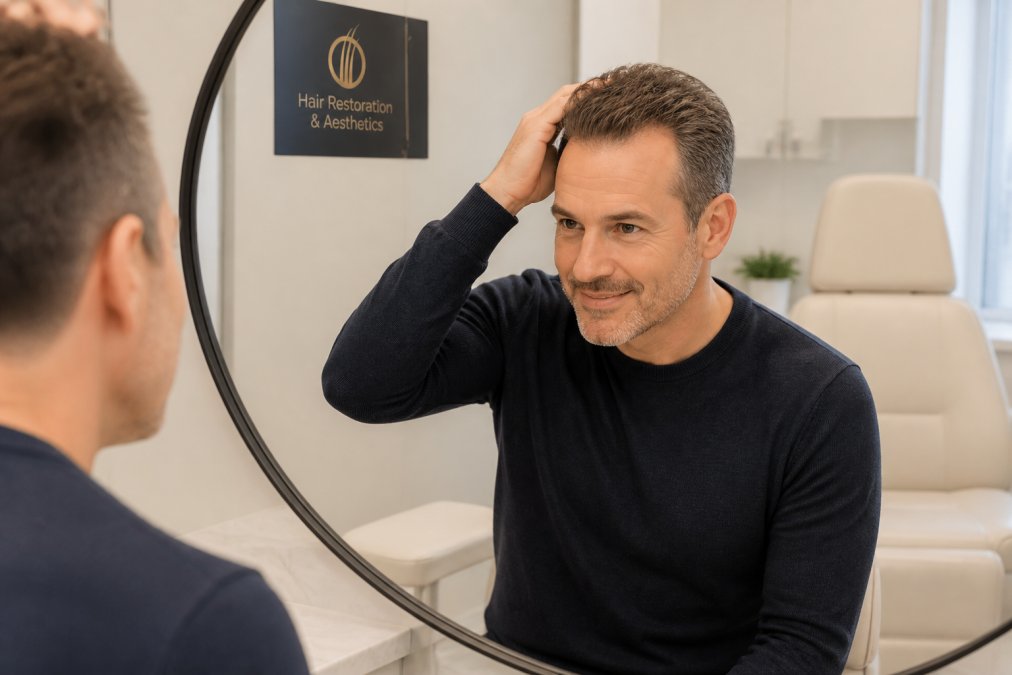
FUE Hair Transplant: The Gold Standard for Natural Results
Follicular unit extraction, or FUE, is widely considered the gold standard for achieving natural looking hair restoration for men. Unlike older strip methods, FUE harvests individual follicles from the donor area and transplants them to thinning regions, leaving no linear scar and allowing greater artistic freedom.
Follicular Unit Extraction Explained
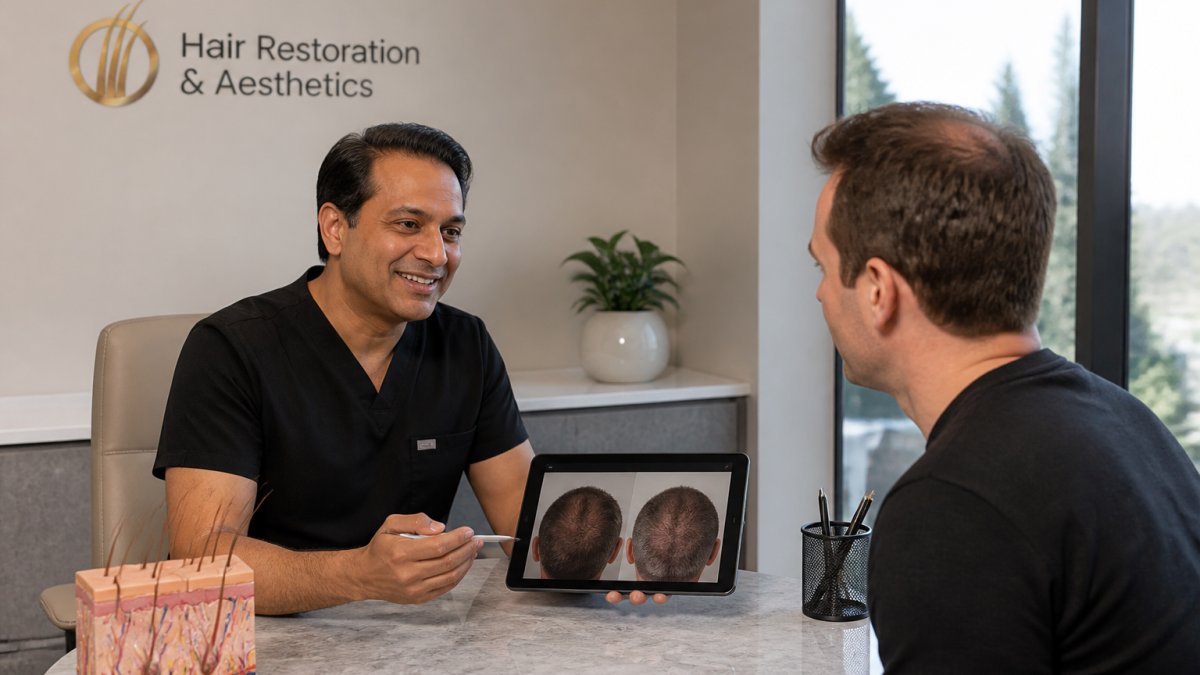
The procedure begins with a dermatological assessment of scalp density and donor quality. Individual follicular units, naturally occurring groups of 1 to 4 hairs, are extracted and placed into tiny recipient sites matched to the angle and density of your surrounding hair.
A skilled surgeon uses single-hair grafts at the front edge and denser grafts behind them to create a soft, feathered transition, separating a natural result from a "doll's hair" appearance.
Understanding FUE Hair Transplant Recovery Time
Most men return to normal routines within a few days, though complete visual recovery takes longer.
Here is a realistic timeline of what to expect:
- Days 1-3: The recipient area may be red and slightly swollen. You can usually return to desk work after 48 to 72 hours.
- Days 4-10: Small scabs around the grafts will fall off. This is normal and does not indicate graft loss.
- Weeks 2-6: The transplanted hairs will shed. This is a normal part of the hair growth cycle; the follicle itself remains alive beneath the scalp.
- Months 3-6: New growth begins to appear, often thin and fine at first.
- Months 9-12: You see the full aesthetic outcome, with improved hair density and texture.
You can typically wear a loose hat after a few days to cover redness. Strenuous exercise is restricted for about two to three weeks to protect the grafts.
Non-Surgical Options: Benefits of Alma TED for Hair Thinning
Not every man is ready for surgery, and some want to treat thinning before it progresses. Alma TED, a non-invasive acoustic sound wave therapy, is designed to revitalize dormant hair follicles.
How Alma TED Works on the Scalp
Alma TED delivers targeted acoustic wave energy to the scalp, creating micro-mechanical stress believed to stimulate cellular activity, improve circulation, and encourage growth factors. There is no needle, no downtime, and no risk of bruising or infection.
Where Alma TED Fits in the Hair Loss Timeline
The benefits of Alma TED for hair thinning are most pronounced in the early stages of hair loss, where the follicle is miniaturizing but not yet dead. It is a legitimate tool for improving scalp health and stimulating the hair growth cycle, but it is most effective for maintaining density and thickening existing hair, not for regrowing hair on completely bald areas.
A practical way to think about it:
- Norwood stages 1-3 (early recession at the temples or a thinning crown): Alma TED can help stabilize thinning and improve hair quality.
- Norwood stages 4-5 (more pronounced balding with a clear bald spot or significant recession): Alma TED may support the remaining hair, but a surgical procedure is typically needed to restore density to the bald areas.
- Norwood stages 6-7 (extensive baldness): Alma TED is unlikely to produce meaningful regrowth on its own; surgical restoration is the primary option.
The Emotional Advantage of a Non-Surgical Start
For many men, the fear of looking 'different' during recovery, the cost, and the permanence of surgery can be paralyzing. Alma TED offers an entry point that feels more like a routine wellness appointment than a life event.
Combining Non-Surgical and Surgical Approaches
Alma TED is often used in conjunction with FDA-approved treatments like topical minoxidil or finasteride to maximize results. A consultation with a physician can help determine if your hair loss pattern makes you a suitable candidate for this technology versus a surgical approach. If you are unsure which path fits your stage of hair loss, you can Schedule a Free Consultation to get a professional assessment.
A man in his late 20s or early 30s noticing crown thinning, not ready for a transplant and hesitant about daily medication, finds Alma TED a middle path: in-office sessions with no recovery time, preserving hair while he decides on a permanent solution later.
What a Treatment Course Looks Like
A typical protocol involves a series of sessions over several weeks, followed by maintenance. Each session is comfortable, often described as a tapping sensation, and you can return to work immediately.
The technology is FDA-cleared for stimulating hair growth (the FDA). A physician must confirm you have viable, miniaturizing follicles; if hair loss is too advanced, an honest consultation will tell you whether Alma TED or surgery is right.
Choosing a Board-Certified Hair Restoration Doctor
The physician's skill is the single most important variable in your outcome. Without an artistic eye and surgical precision, the result will look unnatural.
The Credential Check: What 'Board-Certified' Actually Means
When you ask if a doctor is 'board-certified,' follow up with: 'By which board?' The answer should include ABHRS or a primary board like the American Board of Dermatology or Plastic Surgery.
The Portfolio Review: What to Look For (and What to Avoid)
Credentials matter, but the proof is in the results. Look for these markers of quality in before-and-after photos:
- Consistency of lighting and angle: The photos should be taken in the same room, with the same lighting, and from the same angle. If the 'after' photo uses different lighting or a different pose, it is harder to judge the true result.
- Hairline design: Look at the hairline in the 'after' photo. Does it look soft and irregular, or is it a hard, straight line? A natural hairline will have micro-irregularities and a subtle transition zone.
- Donor area appearance: If the photos show the back of the head, check for any visible scarring. With FUE, the donor area should look uniformly shaved or, if not shaved, free of any patchy or linear marks.
- Age-appropriateness: Does the result look like it belongs on the patient's face? A 50-year-old man with a straight, low, juvenile hairline looks unnatural, even if the transplant was technically perfect.
The Red Flags: What Should Make You Walk Away
- The 'One-Size-Fits-All' Hairline: If the doctor draws the same hairline on every patient without considering your facial proportions, age, or future hair loss pattern, that is a major red flag. Your hairline must be designed for you.
- Pressure to Commit: A reputable practice will not pressure you to book surgery on the spot. They should encourage you to go home, think about it, and come back with questions.
- Technician-Driven Surgery: Some clinics have the physician perform only the anesthesia and then delegate the extraction and placement of grafts to a team of technicians. While technicians play a role, the physician should be actively involved in the critical steps of graft harvesting and recipient site creation, as these determine the naturalness of the result.
- Vague Answers About the Procedure: The doctor should be able to clearly explain the difference between FUE and older methods, the expected graft count, and the plan for hairline design. If the answers are vague or evasive, that is a sign of inexperience.
The Consultation as a Two-Way Interview
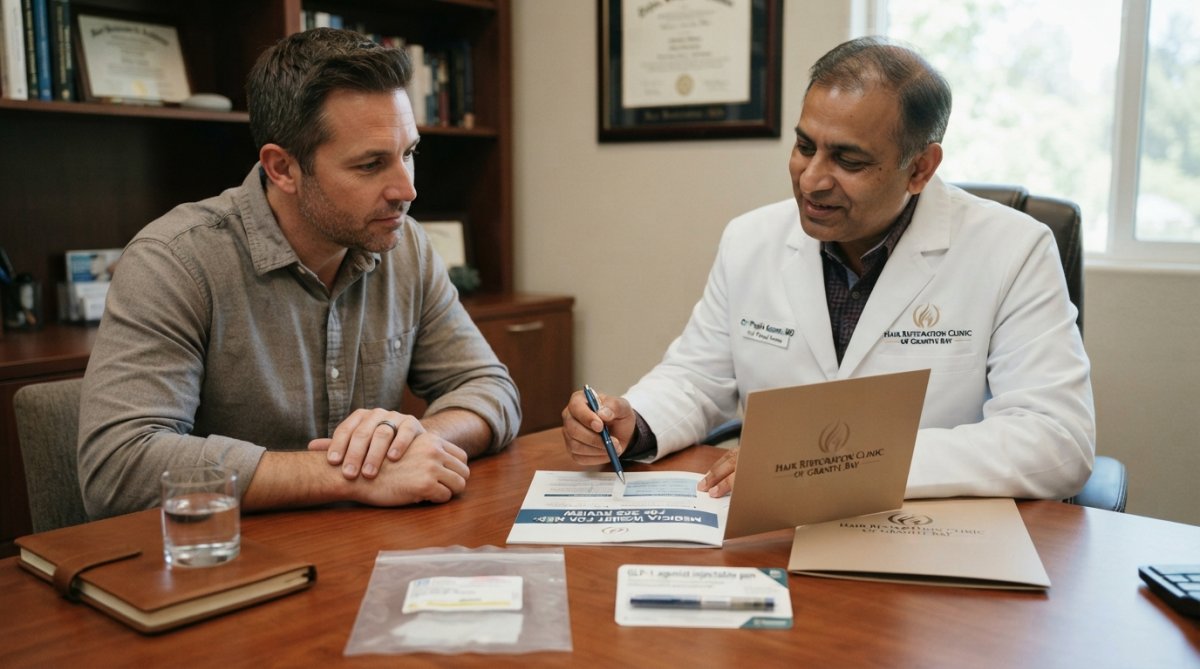
Your consultation is not just for the doctor to evaluate you; it is for you to evaluate the doctor. Ask to see photos of patients with a similar hair loss pattern to yours, and ask about the doctor's experience with your specific hair characteristics (e.g., curly, light-colored, or fine hair), as these present unique challenges.
The Psychological Safety Net
A good doctor understands the emotional weight of this decision, discussing your motivations and fears honestly. You should leave feeling more informed and confident, not pressured.
Managing Expectations: From Hairline Design to Final Results
Natural looking hair restoration for men requires a long-term perspective. The final outcome is not visible for up to 12 months, so understanding this timeline is crucial for managing expectations.
The process begins with the consultation, where the doctor maps out your hairline and discusses realistic density based on your donor area. The goal is not to restore your 20-year-old hair but to create the illusion of density with an age-appropriate hairline.
| Phase | Timeline | What to Expect |
|---|---|---|
| Consultation & Design | Day 0 | Hairline drawn, donor density assessed, plan finalized |
| Procedure | Day 1 | Grafts extracted and placed over 6-8 hours |
| Initial Healing | Days 2-10 | Scabs form and fall off; redness subsides |
| Shedding Phase | Weeks 2-6 | Transplanted hair falls out (normal) |
| Early Growth | Months 3-6 | New, fine hairs begin to emerge |
| Final Results | Months 9-12 | Full density and texture are visible |
The wait can be emotionally challenging, so focus on progress month by month. A board-certified physician will provide clear post-operative care and follow-up appointments.
Lifestyle and Maintenance After Restoration
A hair transplant is permanent for the hair it moves, but it does not stop genetic hair loss. Without maintenance, native hair can continue to thin, so a plan is essential.
Many physicians recommend continuing FDA-approved treatments like minoxidil and finasteride to preserve native hair (the FDA). Once fully grown in, transplanted hair can be treated like normal hair, including coloring and styling.
For thinning in areas not addressed by surgery, combining a transplant with Alma TED helps maintain overall density. The most successful patients treat hair restoration as ongoing management, not a one-time fix.
Conclusion: Your Path to Natural-Looking Hair
The decision to address hair loss is personal, and the fear of an unnatural result is valid. With modern FUE techniques, artistic hairline design, and a board-certified physician, natural looking hair restoration for men is an achievable outcome.
At Hair Restoration Clinic of Granite Bay, led by board-certified Dr. Piyush Kumar, MD, we specialize in the Cole follicular unit extraction system. We combine this with an honest assessment of what is achievable, ensuring your results look like you, only with a fuller head of hair. To explore your options and receive personalized guidance, Schedule a Free Consultation with our team.
Frequently Asked Questions
What is the most natural-looking hair restoration method?
FUE hair transplant is widely considered the most natural-looking method. It involves transplanting individual follicular units from the donor area to thinning or balding regions, allowing for precise control over hairline design and graft placement. The result mimics your natural hair growth pattern. Non-surgical options like Alma TED can also improve density, but a transplant offers the most dramatic and permanent aesthetic outcome.
How long does it take to see natural results from hair restoration?
While you will see some initial growth within 3 to 4 months, the most natural-looking results from an FUE hair transplant typically appear between 12 and 18 months post-procedure. This timeline allows the transplanted hair follicles to complete their natural growth cycle and mature. Patience is key, as the final hair density and aesthetic outcome develop gradually.
Can non-surgical treatments provide natural-looking hair density?
Yes, non-surgical options like Alma TED can improve hair density and scalp health. These treatments use acoustic sound wave therapy to stimulate hair follicles and are best suited for early-stage thinning. While they may not restore a completely bald area, they can strengthen existing hair and create a fuller appearance, making them a valuable complement to surgical restoration.
What should men look for in a board-certified hair restoration specialist?
Look for a specialist who is board-certified and has extensive experience specifically in FUE procedures. Review their before-and-after photos, especially from patients with similar hair loss patterns. Ask about the specific technology they use, like the Cole system, and ensure they provide a personalized plan. A qualified doctor will assess your donor area and discuss realistic outcomes.
The path to restoring your hair is not about vanity; it is about aligning your external appearance with how you feel inside. With over a decade of experience and a commitment to natural-looking results, we are here to guide you through every step, from the initial hairline design to the final reveal. Schedule a free consultation to discuss your goals and see how we can help you achieve a look that is undeniably you.