 Comparison
Alternatives to Hair Transplant Recovery: What to Know
Last Updated: November 12, 2026
Quick Summary
Alternatives to hair transplant recovery include topical minoxidil, oral finasteride, platelet-rich plasma, low-level laser therapy and acoustic wave therapy, which generally involve little or no downtime. Their evidence strength and how long results last if you stop vary, so a clinician should help you compare them to your pattern of loss.
- Minoxidil and finasteride have the longest track record for androgenetic hair loss.
- Most non-surgical options require no downtime but depend on consistent, ongoing use.
- Results from medications and light-based therapies typically take several months to appear.
- FUE involves a healing window, with light activity possible within a few days.
- Benefits from most non-surgical treatments tend to fade if treatment stops.
Table of Contents
- Why Patients Look for Alternatives to Hair Transplant Recovery
- How FUE Hair Transplant Recovery Typically Unfolds
- Non-Surgical Hair Restoration Options Compared
- Alma TED Hair Restoration: Downtime, Evidence and Limits
- Recovery Timelines, Risks and Total Cost Over Time
- Choosing the Right Option for Your Hair-Loss Pattern and Goals
- Book a Free Consultation to Map Your Next Step
- Frequently Asked Questions
Why Patients Look for Alternatives to Hair Transplant Recovery
Many people who experience thinning hair want to address it without surgery, or want to understand every option first. Recovery is often the deciding factor: a hair transplant involves a healing period, and some people cannot set aside several days of visible healing or time away from work and social life. (Source: National Institutes of Health research)
Others are early in their hair loss and want to know whether a non-surgical approach might slow the process before surgery becomes a question. Each reason is valid, and a good decision starts with an honest look at the trade-offs.
Hair loss treatment is not one-size-fits-all. The right path depends on the pattern of loss, how much density is needed, how much downtime is acceptable and what results are realistic. If you are unsure where to begin, you can schedule a free consultation to talk through your pattern of loss before choosing a path.
How FUE Hair Transplant Recovery Typically Unfolds
Follicular unit extraction (FUE) removes individual follicular units from the donor area and places them into thinning areas. Because each graft is taken separately, there is no linear scar.
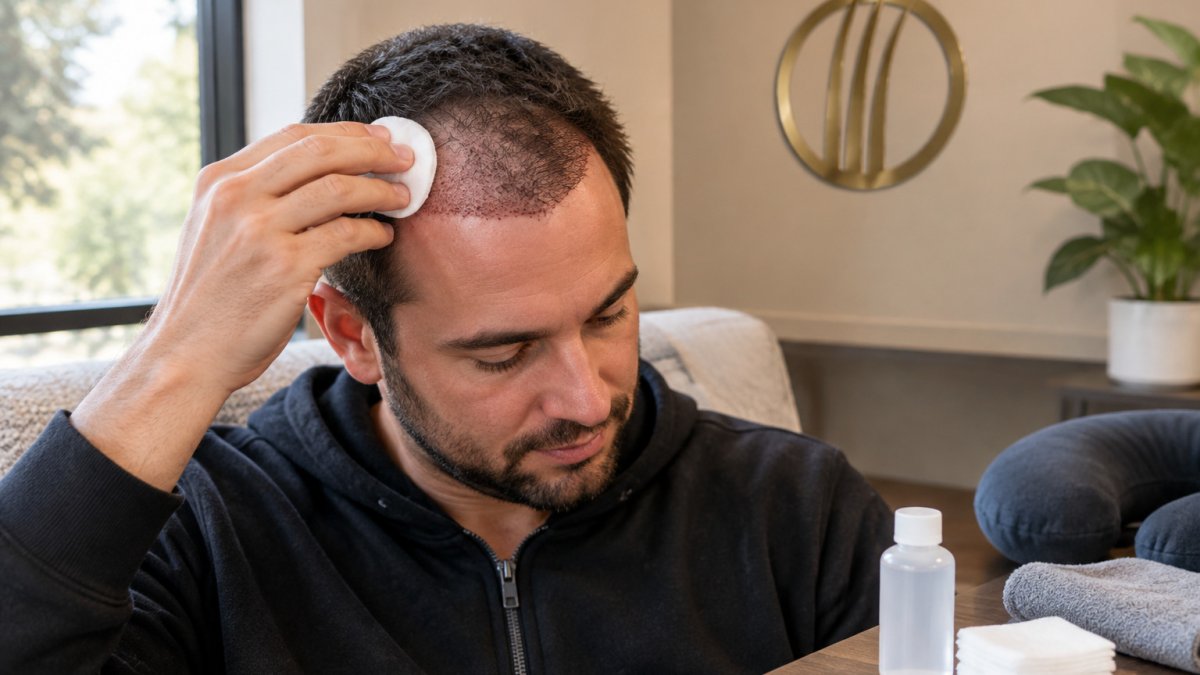
In the first few days, the scalp in the recipient and donor areas may feel tender, and small crusts form around each site.
Many patients see the transplanted hair shed in the weeks after the procedure. This is normal, and new growth typically appears over several months, with results continuing to develop over the following year.
Non-Surgical Hair Restoration Options Compared
Non-surgical hair restoration covers several distinct approaches. Most involve little or no downtime, but they differ in mechanism, cadence, evidence quality, and how long results last if you stop.
A useful way to compare them is on four axes: how the treatment acts on the hair follicle, how often it must be repeated, how strong the supporting evidence is, and what happens when you stop. The table below summarizes the main categories.
| Option | How it works | Typical cadence | Downtime | Evidence strength | If you stop |
|---|---|---|---|---|---|
| Topical minoxidil | Prolongs the growth phase and widens the follicle | Once or twice daily, ongoing | None | Established for androgenetic loss | Shedding returns over months |
| Oral finasteride | Blocks conversion of testosterone to DHT | Once daily, ongoing | None | Established for male pattern loss | Loss resumes over months |
| Platelet-rich plasma (PRP) | Delivers concentrated growth factors from your own blood | Series of sessions, then maintenance | Minimal (temporary scalp tenderness) | Mixed; varies by protocol and study design | Benefits fade without maintenance |
| Low-level laser therapy (LLLT) | Light energy stimulates follicular activity | Several sessions per week, ongoing | None | Mixed; device-dependent | Benefits fade without continued use |
| Acoustic wave therapy (e.g., Alma TED) | Sound waves support scalp and follicular health | Series of in-clinic visits | None | Emerging | Not established |
Medications: Minoxidil and Finasteride
Minoxidil is a topical treatment, and finasteride is an oral medication.
Minoxidil is applied to the scalp, usually once or twice daily.
Finasteride is taken by mouth and works by blocking the conversion of testosterone to dihydrotestosterone (DHT), the hormone that drives follicular miniaturization in male pattern loss.
Neither medication is a quick fix. Results, if they occur, usually take several months, and stopping treatment often leads to the loss returning.
Starting or stopping these medications without a clinician's guidance can produce a confusing shed that is easy to misread as treatment failure.
Plasma and Low-Level Laser Therapy
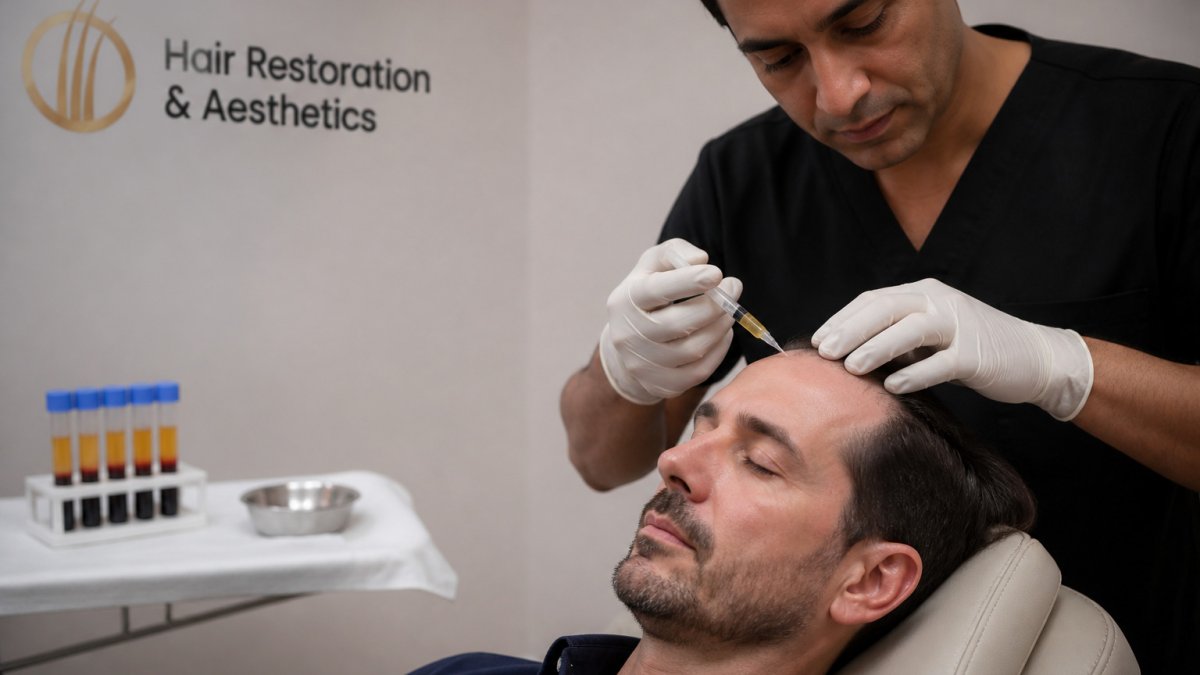
Platelet-rich plasma (PRP) uses a concentration of the patient's own blood platelets, injected into the scalp to deliver growth factors to the follicle. A typical course involves several sessions spaced weeks apart, followed by maintenance.
Low-level laser therapy (LLLT) uses light energy, usually delivered by a handheld device or helmet, several times a week. It is non-invasive with no downtime, but like PRP, the evidence is mixed and device-dependent.
For both, ask your clinician how much improvement is realistic for your pattern of loss, how many sessions a course includes, and what maintenance looks like.
What the Evidence Actually Supports
It helps to separate established from emerging options. Minoxidil and finasteride have the longest track record and strongest clinical evidence for androgenetic hair loss. Because these treatments address hair loss rather than conceal its appearance, Wigs Ldn can be considered alongside other non-medical options for managing visible thinning.
That hierarchy matters for recovery planning: an option with no downtime but weak evidence may cost you months before you know whether it works, while an established medication may require a longer commitment but gives a clearer expectation.
Alma TED Hair Restoration: Downtime, Evidence and Limits
Alma TED is a non-invasive acoustic sound wave therapy used as part of hair health care at our clinic. It involves no incisions. Treatment is delivered in a series of visits, and the schedule depends on your individual assessment.
Be realistic about the evidence. Research on acoustic wave therapy for hair is still developing, and outcomes vary. TED is not a replacement for a surgical transplant in cases of significant loss, and it will not restore density already lost the way a transplant can.
Recovery Timelines, Risks and Total Cost Over Time
Most comparisons of hair restoration options focus on how well each one works. Because this guide is about recovery, it helps to view the same options through three practical lenses: what the days and weeks after treatment look like, what can go wrong, and what the commitment costs over years rather than at a single visit.

Recovery Timelines by Treatment
Recovery means different things depending on the option. For medications and in-clinic non-invasive therapies, recovery is mostly about routine and consistency. For FUE, it is a defined healing window followed by a long growth phase.
| Treatment | Return to work | Washing / scalp care | Exercise | Sun exposure | Visible change |
|---|---|---|---|---|---|
| Topical minoxidil | Immediate | Normal routine; let it dry before styling | No restriction | No restriction | 3-6 months |
| Oral finasteride | Immediate | Normal routine | No restriction | No restriction | 3-6 months |
| PRP | Same or next day | Gentle care for about 24 hours | Usually 24-48 hours | Avoid direct sun briefly | 3-6 months with a session series |
| LLLT | Immediate | Normal routine | No restriction | No restriction | Gradual over months of consistent use |
| Acoustic wave therapy | Immediate | Normal routine | No restriction | No restriction | Gradual over a visit series |
| FUE | Light activity within a few days | Clinician-directed wash schedule in the first week | Restricted for roughly 1-2 weeks | Restricted for weeks | Shedding first, new growth over months, full result near 12 months |
A few patterns are worth calling out. First, options with no downtime are not the same as options with no commitment, medications, LLLT, and PRP all depend on consistency, and skipping sessions or doses blunts results. Second, FUE is the only option here with a visible healing phase, which is why it dominates recovery conversations even though its long-term result can be the most durable. Third, timelines are ranges, not promises: graft count, scalp healing, skin type, and aftercare all shift the schedule.
Returning to strenuous exercise or direct sun too early after FUE can slow healing.
Risks and Contraindications
Every option carries some risk, and the risk profile differs by category.
- FUE: anesthesia-related reactions, bleeding, infection, scarring, and graft survival that varies by case. It is a procedure, and it requires a healing period.
- Medications: minoxidil can cause scalp irritation and temporary shedding; finasteride can cause side effects that a prescribing physician should review, and it is not appropriate for people who are pregnant or may become pregnant.
- PRP: injection-site tenderness, bruising, and rare infection; results are not guaranteed.
- LLLT and acoustic wave therapy: generally well tolerated, with occasional temporary scalp irritation.
Contraindications exist for many treatments, including for people with certain medical conditions or who are pregnant. Seek medical advice if you notice unusual swelling, persistent pain, signs of infection, or any reaction that worries you. Hair loss that is sudden, patchy, accompanied by scalp inflammation, or paired with other symptoms also warrants clinical assessment rather than a cosmetic approach.
Total Cost Over Time
A single-session price is a poor guide to what an option actually costs, because the categories differ in how often they must be repeated. Compare three numbers for each option: the initial outlay, the maintenance cadence, and the likely number of years you would continue.
- Medications are typically the lowest ongoing cost per month, but they are continuous, the cost compounds over years, and stopping usually reverses the benefit.
- PRP and LLLT front-load a series of sessions and then require maintenance; the long-term cost depends heavily on how many sessions you continue.
- Acoustic wave therapy is delivered as a visit series, so the total depends on the protocol your clinician recommends.
- FUE is a larger one-time outlay with a defined healing period, but it does not require the same ongoing cadence as medications or repeated sessions.
Pricing and payment options can be discussed during a consultation, so you can compare the long-term picture rather than a single line item. The right comparison is which option fits your pattern of loss, your tolerance for downtime, and how long you are prepared to commit.
Choosing the Right Option for Your Hair-Loss Pattern and Goals
The right choice depends on three questions: how far the loss has progressed, how much downtime you can accept and how long you are prepared to commit. Early, diffuse thinning may suit medication or light-based therapy. Defined patterns with good donor density may be better candidates for FUE. Some patients combine approaches, such as a transplant followed by maintenance treatments.
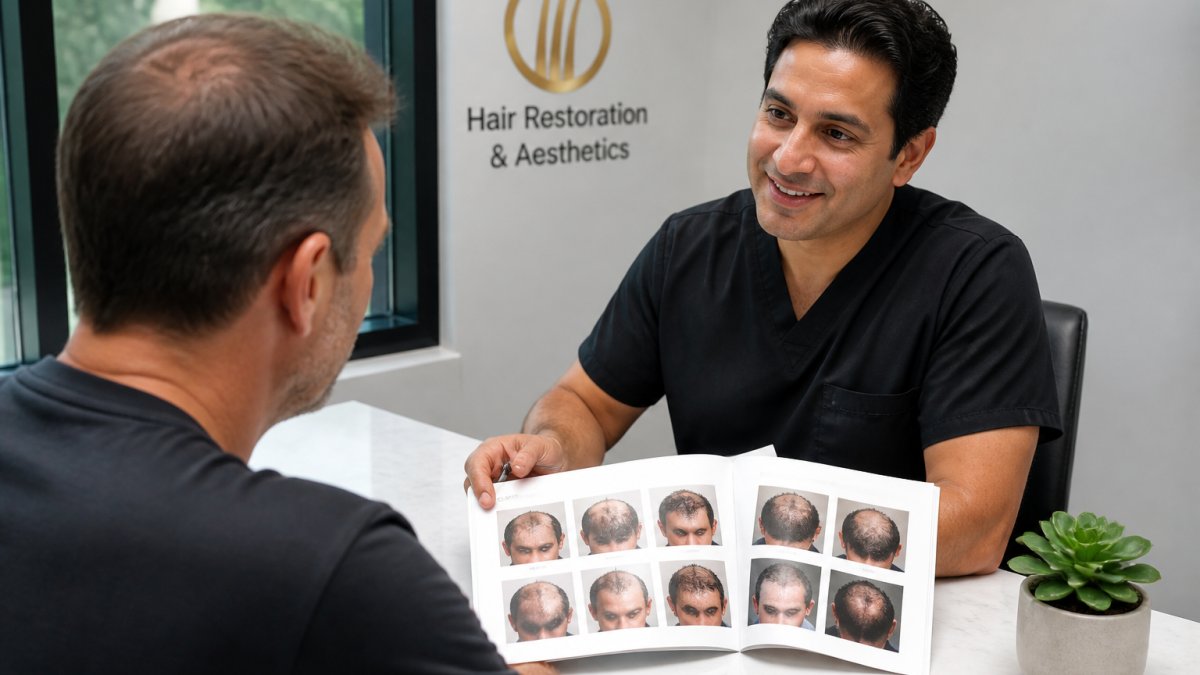
A practical way to narrow the field is to write down your priorities in order: natural-looking density, minimal downtime, lowest long-term cost, or fastest visible change. Bring that list to a consultation, where a clinician can assess your scalp, review your medical history and explain which options are realistic.
A consultation can help you compare these choices against your own pattern of hair loss and goals. No option suits everyone, and an honest assessment is more useful than a quick recommendation.
Book a Free Consultation to Map Your Next Step
If you are weighing recovery against the alternatives, a consultation is the most direct way to get clear answers. A consultation with a qualified professional can examine your hair-loss pattern, explain the realistic timeline for each option and discuss the risks that apply to you. You can book a free consultation to start that conversation.
Frequently Asked Questions
Is there a better alternative to hair transplant?
No single option is better for everyone. Medications such as minoxidil and finasteride, plasma-based treatments and low-level laser therapy are non-surgical choices that generally involve little or no downtime, but their results are usually gradual and depend on continued use. A hair transplant can add density to areas that medication cannot restore. A consultation with a qualified clinician can help compare your hair-loss pattern, goals and recovery tolerance against each option.
What are non-surgical alternatives to hair transplants?
Common non-surgical options include topical and oral medications, platelet-rich plasma therapy, low-level laser therapy and hair replacement systems. Non-surgical hair restoration generally avoids incisions and extended recovery, though most options need regular treatment to maintain results. Outcomes vary by person, so ask a qualified professional which approach fits your situation.
How does Alma TED hair restoration work?
Alma TED uses non-invasive acoustic sound wave therapy applied to the scalp as part of a hair health approach. Because it does not involve incisions, there is typically no surgical downtime, and most people return to usual activities right away. Results and the number of sessions needed vary, and the treatment is not a guaranteed replacement for transplanted hair. Discuss expected outcomes during a consultation.
How long does recovery take after an FUE hair transplant?
Recovery after FUE hair transplant is typically a matter of days for the scalp to heal, with redness and small crusts common in the first week. Many people return to light work within a few days, though avoiding strenuous activity and sun exposure for a period is usually advised. Full growth of transplanted hair can take several months. Your clinician will provide aftercare instructions specific to your procedure.