 how-to
Affordable Facial Rejuvenation for Sensitive Skin
Table of Contents
- Why Sensitive Skin Needs a Different Approach to Facial Rejuvenation
- Non-Invasive Treatment Options That Work for Sensitive Skin
- Laser Facial for Sensitive Skin: What You Should Know
- Microneedling for Sensitive Skin: Collagen Induction Without Aggravation
- Sensitive Skin Treatment Aftercare: Protecting Your Results
- Building Your Personalized Facial Rejuvenation Plan
- Frequently Asked Questions
Last Updated: October 17, 2026
Why Sensitive Skin Needs a Different Approach to Facial Rejuvenation
Sensitive skin demands a different strategy for affordable facial rejuvenation for sensitive skin. Standard anti-aging treatments often backfire on reactive skin, causing redness, irritation, or inflammation that sets back your goals.
At Hair Restoration Clinic of Granite Bay, we work with patients who've tried harsh treatments and paid the price. Sensitive skin has a compromised barrier, so it reacts more intensely to active ingredients and heat-based therapies.
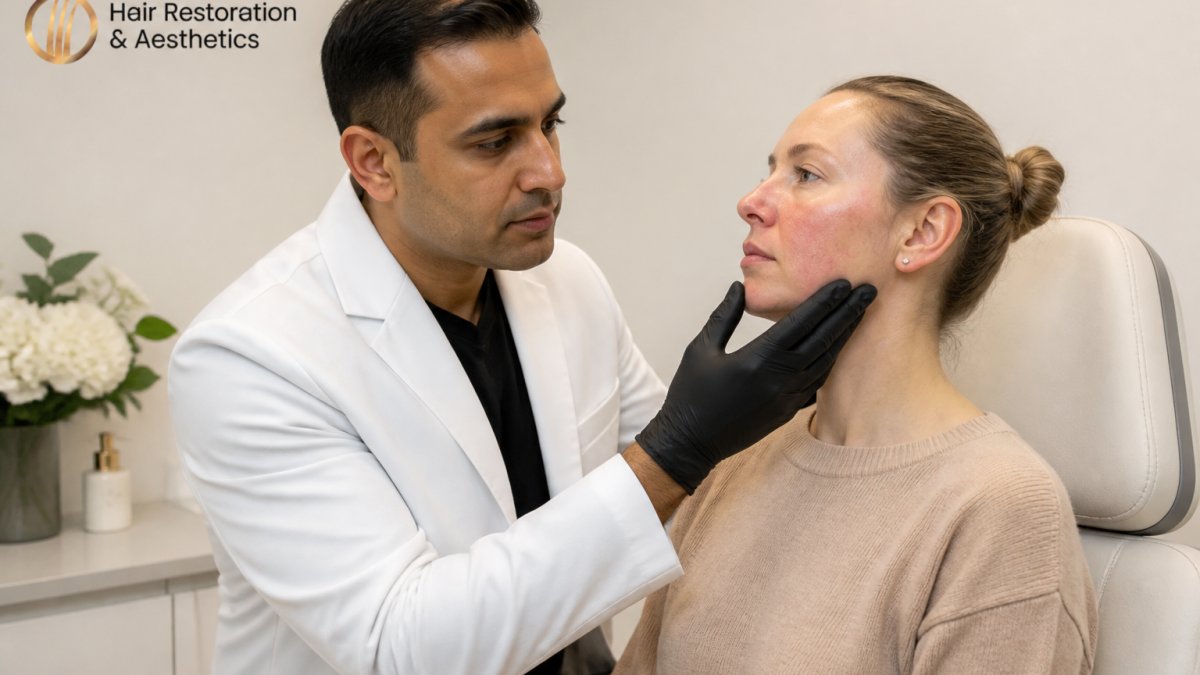
The best approach starts with understanding what makes your skin reactive:
- Reactive barrier: Your skin loses moisture faster and absorbs irritants more easily
- Lower tolerance for heat: Intense laser treatments and aggressive microneedling cause lasting redness
- Delayed recovery: Inflammation takes longer to settle, extending downtime
- Product sensitivity: Even gentle actives can trigger flare-ups
Affordable facial rejuvenation for sensitive skin rebuilds your skin's health first, then addresses aging concerns.
Non-Invasive Treatment Options That Work for Sensitive Skin
Non-invasive treatments form the foundation of smart facial rejuvenation for sensitive skin. They work with your skin, stimulating natural repair without triggering defensive inflammation. Select treatments that deliver results through gentle stimulation, not aggressive trauma, and compare them on benefit, downtime, sensitivity risk, and relative cost.
A Side-by-Side Comparison for Reactive Skin
The table below summarizes how the gentlest in-office options compare. Relative cost is a tier (lower, moderate, higher) rather than a dollar figure, since pricing depends on provider, units or syringes, and market. Ask for a written estimate at consultation.
| Option | Primary benefit | Typical downtime | Sensitivity risk | Relative cost tier |
|---|---|---|---|---|
| Neurotoxins (Botox, Dysport, Xeomin) | Softens dynamic lines (forehead, crow's feet, frown lines) | None to minimal | Low, product sits below the skin surface | Moderate, recurring every 3-4 months |
| Hyaluronic acid dermal fillers | Restores volume in cheeks, lips, under-eye hollows | 1-3 days of mild swelling or bruising | Low to moderate, depends on technique and product | Higher per session, longer-lasting |
| PDO threads | Subtle lift plus gradual collagen stimulation | 2-3 days of mild swelling or bruising | Moderate, placement technique matters | Moderate to higher |
| Gentle laser facial (low-fluence) | Redness, pigment, texture | Hours to 2-3 days | Moderate, requires setting adjustment | Moderate, series of 3-5 |
| Shallow microneedling (0.5-1.0 mm) | Texture, fine lines, early scarring | A few hours of flushing | Low when depth and interval are conservative | Lower per session, series of 3-4 |
Neurotoxins and Dermal Fillers for Gentle Results
Neurotoxins like Botox, Dysport, and Xeomin relax the muscles that create expression lines. For sensitive skin this is ideal because the product sits beneath the surface, causing zero irritation to your reactive epidermis. Hyaluronic acid dermal fillers restore lost volume in cheeks, lips, and under-eye areas while hydrating from within. Since fillers don't heat or mechanically injure skin, they're exceptionally well-tolerated by reactive skin types.
A small amount of neurotoxin paired with strategic filler creates natural-looking results without the appearance of "work done." Most patients see softened lines and restored structure within two weeks, with immediate recovery.
PDO Threads for Subtle Lifting Without Downtime
PDO threads offer a middle ground between injectables and more intensive treatments. These dissolvable threads physically lift sagging skin while triggering collagen production. For sensitive skin they work because they stimulate repair gradually: the threads dissolve over 6-12 months, and your body creates new collagen throughout.
Results appear in stages: immediate subtle lift, progressive collagen building over 8-12 weeks, peak results at 3-4 months, and gradual fading over 6-12 months. Downtime is minimal, mild swelling or bruising for 2-3 days.
Laser Facial for Sensitive Skin: What You Should Know
Laser facial for sensitive skin requires careful selection of technology and settings. Not all lasers suit reactive skin, but certain wavelengths and power levels deliver genuine anti-aging benefits without triggering inflammation.
The right laser facial targets specific concerns, redness, brown spots, texture, while respecting your skin's tolerance. Low-energy, longer-wavelength lasers penetrate deeply without generating excessive heat at the surface where sensitive skin reacts most.
Results from appropriate laser treatment include:
- Reduced redness and broken capillaries
- Faded sun spots and hyperpigmentation
- Improved skin texture and smoothness
- Stimulated collagen remodeling
Recovery depends on laser type. Gentler options require no downtime, with mild pinkness resolving within hours. More intensive treatments may cause 2-3 days of visible healing, still far gentler than aggressive lasers inflict on sensitive skin.
A skilled provider adjusts laser settings to your skin's needs. Sensitive skin often needs lower fluence (energy) and longer intervals between sessions, slower, but it prevents the reactive flare-ups that set back your goals.
Microneedling for Sensitive Skin: Collagen Induction Without Aggravation
Microneedling for sensitive skin sounds counterintuitive, creating tiny controlled injuries to stimulate healing, but done correctly, it's one of the gentlest ways to trigger collagen and improve texture.
Very fine needles create micro-channels in your skin, and your body responds with healing growth factors and new collagen.
For sensitive skin, needle depth and frequency matter enormously. Shallow microneedling (0.5-1.0 mm) at longer intervals (4-6 weeks) allows your skin to recover fully between sessions.
Realistic expectations:
- Fine lines soften gradually over 3-4 sessions
- Skin texture improves noticeably by session two
- Hyperpigmentation fades over 6-8 weeks
- Results continue improving for months after the final session
Downtime is minimal for shallow microneedling. Your skin may appear slightly flushed for a few hours. Some patients experience mild dryness for 2-3 days as their skin heals.
Microneedling's affordability lies in its efficiency: shallow, frequent sessions cost less than aggressive single treatments and deliver superior results on reactive skin because they don't trigger defensive inflammation.
Schedule a Free Consultation →
Sensitive Skin Treatment Aftercare: Protecting Your Results
Aftercare determines whether your affordable facial rejuvenation for sensitive skin succeeds. Aggressive post-treatment routines undo the benefit of gentle procedures. The rule: simplify everything, your skin needs rest and support, not stimulation.
Patch Testing and Ingredient Screening Before You Start
Before any new product touches your full face, patch test it on the inner forearm or behind the ear and wait 24-48 hours. A reaction, redness, itching, burning, or swelling, means stop. This prevents reactions that could set back your progress by months.
Treat these as common triggers for reactive skin: fragrance, essential oils, alcohol denat, menthol, and high-concentration acids. Look for fragrance-free, hypoallergenic formulas with short ingredient lists, and introduce one new product at a time, spaced a week apart, so you can identify the culprit if a reaction occurs.
Essential Aftercare Steps
- Avoid active ingredients for 1 week: Skip retinol, vitamin C, acids, and peptides. These irritate healing skin and can cause post-inflammatory hyperpigmentation.
- Use lukewarm water only: Hot water opens pores and increases sensitivity. Cool to lukewarm rinses calm inflammation.
- Apply gentle moisturizer immediately: Within 60 seconds of cleansing, apply a fragrance-free, hypoallergenic moisturizer. This locks in hydration while your barrier repairs itself.
- Use broad-spectrum SPF 30+ daily: Sun exposure during healing causes permanent discoloration and erases your treatment investment. This step is non-negotiable.
- Skip makeup for 24-48 hours: Let your skin breathe and complete its immediate healing phase.
- Avoid saunas, steam rooms, and intense exercise: Heat increases inflammation and delays recovery.
Recovery Timeline for Sensitive Skin
| Timeline | What's Happening | What to Do |
|---|---|---|
| Hours 0-24 | Active inflammation, barrier repair begins | Hydrate, cool compress, minimal routine |
| Days 2-3 | Redness peaks, then begins fading | Continue gentle care, avoid irritants |
| Days 4-7 | Visible healing, skin texture improving | Introduce gentle cleanser, maintain SPF |
| Weeks 2-4 | Full barrier recovery, results emerging | Resume normal routine gradually |
Warning Signs: When to Stop and Call a Clinician
Most post-treatment redness and mild swelling settle within a few days. But some signs mean you should stop self-care and contact your provider or a dermatologist promptly:
- Redness, swelling, or pain that worsens after day 3 instead of improving
- Blistering, oozing, or a rash that spreads beyond the treated area
- Fever, hives, or difficulty breathing (seek urgent care)
- Persistent flushing or burning that lasts more than a week
- New or worsening hyperpigmentation
If you have a history of rosacea, eczema, or known allergies, flag it before treatment, not after. A clinician can adjust the plan, pre-treat the skin, or recommend a patch test protocol tailored to your history.
Many patients resume their full skincare routine too quickly, triggering irritation that masks results. Patience during aftercare, and knowing when to ask for help, determines whether you see the full benefit.
Building Your Personalized Facial Rejuvenation Plan
Affordable facial rejuvenation for sensitive skin works best as a sequence, not a single treatment. A personalized plan layers gentle options over time so your skin can adapt.
Start by identifying your primary concern, fine lines, volume loss, texture, or redness. Address that first with the gentlest effective option.
Example sequence for sensitive skin:
Month 1-2: Neurotoxin or filler to address primary concern (lines or volume) Month 3-4: Introduce shallow microneedling to improve texture Month 5-6: Add gentle laser facial to fade discoloration Month 7+: Maintenance sessions as needed
This staggered approach costs less than bundling treatments because your skin tolerates gentler settings when it's not overwhelmed, and you'll know which treatment created which improvement.
A consultation with a board-certified provider is essential.
At Hair Restoration Clinic of Granite Bay, Dr. Piyush Kumar and our team specialize in treatment plans for reactive skin.
Key questions to ask during your consultation:
- What's your experience treating sensitive skin specifically?
- Can you adjust treatment intensity based on my skin's response?
- What's the realistic timeline for seeing results?
- How will you know if a treatment is too strong for my skin?
- What happens if I have a reaction?
The goal isn't to rush results but to build a sustainable routine that improves skin health while addressing aging concerns.
Sensitive skin doesn't disqualify you from looking refreshed and youthful. At Hair Restoration Clinic of Granite Bay, we've helped many patients with reactive skin achieve their aesthetic goals through personalized, gentle treatment plans. Schedule a free consultation to discuss which affordable facial rejuvenation options suit your specific skin type and concerns.
Frequently Asked Questions
What is the best facial rejuvenation treatment for sensitive skin?
The best treatment depends on your specific concerns and skin tolerance. Neurotoxins and dermal fillers offer gentle results with minimal irritation, while laser facials and microneedling can address texture and tone when performed by an experienced provider. A skin assessment by a board-certified physician helps determine which option suits your needs. Non-invasive approaches typically cause less irritation than aggressive treatments.
Can people with sensitive skin get laser facial treatments?
Yes, but with careful consideration. Laser facials for sensitive skin require lower energy settings and specialized protocols to minimize redness and irritation. Not all laser types suit sensitive skin equally. A consultation with a qualified provider can determine whether laser treatment is appropriate for your skin type and concerns, and what precautions are needed to protect your skin barrier.
How can I reduce irritation after a facial treatment?
Sensitive skin treatment aftercare is critical. Avoid hot water, harsh cleansers, and active ingredients like retinoids for at least 48 hours post-treatment. Use gentle, fragrance-free moisturizers and apply broad-spectrum SPF 30 or higher daily. Skip makeup and strenuous exercise for 24 hours. Follow your provider's specific aftercare instructions, which may include cooling masks or prescribed serums to support healing and minimize irritation.
How long does facial rejuvenation treatment take to show results?
Results vary by treatment type. Neurotoxins typically show effects within 3-7 days, with full results in two weeks. Dermal fillers work immediately, though swelling may mask final results for a few days. Laser facials and microneedling require a series of treatments, with visible skin texture and tone improvement appearing after 4-6 weeks as collagen rebuilds. Your provider will outline a realistic timeline during your consultation.