 how-to
What to Expect During a Cosmetic Consultation
Table of Contents
- What to Expect During a Cosmetic Consultation
- How to Prepare for a Cosmetic Consultation
- What to Wear to a Cosmetic Consultation
- How Long Does a Cosmetic Consultation Take
- Cosmetic Consultation Questions to Ask Your Provider
- Evaluating Whether a Provider Is Right for You
- What Happens After Your Cosmetic Consultation
- Frequently Asked Questions
Last Updated: October 17, 2026
What to Expect During a Cosmetic Consultation
A cosmetic consultation is your first real conversation with a qualified provider about your aesthetic goals. It's not a sales pitch or a commitment, it's a chance to ask questions, understand your options, and decide if the provider and treatment plan are right for you.
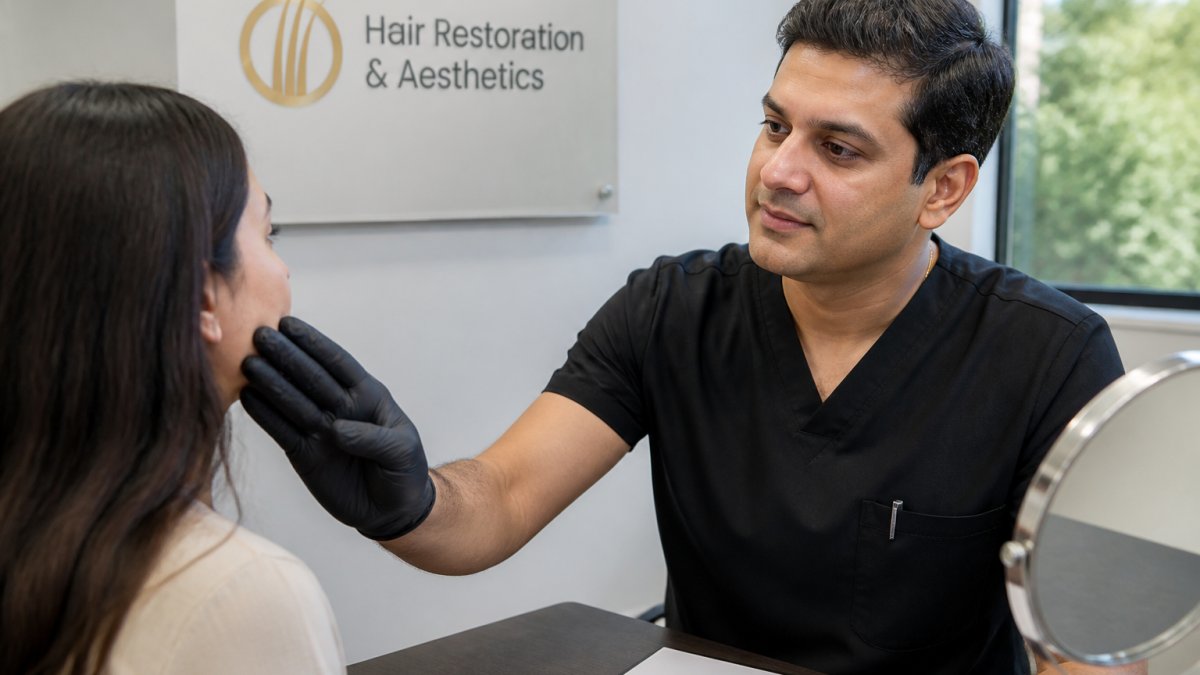
At Hair Restoration Clinic of Granite Bay, we treat every consultation as a foundation-building conversation. You'll meet with Dr. Piyush Kumar, MD, a board-certified physician with over a decade of experience in both hair restoration and aesthetic rejuvenation. During this time, you'll discuss what brings you in, what results you're hoping for, and what options actually exist for your specific situation.
The consultation typically unfolds in stages. First comes the greeting and intake. Then a detailed conversation about your medical history and current health. Next, a physical examination of the treatment area. Finally, a discussion of recommendations, risks, benefits, and realistic expectations. Most consultations take 30 to 60 minutes, though the exact timeline depends on the complexity of your goals and the number of treatment options being explored.
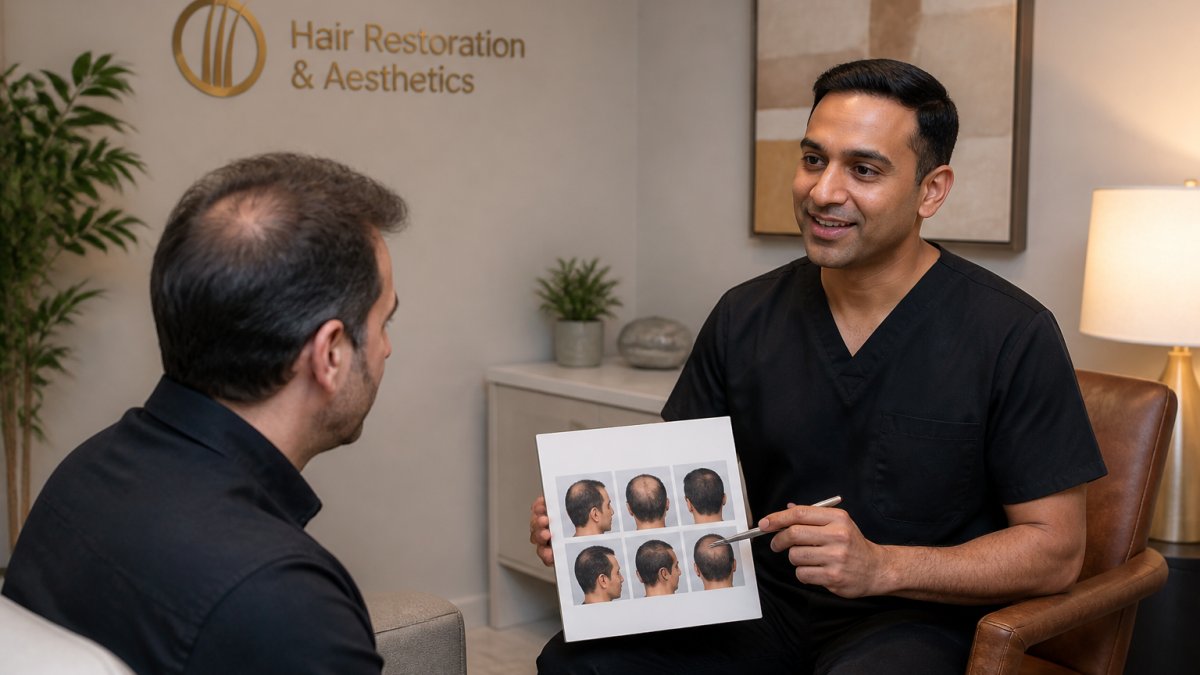
The Appointment Timeline and What Happens at Each Stage
Check-in and paperwork (5-10 minutes): You'll arrive a few minutes early to complete intake forms. These ask about your medical history, current medications, allergies, and previous procedures. Be honest here, this information helps the provider recommend safe, appropriate treatments.
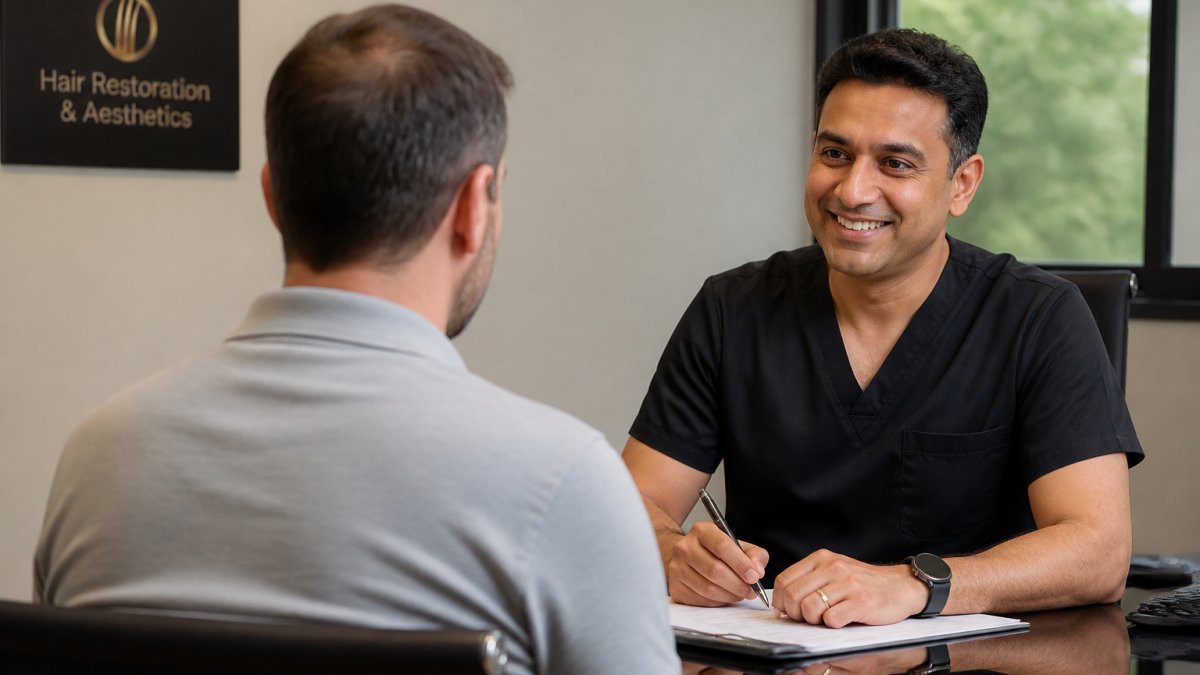
Initial consultation discussion (10-15 minutes): The provider will ask open-ended questions about what brought you in. What concerns you most? What results would feel like a success? Have you tried anything before? This isn't interrogation, it's listening.
Medical history review (5-10 minutes): The provider will ask about your overall health, medications you take, any bleeding disorders, and whether you smoke. They'll also ask about previous cosmetic procedures, surgeries, or treatments.
Physical examination (10-20 minutes): This is where the provider looks closely at the treatment area. For hair restoration, they examine your scalp, hair density, and the pattern of hair loss.
Treatment recommendations and discussion (10-20 minutes): The provider will explain what they recommend and why. They'll describe the procedure itself, what to expect during recovery, and realistic timelines for results.
Next steps and scheduling (5-10 minutes): If you're ready to move forward, you'll discuss scheduling. If you want to think about it, that's fine too. A reputable provider won't pressure you to decide on the spot.
How to Prepare for a Cosmetic Consultation
Preparation makes your consultation more productive. You'll have clearer conversations and get better recommendations when you arrive organized and informed.
Start with a list of questions. Write down what you want to ask before you arrive. Include specific concerns, previous treatments you've tried, and what results would matter most to you.
Gather your medical history. Know your current medications, any allergies, and whether you have bleeding disorders or take blood thinners. If you've had previous cosmetic procedures, know what they were and when.
Bring photos of results you like. If there's a look or result you're drawn to, bring a photo. This helps the provider understand your aesthetic goals and whether they're realistic for your face or hair.
Avoid certain products before your appointment. Stop using retinoids, vitamin C serums, and exfoliating acids for a few days before your consultation. These can irritate skin and make it harder for the provider to assess your baseline skin condition accurately.
Get good sleep the night before. Skin looks better when you're rested. You'll also be more alert and able to absorb information during the consultation.
Wear comfortable, easy-to-remove clothing. You may need to remove a shirt or tilt your head for examination. Wear something that makes you feel confident and comfortable.
What to Wear to a Cosmetic Consultation
What you wear matters less than you think, but a few practical choices make the appointment smoother.
Wear clothes that let the provider see the treatment area. If you're consulting about hair restoration, wear something you can easily remove or pull back. If it's facial rejuvenation, a crew neck or open neckline works well. For laser hair removal consultation, wear shorts or a sleeveless top depending on the area being treated.
Choose clothing you feel confident in. You're going to be examined and possibly photographed. Wear something that makes you feel like yourself, not something that feels uncomfortable or exposing.
Skip heavy makeup if it's a facial consultation. Light makeup is fine, but heavy foundation or contouring can make it harder for the provider to assess your skin accurately. If you do wear makeup, the provider may ask you to wash it off before the examination.
Wear your hair down if it's a hair restoration consultation. This lets the provider see your natural hair pattern, density, and where hair loss is most visible. If you usually style your hair a certain way, wear it that way so the provider understands your typical look.
Avoid strong perfume or cologne. Medical offices often have people with sensitivities, and strong scents can be distracting during a detailed consultation.
How Long Does a Cosmetic Consultation Take
Most cosmetic consultations last 30 to 60 minutes, though the exact time depends on several factors.
Simple consultations, for example, a single area like eyebrow restoration or a straightforward laser hair removal assessment, typically take 30 to 45 minutes. The provider examines the area, discusses options, and answers your questions.
Complex consultations, when you're exploring multiple treatment options, have a complicated medical history, or want to discuss a detailed multi-step plan, can take 60 to 90 minutes. Hair restoration consultations often fall into this category because the provider needs to assess your hair loss pattern, scalp health, and donor hair availability in detail.
Follow-up consultations, if you've already had treatment and are coming back to discuss results or additional procedures, may take 20 to 30 minutes.
Block out two hours total on your calendar to account for check-in, paperwork, and any waiting time. You don't want to feel rushed, and the provider won't either.
Schedule a Free Consultation →
Cosmetic Consultation Questions to Ask Your Provider
Come with specific questions. A good provider welcomes them. Here are the questions that matter most.
About the provider and their experience:
- How many of these procedures have you performed?
- Are you board-certified? In what specialty?
- Can I see before-and-after photos from patients with similar concerns to mine?
- What's your approach to natural-looking results?
About the procedure itself:
- What exactly does the procedure involve?
- How long does the procedure take?
- What type of anesthesia or numbing is used?
- Will I be awake during the procedure?
About recovery and results:
- What's the recovery timeline? When can I return to work, exercise, and normal activities?
- What should I expect in terms of swelling, bruising, or discomfort?
- How long until I see final results?
- Are results permanent, or will I need touch-ups?
About risks and complications:
- What are the most common side effects?
- What are the rare but serious risks?
- How are complications managed if they occur?
- What's your revision or touch-up policy?
About cost and logistics:
- What's the total investment for the treatment plan you're recommending?
- Do you offer payment plans or financing?
- What's included in the cost? Are there additional fees?
- If I'm not happy with results, what options do I have?
About expectations:
- What would you consider a successful outcome for me?
- What results are realistic given my starting point?
- How will my results compare to what I've seen in your photos?
Write down the answers. You'll want to review them later when you're deciding whether to move forward.
Evaluating Whether a Provider Is Right for You
Not every qualified provider is the right fit for you. Use these criteria to evaluate.
Board certification matters. A board-certified physician has completed rigorous training, passed comprehensive exams, and maintains continuing education (What is ABMS Board Certification?). Dr. Piyush Kumar, MD, at Hair Restoration Clinic of Granite Bay is board-certified, which means he meets established standards for safety and competence.
Experience with your specific concern is key. Ask how many times the provider has treated someone with your exact situation. A provider with hundreds of hair transplants has different expertise than one who does hair restoration once a month alongside other procedures. Similarly, if you want natural-looking results, ask whether the provider specializes in that aesthetic.
Before-and-after photos tell a story. Look at results from patients who started where you are now. Do the results look natural? Do they align with what you want? Be skeptical of heavily edited or overly dramatic transformations, they may not represent typical outcomes.
Communication style matters. Did the provider listen to you, or did they push a specific treatment? Did they explain things clearly, or use jargon without checking if you understood? Did they acknowledge risks, or only talk about benefits?
Red flags to watch for:
- Pressure to decide or pay on the spot
- Unwillingness to discuss risks or complications
- Vague answers about experience or training
- Photos that look unrealistic or heavily edited
- Dismissing your concerns as unimportant
- Guarantees of specific results
What Happens After Your Cosmetic Consultation
The consultation doesn't end when you leave the office. Here's what typically happens next.
You'll receive a summary. Most providers send a follow-up email or letter summarizing the consultation, the recommended treatment plan, and any costs discussed. Review this carefully.
Take time to think. You don't need to decide immediately. Sleep on it. Review the before-and-after photos again. Talk to trusted friends or family if that helps.
Ask for a second opinion if you want one. There's no shame in consulting with another provider before committing. Many people do this, and ethical providers expect it.
Do your own research. Read reviews from actual patients. Look at the provider's credentials independently. Check that they're board-certified through the appropriate board's website. Verify their license through your state's medical board.
Schedule your procedure when you're ready. Once you've decided, the office will schedule your appointment and provide pre-treatment instructions. Follow these carefully, they directly affect your results and recovery.
Prepare for your appointment. In the days before your procedure, follow all pre-treatment guidelines. This might include avoiding certain medications, not smoking, staying hydrated, or avoiding sun exposure. These steps matter.
Plan for recovery. Arrange time off work if needed. Stock up on any recommended aftercare products. Make sure you have someone to drive you home if anesthesia is involved.
A cosmetic consultation is the foundation of good results. You'll leave with clear information about what's possible, what realistic results look like, and whether this is the right path for you. Schedule a free consultation to start the conversation with a board-certified physician who listens.
Frequently Asked Questions
What should I ask during a cosmetic consultation?
Ask about the provider's credentials, experience with your specific concern, treatment options available, expected results, recovery timeline, risks and complications, before-and-after photos from similar cases, and costs. Request clarification on anything that feels unclear. A qualified provider welcomes questions and takes time to address your concerns thoroughly.
How should I prepare for a cosmetic consultation?
Gather your medical history, including current medications and previous procedures. Research the provider's qualifications and read patient reviews. Write down your goals and concerns before the appointment. Avoid heavy makeup if discussing facial treatments. Wear comfortable, loose clothing. Arrive early to complete any required paperwork. Bring a trusted friend or family member if it helps you feel more confident.
How long does a cosmetic consultation typically take?
Most cosmetic consultations last 30 to 60 minutes, depending on the complexity of your goals and the thoroughness of the evaluation. This includes time for the provider to assess your medical history, examine the treatment area, discuss your desired results, review options, and answer questions. Allow extra time if this is your first visit and you need to complete intake forms.
What happens if I'm not ready to move forward after my consultation?
There's no obligation to schedule treatment immediately. A reputable provider respects your decision to think things over or seek a second opinion. Take time to review the treatment plan, consider your options, and confirm the provider is the right fit. Many patients benefit from scheduling a follow-up consultation to discuss additional questions or move forward when they're ready.