
 blog
blog
Types of Dermal Fillers: A Complete Overview
Table of Contents
- What Are Dermal Fillers and How They Work
- Hyaluronic Acid Fillers
- Calcium Hydroxylapatite and Other Semi-Permanent Options
- How Long Do Dermal Fillers Last
- Dermal Filler Side Effects and Risks
- Choosing the Right Facial Filler for Your Goals
- Common Treatment Areas and Results
- Conclusion
- Frequently Asked Questions
Last Updated: September 25, 2026
What Are Dermal Fillers and How They Work
Dermal fillers are injectable substances that add volume to the face and reduce the appearance of wrinkles and fine lines, with several types of dermal fillers available to suit different needs and goals. They work by restoring lost volume beneath the skin's surface, smoothing out creases and creating a more youthful appearance. At Hair Restoration Clinic of Granite Bay, we understand that choosing the right filler requires knowing what options exist and how each one performs.
As you age, your skin loses collagen and hyaluronic acid, causing sagging, hollowing, and wrinkles (Hyaluronic Acid and Skin: Its Role in Aging and Wound-Healing Processes). Fillers replace that lost volume by sitting beneath the skin and pushing it upward. Different types work in different ways and last for different lengths of time.
Common filler areas include cheeks, lips, nasolabial folds, and under-eye hollows. Some fillers stimulate collagen production; others add volume that gradually breaks down. Understanding these differences helps you choose the right treatment.
Hyaluronic Acid Fillers
Hyaluronic acid (HA) is a natural substance your body already produces. It holds water and keeps skin plump and hydrated. HA fillers are the most popular choice because they're safe, reversible, and produce natural-looking results.
HA fillers work immediately, adding volume where needed. Your body gradually breaks down the filler over time, which is why results fade and why HA fillers are reversible, an enzyme called hyaluronidase can dissolve the filler within hours if you're unhappy with the result.
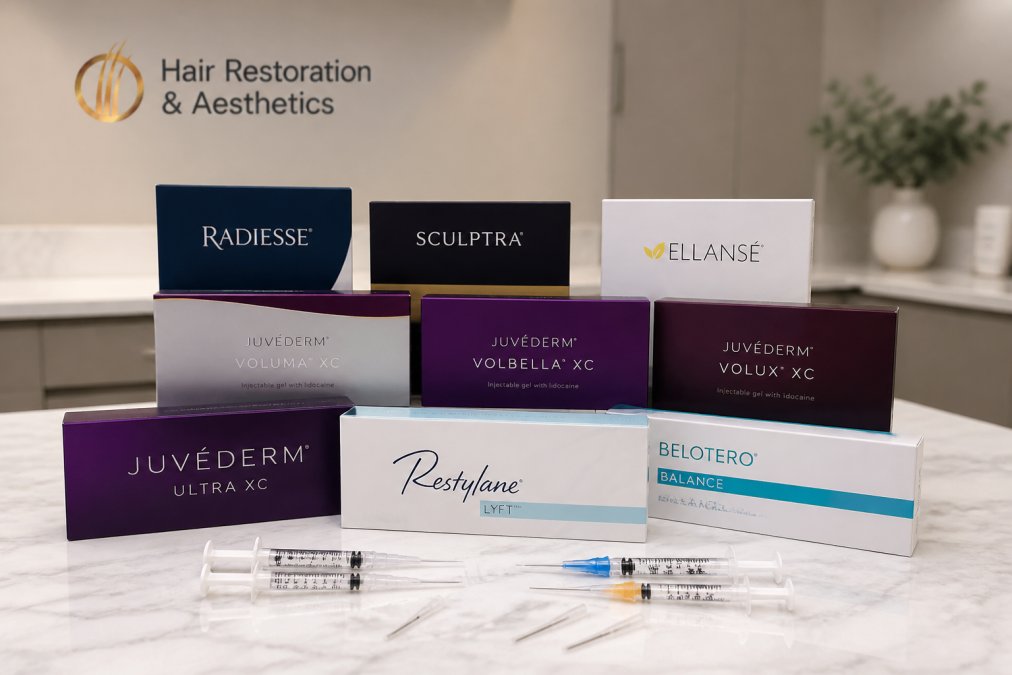
Common HA filler brands include Juvederm and Restylane. These come in different thicknesses. Thicker formulas work better for deep wrinkles and cheek volume. Thinner formulas suit delicate areas like lips and under-eye hollows.
HA fillers typically last:
- Thin formulas: 6-9 months
- Thicker formulas: 9-12 months
- Some newer products claim 18 months
HA fillers feel natural because they integrate with your skin's tissue and absorb water, keeping the area looking fresh. The main drawback is that results fade, requiring regular touch-ups to maintain the look.
Calcium Hydroxylapatite and Other Semi-Permanent Options
Calcium hydroxylapatite (CaHA) is a mineral compound found naturally in bones. It's thicker and longer-lasting than HA, and stimulates collagen production so results improve over time.
Radiesse is the main CaHA filler. It works in two ways: the gel adds immediate volume, and your body builds new collagen around it, making results progressively better over the first few weeks.
CaHA fillers typically last 12-18 months, sometimes longer. They're ideal for deeper wrinkles, cheek augmentation, and jawline definition. Because they're thicker, they're not suitable for delicate areas like lips or under the eyes.
CaHA is not reversible like HA, so you must be confident about placement before injection. The trade-off is longer-lasting results and stronger collagen stimulation.
Poly-L-lactic Acid Fillers
Poly-L-lactic acid (PLLA) is a biocompatible synthetic material used in medical devices for decades. Unlike other fillers that add volume directly, PLLA triggers your body to produce new collagen.
PLLA requires multiple treatment sessions, usually three injections spaced 4-6 weeks apart. Results develop gradually over several months as collagen builds, delivering long-lasting, natural-looking volume.
PLLA results last 2+ years because the collagen your body creates is permanent. The filler breaks down, but the collagen remains, making PLLA one of the longest-lasting options.
PLLA works best for large areas needing volume restoration, like sunken cheeks or temples. It's not ideal for small details or lips because results take time to appear.
Polymethylmethacrylate Fillers
Polymethylmethacrylate (PMMA) is a permanent synthetic material consisting of tiny microspheres suspended in collagen gel that stay in place indefinitely while your body builds collagen around them.
Bellafill is the main PMMA filler. Because it's permanent, results don't fade, appealing to people who want a one-time treatment rather than ongoing maintenance.
The downside is permanence, if you dislike the result, it cannot be easily removed. PMMA is best for people confident about their goals and working with an experienced injector, typically for deeper wrinkles and cheek volume.
PMMA results last 5 years or longer, sometimes indefinitely. This makes it the most durable filler option, but it also carries the most commitment.
How Long Do Dermal Fillers Last
Filler longevity depends on the type, area treated, and your metabolism. Genetics and lifestyle affect how quickly your body breaks down fillers.
Filler longevity by type:
| Filler Type | Typical Duration | Best For |
|---|---|---|
| Hyaluronic Acid | 6-12 months | First-timers, lips, delicate areas |
| Calcium Hydroxylapatite | 12-18 months | Deep wrinkles, cheeks, jawline |
| Poly-L-lactic Acid | 2+ years | Large volume loss, temples, cheeks |
| Polymethylmethacrylate | 5+ years | Permanent results, deep lines |
People with faster metabolisms may see results fade in 6 months, while others enjoy results for 18 months or more from the same filler.
The treated area also matters. Lips break down fillers faster due to constant movement during eating and talking, while cheeks and temples retain fillers longer.
Schedule a Free Consultation →
Touch-ups are common with temporary fillers. Many people schedule maintenance appointments every 9-12 months to keep results looking fresh.
Dermal Filler Side Effects and Risks
Most people tolerate dermal fillers well, but side effects can occur. Knowing what to expect helps you recognize when medical attention is needed.
Common side effects include:
- Redness and swelling at injection sites
- Bruising (can last 1-2 weeks)
- Tenderness or sensitivity
- Mild itching
- Temporary numbness
These effects usually fade within a few days, with swelling peaking around 24-48 hours after injection.
Serious complications are rare. Vascular occlusion occurs when filler enters a blood vessel, blocking blood flow, a medical emergency. Granulomas are inflammatory bumps that can form months after injection. Infection is possible if sterile technique isn't followed.
Choosing an experienced, board-certified injector significantly reduces risk. Proper injection technique and knowledge of facial anatomy are critical. Ask about your provider's training, credentials, and how many procedures they've performed.
Reversibility and Dissolving Fillers
A major advantage of HA fillers is reversibility. If you're unhappy with the result, overcorrection, or asymmetry develops, HA fillers can be dissolved using hyaluronidase (also marketed as Vitrase or Hylenex).
Hyaluronidase breaks down the chemical bonds in HA molecules, rapidly dissolving the filler within hours to days. This gives patients a safety net other filler types don't offer, if you dislike the look, feel too full, or experience an allergic reaction, dissolution is a straightforward reversal option.
Dissolution results typically appear within 24-48 hours, though some residual filler may remain. A second treatment can be performed if needed. The procedure feels similar to the original injection, a series of small injections into the affected area.
This reversibility makes HA fillers ideal for first-time users and delicate areas like lips and under-eye hollows. You can test the result without permanent commitment, and dissolution removes the concern of being "stuck" with an unwanted result.
In contrast, calcium hydroxylapatite, poly-L-lactic acid, and polymethylmethacrylate fillers cannot be dissolved. These semi-permanent or permanent options require confidence in placement and provider skill. While their longer-lasting results appeal to many patients, the inability to reverse them means higher stakes for decision-making.
Choosing the Right Facial Filler for Your Goals
Selecting the right filler depends on your goals, the area being treated, how long you want results to last, and your comfort level with injections.
For first-time filler users: Start with hyaluronic acid. It's reversible, safe, and gives you confidence before committing to longer-lasting options.
For deep wrinkles and significant volume loss: Calcium hydroxylapatite or poly-L-lactic acid work better than HA because they last longer and stimulate collagen.
For large areas needing volume: PLLA works well because it builds collagen gradually across broad regions like sunken cheeks.
For permanent results: PMMA is an option, but only after you've tried temporary fillers and know exactly what you want.
Pain Management and Comfort During Treatment
While dermal filler injections are generally well-tolerated, comfort during the procedure is a legitimate concern. Understanding pain management options helps you choose a filler and provider that align with your needs.
Common Treatment Areas and Results
Dermal fillers work in many facial areas. Each area has different anatomy and goals, which affects which filler works best.

Conclusion
Understanding the types of dermal fillers helps you make an informed choice about facial rejuvenation. Hyaluronic acid offers safety and reversibility for first-timers. Calcium hydroxylapatite and poly-L-lactic acid provide longer-lasting results through collagen stimulation. Polymethylmethacrylate delivers permanent volume for committed patients.
Frequently Asked Questions
What is the most popular type of dermal filler?
Hyaluronic acid fillers are the most widely used types of dermal fillers because they are temporary, reversible with hyaluronidase if needed, and work well for most skin types. They excel at volumizing and smoothing nasolabial folds, lips, and cheeks. Their popularity stems from their safety profile, predictable results, and the ability to adjust or dissolve them if desired.
How long do dermal fillers last on average?
Longevity depends on the filler type. Hyaluronic acid fillers typically last 6 to 12 months before the body gradually absorbs them. Semi-permanent options like calcium hydroxylapatite may last 12 to 18 months, while poly-L-lactic acid can provide results for 2 years or longer. Individual metabolism, injection depth, and facial movement affect duration.
What are the main risks of dermal fillers?
Common side effects include temporary swelling, bruising, and redness at injection sites. Rare but serious risks include vascular occlusion (blocked blood vessels), granuloma formation, and allergic reactions. Choosing a qualified injector who understands facial anatomy and injection technique significantly reduces adverse events. Discuss your medical history and any concerns during a consultation.
How do I choose the right facial filler for my skin type and age?
Selecting the right filler depends on your skin type, the area being treated, desired results, and how long you want effects to last. Younger patients often prefer temporary hyaluronic acid fillers for subtle volumizing. Mature skin may benefit from semi-permanent options that stimulate collagen. A board-certified provider evaluates your facial structure and skin condition to recommend the best choice for natural results.