
 how-to
How to Safely Remove Body Hair With Lasers
Table of Contents
- How Laser Hair Removal Works
- How to Prepare for Laser Hair Removal
- What to Expect During the Procedure
- Laser Hair Removal Aftercare Tips
- Is Laser Hair Removal Permanent for All Skin Tones
- Laser Hair Removal Side Effects and Risks
- Professional vs. At-Home Laser Hair Removal Safety
- Frequently Asked Questions
Last Updated: September 26, 2026
How Laser Hair Removal Works
Laser hair removal uses concentrated light energy to safely remove body hair lasers by targeting the pigment in hair follicles. The laser beam passes through the skin and is absorbed by melanin, the dark pigment that gives hair its color. This thermal damage destroys the follicle at its root, preventing future hair growth.
Hair grows in cycles, and not all follicles are active simultaneously. Multiple sessions are needed to catch all follicles during their active growth phase.
The laser works best on darker hair because melanin absorbs light energy most effectively. The wavelength is chosen to minimize damage to the outer skin while reaching the hair follicle deep in the dermis.
How to Prepare for Laser Hair Removal
Avoid sun exposure for at least two weeks before your appointment, UV rays increase photosensitivity and burn risk.
Shave the treatment area the day before your appointment. Do not wax, pluck, or use depilatory creams, as these remove the hair root and the laser needs the follicle intact to work.
Skip caffeine, alcohol, and blood-thinning medications for 24 hours before treatment, as these increase bruising and sensitivity. Mention all medications during your consultation.
Key preparation steps:
- Avoid sun exposure for 2 weeks prior
- Shave (don't wax or pluck) the day before
- Skip caffeine and alcohol the day of treatment
- Remove any makeup, lotion, or deodorant from the area
- Wear loose, dark clothing to your appointment
- Arrive with clean skin free of products
What to Expect During the Procedure
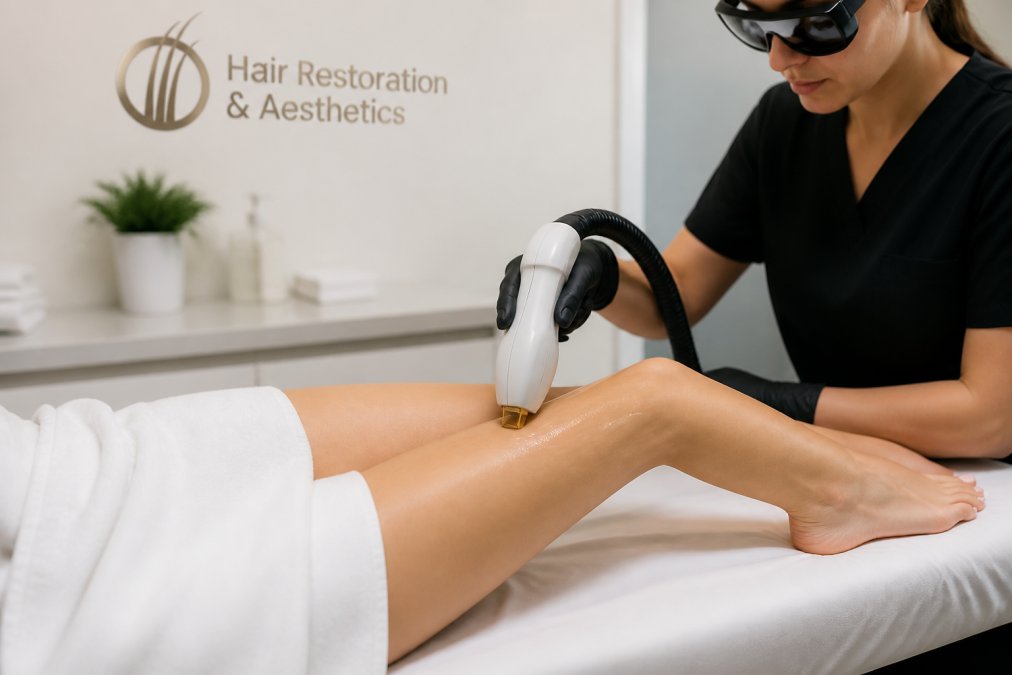
A qualified professional applies cooling gel to the treatment area, then delivers short pulses of light with a handheld laser device. You'll feel a warm sensation or mild snapping.
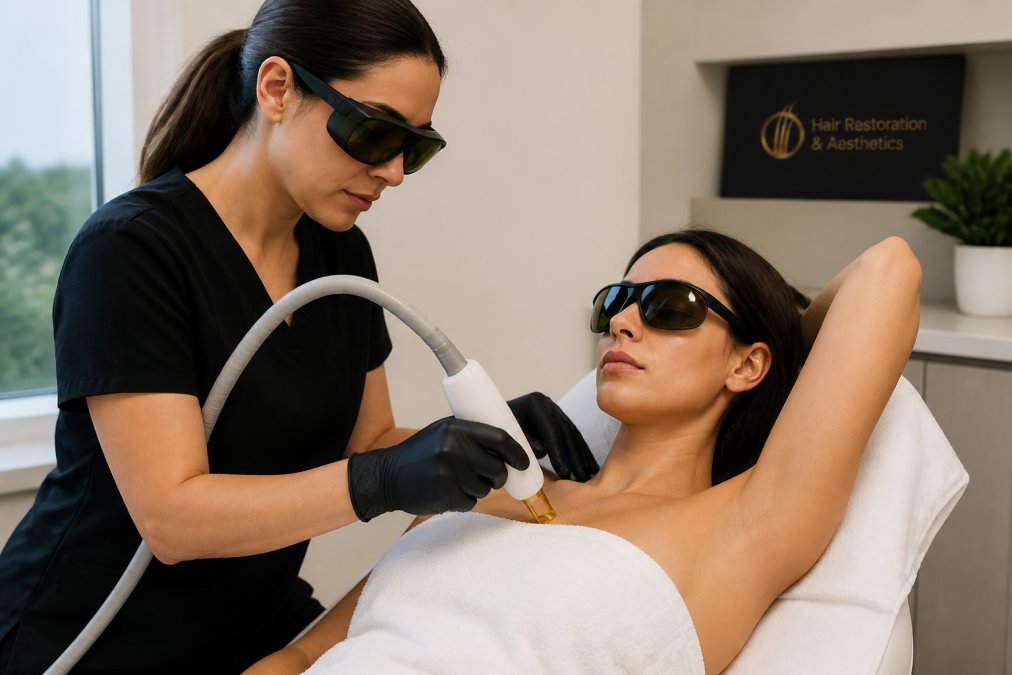
The procedure takes 15 to 60 minutes depending on area size. Most people find the sensation tolerable, though sensitive areas may feel more uncomfortable.
The professional passes the laser over the entire treatment area multiple times and adjusts settings based on your skin type and hair color to avoid burns.
Your skin may be red or slightly swollen, typically fading within hours. Avoid intense exercise and hot showers for 24 hours.
Laser Hair Removal Aftercare Tips
Apply a soothing moisturizer or aloe vera gel immediately after treatment. Avoid fragrance, alcohol, or acids for at least 48 hours.
Avoid sun exposure for at least two weeks. If you must go outside, wear broad-spectrum sunscreen with SPF 30 or higher.
Skip hot baths, saunas, and intense workouts for 24 hours. Cool compresses help reduce redness if needed.
Post-treatment care checklist:
- Apply soothing moisturizer immediately
- Avoid sun exposure for 2 weeks
- Skip hot water and saunas for 24 hours
- Wear SPF 30+ sunscreen daily
- Don't pluck or wax between sessions
- Shave only if needed after 24 hours
- Avoid chlorinated pools for 48 hours
Hair shedding over the next 1-2 weeks is normal, the laser damaged the follicle and the hair is being expelled. Do not pick at the skin.
Schedule your next appointment 4-6 weeks later.
Is Laser Hair Removal Permanent for All Skin Tones
Maintenance sessions may be needed every 1-2 years, far less frequent than shaving or waxing.
Laser Hair Removal Side Effects and Risks
Common side effects are mild and temporary: redness, swelling, and temporary color changes typically resolve within hours to weeks.
Schedule a Free Consultation →
Common side effects:
- Temporary redness
- Mild swelling
- Temporary hyperpigmentation
- Temporary hypopigmentation
- Slight itching
Rare serious side effects:
- Burns or blistering
- Permanent scarring
- Permanent color changes
- Infection
Critical Contraindications: When Laser Hair Removal Is Not Safe
Pregnancy: Laser hair removal is not recommended during pregnancy due to increased skin sensitivity and hyperpigmentation risk from hormonal changes.
Photosensitizing medications: Certain medications increase skin photosensitivity and burn risk dramatically. These include:
- Tetracycline and fluoroquinolone antibiotics (doxycycline, ciprofloxacin)
- Nonsteroidal anti-inflammatory drugs (NSAIDs) at high doses
- Isotretinoin (Accutane) for severe acne, treatment must be delayed at least 6 months after the final dose
- Certain antifungal medications (griseofulvin)
- Some blood pressure medications (thiazide diuretics)
- Retinoids and vitamin A derivatives used for acne or anti-aging
Photosensitizing Medications and Timing
Photosensitizing medications increase your risk of burns. If you take any of the medications listed above, inform your provider immediately. Depending on the medication, you may need to:
- Postpone treatment until you finish the medication course
- Wait a specific period after stopping (e.g., 6 months for Accutane)
- Adjust laser settings to lower power
- Space treatments further apart to allow skin recovery
Never stop taking a prescribed medication to pursue laser hair removal. Work with both your prescribing physician and your laser provider to determine a safe timeline.
Why Professional Assessment Matters
A qualified provider will take a detailed medical history, ask about all medications and supplements, and assess your skin type and hair characteristics before recommending treatment. This consultation is not a formality, it's a critical safety step that identifies contraindications and determines whether you're a candidate for treatment at all. If you're ready to explore whether laser hair removal is right for you, Schedule a Free Consultation with our team to discuss your specific needs and medical history.
Professional vs. At-Home Laser Hair Removal Safety
Professional laser systems and at-home devices operate on fundamentally different principles, and the safety gap is especially pronounced for people with darker skin tones.
Power Output and Penetration Depth
Professional lasers deliver 10-20 joules per square centimeter (J/cm²), while at-home devices deliver 3-5 J/cm². Since hair follicles sit 2-4 millimeters deep, higher energy penetrates deeper and destroys follicles more reliably.
Cooling Systems and Skin Protection
Professional systems include real-time cooling (contact cooling, cryogenic spray, or air cooling) that keeps the epidermis at a safe temperature while allowing deeper tissue to reach the 65-75°C needed to destroy the follicle.
Laser Wavelength and Skin Tone Safety
How wavelength affects skin tone: Different laser wavelengths penetrate skin to different depths and are absorbed differently by melanin:
- Alexandrite (755 nm): Excellent for light to medium skin but risky for darker skin, epidermis melanin absorbs too much energy.
- Diode (810 nm): Safer for medium skin but still risky for very dark skin.
- Nd:YAG (1064 nm): Safer for darker skin because it bypasses surface melanin and targets the deeper hair follicle.
Expertise and Real-Time Adjustment
A certified technician assesses your skin type, hair color, and density, then adjusts laser settings based on your characteristics. If your skin shows excessive heat absorption, they lower the power immediately.
Treatment Speed and Completion
Professional treatment typically requires 6-8 sessions spaced 4-6 weeks apart, completing in 12-16 weeks with visible, consistent results.
Cost and Long-Term Value
At-home devices range from $200 to $1,000 upfront. Professional treatment costs more per session but delivers faster, more reliable results. When you factor in the time investment (at-home treatment can take a year or more) and the higher likelihood of needing touch-ups with at-home devices, professional treatment often provides better long-term value.
Safety Comparison Table
| Factor | Professional | At-Home |
|---|---|---|
| Power Output | 10-20 J/cm² (deep penetration) | 3-5 J/cm² (shallow penetration) |
| Cooling System | Built-in, real-time, multiple methods | Limited or manual; inconsistent |
| Wavelength Options | Multiple (Nd:YAG, diode, alexandrite) | Usually one (diode or alexandrite) |
| Skin Tone Safety | Safe for all types with proper wavelength | High burn risk for darker skin |
| Real-Time Adjustment | Yes; technician adjusts settings live | No; preset levels only |
| Treatment Duration | 6-8 sessions, 12-16 weeks | 12-24+ sessions, 6-12+ months |
| Results | Consistent, reliable, 80-90% reduction | Variable, often incomplete |
| Expertise Available | Certified technician on-site | User-dependent; no professional oversight |
The Bottom Line on Safety
Professional treatment with a qualified provider is the safest choice, especially if you have darker skin, coarse hair, or any medical contraindications. The combination of appropriate wavelength, real-time cooling, expert adjustment, and professional oversight makes complications rare.
Frequently Asked Questions
Is laser hair removal safe for all skin tones?
Professional laser hair removal is safe across most skin tones when performed by a certified technician using appropriate wavelengths and settings. Melanin in darker skin absorbs laser energy, so practitioners adjust parameters to minimize risk of burns or pigmentation changes. At-home devices often lack these safety adjustments. A consultation with a qualified professional ensures your specific skin type and hair color are matched to the right technology and settings for safe, effective results.
How should I prepare my skin before laser hair removal?
Preparation is critical for safety and effectiveness. Shave the treatment area 24 hours before your appointment, but avoid waxing, plucking, or depilatory creams for at least two weeks prior. Avoid sun exposure and tanning beds for 4-6 weeks before treatment, as tanned skin increases burn risk. Skip photosensitizing medications if possible and discuss any recent medications with your provider. Wear loose clothing to your appointment and arrive with clean, makeup-free skin. These steps protect the epidermis and hair follicles from unnecessary thermal damage.
How many sessions of laser hair removal are typically needed?
Most people require 6-8 sessions spaced 4-6 weeks apart for significant permanent reduction. Hair grows in cycles, and the laser targets follicles only during the active anagen phase. Multiple sessions ensure you catch hairs at the right growth stage. Coarser hair and darker skin tones may need additional sessions. After your initial series, touch-up sessions every 6-12 months maintain results as some fine regrowth may occur over time.
Can I do laser hair removal at home safely?
At-home laser and IPL devices carry higher safety risks than professional treatment. Consumer devices have lower power output and lack the cooling systems, wavelength precision, and real-time adjustments that clinical settings provide. Without professional assessment of your skin type, melanin levels, and contraindications, you risk burns, hyperpigmentation, and ineffective results. Professional supervision ensures correct device settings, proper technique, and immediate management of any side effects. For safe, lasting results, professional treatment is strongly recommended.