 how-to
How to Choose the Right Dermal Filler for Your Face
Table of Contents
- Understanding How Dermal Fillers Work
- Types of Dermal Fillers and What They Do
- How Long Do Dermal Fillers Last
- Matching Fillers to Your Facial Anatomy and Goals
- Choosing a Board-Certified Injector
- FDA Approved Dermal Fillers List and Safety
- What to Expect: The Procedure, Recovery, and Side Effects
- Reversibility and Realistic Expectations
- Frequently Asked Questions
Last Updated: September 3, 2026
Understanding How Dermal Fillers Work
Dermal fillers are injectable gels that restore volume beneath the skin's surface to smooth lines, enhance contours, and address signs of facial aging. When strategically placed in the dermis or subcutaneous tissue, they fill depressions, support sagging skin, and stimulate collagen production depending on the filler type.
Hyaluronic acid fillers bind water molecules and integrate smoothly into tissue, while biostimulatory fillers like calcium hydroxylapatite and poly-L-lactic acid trigger your body's own collagen production over weeks to months. A filler injected into the lips behaves differently than one placed in the cheeks due to differences in tissue thickness, movement, and blood flow. The injector's technique, injection depth, and placement pattern directly influence how natural the result appears and how long it lasts.
At Hair Restoration Clinic of Granite Bay, we emphasize that filler selection starts with understanding your facial anatomy. The best choice depends on whether you're seeking immediate volume restoration, gradual collagen stimulation, or a combination approach.
Types of Dermal Fillers and What They Do
Hyaluronic Acid Fillers
Hyaluronic acid (HA) fillers are the most widely used dermal fillers in aesthetic medicine. HA is a naturally occurring substance in the skin that holds water, maintaining hydration and volume. When injected, HA fillers immediately add volume and can be dissolved with hyaluronidase if needed, a reversibility feature that appeals to first-time patients.
HA fillers come in varying viscosities and G-prime values, which measure how much resistance the gel provides. Higher G-prime fillers maintain their shape better in areas requiring structural support, like cheekbones and chin definition. Lower G-prime formulations flow smoothly, making them ideal for fine lines around the lips and eyes.
Common HA filler brands include Restylane, Juvéderm, and Belotero, each with slightly different molecular structures affecting how they integrate into tissue and longevity. Results typically last 6 to 12 months, though individual metabolism and injection placement influence duration. The reversibility of HA fillers is significant: if you're unhappy with results or experience complications, hyaluronidase can dissolve the material within hours.
Biostimulatory and Synthetic Fillers
Biostimulatory fillers work through a fundamentally different mechanism than hyaluronic acid. Calcium hydroxylapatite (Radiesse) and poly-L-lactic acid (Sculptra) stimulate your body's fibroblasts to produce new collagen, gradually restoring volume over weeks to months. Results can last 12 to 24 months or longer.
These fillers suit patients seeking long-term facial rejuvenation rather than immediate correction. Because collagen rebuilding is gradual, results look natural as they mirror how your face would age if collagen were being maintained.
Synthetic fillers like polymethylmethacrylate (PMMA, used in Bellafill) provide permanent volume restoration. PMMA microspheres suspended in collagen gel create lasting support as the collagen resorbs. Permanence appeals to patients committed to a specific aesthetic goal, but it also means you cannot reverse the treatment.
Each filler category has trade-offs: HA offers reversibility and predictable duration; biostimulatory fillers deliver gradual, natural-looking results with extended longevity; synthetic fillers provide permanence. Choosing between them depends on your timeline, budget, risk tolerance, and aesthetic priorities.
How Long Do Dermal Fillers Last
Hyaluronic acid fillers typically last 6 to 12 months (the FDA). Fillers placed in high-movement areas like the lips metabolize faster than those in stable zones like the cheeks. Your body gradually breaks down the hyaluronic acid through natural enzymatic processes.
Calcium hydroxylapatite (Radiesse) generally persists for 12 to 18 months because it combines immediate volume with gradual collagen stimulation (the FDA). Poly-L-lactic acid (Sculptra) offers the longest duration among temporary fillers: 24 months or more, though longevity varies based on collagen response.
Permanent fillers like PMMA (Bellafill) maintain their effect indefinitely because the microspheres don't break down. However, facial aging continues around the filler, which can create an unnatural appearance over time.
Maintenance scheduling should factor into your decision. If you prefer quarterly touch-ups with HA fillers, budget and convenience may favor that routine. If you prefer annual or biannual visits, longer-lasting options become more attractive.
Matching Fillers to Your Facial Anatomy and Goals
Treatment Areas: Lips, Cheeks, and Nasolabial Folds
Different facial areas require different filler strategies because tissue thickness, movement patterns, and aesthetic goals vary significantly. The lips are highly mobile with thinner dermis than the cheeks, demanding a product with appropriate viscosity to maintain shape during speech and eating while avoiding an overfilled appearance.
Cheek augmentation addresses volume loss that occurs with aging. Strategic cheek filler restores definition to the cheekbone and creates a more youthful contour. Cheek fillers typically require higher G-prime products that provide structural support and last longer than lip fillers.
Nasolabial folds, the lines running from the nose to the corners of the mouth, deepen with age as cheek volume diminishes. Treating them effectively requires understanding the underlying cause. If volume loss in the cheek is the root issue, addressing the cheek itself creates more natural, longer-lasting results than filling the fold directly.
Marionette lines, which extend downward from the corners of the mouth, respond well to filler placed in the jawline and lower cheek. These lines often signal loss of structural support in the lower face, and restoring that support improves the overall appearance.
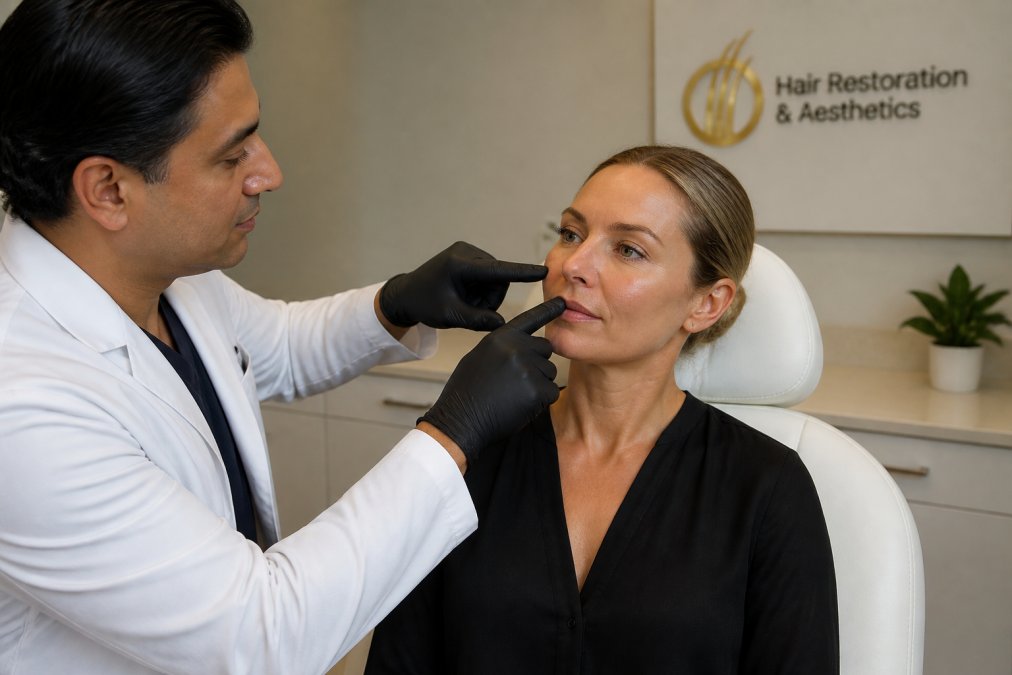
The key principle is that effective filler placement addresses underlying volume loss, not just the visible line. A skilled injector assesses your facial anatomy to determine where volume has been lost and restores it strategically, producing natural-looking results.
Assessing Your Skin Quality and Dermal Thickness
Before selecting a filler, a qualified injector evaluates your skin quality and dermal thickness because these factors directly influence which products work best. Thin skin requires different filler choices than thick skin; fine, delicate skin tolerates less volume and benefits from smoother, lower-viscosity fillers that won't create lumps or visible irregularities.
Dermal thickness varies by genetics, age, sun exposure, and ethnic background. Thicker dermis can accommodate higher-viscosity fillers and larger volumes without visible distortion. Thinner dermis demands conservative placement and often benefits from HA fillers that integrate smoothly and can be adjusted or dissolved if overcorrection occurs.
Skin quality, including elasticity, hydration, and texture, also influences filler selection. Skin with good elasticity adapts well to volume restoration and maintains results longer. Dehydrated or sun-damaged skin may benefit from combining filler with skin rejuvenation treatments like laser facials or microneedling to improve overall skin quality alongside volume restoration.
A board-certified injector will assess these factors during consultation, asking about your skin history, sun exposure, and previous treatments. This assessment informs whether you're a better candidate for immediate HA correction, gradual collagen stimulation, or a combination approach.
Choosing a Board-Certified Injector
The most important decision in choosing the right dermal filler is actually choosing the right injector. Product selection matters, but technique, anatomical knowledge, and experience determine whether your results look natural and last as expected.
A board-certified physician or nurse injector has completed rigorous training in facial anatomy, injection techniques, and complication management. Board certification from organizations like the American Board of Plastic Surgery indicates the provider has met specific educational and experience requirements.
Schedule a Free Consultation →
During consultation, ask about the injector's training, experience, and how many filler procedures they perform annually. Request before-and-after photos showing results on patients with similar facial anatomy and goals to yours. Consistent, natural-looking results across diverse patients indicate skill and aesthetic judgment.
Ask whether the injector uses needles, cannulas, or both. Cannulas (blunt-tipped tubes) reduce bruising and vascular injury risk compared to needles, though they require different technique. An experienced injector may use both depending on the area and filler type.
Verify that the clinic uses FDA-approved fillers stored properly and maintains rigorous sterility protocols. Ask about their complication management plan: what happens if you experience vascular occlusion, allergic reaction, or unsatisfactory results? A clinic with clear protocols and willingness to address complications transparently builds confidence.
FDA Approved Dermal Fillers List and Safety
The FDA regulates dermal fillers as medical devices. Approved fillers have undergone safety and efficacy testing, meaning the product, when used as directed by qualified professionals, presents acceptable risk-benefit ratios.
Common FDA-approved hyaluronic acid fillers include Juvéderm, Restylane, and Belotero families. Each product line includes multiple formulations designed for specific applications based on viscosity and G-prime characteristics.
Calcium hydroxylapatite (Radiesse) and poly-L-lactic acid (Sculptra) are FDA-approved biostimulatory options. Radiesse is approved for immediate volume restoration and can be used in the hands and other body areas beyond the face. Sculptra is approved for facial lipoatrophy and gradual volume restoration.
Polymethylmethacrylate (Bellafill) is an FDA-approved permanent filler combining collagen and PMMA microspheres. Its permanence makes it suitable for patients seeking long-term correction of specific concerns.
Safety with any filler depends on proper technique, appropriate patient selection, and realistic expectations. Serious complications are rare but include vascular occlusion, allergic reactions, granulomas, and infection. A qualified injector minimizes these risks through anatomical knowledge, careful injection technique, and thorough patient screening.
Contraindications include active skin infections, certain autoimmune conditions, and pregnancy. A thorough consultation identifies these factors before treatment begins.
What to Expect: The Procedure, Recovery, and Side Effects
A typical filler appointment takes 30 to 60 minutes depending on the number of areas treated. Your injector will mark injection points, apply topical anesthetic, and may use ice to numb the area further. Some fillers contain lidocaine for additional comfort during injection.
Injection sensation varies by area. Lips are more sensitive than cheeks; most patients report mild discomfort rather than pain. Immediate results appear within minutes for hyaluronic acid fillers. Some swelling occurs immediately after injection, this is normal and typically resolves within 24 to 48 hours. Biostimulatory fillers show less immediate change; results develop over weeks as collagen production increases.
Post-procedure side effects are usually mild and temporary. Bruising occurs in roughly 10-15% of patients and typically fades within 7 to 10 days (peer-reviewed research). Swelling peaks at 24 to 48 hours and gradually improves. Tenderness at injection sites usually resolves within a few days.
Rare side effects include allergic reactions, infection, and vascular complications. Vascular occlusion, where filler blocks blood flow, presents as sudden blanching, severe pain, or darkening of skin. This requires immediate medical attention and hyaluronidase injection if HA filler was used.
Downtime is minimal for most patients. You can return to normal activities immediately, though avoiding strenuous exercise, extreme heat, and alcohol for 24 to 48 hours reduces bruising and swelling.
Reversibility and Realistic Expectations
One of the most important aspects of choosing the right dermal filler is understanding reversibility. Hyaluronic acid fillers can be dissolved with hyaluronidase injection if results are unsatisfactory or complications occur. This reversibility makes HA an excellent choice for first-time filler patients or those wanting to test aesthetic changes before committing to longer-lasting options.
Biostimulatory fillers like Sculptra cannot be reversed once injected; results develop gradually and fade gradually as collagen resorbs. This irreversibility demands careful patient selection and realistic expectations about the timeline and final appearance.
Permanent fillers like PMMA cannot be reversed. Once placed, they remain indefinitely. This permanence requires absolute certainty about aesthetic goals and acceptance that facial aging will continue around the filler.
Realistic expectations are essential for satisfaction. Fillers improve lines and restore volume, but they don't stop aging or transform your face into someone else's. The goal is a refreshed, natural appearance that looks like you at your best.
Common unrealistic expectations include expecting fillers to eliminate all wrinkles (some lines are better addressed with neurotoxins like Botox), assuming results will last indefinitely without maintenance, or believing one treatment will solve all facial aging concerns. A qualified injector discusses these expectations during consultation and may recommend combination treatments, fillers plus neurotoxins plus skin rejuvenation, to address multiple concerns comprehensively.
Choosing the right dermal filler for your face requires understanding how different products work, matching them to your facial anatomy and goals, and selecting a qualified injector with the expertise to execute your aesthetic vision. At Hair Restoration Clinic of Granite Bay, we specialize in comprehensive facial rejuvenation, including dermal fillers combined with neurotoxins, laser skin rejuvenation, and microneedling to address multiple signs of aging. Our board-certified approach prioritizes natural-looking results and patient safety. Schedule a free consultation to discuss how dermal fillers can refresh your appearance and which options align with your goals and timeline.
Frequently Asked Questions
What is the difference between hyaluronic acid and non-hyaluronic dermal fillers?
Hyaluronic acid fillers attract and hold water, providing natural-looking volume and are reversible with hyaluronidase if needed. Non-hyaluronic fillers, such as biostimulatory and synthetic options, work differently: biostimulatory fillers trigger collagen stimulation for gradual, longer-lasting results, while synthetic fillers provide permanent or semi-permanent augmentation. The choice depends on your aesthetic goals, desired longevity, and how much tissue integration you want.
How long do dermal fillers last, and does it vary by type?
Longevity varies significantly by filler type and location. Hyaluronic acid fillers typically last 6 to 18 months, depending on viscosity and the treatment area. Biostimulatory fillers may provide results for 2 to 5 years as they stimulate your own collagen production. Synthetic fillers can last several years or longer. Lips and mobile areas metabolize fillers faster than cheeks or nasolabial folds. A maintenance schedule depends on your filler choice and personal metabolism.
How do I know if a provider is a board-certified injector qualified to administer dermal fillers?
Verify credentials directly: ask if your provider is board-certified by the American Board of Dermatology, American Board of Plastic Surgery, or American Board of Facial Plastic and Reconstructive Surgery. Request evidence of their certification and training in injection technique, including experience with cannula versus needle administration. A qualified injector understands facial anatomy, vascular anatomy, and can assess contraindications based on your medical history. Don't hesitate to ask for before-and-after photos from patients with similar concerns.
What are the most common side effects of dermal filler injections?
Common side effects include temporary swelling, bruising, and redness at the injection site, typically resolving within a few days to a week. Some patients experience mild tenderness or itching. Rare but serious complications include vascular occlusion (when filler blocks a blood vessel), which requires immediate medical attention. Post-procedure downtime is minimal for most people, and you can usually return to normal activities within 24 to 48 hours. Your board-certified provider should discuss all potential risks and how to minimize them during your consultation.
This article was written using GrandRanker