
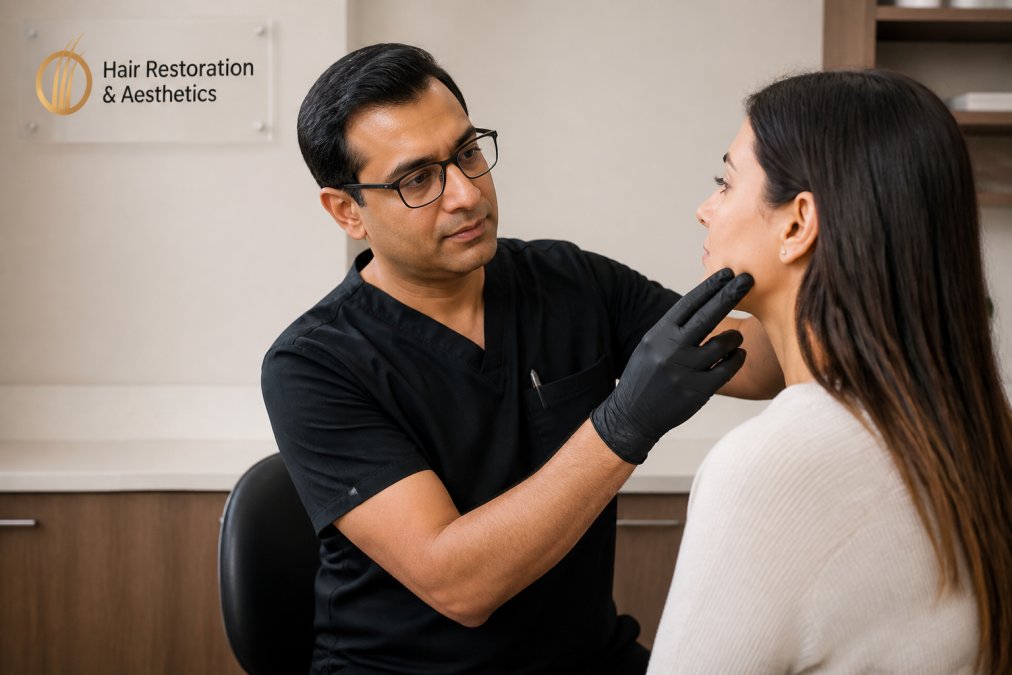
 how-to
How to Choose a Board-Certified Aesthetic Physician
Table of Contents
- Why Board Certification Matters for Aesthetic Medicine
- How to Verify Medical Board Certification
- Beyond Certification: Training, Experience, and Hospital Privileges
- Red Flags and Green Flags When Researching Providers
- Questions to Ask Before Aesthetic Procedures
- Your Aesthetic Consultation Checklist
- Conclusion: Trust Your Research, Then Trust Your Instincts
- Frequently Asked Questions
Last Updated: September 5, 2026
Choosing the right provider for aesthetic treatments is one of the most consequential healthcare decisions you will make, yet it is often approached with less scrutiny than buying a car. The process of how to choose a board certified aesthetic physician comes down to verifiable credentials, transparent experience, and a consultation that answers your specific questions with confidence. At Hair Restoration Clinic of Granite Bay, we believe informed patients make the best decisions, which is why this guide focuses on the exact steps to vet any aesthetic physician before you commit to treatment.
The aesthetic industry is a mix of board-certified physicians and practitioners with widely varying training. Many patients assume that anyone performing injectables or laser treatments holds the same qualifications, but that assumption can lead to disappointing outcomes or safety risks. Your face and body deserve a standard of care that prioritizes medical training over marketing. Below, we'll walk through the specific credentials to verify, the questions to ask before aesthetic procedures, and the red flags that should send you elsewhere.
Why Board Certification Matters for Aesthetic Medicine
Board certification is the single strongest signal that a physician has completed rigorous, accredited training in their specialty. A board-certified aesthetic physician is a medical doctor who has finished an accredited residency program and passed comprehensive exams administered by a recognized medical board. This process confirms a baseline of clinical expertise that non-physician injectors simply cannot match.
The distinction matters most when complications arise. A physician with deep surgical training understands facial anatomy at a level that protects you during procedures. According to the American Board of Medical Specialties, board certification demonstrates a physician's commitment to ongoing professional development and peer-reviewed standards of care. This is especially relevant in aesthetic medicine, where the line between medical treatment and cosmetic enhancement often blurs.
How to Verify Medical Board Certification
Most guides tell you to "verify credentials," but they stop short of showing you exactly how. This friction point is where many patients give up and take a clinic's website at face value. To close that gap, here is a precise, digital-first verification workflow you can complete in under ten minutes.
Step 1: Run the ABMS Certification Check
The American Board of Medical Specialties (ABMS) maintains the official registry of board-certified physicians. Visit the ABMS website and use the "Is Your Doctor Board Certified?" tool. Enter the physician's full legal name and, if available, their state of license. The tool will return their certification status, the specialty board that issued it, and the certification's expiration date. A certification that is "Not Current" or "Expired" is a significant red flag.
Step 2: Cross-Reference with the State Medical Board
Federal certification is only half the picture. Every state maintains its own medical board that issues licenses and tracks disciplinary actions. Search for "[State Name] Medical Board License Lookup" and enter the physician's name. You are looking for three things:
- Active, unrestricted license: The license status should read "Active" or "Clear." Any restriction, probation, or limitation is a warning sign.
- Disciplinary history: Review the public actions section for any prior suspensions, fines, or reprimands. Even a single past action warrants a direct question during your consultation.
- License expiration date: An expired license means the physician is practicing without legal authority in that state.
Step 3: Check the Federation of State Medical Boards (FSMB)
The FSMB operates a national database that aggregates disciplinary actions across all state boards. This is especially useful if the physician has moved between states, as a sanction in one state may not appear immediately in another. The FSMB's public profile service allows you to see a physician's education, licenses, and any actions taken against them nationwide.
Step 4: Look Up Hospital Privileges Directly
Hospital privileges are granted by an independent committee that reviews a physician's training, outcomes, and peer references. You can often verify privileges by calling the hospital's medical staff office and asking whether the physician holds active privileges. If a physician claims privileges at a specific hospital, confirm it directly. A physician who cannot obtain hospital privileges, or who avoids the process entirely, may lack the peer-reviewed validation that comes with it.
Step 5: Beware of Look-Alike Certifications
A common trap is confusing board certification with membership in a private aesthetic society. Organizations that offer weekend courses and issue "certificates" in injectables or laser therapy are not the same as the ABMS boards. Look for the specific board name, such as the American Board of Dermatology, the American Board of Plastic Surgery, or the American Board of Facial Plastic and Reconstructive Surgery, and verify it appears in the ABMS directory. If the credential is not listed there, it is not an accredited board certification.
This workflow takes about ten minutes and provides a documented trail of the physician's qualifications. Bring the results to your consultation and ask the physician to explain any discrepancies you find. A confident, ethical physician will appreciate your diligence.
Beyond Certification: Training, Experience, and Hospital Privileges
Board certification establishes a foundation, but it does not tell the whole story. An aesthetic physician's experience with a specific procedure matters enormously. Ask how many times they have performed the treatment you are considering, and request to see before-and-after photos of patients with similar concerns. A physician who has performed a procedure hundreds of times will handle complications differently than someone who does it occasionally.
Hospital privileges are another layer of verification worth understanding. When a physician holds privileges at an accredited facility, it means an independent committee has reviewed their training and outcomes. According to the American Society of Plastic Surgeons, choosing a surgeon with hospital privileges ensures you are treated by someone whose skills have been vetted by peers, not just their own marketing team.
Continuing medical education also separates committed practitioners from those resting on old training. Aesthetic techniques evolve rapidly, and the best physicians invest in ongoing education to refine their skills. During your consultation, ask about recent training or conferences the physician has attended. The answer reveals whether they are current with the latest advances in aesthetic medicine.
Red Flags and Green Flags When Researching Providers
Technical credentials tell you what a physician knows. They do not tell you how that physician treats you as a person. The aesthetic consultation is as much a psychological assessment as it is a medical one. You are evaluating whether this physician will listen, respect your boundaries, and prioritize your well-being over their revenue. Here is how to vet the human side of the practice.
Red Flag: The "One-Size-Fits-All" Recommendation
A physician who recommends the same treatment for every patient, regardless of their anatomy, skin type, or goals, is following a script, not practicing medicine. A thorough provider will take time to examine your facial structure, skin quality, and medical history before suggesting a plan. If the recommendation feels generic or rushed, ask them to explain why this specific treatment is right for your anatomy. An inability to articulate a personalized rationale is a significant red flag.
Red Flag: Dismissal of Your Concerns
Pay close attention to how the physician responds when you express hesitation or ask about risks. A dismissive response, such as "That never happens" or "You're overthinking it", signals a lack of respect for your autonomy. Ethical physicians acknowledge potential complications honestly and explain how they would manage them. They do not minimize your concerns to close the sale.
Red Flag: Pressure to Decide Immediately
High-pressure tactics are a hallmark of volume-driven practices. If a physician or their staff pushes you to book a procedure "today" to secure a discount or a specific date, walk away. Legitimate medical decisions should never be made under time pressure. A physician who respects you will encourage you to go home, think it over, and return with additional questions.
Green Flag: Willingness to Recommend Against Treatment
The strongest green flag is a physician who tells you not to have a procedure. During your consultation, ask directly: "Is there any treatment you would recommend against for me, and why?" A physician who is willing to turn down revenue because a treatment is not right for your anatomy or goals is demonstrating ethical alignment. This is rare, and it is exactly what you want.
Green Flag: Transparency About Their Own Limitations
No physician is an expert in every procedure. A confident, ethical provider will openly state when a treatment falls outside their core expertise and refer you to a colleague who is better suited. This honesty is a sign of professional maturity. Be wary of a physician who claims to be equally skilled in every possible treatment, this is rarely true.
Green Flag: A Consultation That Feels Like a Dialogue
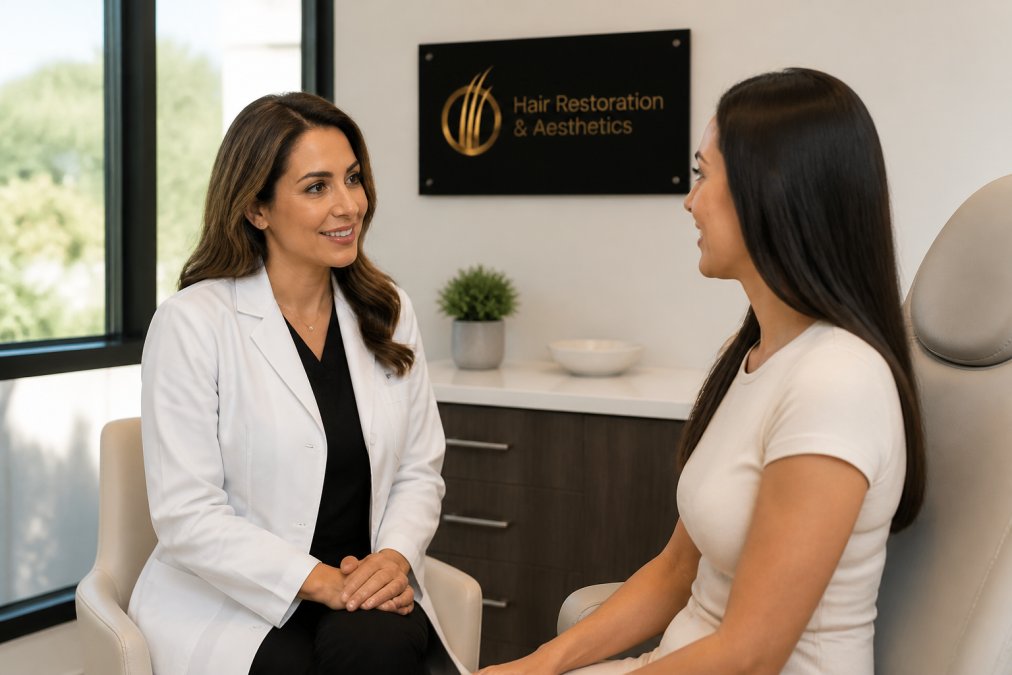
Notice the balance of conversation. Does the physician ask about your lifestyle, your past experiences with treatments, and your long-term aesthetic goals? Or do they dominate the conversation with technical jargon? A physician who asks more questions than they answer is gathering the information needed to make a personalized recommendation. This dialogue is the foundation of trust.
The Instinct Check
After the consultation, ask yourself one question: Did I feel heard, respected, and educated? If the answer is yes, you have found a physician who values the patient-physician relationship. If you felt rushed, talked down to, or pressured, those feelings are data. Trust them. The right physician will make you feel like a partner in your care, not a transaction.
Questions to Ask Before Aesthetic Procedures
Your consultation is an interview, and you should come prepared with specific questions. Beyond credentials, ask about the physician's experience with your particular procedure, the realistic outcomes you can expect, and the potential complications. A confident physician will answer directly without hedging.
Ask who will actually perform the treatment. In some practices, the physician conducts the consultation but a nurse or assistant performs the procedure. If you are seeking a board-certified aesthetic physician, confirm that the physician will be the one treating you. This distinction is critical for procedures that require precise injection technique or laser calibration.
Recovery expectations deserve equal attention. Ask about downtime, what you can do to optimize results, and what follow-up care looks like. According to the American Medical Association's patient resources, understanding the full treatment process, including aftercare, is essential for informed consent and realistic expectations.
Your Aesthetic Consultation Checklist
Use this checklist during your consultation to ensure you have covered every essential point before scheduling a procedure.
| Checklist Item | What to Look For | Why It Matters |
|---|---|---|
| Board certification | Verify through ABMS or state board | Confirms accredited training |
| Procedure experience | Specific number of procedures performed | Predicts complication handling |
| Before-and-after photos | Patients with similar concerns | Sets realistic expectations |
| Treatment provider | Physician performs the procedure | Ensures skill level matches |
| Complication protocol | Clear plan for adverse events | Protects your safety |
| Recovery plan | Detailed aftercare instructions | Optimizes your results |
Conclusion: Trust Your Research, Then Trust Your Instincts
The process of choosing a board-certified aesthetic physician requires the same diligence you would apply to any major medical decision. Verify credentials through official channels, ask pointed questions about experience and outcomes, and pay attention to how the practice treats you during the consultation process. A provider who values safety and transparency will welcome your scrutiny.
At Hair Restoration Clinic of Granite Bay, led by board-certified physician Dr. Piyush Kumar, MD, we encourage every patient to ask these questions and verify our credentials. We are proud to offer a Schedule a Free Consultation where you can discuss your goals, review before-and-after results, and decide if we are the right fit for your care.
Frequently Asked Questions
Is an aesthetic physician the same as a plastic surgeon?
No, they are different. A plastic surgeon completes a residency in plastic and reconstructive surgery, which covers both cosmetic and reconstructive procedures. An aesthetic physician is typically a doctor from another specialty, such as dermatology or family medicine, who has pursued additional training in cosmetic and aesthetic treatments like injectables, lasers, and hair restoration. Both can be board-certified, but the certification and scope of training differ. For non-surgical procedures, an aesthetic physician's training can be highly relevant and thorough.
How can I verify a physician's board certification status?
You can verify a physician's board certification through the American Board of Medical Specialties (ABMS) website, which offers a free online verification tool. You will need the physician's full name and, if possible, their medical license number. This tool confirms whether the doctor is certified and whether their certification is current. You can also check your state's medical board website for disciplinary actions or malpractice history.
What are the risks of choosing an unqualified aesthetic provider?
Choosing an unqualified provider increases your risk of poor outcomes, including asymmetry, infection, scarring, nerve damage, and unsatisfactory aesthetic results. In some cases, treatments can be permanently disfiguring. Non-surgical procedures still require a deep understanding of facial anatomy to be performed safely. An unqualified provider may also lack the training to manage complications if they arise. Verifying credentials is the single most effective step you can take to protect your health and your results.
What should I look for during an aesthetic consultation?
During your consultation for any aesthetic procedure, the physician should conduct a thorough assessment of your medical history and your aesthetic goals. They should clearly explain the procedure, its expected outcomes, potential risks, and recovery time. Ask to see before-and-after photos of previous patients with similar concerns. A qualified physician will also discuss alternatives to the procedure, including the option of doing nothing, and will never pressure you into a decision.
Schedule your free consultation with Hair Restoration Clinic of Granite Bay and experience the confidence that comes from choosing a board-certified aesthetic physician. Our team is ready to answer your questions and help you achieve natural-looking results.