
 how-to
Can You Dissolve Lip Fillers If You're Unhappy?
Table of Contents
- Why People Choose to Dissolve Lip Fillers
- Hyaluronidase for Lip Filler Correction: How It Works
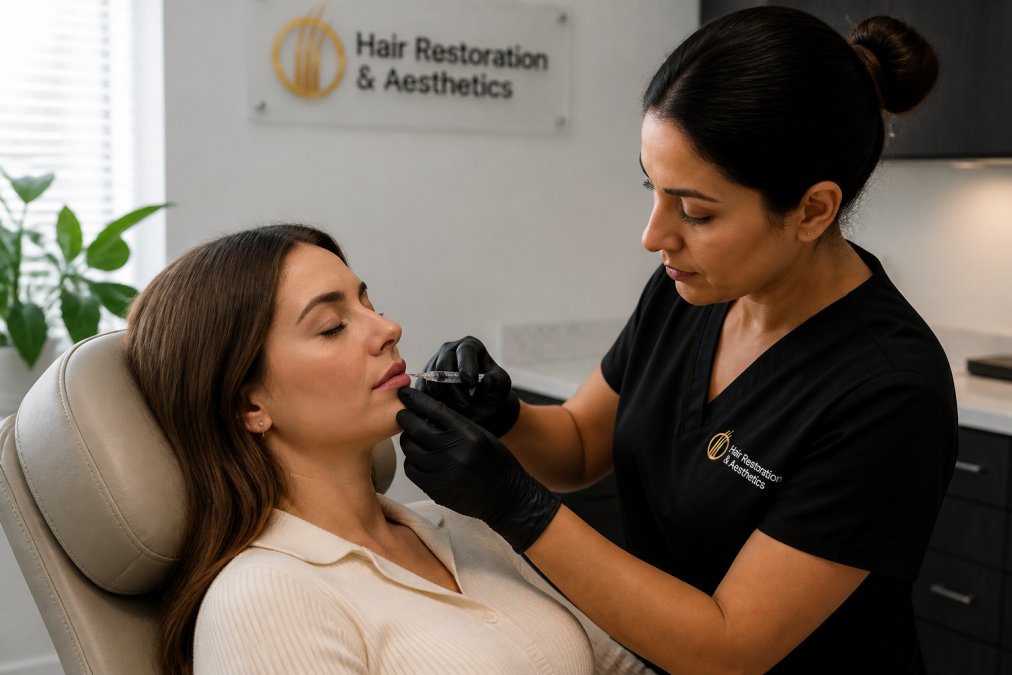
- What to Expect During Your Dissolving Appointment
- Lip Filler Correction Timeline: Week by Week
- Lip Filler Dissolving Side Effects and Safety
- Partial Dissolving and the Emotional Side of Filler Regret
- Cost, Insurance, and Choosing a Qualified Injector
- Frequently Asked Questions
Last Updated: September 21, 2026
Why People Choose to Dissolve Lip Fillers
Yes, you can dissolve lip fillers if you're unhappy with the result. Hyaluronic acid fillers, the most common type used for lip augmentation, can be broken down with an injectable enzyme called hyaluronidase (pubmed.ncbi.nlm.nih.gov). This guide from Hair Restoration Clinic of Granite Bay explains the process, the timeline, and what to expect.
Filler regret is more common than most people admit. A common mistake is waiting months hoping the look will grow on you. It rarely does.
The three main reasons patients seek reversal:
- Migration: filler drifts above the lip line
- Asymmetry: one side sits higher or fuller
- Overfilling: lips look puffy or unnatural
Each case needs a clinical assessment before treatment.
Hyaluronidase for Lip Filler Correction: How It Works
Hyaluronidase is an enzyme that breaks down hyaluronic acid, the gel-like substance in most dermal fillers. Once injected, it dissolves the filler so your body can clear it naturally.
The process is fast.
Why a Patch Test Comes First
A patch test checks for allergic reaction before full treatment. Your provider injects a small amount and watches for a reaction. This step matters because hyaluronidase is a protein-based enzyme, and some people react to it (pubmed.ncbi.nlm.nih.gov).
What to Expect During Your Dissolving Appointment
Your appointment starts with a clinical assessment. A licensed professional reviews your history, examines your lips, and confirms the filler type. Not all fillers dissolve. If yours is not hyaluronic acid based, hyaluronidase will not work.

Here is the typical flow:
- Numbing cream applied to the lips
- Patch test or full dose, depending on your plan
- Small enzyme injections across the treated area
- Brief observation before you go home
Lip Filler Correction Timeline: Week by Week
The lip filler correction timeline depends on how much filler is present, how long it has been in place, and how your body responds to hyaluronidase. Filler that has been in the lips for years is often more cross-linked and can take longer to break down than filler placed weeks ago. Here is a realistic, day-by-day picture of what most patients experience.
| Timeframe | What You'll Notice | What's Happening Under the Skin |
|---|---|---|
| Hour 0-6 | Numbing wears off, mild stinging at injection sites | Hyaluronidase begins cleaving the hyaluronic acid chains |
| 24-48 hours | Softening begins, visible swelling, lips may look fuller than before | Broken-down filler pulls in water, which temporarily increases volume |
| Day 3-7 | Visible reduction, main breakdown phase, bruising fades | Your lymphatic system clears the fragmented hyaluronic acid |
| Week 2 | Most filler gone, shape settling, residual firmness possible | Remaining fragments continue to clear; tissue rehydrates |
| Week 3-4 | Full result visible, touch-up assessed | Lip shape stabilizes; a second session can be planned if needed |
Why Your Lips Look Fuller Before They Shrink
This is the single most common source of panic after a dissolving appointment. Hyaluronidase breaks hyaluronic acid into smaller fragments, and those fragments attract water. The result is temporary swelling that can make lips look larger on day one than they did before treatment. Do not judge the result on day one, or even day three. Most practitioners ask patients to wait a full two weeks before evaluating the outcome.
How Many Sessions Will You Actually Need?
One session is often enough for filler placed recently or in small amounts. A common pattern is:
- One session: recent filler, mild overfilling, or partial dissolving
- Two sessions: older filler, large volumes, or filler that has migrated
- Three or more sessions: very dense or long-standing filler, or when the provider is deliberately dissolving slowly to avoid a sudden volume loss
Does the Procedure Hurt?
Most patients rate it as mild. Numbing cream is applied first, and the enzyme itself is injected with a very fine needle. The most common sensations are a brief sting during injection and tenderness for a day or two afterward. Bruising is possible, especially if you take blood thinners or supplements like fish oil or vitamin E.
Waiting Period Before Re-Injecting
If you want new filler after dissolving, most providers recommend waiting at least two weeks, and often four, before re-injecting. The tissue needs time to settle so your injector can assess the true underlying shape. Re-injecting too soon risks repeating the same asymmetry or overfilling that led you to dissolve in the first place.
Lip Filler Dissolving Side Effects and Safety
Lip filler dissolving side effects are usually mild and short lived. The most common are swelling, bruising, and tenderness at the injection sites.
Allergic Reaction Signs and Emergency Protocols
Watch for hives, swelling beyond the lips, or trouble breathing. These signs need immediate medical attention.
Partial Dissolving and the Emotional Side of Filler Regret
Not everyone wants full reversal. Partial dissolving removes some filler to soften the look while keeping volume. This is common for patients who liked the shape but not the size, or who want to keep some projection while correcting migration above the lip line.
How Partial Dissolving Works
Instead of injecting enzyme across the entire lip, your provider targets specific zones, usually the upper lip border, the areas of migration, or one side if asymmetry is the issue. A lower dose is used, and the goal is a measured reduction rather than a full reset. Because hyaluronidase spreads through tissue, partial dissolving is less precise than full dissolving, and most providers deliberately under-treat and reassess rather than risk removing too much.
Partial dissolving is a good fit if you:
- Like the overall shape but want less volume
- Have migration in one area but want to keep the rest
- Want a gradual change rather than a sudden one
- Are unsure whether you want full reversal
The Emotional Side of Filler Regret
The emotional side gets less attention than it should. Filler regret can feel isolating. Many patients describe embarrassment, anxiety about their appearance, and a reluctance to tell anyone, including their injector, that they are unhappy. Some describe a persistent preoccupation with their lips that does not match how others see them, a pattern sometimes called filler dysmorphia.
- Tell your injector honestly. They cannot correct what they do not know about, and most have seen this many times.
- Separate the filler from your self-image. The filler is a temporary product, not a permanent feature of your face.
- Give yourself a defined waiting period. Decide in advance how long you will wait before deciding, so the decision is not driven by a bad day.
- Talk to someone. A partner, a friend, or a therapist can help you separate appearance anxiety from the actual clinical issue.
A Safety Checklist Before You Book
Before any dissolving appointment, confirm the following with your provider:
- A patch test is offered as standard, not as an add-on
- The provider can name the filler you were treated with, or will help you find out
- Emergency protocols for allergic reaction are in place, including epinephrine on site
- The provider has experience dissolving lips specifically, not just placing filler
- You have a clear plan for how many sessions may be needed and how they will be spaced
Cost, Insurance, and Choosing a Qualified Injector
Dissolving is a cosmetic procedure, so insurance rarely covers it. Pricing depends on how much enzyme is needed and how many sessions you require, so ask your provider for a quote rather than assuming a figure.
- Board certification
- A patch test offered as standard
- Clear emergency protocols
- Before-and-after photos of real patients
Frequently Asked Questions
How long does it take to dissolve lip fillers?
Most people notice softening within 24 to 48 hours of the enzyme injection, with the majority of the hyaluronic acid broken down over one to two weeks. Swelling from the injection itself can briefly mask results, so the full picture often appears by the two-week mark. If any filler remains, a follow-up session can address it. Your injector will map out a realistic lip filler correction timeline for your specific case during a consultation.
Can you dissolve just a bit of lip filler instead of all of it?
Yes. Partial dissolving is common when the goal is to reduce volume rather than remove it completely. Your injector can target specific areas, such as a migrated upper lip or an uneven side, by injecting a smaller dose of hyaluronidase. Because the enzyme spreads through surrounding tissue, results can be less predictable than a full dissolve, so many providers schedule a short follow-up to fine-tune the outcome.
Does dissolving lip fillers hurt?
Most patients describe the sensation as a brief stinging or burning during the injection, lasting only seconds per site. Numbing cream is often applied beforehand to reduce discomfort. Afterward, expect tenderness, mild swelling, and possible bruising for a few days. Over-the-counter pain relief and cold compresses can help. If you are nervous about discomfort, tell your injector so they can adjust the approach.
Are there risks associated with dissolving lip fillers?
Hyaluronidase is generally well tolerated, but lip filler dissolving side effects can include swelling, bruising, redness, and temporary tenderness. Rare but serious risks include allergic reaction, including anaphylaxis, which is why a patch test and medical supervision matter. The enzyme can also break down your own natural hyaluronic acid in the treated area, which may leave lips looking flatter for a short time. A board-certified provider can assess your risk profile and manage complications.
Filler regret is fixable, but it needs the right hands. If you are unhappy with your lips, do not wait and hope. Hair Restoration Clinic of Granite Bay offers physician-supervised dermal filler correction, patch testing, and honest guidance on partial versus full dissolving. Schedule a free consultation and get a clear plan for your result.