 ultimate-guide
Benefits of PDO Thread Lifts for Face
Table of Contents
- What Is a PDO Thread Lift?
- How PDO Thread Lifts Work
- Primary Benefits of PDO Thread Lifts for Facial Rejuvenation
- PDO Thread Lift Recovery Time and Aftercare
- How Long Do PDO Threads Last?
- PDO Thread Lifts vs. Dermal Fillers: Which Is Right for You?
- Who Is an Ideal Candidate for PDO Thread Lifts?
- Potential Side Effects and Risk Considerations
Last Updated: August 28, 2026
What Is a PDO Thread Lift?
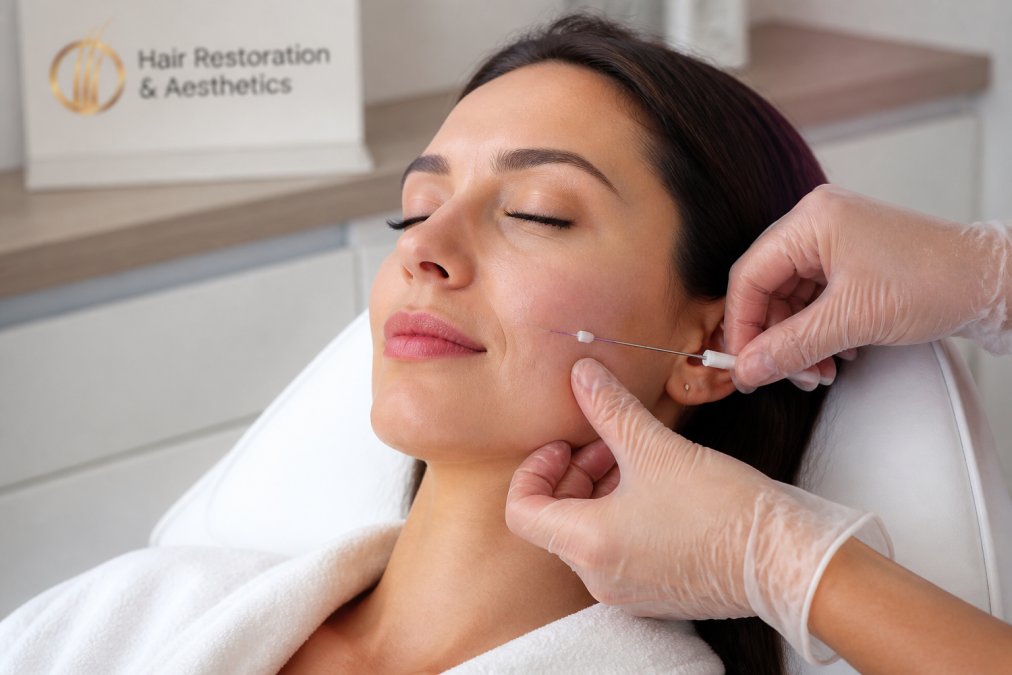
A PDO thread lift is a minimally invasive facial rejuvenation procedure that uses absorbable polydioxanone threads to lift and tighten sagging skin. The threads are inserted beneath the skin's surface using a fine cannula, providing immediate mechanical lift while stimulating collagen production over time. At Hair Restoration Clinic of Granite Bay, we offer PDO thread lifts as part of our aesthetic services.
The biocompatible threads, the same material used in surgical sutures for decades, are gradually absorbed by the body over 6 to 12 months while the collagen they've stimulated continues to support the skin's structure (the FDA). This dual mechanism, immediate lifting plus progressive collagen induction, makes PDO thread lifts unique among non-surgical rejuvenation options. Patients often see improvements in skin texture, fine lines, and overall elasticity as the collagen process unfolds.
How PDO Thread Lifts Work
The procedure begins with a consultation where the practitioner evaluates your facial anatomy, skin laxity, and aesthetic goals. Local anesthesia is applied to ensure comfort. The actual insertion typically takes 30 to 45 minutes, depending on the number of threads and areas treated.
A fine cannula creates pathways beneath the skin's surface. PDO threads are then threaded through these pathways. Some threads feature barbs or cones that grip tissue for immediate mechanical lift; others are smooth and work primarily through collagen stimulation. The combination used depends on your specific needs.
Once inserted, the threads trigger a healing response. Fibroblasts, the cells responsible for collagen production, activate around the threads, initiating neocollagenesis (peer-reviewed research). This biological response strengthens the skin's foundation from within, creating results that improve over weeks and months following treatment.
The procedure can treat multiple facial areas simultaneously: the cheeks and mid-face, jawline definition, nasolabial folds, neck, and décolletage. This versatility allows comprehensive facial rejuvenation in a single appointment.
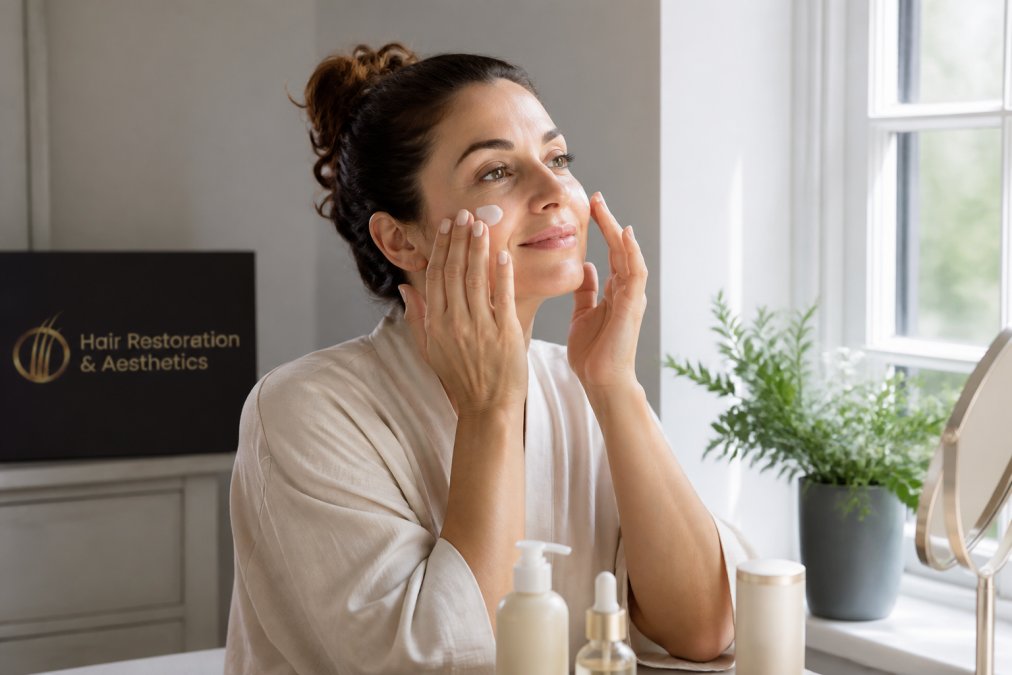
Primary Benefits of PDO Thread Lifts for Facial Rejuvenation
PDO thread lifts actually lift tissue and stimulate the body's natural collagen production, unlike dermal fillers that add volume or neurotoxins that relax muscles. This creates natural-looking results that continue to improve over time.
Patients report visible lifting in the mid-face, improved jawline definition, reduced jowls, and softened nasolabial folds. Fine lines and wrinkles soften as collagen rebuilding progresses. The overall effect is a refreshed, youthful appearance without the "done" look that can accompany other procedures.
One of the most compelling benefits is longevity combined with minimal downtime. You achieve significant rejuvenation while returning to most normal activities within days.
Skin Laxity and Collagen Induction
Skin laxity, the loss of elasticity and firmness with aging, is a primary concern PDO thread lifts address. As collagen and elastin production decline, sagging skin and loss of definition follow. PDO threads work on two fronts: providing immediate mechanical support while triggering collagen production through biostimulation.
The collagen induction process is gradual but progressive. In the first few weeks, you'll notice mechanical lift from the threads. By week four to six, as fibroblasts activate and new collagen forms, skin texture improves noticeably (peer-reviewed research). This process continues for several months, with results often peaking around three to four months.
This approach differs fundamentally from other non-surgical options. Dermal fillers add volume but don't address underlying elasticity loss. Neurotoxins relax muscles but don't lift tissue. PDO threads tackle the root cause, collagen loss and tissue laxity, by stimulating the body's natural regenerative response.
Minimal Downtime and Non-Surgical Results
PDO thread lifts avoid surgery, general anesthesia, and extended recovery. Most patients experience only mild discomfort during the procedure, managed easily with local anesthesia. You can return home and resume light activities the same day.
The first 24 to 48 hours may involve some swelling and mild bruising, typically minimal and easily concealed with makeup. Unlike surgical facelifts requiring weeks of recovery, PDO thread lifts allow you to return to work, exercise, and social activities within a few days.
Results appear gradually over weeks and months, allowing colleagues to notice you look refreshed rather than noticing you've "had work done." This natural progression also lets you assess results and schedule additional treatments if desired.
PDO Thread Lift Recovery Time and Aftercare
Recovery from a PDO thread lift is straightforward. Most patients experience mild swelling and possible bruising for the first few days, typically resolving within one week.
During the first 24 hours, avoid touching treated areas and refrain from strenuous exercise or activities that elevate your heart rate. Sleep with your head elevated on extra pillows to minimize swelling. Avoid alcohol, blood thinners, and excessive salt intake for the first week.
Skincare should be gentle during recovery. Use lukewarm water and mild cleanser; avoid hot water, which increases inflammation. Avoid makeup for at least 24 hours, then resume if swelling is minimal. Avoid facial treatments like microneedling, chemical peels, or aggressive massage for at least two weeks.
By day three to five, most patients return to normal activities, including work and light exercise. Full exercise can typically resume after one week. Well-placed threads inserted at the correct depth are not visible or felt. If you can feel threads under the skin, contact your provider immediately.
How Long Do PDO Threads Last?
PDO threads are gradually absorbed by the body over 6 to 12 months. However, benefits often extend beyond this timeframe because of the collagen they've stimulated.
Results typically peak around months three to four, remain stable for several more months, then gradually soften as threads are fully absorbed. Some patients report results lasting 12 to 18 months or longer, particularly with maintained good skin health and sun protection.
Schedule a Free Consultation →
Duration varies based on the number of threads used, areas treated, your age, skin quality, and lifestyle. Younger patients with good skin elasticity often see longer-lasting results. Sun exposure, smoking, and poor nutrition can shorten result lifespan by accelerating collagen breakdown.
Many practitioners recommend maintenance treatments every 12 to 18 months to sustain results. Some patients opt for a single treatment and are satisfied with lasting improvement in skin quality and texture, even after the lifting effect diminishes.
PDO Thread Lifts vs. Dermal Fillers: Which Is Right for You?
Both PDO thread lifts and dermal fillers address facial aging but work differently. Dermal fillers add volume to areas that have lost fullness, excellent for restoring cheek volume, plumping lips, softening nasolabial folds, and filling under-eye hollows. Results appear immediately and typically last 6 to 18 months.
PDO thread lifts address tissue sagging and skin laxity by lifting and tightening. They're ideal for patients with moderate to significant skin laxity seeking to restore jawline definition, lift the mid-face, or reduce jowls. Thread lifts stimulate collagen production, improving skin quality over time. Results develop gradually but often improve for several months.
The choice often isn't either/or. Many patients benefit from combining both treatments. Fillers restore volume while threads lift and tighten. A practitioner can assess your specific concerns and recommend the best approach.
Consider your primary concern: Is it sagging skin and loss of definition (threads) or loss of volume and fullness (fillers)? Do you prefer immediate results (fillers) or gradual improvement (threads)? Honest answers guide the right choice.
Who Is an Ideal Candidate for PDO Thread Lifts?
Ideal candidates are generally adults experiencing mild to moderate skin laxity who want non-surgical rejuvenation. Age varies; some patients in their 40s benefit from threads, while others don't pursue them until their 60s or beyond.
Good candidates have realistic expectations about results. You understand that threads provide lifting and collagen stimulation, not the dramatic transformation of a surgical facelift. You're willing to allow several weeks for results to develop and appreciate gradual, natural-looking improvement.
Your skin quality matters. Patients with good baseline skin quality often see the most impressive results. Those with thin, fragile, or very sun-damaged skin may not be ideal candidates.
Certain medical conditions or medications may affect candidacy. Patients taking blood thinners, those with active infections or skin conditions in the treatment area, or those with a history of keloid formation should discuss these with their provider. Pregnancy is typically considered a contraindication.
Your lifestyle and maintenance commitment also matter. Patients committed to sun protection, good skincare, and healthy habits typically see the best long-term outcomes.
Potential Side Effects and Risk Considerations
PDO thread lifts are generally safe when performed by qualified practitioners, but they carry potential side effects and risks. Common, temporary side effects include swelling, bruising, mild discomfort, and occasional numbness in treated areas, typically resolving within one to two weeks.
More serious but rare complications include thread migration or visibility if placed too superficially. Infection is possible but uncommon with proper sterile technique. Some patients experience prolonged swelling or bruising, particularly if they take blood thinners.
Allergic reactions to polydioxanone are extremely rare, as PDO has been used in medical sutures for decades. Nerve injury is a potential risk if threads are placed incorrectly, though this is rare with proper technique.
Choosing a qualified, experienced practitioner significantly reduces risks. Ensure your provider has extensive training in thread placement, understands facial anatomy thoroughly, and maintains strict sterile protocols. At Hair Restoration Clinic of Granite Bay, our board-certified physician Dr. Piyush Kumar brings over a decade of experience in aesthetic procedures, ensuring your safety and optimal results.
Post-procedure care is equally important. Following all aftercare instructions, avoiding activities that stress the threads, and attending follow-up appointments help ensure the best outcomes. If you experience unusual symptoms, severe pain, signs of infection, or visible thread migration, contact your provider immediately.
PDO thread lifts represent a compelling option for patients seeking non-surgical facial rejuvenation without extended downtime. The combination of immediate lifting and progressive collagen stimulation addresses multiple signs of aging simultaneously. If you're considering this treatment, schedule a consultation with a qualified aesthetic provider who can evaluate your specific needs. At Hair Restoration Clinic of Granite Bay, Dr. Piyush Kumar and our experienced team offer comprehensive aesthetic consultations to help you explore all available options for achieving your desired results. Schedule a Free Consultation to discuss whether PDO thread lifts or other treatments are right for you.
Frequently Asked Questions
Q: How long does a PDO thread lift last on the face?
A: PDO threads are absorbable and typically last 6-12 months as the material dissolves. However, the collagen stimulation they trigger can provide benefits that extend beyond this timeframe. Many patients choose to schedule maintenance treatments annually to sustain results. The exact duration varies based on individual metabolism, thread type, and the areas treated.
Q: What is the typical recovery time after a PDO thread lift?
A: Most patients experience minimal downtime with PDO thread lifts. Initial swelling and mild bruising may appear within the first 24-48 hours and typically resolve within 7-10 days. You can usually return to normal daily activities immediately, though strenuous exercise and heavy lifting should be avoided for 1-2 weeks. Full results emerge gradually over weeks and months as collagen production increases.
Q: How do PDO thread lifts compare to dermal fillers?
A: PDO thread lifts work by lifting sagging skin and stimulating collagen through tissue tightening, making them ideal for addressing skin laxity and jowls. Dermal fillers add volume to restore lost fullness in specific areas like cheeks and lips. Many patients combine both treatments for comprehensive facial rejuvenation.
Q: Are PDO thread lifts safe?
A: PDO thread lifts are considered a safe, minimally invasive alternative to surgical facelifts when performed by a qualified healthcare provider. Polydioxanone (PDO) is an FDA-approved material used in medical sutures for decades. Side effects are typically mild and temporary, including slight swelling, bruising, or tenderness. Serious complications are rare but can include infection or thread migration. A thorough consultation with a board-certified physician helps identify any contraindications and ensures the procedure is appropriate for your medical history.
This article was written using GrandRanker