
 ultimate-guide
Average Cost Per Graft: What Drives Hair Transplant Pricing
Table of Contents
- What the Average Cost Per Graft Actually Reflects
- FUE Hair Transplant Cost: Why Technique Changes the Equation
- Number of Grafts for Hair Transplant: How Surgeons Set Your Count
- Factors That Move the Average Cost Per Graft Up or Down
- Hair Restoration Financing Options and What to Ask Before You Sign
- What the Cost Per Graft Doesn't Tell You About Value and Outcomes
- Frequently Asked Questions
Last Updated: September 11, 2026
What the Average Cost Per Graft Actually Reflects
The average cost per graft is the price a clinic charges for each individual follicular unit it extracts and implants during a hair transplant, making it the number patients use to compare quotes across providers. At Hair Restoration Clinic of Granite Bay, we explain it a simpler way: a graft is one working unit of hair, and the per-graft rate is what you pay for that unit to be moved.
That single figure hides more than it reveals. Two clinics can quote the same rate and deliver very different results, because the number of grafts, the extraction technique, and the surgeon's skill all sit behind the price. American Academy of Dermatology on hair loss and restoration notes that treating hair loss is a medical decision, not a cosmetic add-on, which is why the cheapest quote is rarely the most useful one.
Below, we break down what actually drives that number, how surgeons decide your graft count, and what the rate leaves out.
FUE Hair Transplant Cost: Why Technique Changes the Equation
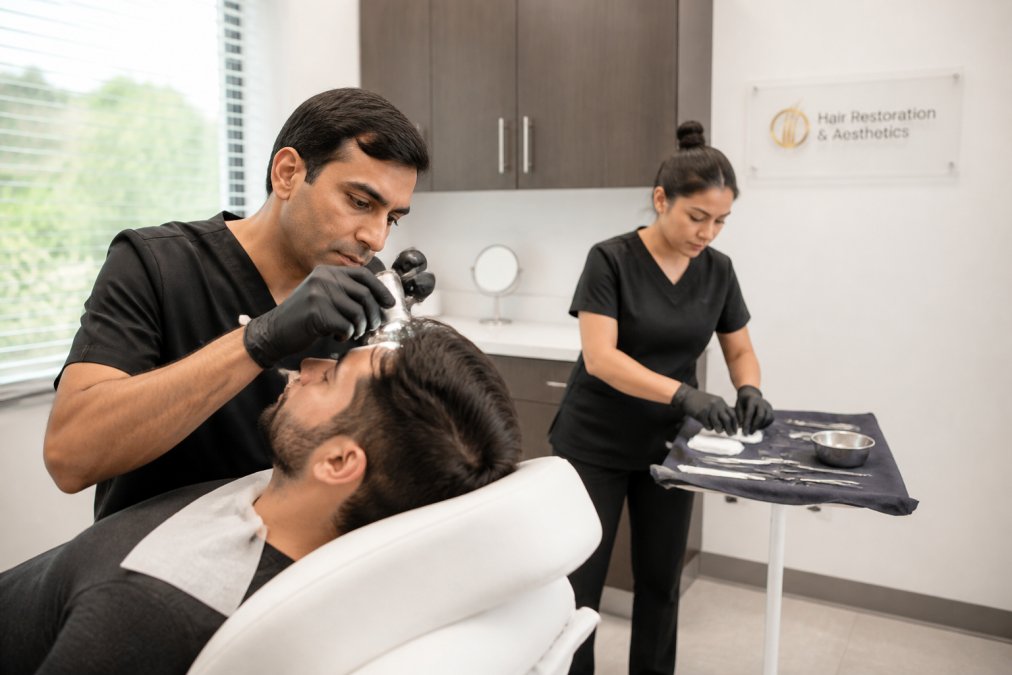
Follicular unit extraction, or FUE, is a method where individual follicular units are removed one at a time with a small punch tool and reimplanted into thinning areas, leaving no linear scar. Because FUE is more labor-intensive than older strip methods, it typically carries a higher per-graft rate (the American Academy of Dermatology). The trade-off is a faster recovery and no long scar across the back of the head.
How the Cole Follicular Unit Extraction System Fits In
The Cole follicular unit extraction system is a refined FUE approach that uses controlled punch depth and angle to protect the follicle during extraction. Protecting the follicle matters because a damaged graft does not grow, and a graft that does not grow is money spent for nothing. This is the system Dr. Piyush Kumar uses at Hair Restoration Clinic of Granite Bay, and it is one reason a per-graft quote from an experienced FUE surgeon reads differently than a bargain rate from a high-volume shop.
Number of Grafts for Hair Transplant: How Surgeons Set Your Count
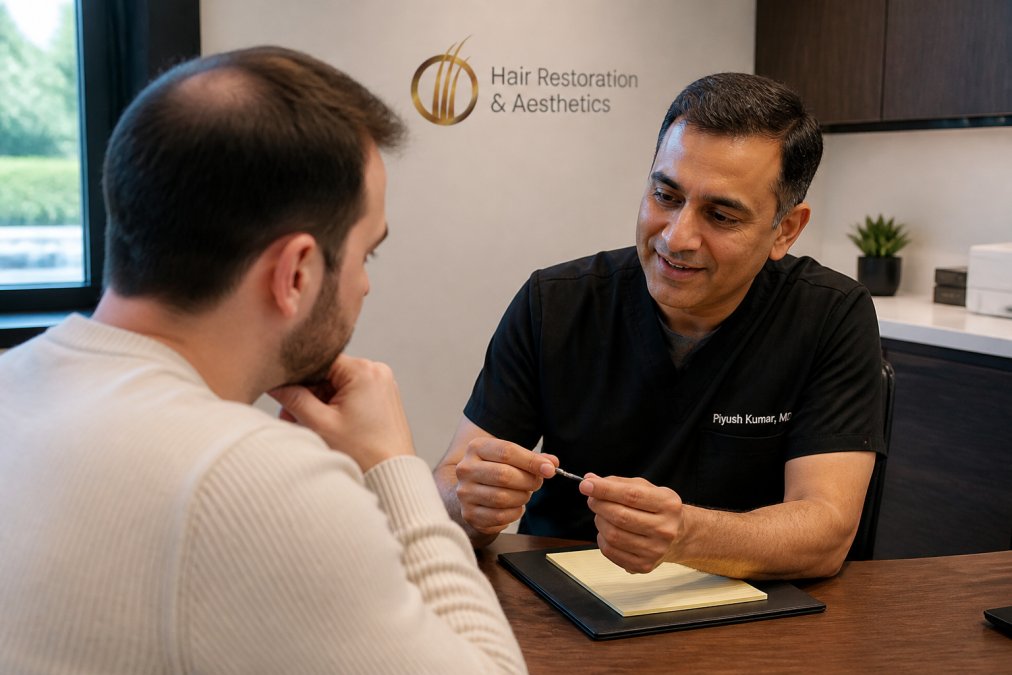
The number of grafts for a hair transplant is set by how much donor hair you have, the size of the area being treated, and the density your surgeon can safely achieve. There is no universal number. A patient restoring a receding hairline may need far fewer grafts than someone filling in the crown and mid-scalp.
Your surgeon maps your scalp, measures the thinning zones, and estimates how many follicular units the donor area can spare without looking thin itself. Overharvesting the donor area is the mistake that ruins results, so a conservative count is often the sign of a careful surgeon.
Norwood Scale and the Graft Ranges That Follow
The Norwood scale is the standard classification for male pattern baldness, running from minimal recession to extensive loss. It gives surgeons a shared language for staging hair loss, and it loosely correlates with graft ranges, though individual density and goals still decide the final number. A lower Norwood stage usually means fewer grafts and a lower total cost, while advanced stages need more grafts and more sessions.
| Factor | What It Changes | Effect on Graft Count |
|---|---|---|
| Norwood stage | Extent of loss | Higher stage, more grafts |
| Donor density | Available supply | Denser donor, more grafts possible |
| Treatment area | Size of the zone | Larger area, more grafts |
| Hair caliber | Coverage per graft | Thicker hair, fewer grafts needed |
| Goal density | How full you want it | Higher density, more grafts |
Factors That Move the Average Cost Per Graft Up or Down
Several variables push the average cost per graft in either direction, and understanding them helps you read a quote with clear eyes. Surgeon experience is the biggest one. A physician who has performed thousands of procedures prices differently than a newer provider, and that gap reflects risk, not just reputation.
Other factors include the number of grafts in a single session, whether the procedure is FUE or an older technique, the geographic market, and whether the clinic handles the procedure in one long session or splits it across two. Add-ons like platelet-rich plasma or post-procedure therapies can raise the total. Ask what is bundled into the per-graft rate and what is billed separately.
Schedule a Free Consultation →
Hair Restoration Financing Options and What to Ask Before You Sign
Hair restoration financing options usually fall into three buckets: paying in full up front, a payment plan offered through the clinic, or a third-party medical financing company. Because insurance rarely covers cosmetic hair restoration, most patients pay out of pocket, which makes the payment structure as important as the rate itself.
Before you sign anything, ask these questions:
- What is the total cost, including every fee?
- Is the quoted graft count guaranteed, or can it change mid-procedure?
- What happens if fewer grafts are harvested than planned?
- Are follow-up visits included, or billed separately?
- Is there a refund or revision policy if growth is poor?
Hair Restoration Clinic of Granite Bay offers a free consultation and payment plans, so you can get a clear number before committing. Consumer Financial Protection Bureau on medical financing advises reading the terms of any medical payment plan carefully, since interest and fees vary widely between lenders.
What the Cost Per Graft Doesn't Tell You About Value and Outcomes
The cost per graft says nothing about how many of those grafts will actually grow, and that is the number that matters most. A gifted surgeon with a higher rate and a 95% survival rate beats a cheap quote where half the grafts fail. Growth rate, natural hairline design, and scarring are the real measures of value.
Outcomes depend on surgeon skill, donor quality, and how well you follow aftercare instructions. A well-designed hairline that matches your facial proportions will look natural for years. A poorly planned one looks transplanted no matter how much you paid per graft. This is why consultation matters more than comparison shopping: a qualified surgeon will tell you what your donor area can realistically support, and a good clinic will show you before-and-after photos from patients with hair loss similar to yours.
Comparing quotes on the per-graft rate alone can lead you toward the wrong provider, since the number that matters is how many grafts actually grow and how natural the result looks. At Hair Restoration Clinic of Granite Bay, board-certified physician Dr. Piyush Kumar brings over a decade of experience and uses the industry-leading Cole follicular unit extraction system to protect each graft during extraction. The clinic offers a free consultation and payment plans, so you can get a clear, all-in figure before you commit. Schedule a free consultation with Hair Restoration Clinic of Granite Bay and get an honest graft estimate built around your own donor supply and goals.
Frequently Asked Questions
How many grafts do I need for a full hair transplant?
Graft counts depend on your Norwood stage, donor density, and the coverage you want. Early thinning often needs 800 to 1,500 grafts, while advanced baldness can require 2,500 to 4,000 or more. A surgeon maps your scalp and calculates the number of grafts for hair transplant during an in-person evaluation. Because pricing scales with graft count, the count is the single biggest driver of your total investment.
Does the average cost per graft change with the type of procedure?
Yes. FUE hair transplant cost typically runs higher per graft than older strip methods because the extraction is more labor-intensive and requires specialized instrumentation. The Cole follicular unit extraction system used at many clinics is designed to reduce trauma to donor follicles, which can affect both the rate and the total. Technique, surgeon skill, and session length all influence the final figure.
Are there financing options available for hair restoration?
Many clinics offer hair restoration financing options such as third-party medical lenders, in-house payment plans, and promotional zero-interest periods for qualified applicants. Approval usually depends on credit history, and terms range from a few months to several years. Ask for the full cost breakdown, including any origination fees, before committing. A free consultation is the best place to review what you qualify for.
Is the cost per graft inclusive of follow-up care?
Not always. Some quotes bundle post-operative visits, medications, and PRP or Alma TED acoustic sound wave therapy, while others bill those separately. Before you compare quotes, ask exactly what is included: surgery day, anesthesia, follow-up appointments, and any adjunct treatments. A lower per-graft rate with add-on fees can end up costing more than a bundled package.