 blog
blog
5 Best Laser Skin Treatments for Sun Damage in 2026
Table of Contents
- How Sun Damage Shows Up on Your Skin
- Quick Comparison: 5 Best Laser Skin Treatments for Sun Damage
- 1. Intense Pulsed Light (IPL) for Pigmentation and Sun Spots
- 2. Non-Ablative Fractional Resurfacing for Texture and Fine Lines
- 3. Ablative CO2 Fractional Laser for Deeper Photodamage
- 4. Q-Switched Lasers for Stubborn Pigment and Melasma
- 5. Photodynamic Therapy with Light for Actinic Keratoses
- Laser Therapy for Hyperpigmentation: Which Option Fits Your Skin Tone
- Preparing for Your Laser Skin Treatment
- Laser Skin Resurfacing Recovery Time
- Maintaining Your Results
- Frequently Asked Questions
Last Updated: September 16, 2026
How Sun Damage Shows Up on Your Skin
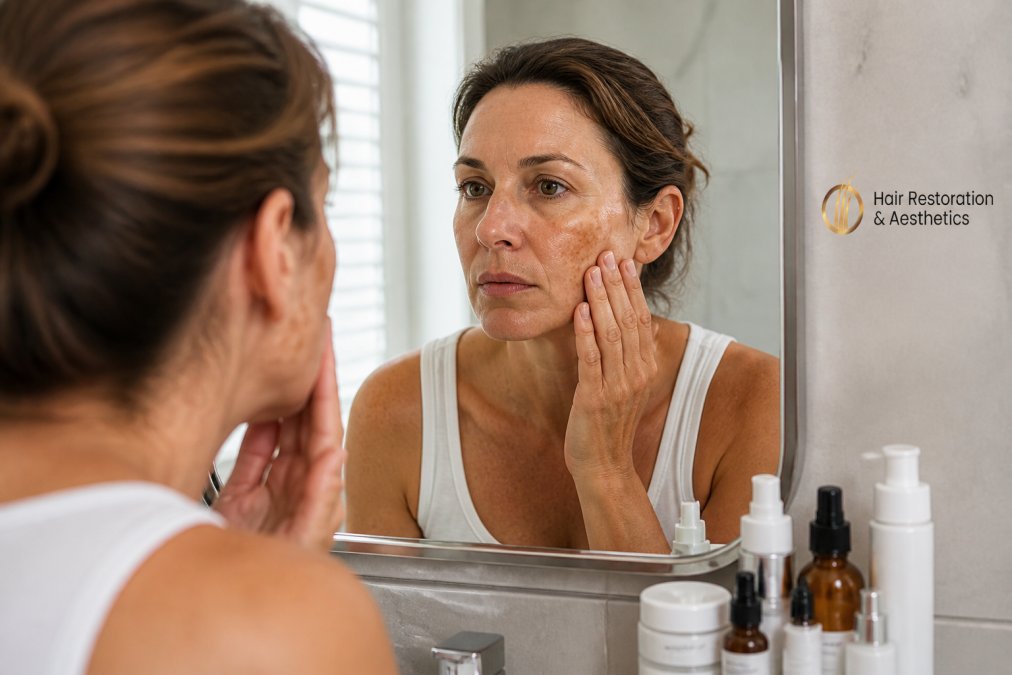
Sun damage is the cumulative effect of ultraviolet exposure on skin cell DNA, and it shows up as far more than a tan that fades. At Hair Restoration Clinic of Granite Bay, we see patients every week who are surprised that the brown patches on their cheeks are not "just aging." They are photodamage.
The visible signs fall into a few categories:
- Pigment changes: sun spots, age spots, and blotchy hyperpigmentation caused by excess melanin
- Texture changes: rough patches, enlarged pores, and a leathery feel from a thickened epidermis
- Lines and laxity: fine lines and wrinkles from collagen breakdown in the dermis
- Precancerous lesions: actinic keratoses, rough scaly spots that a physician should evaluate
Quick Comparison: 5 Best Laser Skin Treatments for Sun Damage
The best laser skin treatment for sun damage depends on what you want corrected, how much downtime you can accept, and your skin tone. No single device handles every concern equally well.
| Treatment | Best For | Typical Downtime |
|---|---|---|
| IPL | Sun spots, redness | Minimal |
| Non-ablative fractional | Texture, fine lines | 2-4 days |
| Ablative CO2 fractional | Deep photodamage | 1-2 weeks |
| Q-switched lasers | Stubborn pigment, melasma | Minimal |
| PDT | Actinic keratoses | Several days |
What We Compared
We compared these five options on four criteria: which signs of photodamage they address, how they affect the epidermis versus the dermis, expected downtime, and suitability across Fitzpatrick skin types. Cost varies by provider, treatment area, and number of sessions, so ask for a quote rather than assuming a figure.
1. Intense Pulsed Light (IPL) for Pigmentation and Sun Spots
IPL is the most accessible starting point for sun spots and uneven pigment. It uses broadband light, not a single laser wavelength, to target melanin and hemoglobin in the upper skin layers.
2. Non-Ablative Fractional Resurfacing for Texture and Fine Lines
Non-ablative fractional resurfacing creates columns of controlled thermal injury in the dermis while leaving the skin surface largely intact. That is what drives new collagen production without stripping the epidermis.
3. Ablative CO2 Fractional Laser for Deeper Photodamage
Ablative CO2 fractional laser removes the outer epidermal layer and heats the dermis, which makes it the most aggressive option here. It delivers the most dramatic improvement in deep wrinkles, significant sun damage, and skin laxity.
4. Q-Switched Lasers for Stubborn Pigment and Melasma
Q-switched lasers fire short, high-energy pulses that shatter pigment particles without broadly heating surrounding tissue. That precision makes them a strong choice for stubborn sun spots, lentigines, and some cases of melasma.
5. Photodynamic Therapy with Light for Actinic Keratoses
Photodynamic therapy pairs a photosensitizing topical agent with a light source to destroy precancerous cells. It is the appropriate choice when actinic keratoses are present, not simply cosmetic sun spots.
Laser Therapy for Hyperpigmentation: Which Option Fits Your Skin Tone
Fitzpatrick skin type is the single most important factor in choosing among these laser skin treatments. Melanin competes with the target pigment for laser energy, so darker skin carries a higher risk of burns, blistering, and post-inflammatory hyperpigmentation (PIH) when the wrong wavelength, pulse duration, or fluence is used. Most practitioners find that the same device can be safe or unsafe depending entirely on how it is tuned, which is why the consultation matters more than the device name on the brochure.
| Treatment | Lighter Skin (Fitzpatrick I-III) | Medium Skin (IV) | Deeper Skin (V-VI) |
|---|---|---|---|
| IPL | Excellent for sun spots and redness | Use with caution; lower fluence, longer pulse | Generally avoided due to PIH risk |
| Non-ablative fractional | Excellent for texture and fine lines | Good with conservative settings | Possible with 1064 nm or low-density protocols |
| Ablative CO2 fractional | Best results for deep photodamage | Higher scarring and PIH risk | Typically not recommended |
| Q-switched lasers | Excellent for lentigines | Excellent for pigment; watch for rebound | Preferred option for pigment concerns |
| PDT | Effective for actinic keratoses | Effective with adjusted light dose | Effective; monitor for PIH |
Contraindications and Medical History That Change the Plan
- Isotretinoin (Accutane) use: Many practitioners wait six to twelve months after the last dose before ablative or fractional resurfacing, because the drug can impair wound healing and raise scarring risk.
- Photosensitizing medications: Certain antibiotics (tetracyclines, fluoroquinolones), diuretics, and some acne and psychiatric medications increase sensitivity to light. These are typically paused only under a prescribing physician's direction.
- History of keloid or hypertrophic scarring: Raises the risk of abnormal healing, especially with ablative devices.
- Active infection, cold sore outbreak, or open lesions in the treatment area: Treatment is deferred until resolved. A history of oral herpes often warrants antiviral prophylaxis before resurfacing.
- Pregnancy and breastfeeding: Elective laser treatments are generally postponed.
- Autoimmune and photosensitive conditions (lupus, porphyria): Require physician clearance and often rule out light-based treatments.
- Recent sun exposure or tanning: Tanned skin absorbs more energy unpredictably; most practices require two to four weeks of strict photoprotection before treatment.
- Uncontrolled diabetes or active skin cancer in the area: Requires medical evaluation first.
If you have melasma specifically, expect a slower, more conservative plan than a friend with simple sun spots. Melasma is reactive, and the goal is gradual clearing with topical support and strict sun protection rather than an aggressive single session.
Schedule a Free Consultation →
Preparing for Your Laser Skin Treatment
Preparation is straightforward but not optional. Stop sun exposure and tanning for at least two weeks before treatment, since tanned skin changes how it absorbs light. Discontinue photosensitizing medications only under a physician's direction, never on your own. Arrive with clean skin, free of makeup, retinoids, and exfoliating acids for several days prior.
Laser Skin Resurfacing Recovery Time
Recovery ranges from same-day return to two weeks, depending on the device. Non-ablative fractional and IPL typically involve two to four days of redness. Ablative CO2 fractional resurfacing requires one to two weeks of healing before makeup and normal activity resume.
Maintaining Your Results
Laser skin treatments reset the clock; they do not stop it. Without a maintenance plan, pigment and texture concerns typically begin returning within six to twelve months, and the rate depends far more on daily habits than on the laser itself.
A Realistic Maintenance Schedule
Most practitioners recommend a tiered approach rather than a fixed annual appointment:
- Daily: Broad-spectrum SPF 30 or higher, reapplied every two hours during sun exposure. This is the single highest-impact habit for protecting your result.
- Daily to nightly: A topical retinoid (tretinoin or a gentler alternative) to support cell turnover and collagen, plus an antioxidant serum such as vitamin C in the morning.
- Every 3-6 months: A pigment-focused topical regimen review, especially if you have melasma or a history of PIH. Some patients rotate hydroquinone or azelaic acid under physician guidance.
- Every 6-12 months: A maintenance laser session for texture and tone. Non-ablative fractional and IPL are common choices here because downtime is short.
- Every 12-24 months: A deeper resurfacing session if photodamage has progressed, or if you want to address new lines and laxity.
What Actually Drives Recurrence
Sun exposure is the dominant factor, but it is not the only one. Hormonal shifts (pregnancy, menopause, certain contraceptives) can trigger melasma independently of UV. Heat and visible light also matter for pigment-prone skin, which is why tinted mineral sunscreens with iron oxides are often recommended over clear chemical formulas for melasma patients (pubmed.ncbi.nlm.nih.gov). Smoking and poor sleep slow collagen remodeling and blunt the results of any resurfacing treatment.
Signs It Is Time to Come Back
- New sun spots appearing on the cheeks, forehead, or hands
- Texture becoming rough again in areas that previously felt smooth
- Fine lines returning around the eyes or mouth
- Pigment that darkens rather than fades after sun exposure
If hair thinning is also part of your concern, Hair Restoration Clinic of Granite Bay offers FUE hair restoration and Alma TED acoustic sound wave therapy alongside its laser skin rejuvenation services. You can Schedule a Free Consultation to map a plan for both.
Frequently Asked Questions
How many laser sessions are typically needed for sun damage?
Most people need three to five sessions for noticeable improvement, though this varies by treatment type and how deep the photodamage goes. IPL and Q-switched lasers often show results after two to three sessions spaced four to six weeks apart. Ablative fractional lasers may only require one or two sessions because they work deeper. Your provider will assess your skin and recommend a plan based on your specific concerns and goals.
Is laser skin resurfacing safe for all skin types?
Not every laser is safe for every skin tone. Fitzpatrick skin type plays a major role in which device a provider recommends. Darker skin tones carry a higher risk of post-inflammatory hyperpigmentation after certain lasers, so providers often choose non-ablative or Q-switched options with longer wavelengths. Board-certified physicians assess your skin type and medical history before recommending treatment to reduce risks and improve outcomes.
What is the recovery time for laser sun damage treatments?
Recovery depends on the laser. Non-ablative and IPL treatments typically involve little to no downtime, with some redness that fades within a day or two. Ablative fractional lasers cause more significant erythema and peeling that can last five to seven days. Q-switched lasers usually have minimal downtime. Your provider will give you specific aftercare instructions, including sun protection and skincare adjustments, to support healing.
Can laser treatments improve skin texture along with sun damage?
Yes. Many lasers address both pigment and texture by stimulating collagen production in the dermis. Fractional resurfacing creates controlled micro-injuries that trigger collagen remodeling, which smooths fine lines, wrinkles, and rough patches over time. IPL primarily targets pigment and redness but can also improve overall tone. Combining treatments or choosing a fractional laser often gives the most well-rounded improvement for sun-damaged skin.